State Key Laboratory of Loess and Quaternary Geology, Institute of Earth Environment, Chinese Academy of Sciences, Xi'an 710075, China.
Sci Rep. 2013;3:2403. doi: 10.1038/srep02403.
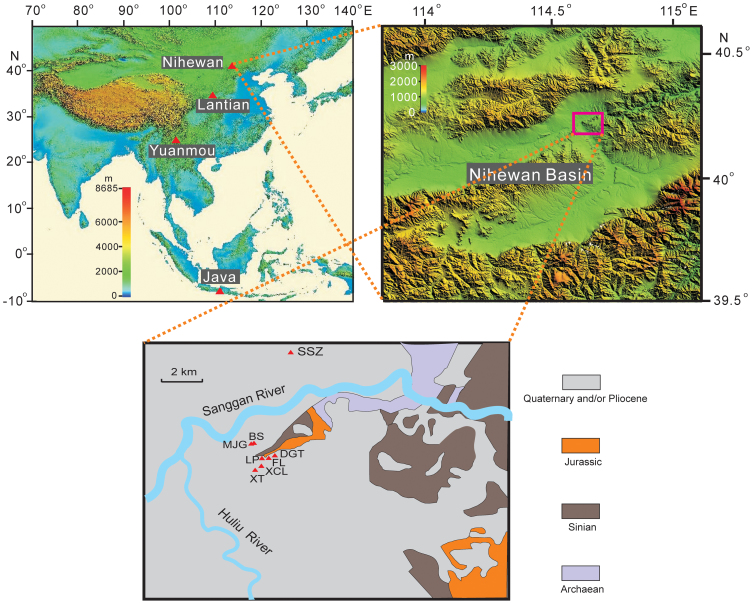
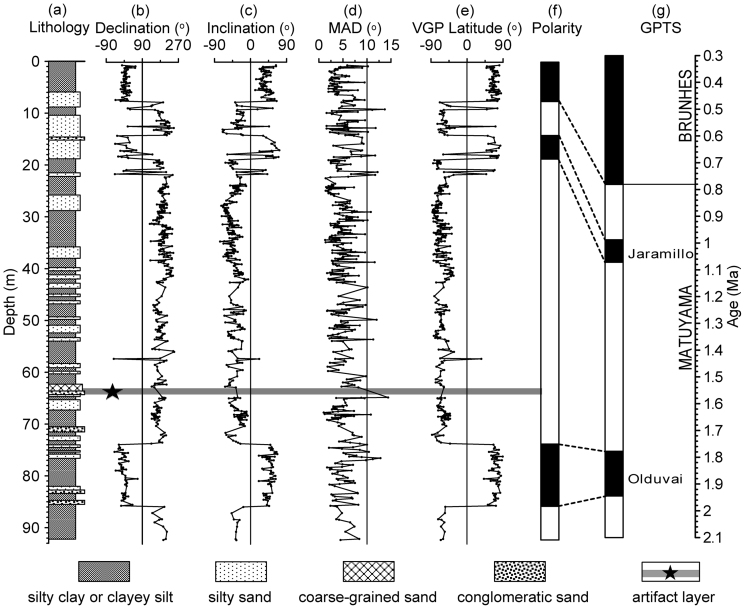
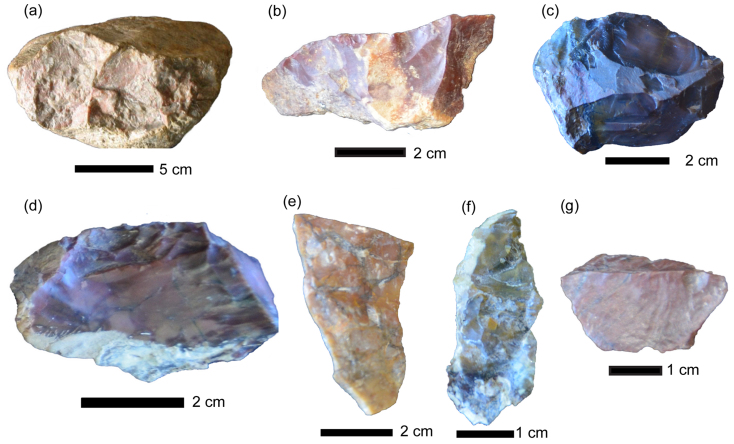
The Nihewan Basin in North China has a rich source of Early Pleistocene Paleolithic sites. Here, we report a high-resolution magnetostratigraphic dating of the Shangshazui Paleolithic site that was found in the northeastern Nihewan Basin in 1972. The artifact layer is suggested to be located in the Matuyama reversed polarity chron just above the upper boundary of the Olduvai polarity subchron, yielding an estimated age of ca 1.7-1.6 Ma. This provides new evidence for hominid occupation in North China in the earliest Pleistocene. The earliest hominids are argued to have lived in a habitat of open grasslands mixed with patches of forests close to the bank of the Nihewan paleolake as indicated from faunal compositions. Hominid migrations to East Asia during the Early Pleistocene are suggested to be a consequence of increasing cooling and aridity in Africa and Eurasia.
中国北方的泥河湾盆地拥有丰富的早更新世旧石器时代遗址。在这里,我们报告了 1972 年在泥河湾盆地东北部发现的上沙嘴旧石器时代遗址的高分辨率磁地层年代测定。石器层被认为位于马修马反向极性时期,就在奥杜威极性亚时的上边界之上,估计年龄约为 170-160 万年前。这为早期更新世华北地区人类的居住提供了新的证据。从动物群的组成来看,最早的人类被认为生活在靠近泥河湾古湖岸的开阔草原与森林斑块混合的栖息地中。有人认为,在早更新世期间,人类向东亚的迁移是非洲和欧亚大陆气候变冷和干旱加剧的结果。