Medical Genomics; UCL Cancer Institute; University College London; London, UK; UCL Institute of Healthy Ageing; University College London; London, UK.
Medical Genomics; UCL Cancer Institute; University College London; London, UK.
Epigenetics. 2013 Oct;8(10):1114-22. doi: 10.4161/epi.26017. Epub 2013 Aug 15.
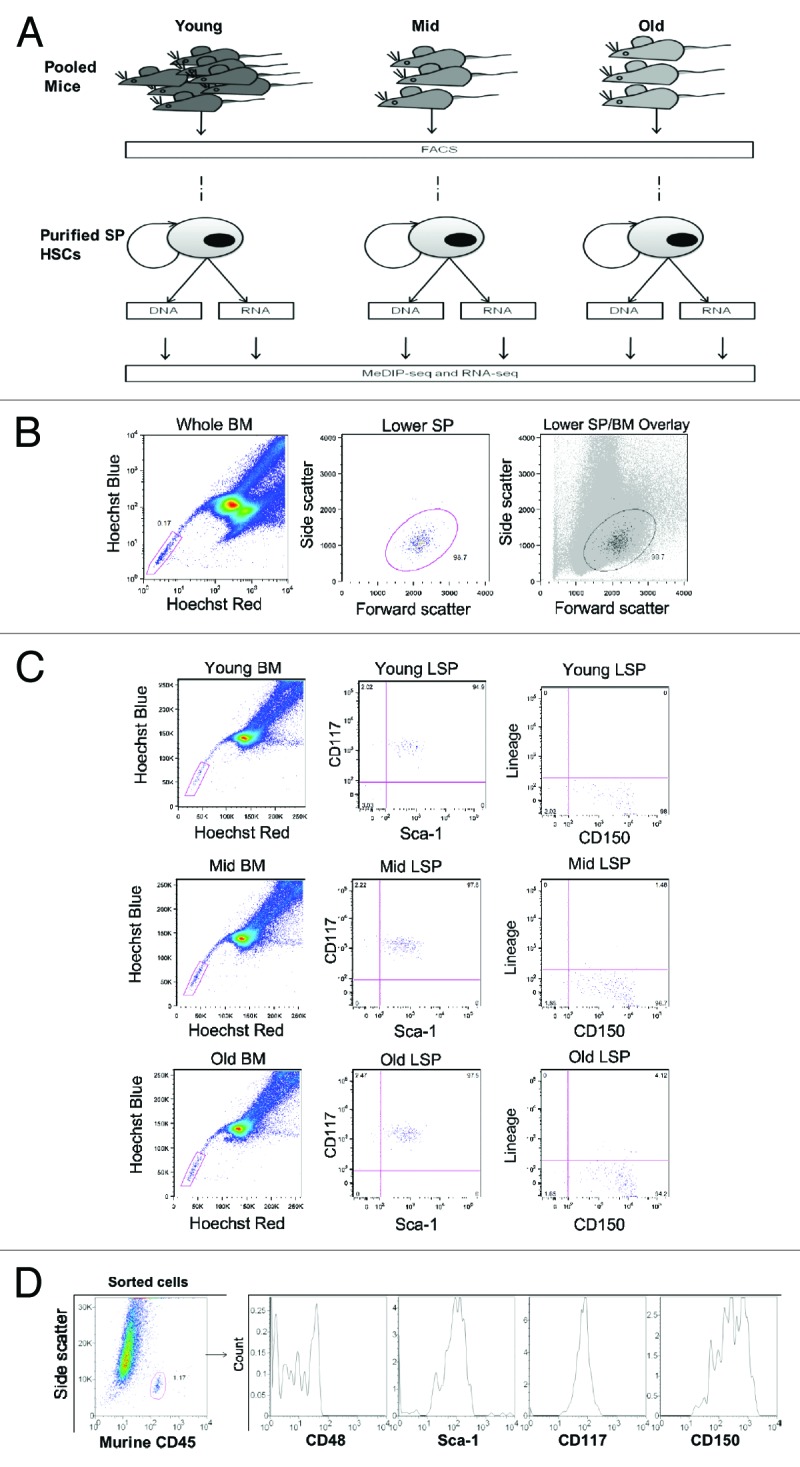
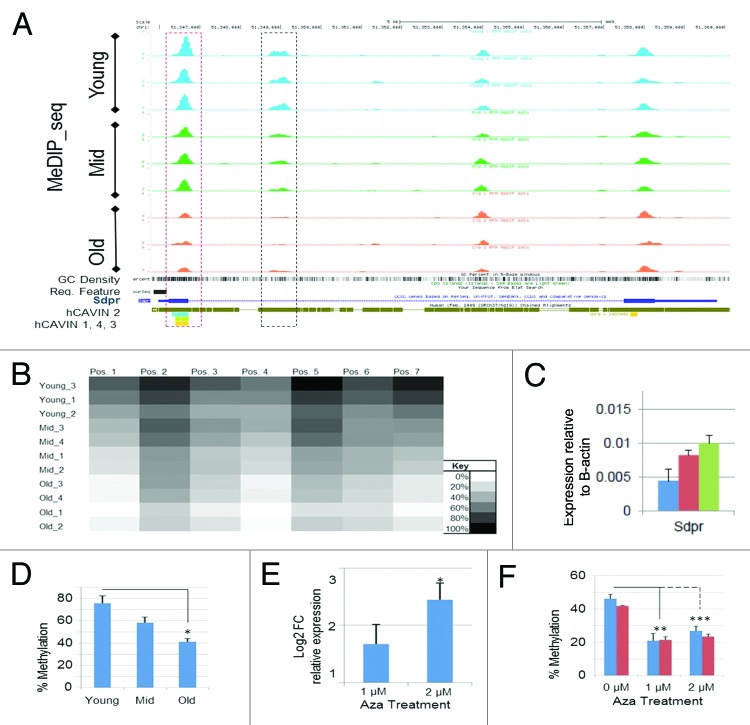
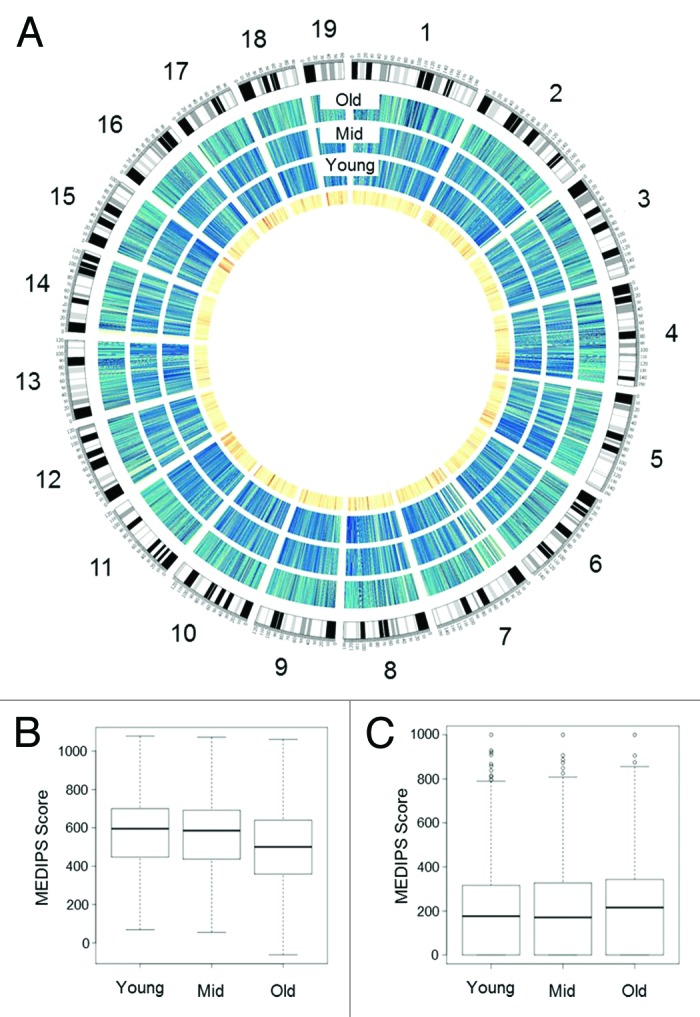
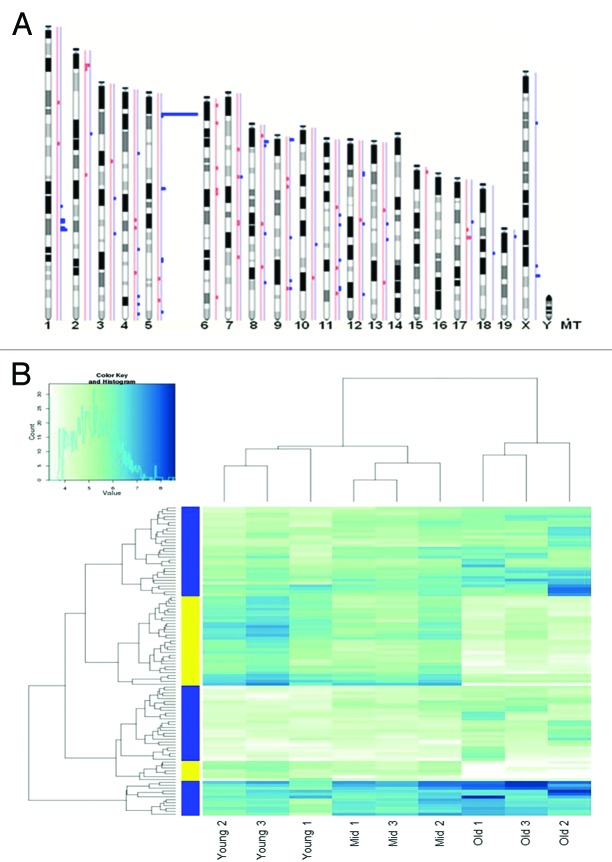
Stem cells have been found in most tissues/organs. These somatic stem cells produce replacements for lost and damaged cells, and it is not completely understood how this regenerative capacity becomes diminished during aging. To study the possible involvement of epigenetic changes in somatic stem cell aging, we used murine hematopoiesis as a model system. Hematopoietic stem cells (HSCs) were enriched for via Hoechst exclusion activity (SP-HSC) from young, medium-aged and old mice and subjected to comprehensive, global methylome (MeDIP-seq) analysis. With age, we observed a global loss of DNA methylation of approximately 5%, but an increase in methylation at some CpG islands. Just over 100 significant (FDR<0.2) aging-specific differentially methylated regions (aDMRs) were identified, which are surprisingly few considering the profound age-based changes that occur in HSC biology. Interestingly, the polycomb repressive complex -2 (PCRC2) target genes Kiss1r, Nav2 and Hsf4 were hypermethylated with age. The promoter for the Sdpr gene was determined to be progressively hypomethylated with age. This occurred concurrently with an increase in gene expression with age. To explore this relationship further, we cultured isolated SP-HSC in the presence of 5-aza-deoxycytdine and demonstrated a negative correlation between Sdpr promoter methylation and gene expression. We report that DNA methylation patterns are well preserved during hematopoietic stem cell aging, confirm that PCRC2 targets are increasingly methylated with age, and suggest that SDPR expression changes with age in HSCs may be regulated via age-based alterations in DNA methylation.
干细胞存在于大多数组织/器官中。这些体干细胞产生替代丢失和受损的细胞,而这种再生能力如何随着衰老而减弱还不完全清楚。为了研究表观遗传变化在体干细胞衰老中的可能作用,我们使用鼠造血系统作为模型系统。我们从年轻、中年和老年小鼠中通过 Hoechst 排除活性(SP-HSC)富集造血干细胞(HSCs),并对其进行全面的、全局的甲基化组(MeDIP-seq)分析。随着年龄的增长,我们观察到大约 5%的 DNA 甲基化整体丢失,但在一些 CpG 岛上的甲基化增加。仅发现超过 100 个显著的(FDR<0.2)衰老特异性差异甲基化区域(aDMRs),考虑到 HSC 生物学中发生的深刻的基于年龄的变化,这一数量令人惊讶。有趣的是,多梳抑制复合物-2(PCRC2)靶基因 Kiss1r、Nav2 和 Hsf4 的甲基化随着年龄的增长而增加。Sdpr 基因的启动子随着年龄的增长而逐渐去甲基化。这与随着年龄的增长基因表达的增加同时发生。为了进一步探索这种关系,我们在分离的 SP-HSC 中培养存在 5-aza-脱氧胞苷的情况下,证明了 Sdpr 启动子甲基化与基因表达之间存在负相关。我们报告说,在造血干细胞衰老过程中,DNA 甲基化模式得到很好的保存,证实了 PCRC2 靶基因随着年龄的增长而逐渐甲基化,并表明 HSCs 中 SDPR 表达的变化可能是通过基于年龄的 DNA 甲基化改变来调节的。