Early Life Institute and Department of Geology and State Key Laboratory of Continental Dynamics, Northwest University, Xi'an, PR China.
PLoS One. 2013 Aug 12;8(8):e70741. doi: 10.1371/journal.pone.0070741. eCollection 2013.
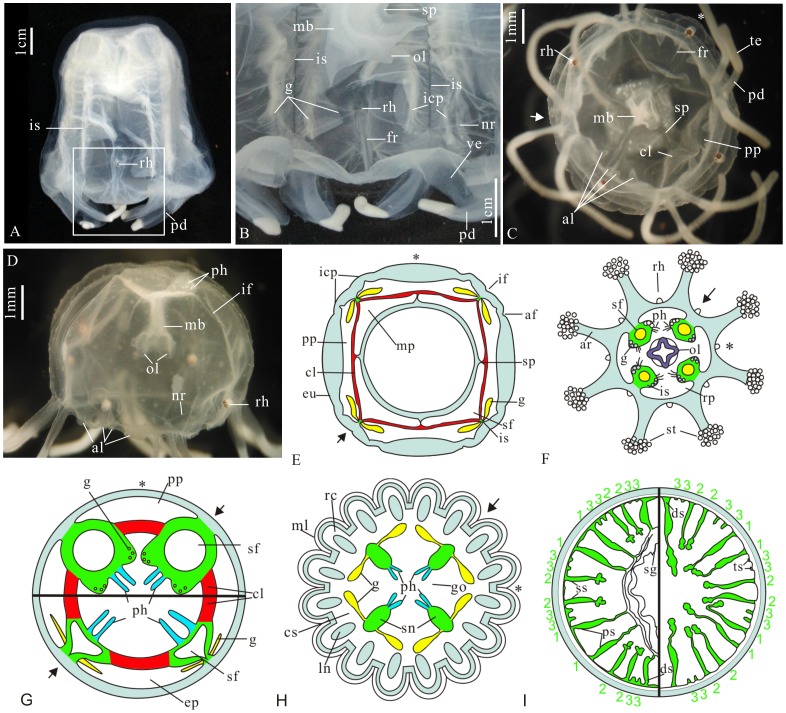
Extant cubozoans are voracious predators characterized by their square shape, four evenly spaced outstretched tentacles and well-developed eyes. A few cubozoan fossils are known from the Middle Cambrian Marjum Formation of Utah and the well-known Carboniferous Mazon Creek Formation of Illinois. Undisputed cubozoan fossils were previously unknown from the early Cambrian; by that time probably all representatives of the living marine phyla, especially those of basal animals, should have evolved.
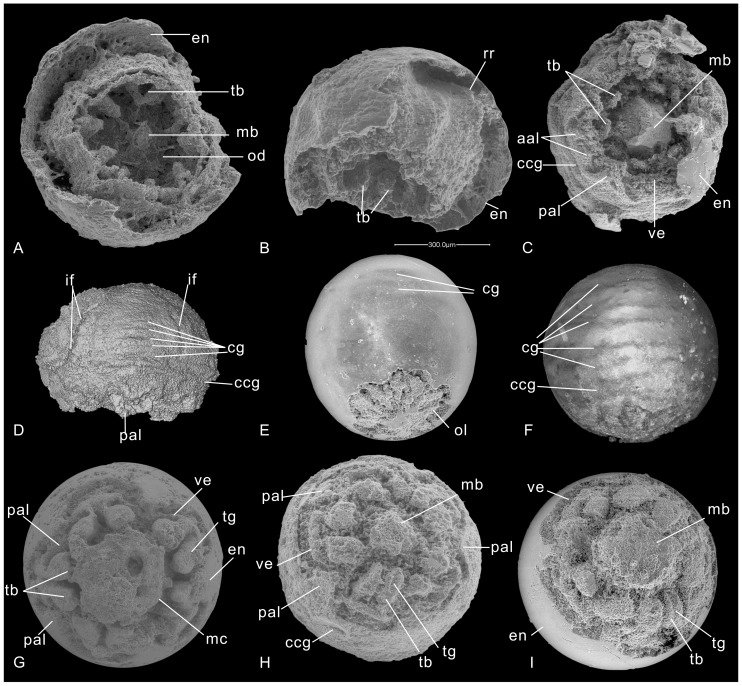
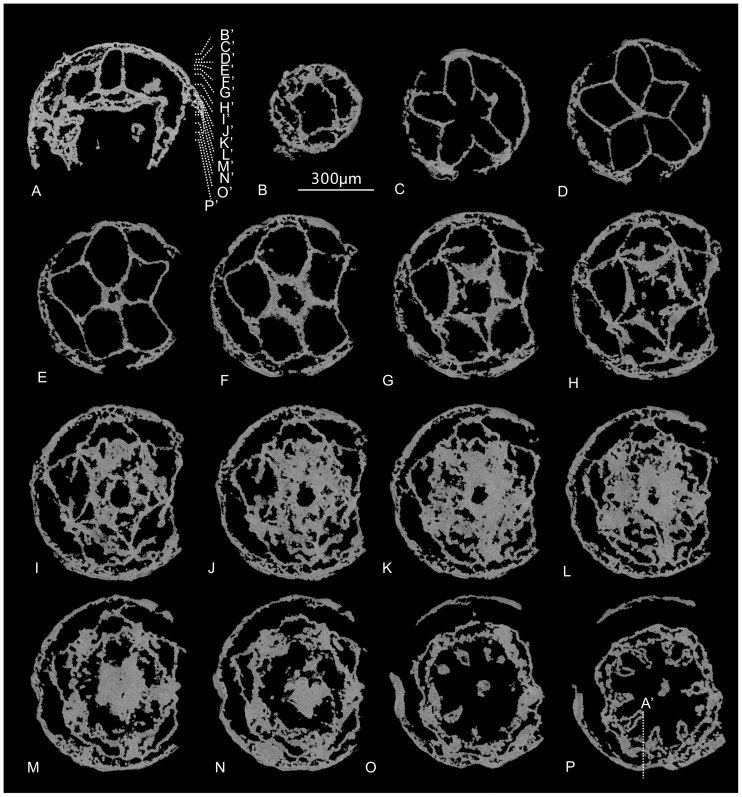
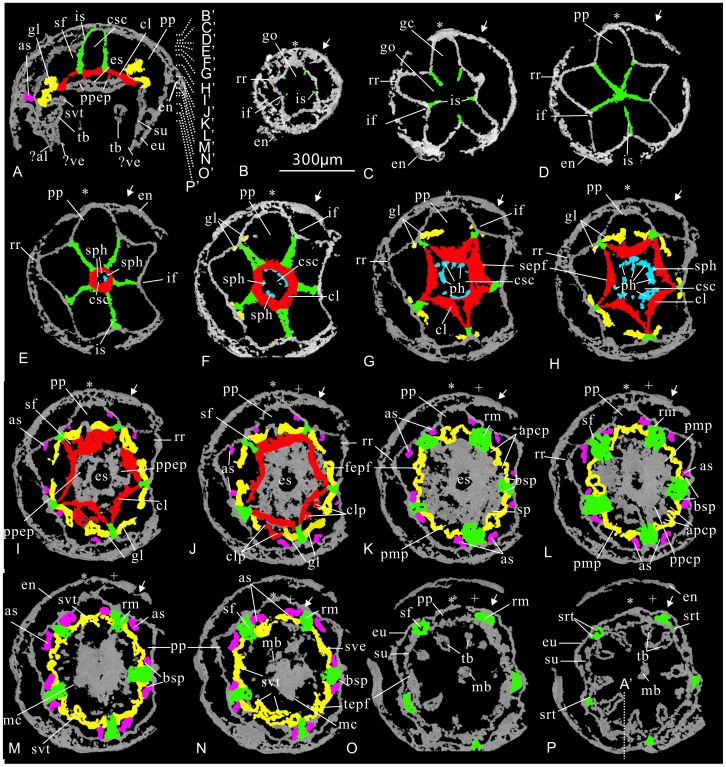
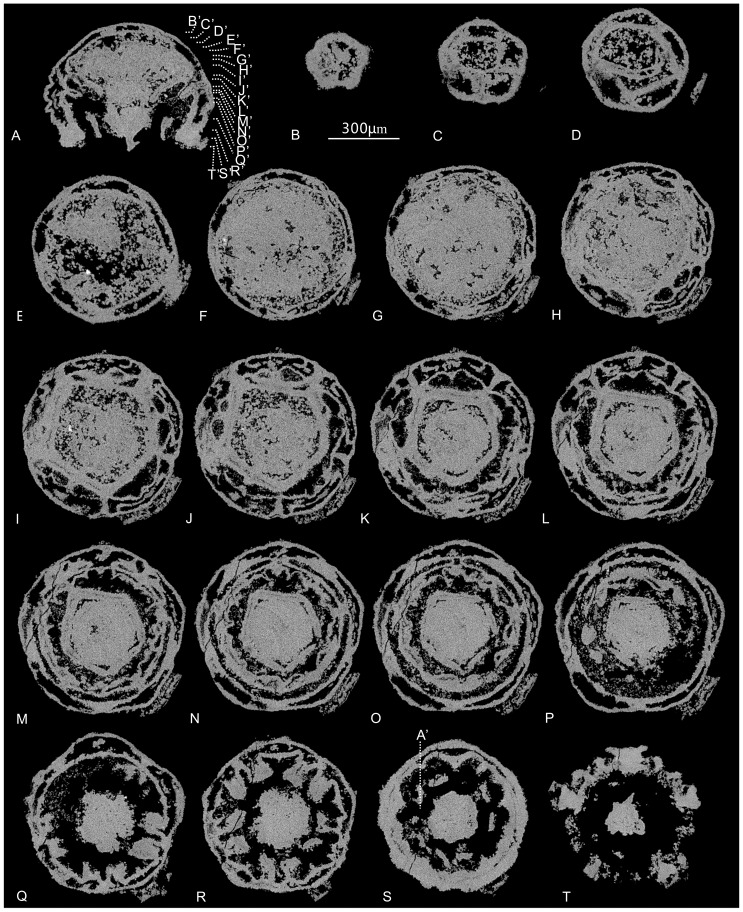
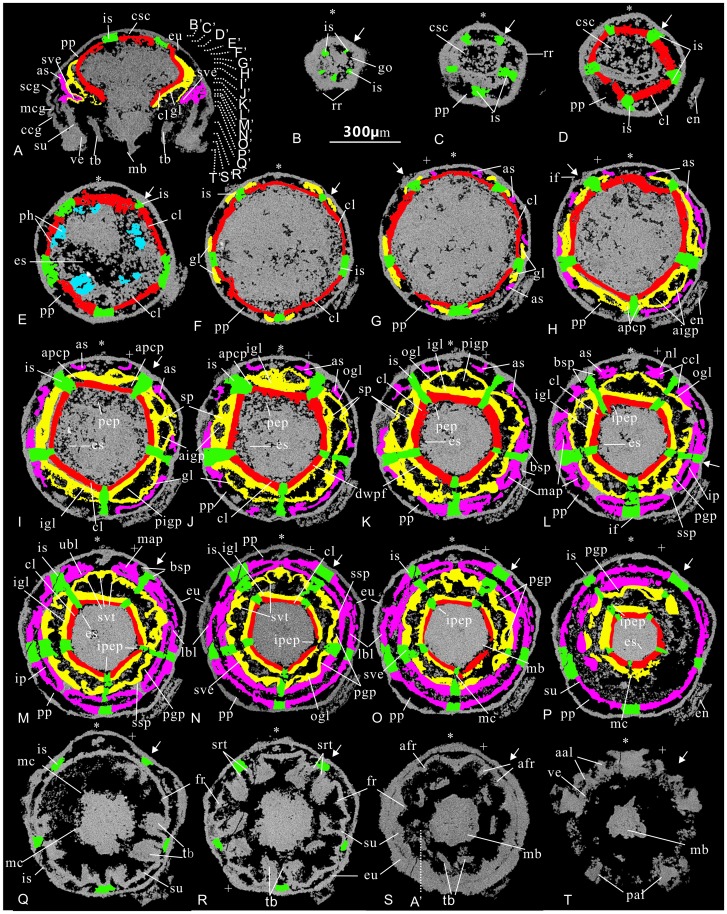
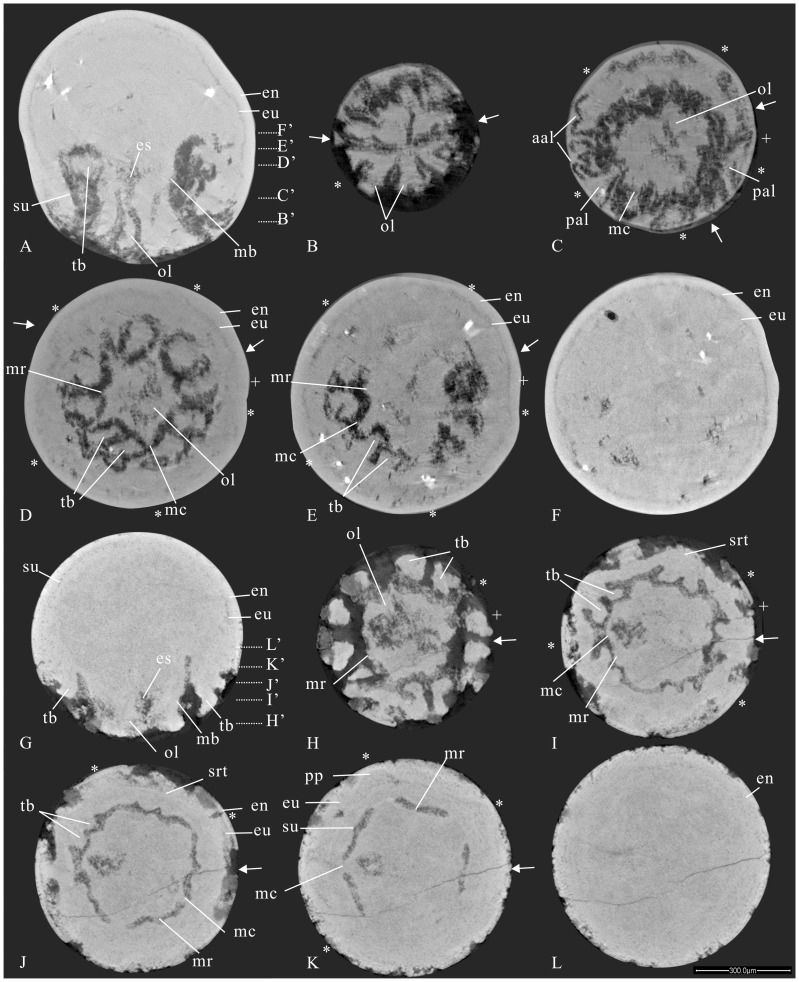
Microscopic fossils were recovered from a phosphatic limestone in the Lower Cambrian Kuanchuanpu Formation of South China using traditional acetic-acid maceration. Seven of the pre-hatched pentamerous cubozoan embryos, each of which bears five pairs of subumbrellar tentacle buds, were analyzed in detail through computed microtomography (Micro-CT) and scanning electron microscopy (SEM) without coating.
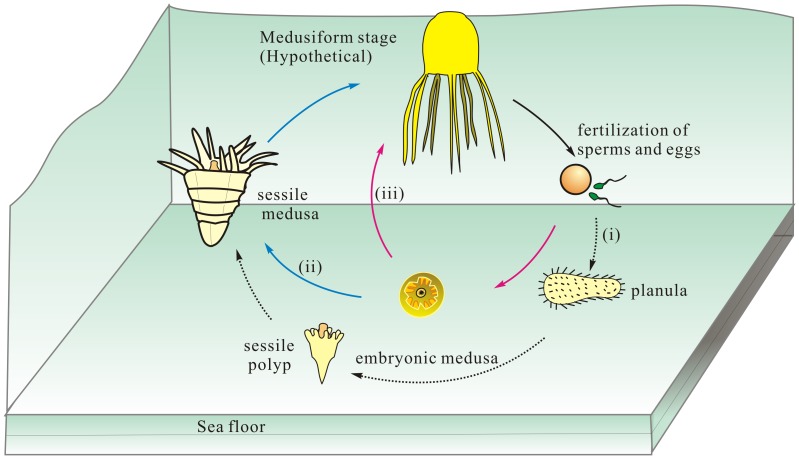
The figured microscopic fossils are unequivocal pre-hatching embryos based on their spherical fertilization envelope and the enclosed soft-tissue that has preserved key anatomical features arranged in perfect pentaradial symmetry, allowing detailed comparison with modern cnidarians, especially medusozoans. A combination of features, such as the claustrum, gonad-lamella, suspensorium and velarium suspended by the frenula, occur exclusively in the gastrovascular system of extant cubozoans, indicating a cubozoan affinity for these fossils. Additionally, the interior anatomy of these embryonic cubozoan fossils unprecedentedly exhibits the development of many new septum-derived lamellae and well-partitioned gastric pockets unknown in living cubozoans, implying that ancestral cubozoans had already evolved highly specialized structures displaying unexpected complexity at the dawn of the Cambrian. The well-developed endodermic lamellae and gastric pockets developed in the late embryonic stages of these cubozoan fossils are comparable with extant pelagic juvenile cubomedusae rather than sessile cubopolyps, whcih indicates a direct development in these fossil taxa, lacking characteristic stages of a typical cnidarian metagenesis such as planktonic planula and sessile polyps.
现存的立方水母是贪婪的捕食者,其特征为方形身体、均匀分布的四对伸展的触手和发达的眼睛。从中生代寒武纪的犹他州马朱姆组和著名的石炭纪伊利诺伊州马宗溪组中已知有一些立方水母化石。此前,早寒武世没有公认的立方水母化石;到那时,可能所有现存海洋门的代表,尤其是那些基础动物,都应该已经进化了。
在中国南方早寒武纪关川铺组的磷质灰岩中,使用传统的醋酸酸浸法回收了微小化石。对其中的七个未孵化的五倍体立方水母胚胎进行了详细分析,每个胚胎都有五对伞状触手芽,它们在未涂层的情况下通过计算机微断层扫描(Micro-CT)和扫描电子显微镜(SEM)进行了分析。
这些有图的微小化石是明确的孵化前胚胎,基于它们的球形受精囊和包含的软组织,软组织保留了排列在完美五辐射对称中的关键解剖特征,允许与现代腔肠动物,特别是水母类进行详细比较。一些特征,如栅板、生殖板、悬垂器和由系带悬挂的帽状体,仅存在于现存立方水母的消化腔系统中,表明这些化石与立方水母有关。此外,这些胚胎立方水母化石的内部解剖结构前所未有地显示出许多新的隔膜衍生的板和未在现存立方水母中发现的分隔良好的胃袋的发育,这表明祖先立方水母已经进化出高度专业化的结构,在寒武纪早期表现出意想不到的复杂性。这些立方水母化石的晚期胚胎阶段发育良好的内胚层板和胃袋与现存的浮游性幼水母相比,与固着的立方水母息肉不同,这表明这些化石分类群直接发育,缺乏典型腔肠动物变态的特征阶段,如浮游性的浮浪幼虫和固着的息肉。