Department of Biotechnology Chemistry and Environmental Engineering, Aalborg University, A,C, Meyers Vænge 15, 2450 Copenhagen, SV, Denmark.
AMB Express. 2013 Aug 19;3(1):47. doi: 10.1186/2191-0855-3-47.
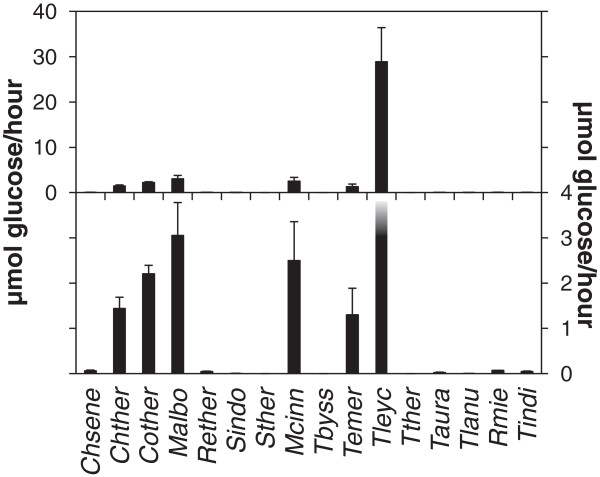
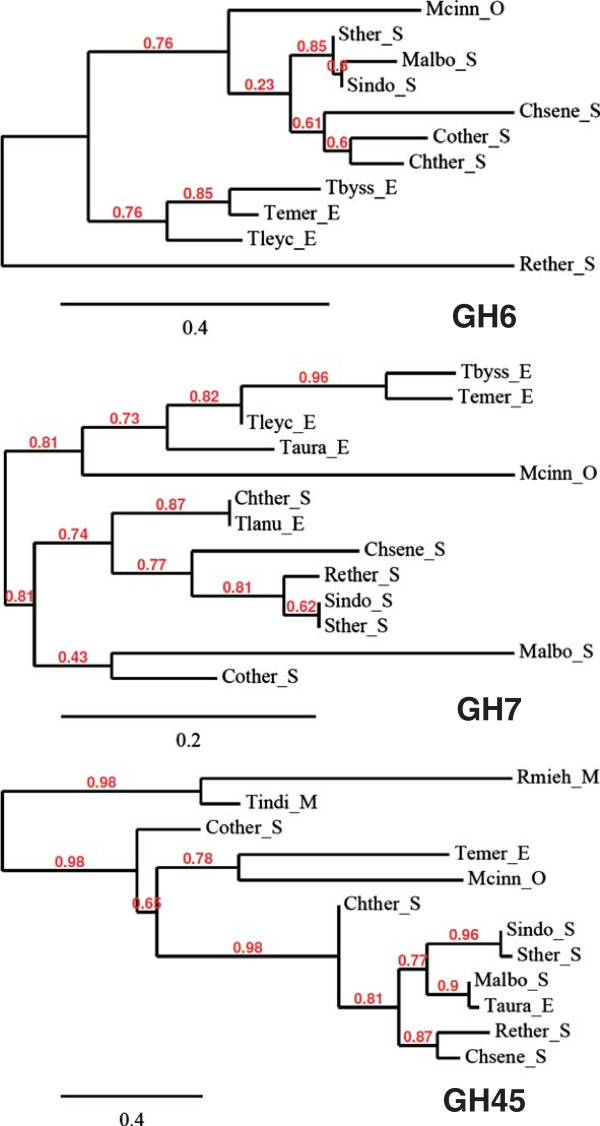
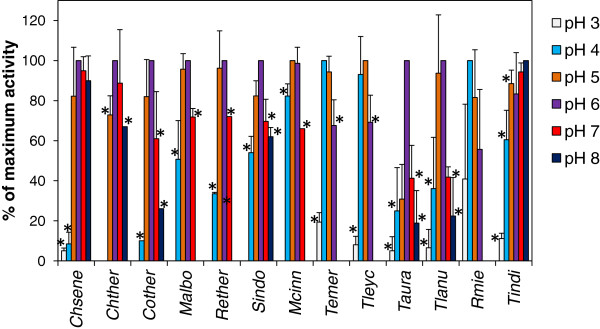
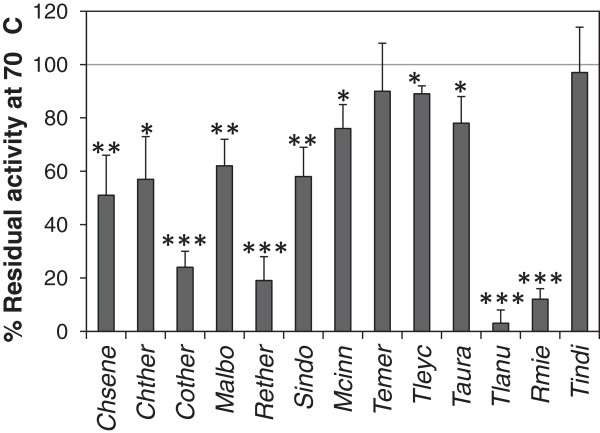
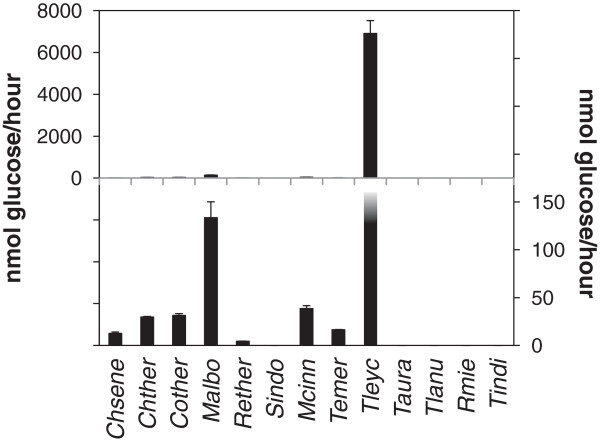
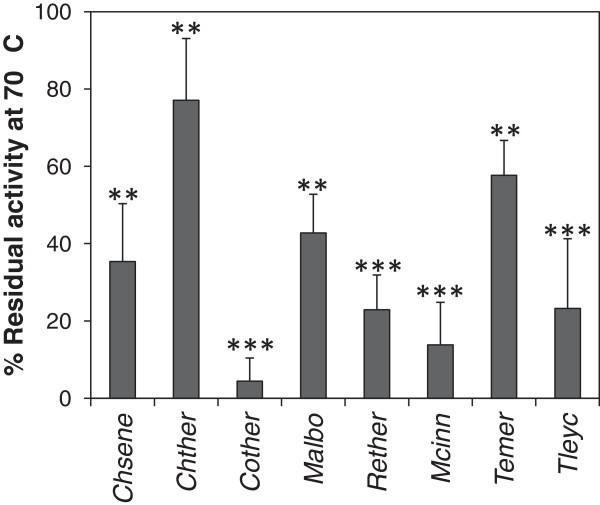
Elucidation of fungal biomass degradation is important for understanding the turnover of biological materials in nature and has important implications for industrial biomass conversion. In recent years there has been an increasing interest in elucidating the biological role of thermophilic fungi and in characterization of their industrially useful enzymes. In the present study we investigated the cellulolytic potential of 16 thermophilic fungi from the three ascomycete orders Sordariales, Eurotiales and Onygenales and from the zygomycete order Mucorales thus covering all fungal orders that include thermophiles. Thermophilic fungi are the only described eukaryotes that can grow at temperatures above 45°C. All 16 fungi were able to grow on crystalline cellulose but their secreted enzymes showed widely different cellulolytic activities, pH optima and thermostabilities. Interestingly, in contrast to previous reports, we found that some fungi such as Melanocarpus albomyces readily grew on crystalline cellulose and produced cellulases. These results indicate that there are large differences in the cellulolytic potential of different isolates of the same species. Furthermore, all the selected species were able to degrade cellulose but the differences in cellulolytic potential and thermostability of the secretome did not correlate to the taxonomic position. PCR amplification and sequencing of 22 cellulase genes from the fungi showed that the level of thermostability of the cellulose-degrading activity could not be inferred from the phylogenetic relationship of the cellulases.
阐明真菌生物量的降解对于理解自然界中生物物质的转化具有重要意义,并且对工业生物质转化具有重要意义。近年来,人们越来越关注阐明嗜热真菌的生物学作用以及表征其在工业上有用的酶。在本研究中,我们调查了来自子囊菌门的 Sordariales、Eurotiales 和 Onygenales 三个目以及接合菌门的 Mucorales 目 16 种嗜热真菌的纤维素分解潜力,从而涵盖了所有包含嗜热菌的真菌目。嗜热真菌是唯一已知能够在 45°C 以上温度下生长的真核生物。所有 16 种真菌都能够在结晶纤维素上生长,但它们分泌的酶显示出广泛不同的纤维素酶活性、最适 pH 值和热稳定性。有趣的是,与以前的报道相反,我们发现一些真菌,如 Melanocarpus albomyces,很容易在结晶纤维素上生长并产生纤维素酶。这些结果表明,同一物种的不同分离株的纤维素分解潜力存在很大差异。此外,所有选定的物种都能够降解纤维素,但分泌的酶的纤维素分解潜力和热稳定性差异与分类地位无关。从真菌中扩增和测序的 22 个纤维素酶基因表明,纤维素降解活性的耐热性水平不能从纤维素酶的系统发育关系推断出来。