Sowmya K, Sudheendra Us, Khan Samar, Nagpal Neelu, Prathamesh Sj
Department of Oral and Maxillofacial Pathology, People's College of Dental Sciences and Research Centre, Bhopal (MP), India.
J Forensic Dent Sci. 2013 Jan;5(1):42-6. doi: 10.4103/0975-1475.114560.
Acid immersion of victim's body is one of the methods employed to subvert identification of the victim, and hence of the perpetrator. Being hardest and chemically the most stable tissue in the body, teeth can be an important forensic investigative medium in both living and nonliving populations. Teeth are also good reservoirs of both cellular and mitochondrial DNA; however, the quality and quantity of DNA obtained varies according to the environment the tooth has been subjected to. DNA extraction from acid-treated teeth has seldom been reported.
The objectives of the present study were to assess the morphological changes along with DNA recovery from acid-immersed teeth.
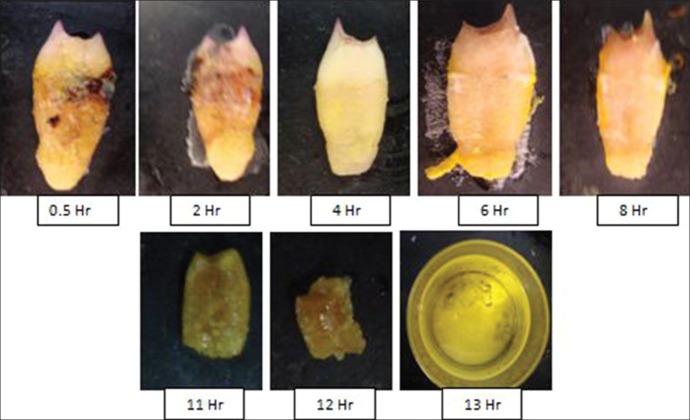
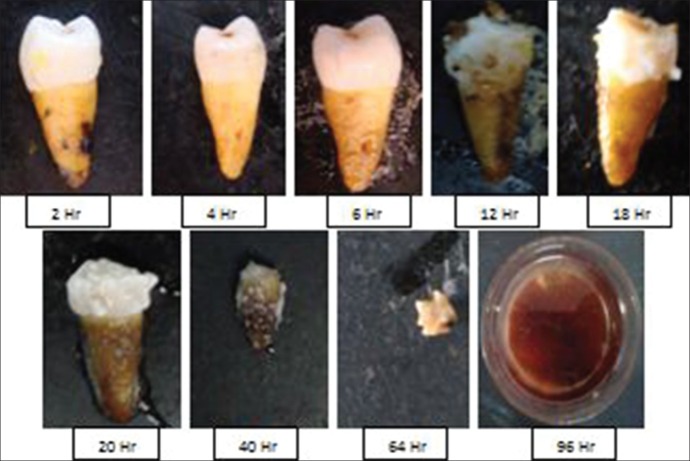
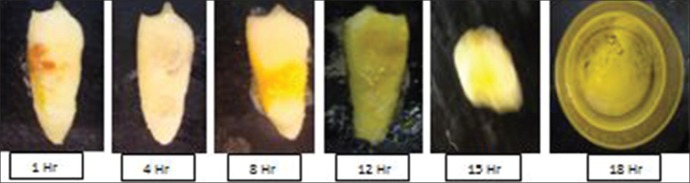
Concentrated hydrochloric acid, nitric acid, and sulfuric acid were employed for tooth decalcification. DNA was extracted on an hourly basis using phenol-chloroform method. Quantification of extracted DNA was done using a spectrophotometer.
Results showed that hydrochloric acid had more destructive capacity compared to other acids.
Sufficient quantity of DNA was obtainable till the first 2 hours of acid immersion and there was an inverse proportional relation between mean absorbance ratio and quantity of obtained DNA on an hourly basis.
对受害者尸体进行酸浸是破坏受害者身份识别从而破坏犯罪者身份识别的方法之一。牙齿是人体中最坚硬且化学性质最稳定的组织,在活体和非活体人群中都可以作为重要的法医调查媒介。牙齿也是细胞DNA和线粒体DNA的良好储存库;然而,所获得的DNA的质量和数量会因牙齿所处的环境而有所不同。从经酸处理的牙齿中提取DNA的报道很少。
本研究的目的是评估酸浸牙齿的形态变化以及DNA的回收情况。
使用浓盐酸、硝酸和硫酸进行牙齿脱钙。每小时使用酚-氯仿法提取DNA。使用分光光度计对提取的DNA进行定量。
结果表明,与其他酸相比,盐酸具有更强的破坏能力。
在酸浸的前2小时内可获得足够数量的DNA,平均吸光度比值与每小时获得的DNA数量之间呈反比关系。