University of Bonn Medical School, Institute of Pathology, Department of Developmental Pathology, Bonn, Germany.
PLoS One. 2013 Aug 13;8(8):e71113. doi: 10.1371/journal.pone.0071113. eCollection 2013.
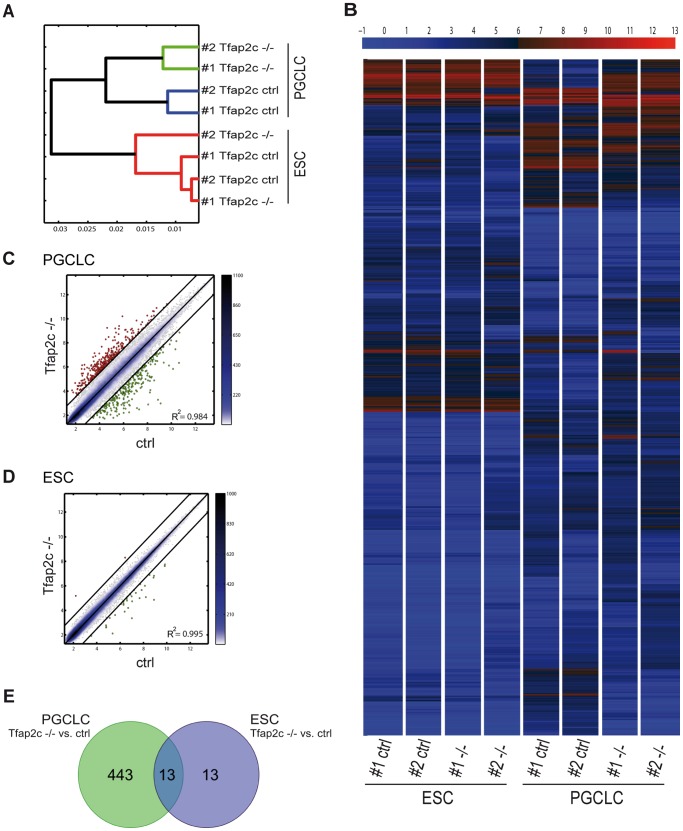
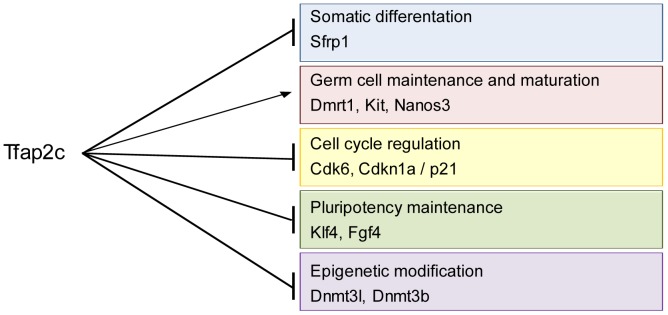
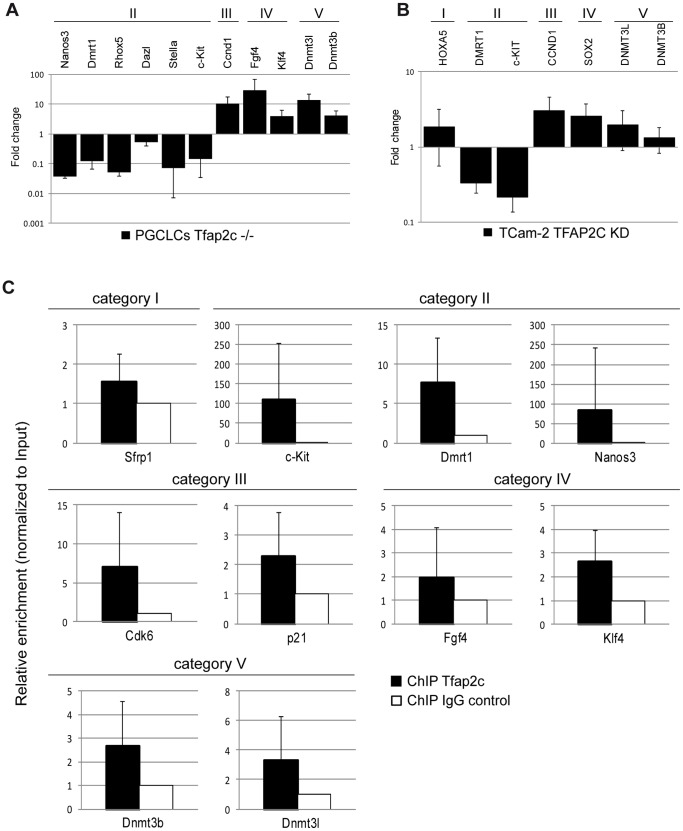
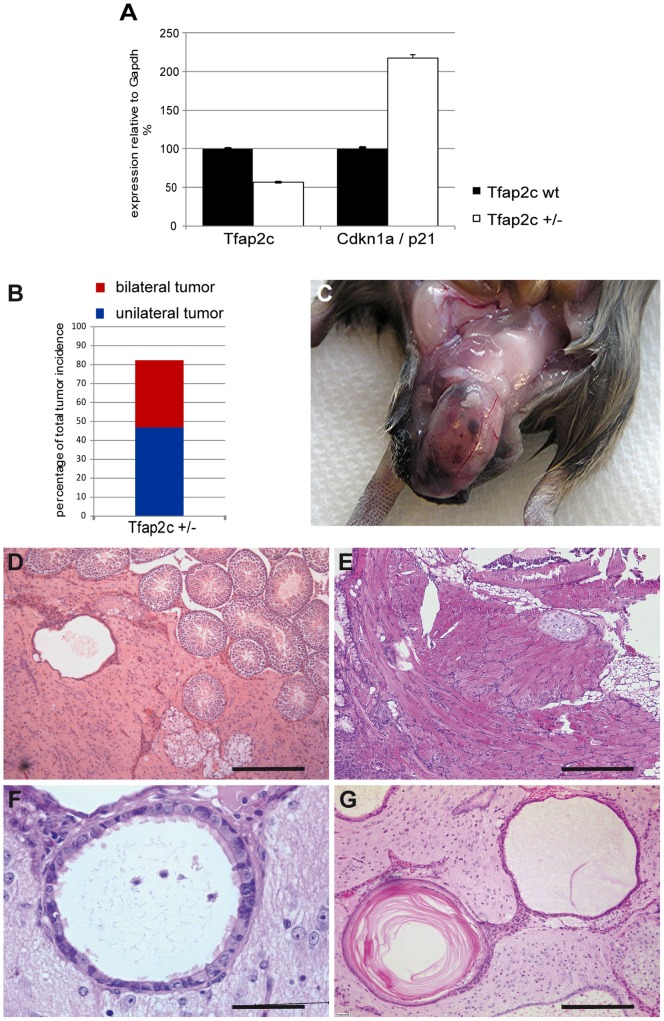
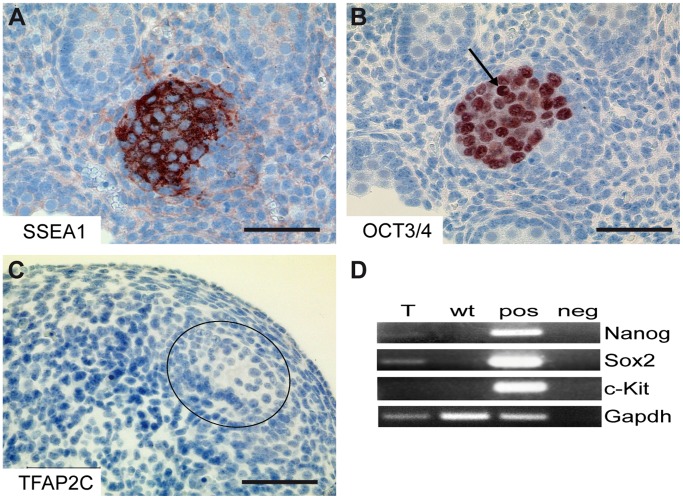
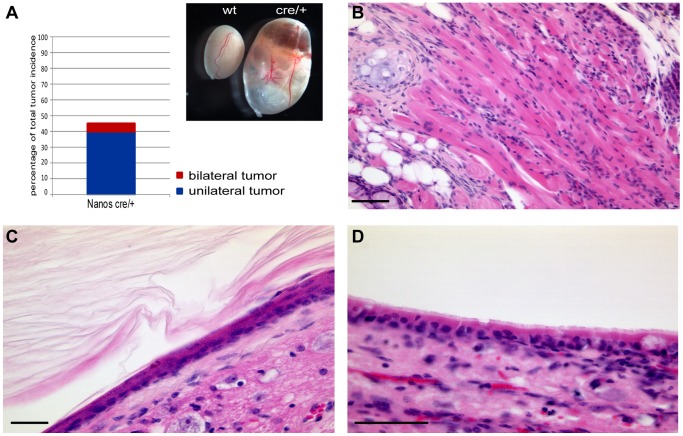
Maintenance and maturation of primordial germ cells is controlled by complex genetic and epigenetic cascades, and disturbances in this network lead to either infertility or malignant aberration. Transcription factor TFAP2C has been described to be essential for primordial germ cell maintenance and to be upregulated in several human germ cell cancers. Using global gene expression profiling, we identified genes deregulated upon loss of Tfap2c in embryonic stem cells and primordial germ cell-like cells. We show that loss of Tfap2c affects many aspects of the genetic network regulating germ cell biology, such as downregulation of maturation markers and induction of markers indicative for somatic differentiation, cell cycle, epigenetic remodeling and pluripotency. Chromatin-immunoprecipitation analyses demonstrated binding of TFAP2C to regulatory regions of deregulated genes (Sfrp1, Dmrt1, Nanos3, c-Kit, Cdk6, Cdkn1a, Fgf4, Klf4, Dnmt3b and Dnmt3l) suggesting that these genes are direct transcriptional targets of TFAP2C in primordial germ cells. Since Tfap2c deficient primordial germ cell-like cells display cancer related deregulations in epigenetic remodeling, cell cycle and pluripotency control, the Tfap2c-knockout allele was bred onto 129S2/Sv genetic background. There, mice heterozygous for Tfap2c develop with high incidence germ cell cancer resembling human pediatric germ cell tumors. Precursor lesions can be observed as early as E16.5 in developing testes displaying persisting expression of pluripotency markers. We further demonstrate that mice with a heterozygous deletion of the TFAP2C target gene Nanos3 are also prone to develop teratomas. These data highlight TFAP2C as a critical and dose-sensitive regulator of germ cell fate.
原始生殖细胞的维持和成熟受复杂的遗传和表观遗传级联控制,该网络的紊乱会导致不孕或恶性异常。转录因子 TFAP2C 已被描述为原始生殖细胞维持所必需的,并且在几种人类生殖细胞癌中上调。使用全基因表达谱分析,我们确定了在胚胎干细胞和原始生殖细胞样细胞中 TFAP2C 缺失时下调的基因。我们表明,TFAP2C 的缺失会影响调节生殖细胞生物学的遗传网络的许多方面,例如成熟标志物的下调和体细胞分化、细胞周期、表观遗传重塑和多能性标志物的诱导。染色质免疫沉淀分析表明 TFAP2C 与下调基因(Sfrp1、Dmrt1、Nanos3、c-Kit、Cdk6、Cdkn1a、Fgf4、Klf4、Dnmt3b 和 Dnmt3l)的调节区域结合,表明这些基因是原始生殖细胞中 TFAP2C 的直接转录靶标。由于 Tfap2c 缺陷的原始生殖细胞样细胞在表观遗传重塑、细胞周期和多能性控制方面表现出与癌症相关的失调,因此将 Tfap2c 敲除等位基因导入 129S2/Sv 遗传背景。在那里,Tfap2c 杂合缺失的小鼠以高发生率发生类似于人类小儿生殖细胞瘤的生殖细胞癌。可以在 E16.5 左右的发育睾丸中观察到前体病变,这些睾丸显示出持续表达多能性标志物。我们进一步证明,TFAP2C 靶基因 Nanos3 杂合缺失的小鼠也容易发生畸胎瘤。这些数据强调了 TFAP2C 作为生殖细胞命运的关键和剂量敏感调节剂的作用。