Cluster for Craniofacial Development and Regeneration Research, Institute of Oral Biosciences and School of Dentistry, Chonbuk National University, Jeonju, South Korea.
PLoS One. 2013 Aug 13;8(8):e71641. doi: 10.1371/journal.pone.0071641. eCollection 2013.
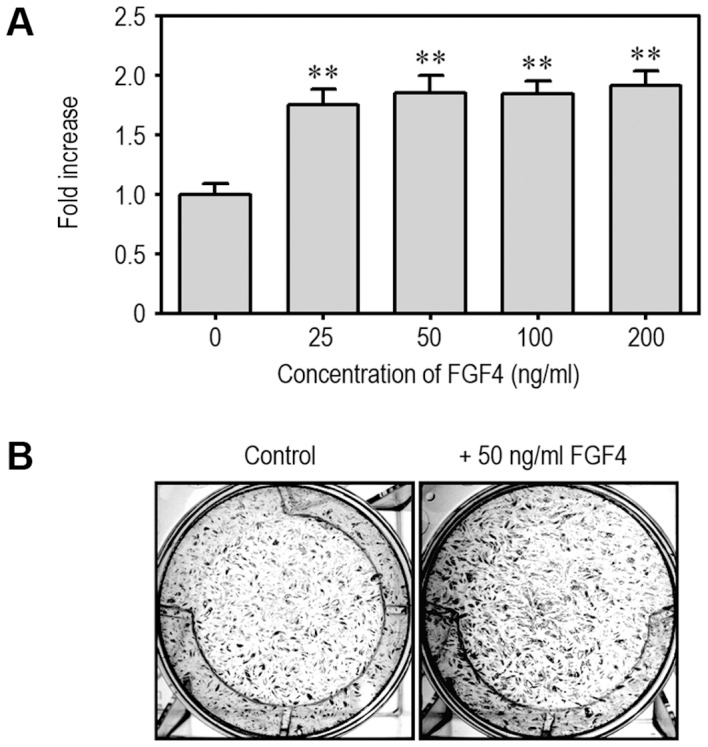
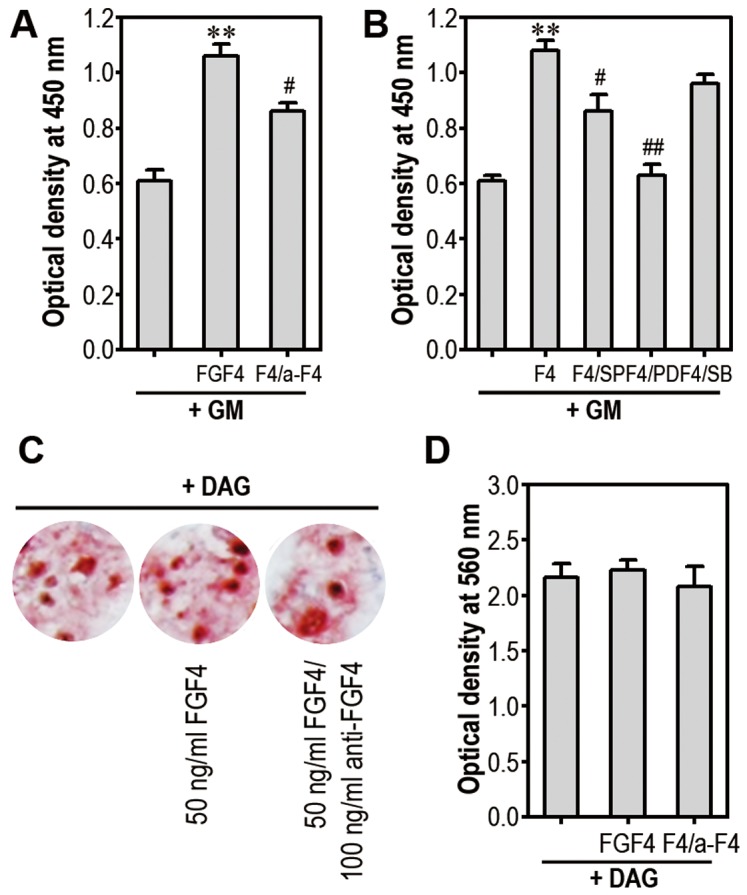
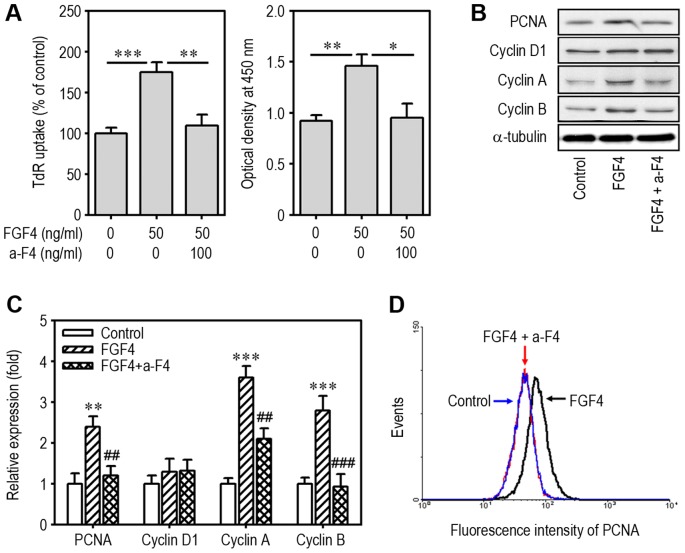
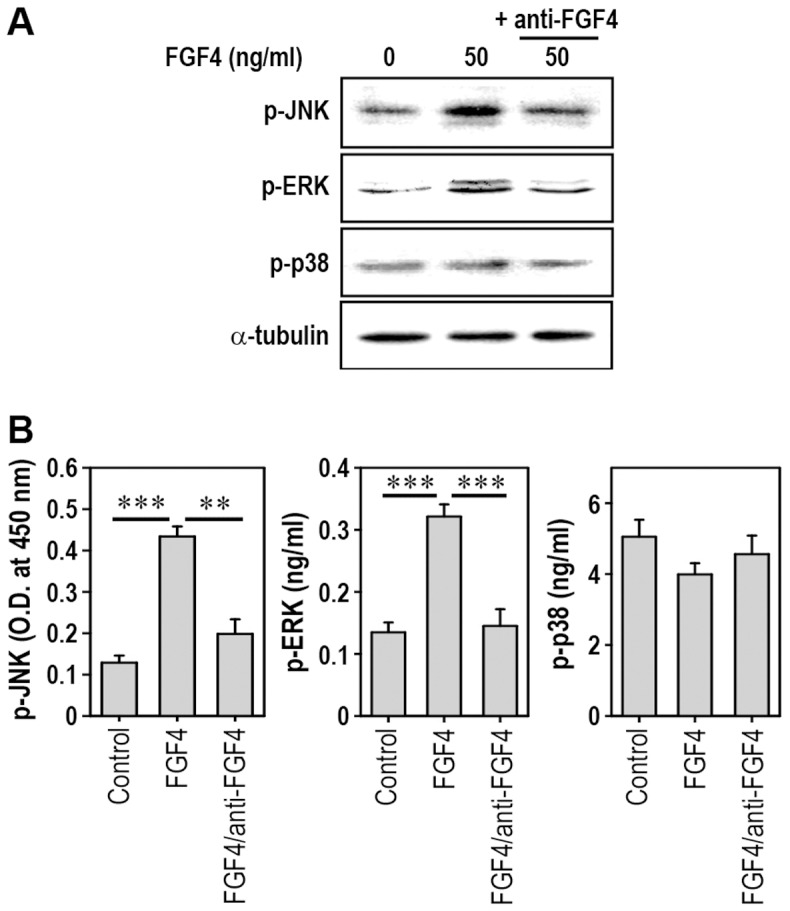
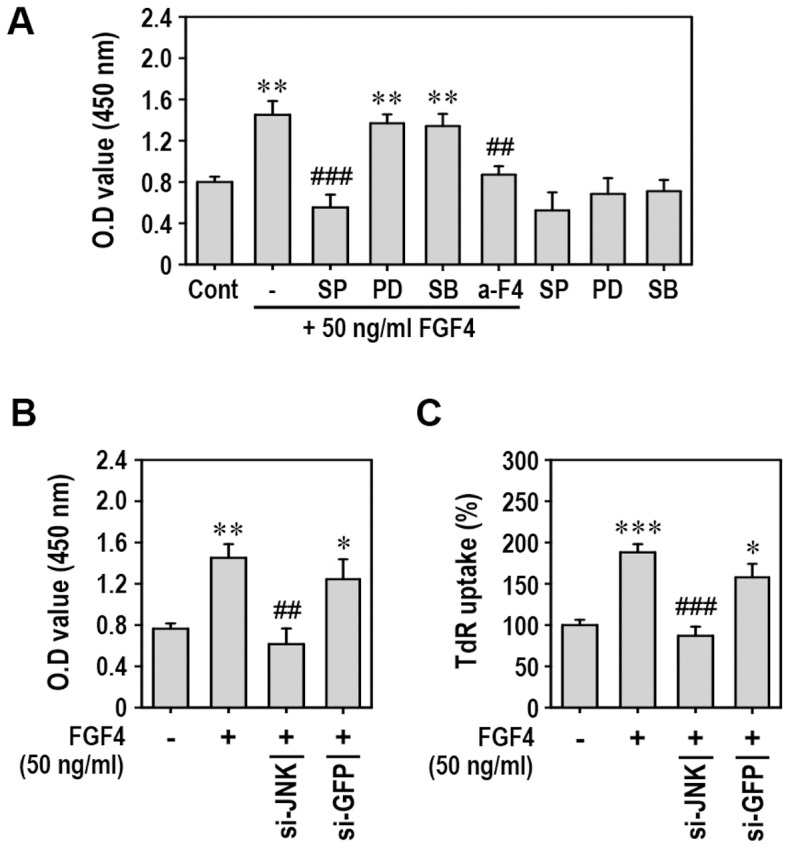
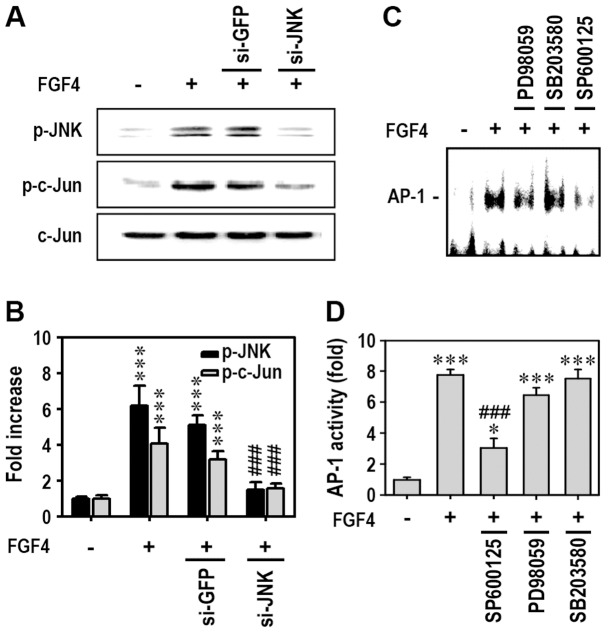
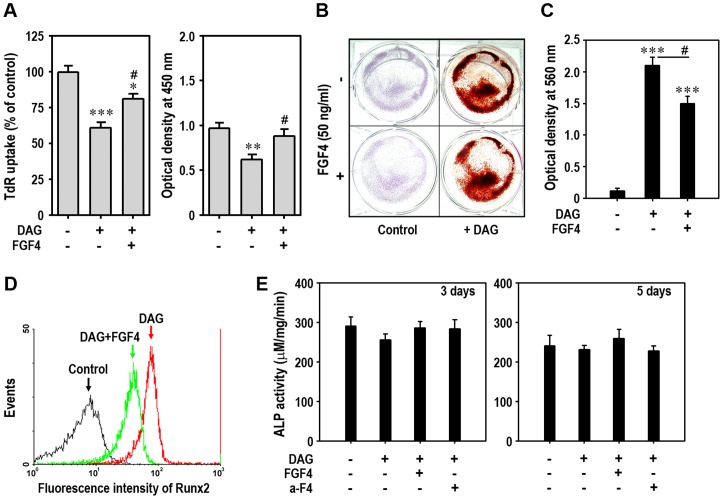
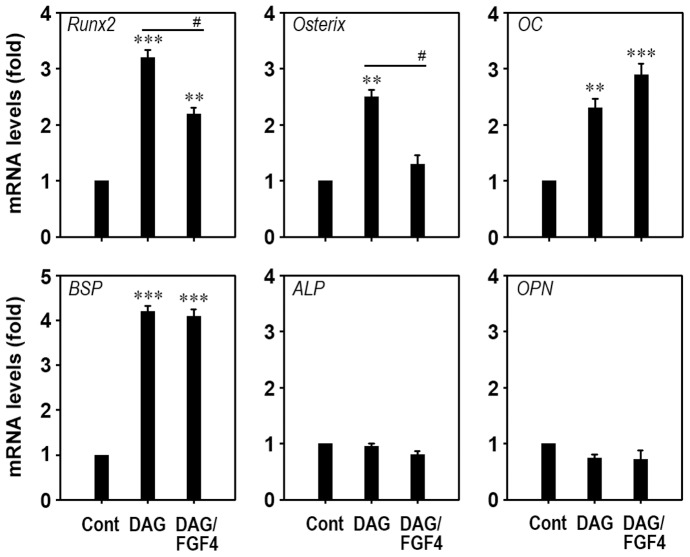
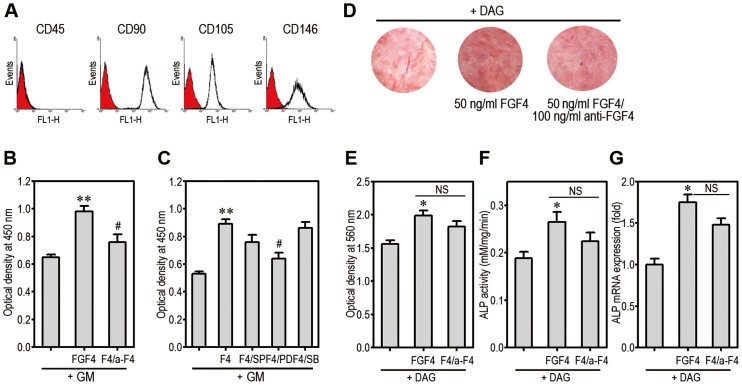
Fibroblast growth factor-4 (FGF4) is expressed in embryonic stages and in adult tissues, where it plays critical roles in modulating multiple cellular functions. However, the exact roles of FGF4 on proliferation and differentiation of embryonic stem cells (ESCs) are not completely understood. Exogenous addition of FGF4 stimulated proliferation of mouse ESCs (mESCs), as proven by the increases in DNA synthesis and cell cycle regulatory protein induction. These increases were almost completely inhibited by pre-treating cells with anti-FGF4 antibody. FGF4 also activated c-Jun N-terminal kinase (JNK) and extracellular-signal regulated kinase (ERK) signaling, but not p38 kinase. Blockage of JNK signaling by SP600125 or by transfection with its specific siRNA significantly inhibited FGF4-stimulated cell proliferation through the suppression of c-Jun induction and activator protein-1 (AP-1) activity. However, ERK or p38 kinase inhibitor did not affect FGF4-stimulated proliferation in mESCs. FGF4 suppressed osteogenic differentiation of mESCs by inhibiting expression of transcription factors involved in bone formation. Further, exogenous FGF4 addition stimulated proliferation of human periodontal ligament stem cells (hPDLSCs) and bone marrow mesenchymal stem cells (BMMSCs) via activation of ERK signaling. FGF4 also augmented mineralization of hPDLSCs, but not of BMMSCs. Collectively, it is suggested that FGF4 triggers proliferation of stem cells by activating MAPK-mediated signaling, while it affects differently osteogenic differentiation according to the origins of stem cells.
成纤维细胞生长因子 4(FGF4)在胚胎期和成年组织中表达,在调节多种细胞功能中发挥关键作用。然而,FGF4 对胚胎干细胞(ESCs)增殖和分化的确切作用尚不完全清楚。外源性添加 FGF4 刺激小鼠 ESCs(mESCs)增殖,这可通过 DNA 合成和细胞周期调节蛋白诱导的增加来证明。用抗 FGF4 抗体预处理细胞几乎完全抑制了这些增加。FGF4 还激活了 c-Jun N 末端激酶(JNK)和细胞外信号调节激酶(ERK)信号通路,但不激活 p38 激酶。用 SP600125 阻断 JNK 信号通路或用其特异性 siRNA 转染显著抑制了 FGF4 刺激的细胞增殖,通过抑制 c-Jun 诱导和激活蛋白-1(AP-1)活性。然而,ERK 或 p38 激酶抑制剂并不影响 mESCs 中 FGF4 刺激的增殖。FGF4 通过抑制参与骨形成的转录因子的表达来抑制 mESCs 的成骨分化。此外,外源性 FGF4 通过激活 ERK 信号通路刺激人牙周韧带干细胞(hPDLSCs)和骨髓间充质干细胞(BMMSCs)的增殖。FGF4 还增强了 hPDLSCs 的矿化,但不能增强 BMMSCs 的矿化。总的来说,这表明 FGF4 通过激活 MAPK 介导的信号转导触发干细胞增殖,而根据干细胞的来源,它对成骨分化的影响不同。