Blaber Elizabeth A, Finkelstein Hayley, Dvorochkin Natalya, Sato Kevin Y, Yousuf Rukhsana, Burns Brendan P, Globus Ruth K, Almeida Eduardo A C
1 Space Biosciences Division, NASA Ames Research Center , Moffett Field, California.
2 School of Biotechnology and Biomolecular Sciences, University of New South Wales , Sydney, Australia .
Stem Cells Dev. 2015 Nov 15;24(22):2605-21. doi: 10.1089/scd.2015.0218. Epub 2015 Oct 22.
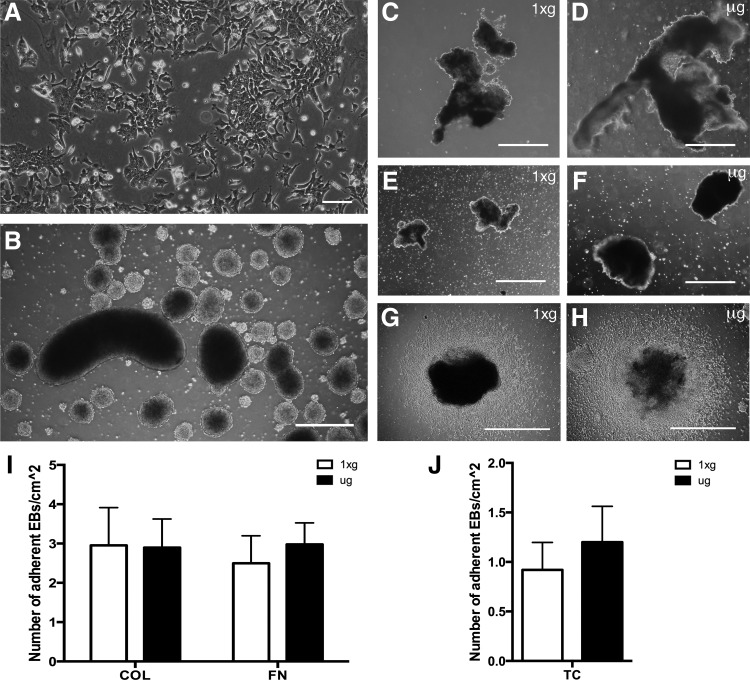
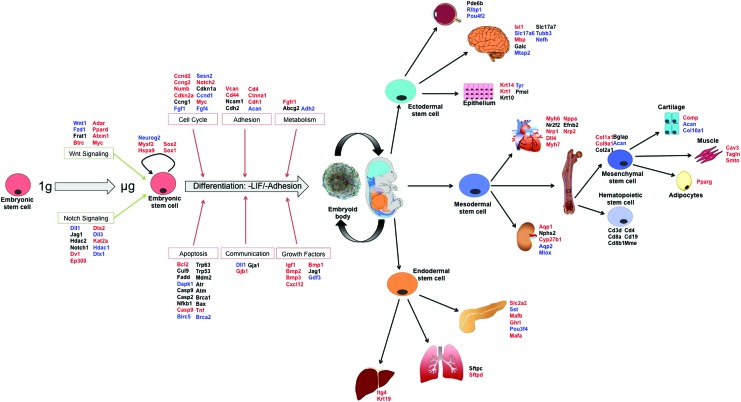
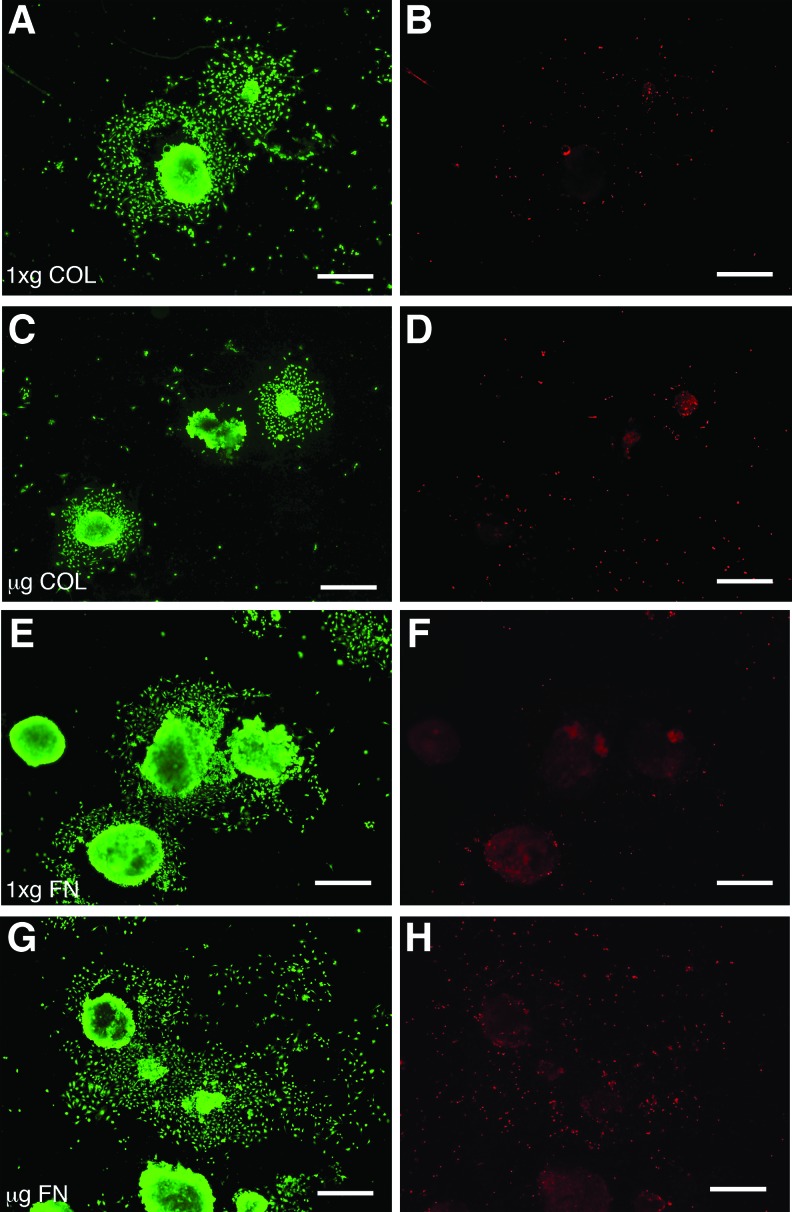
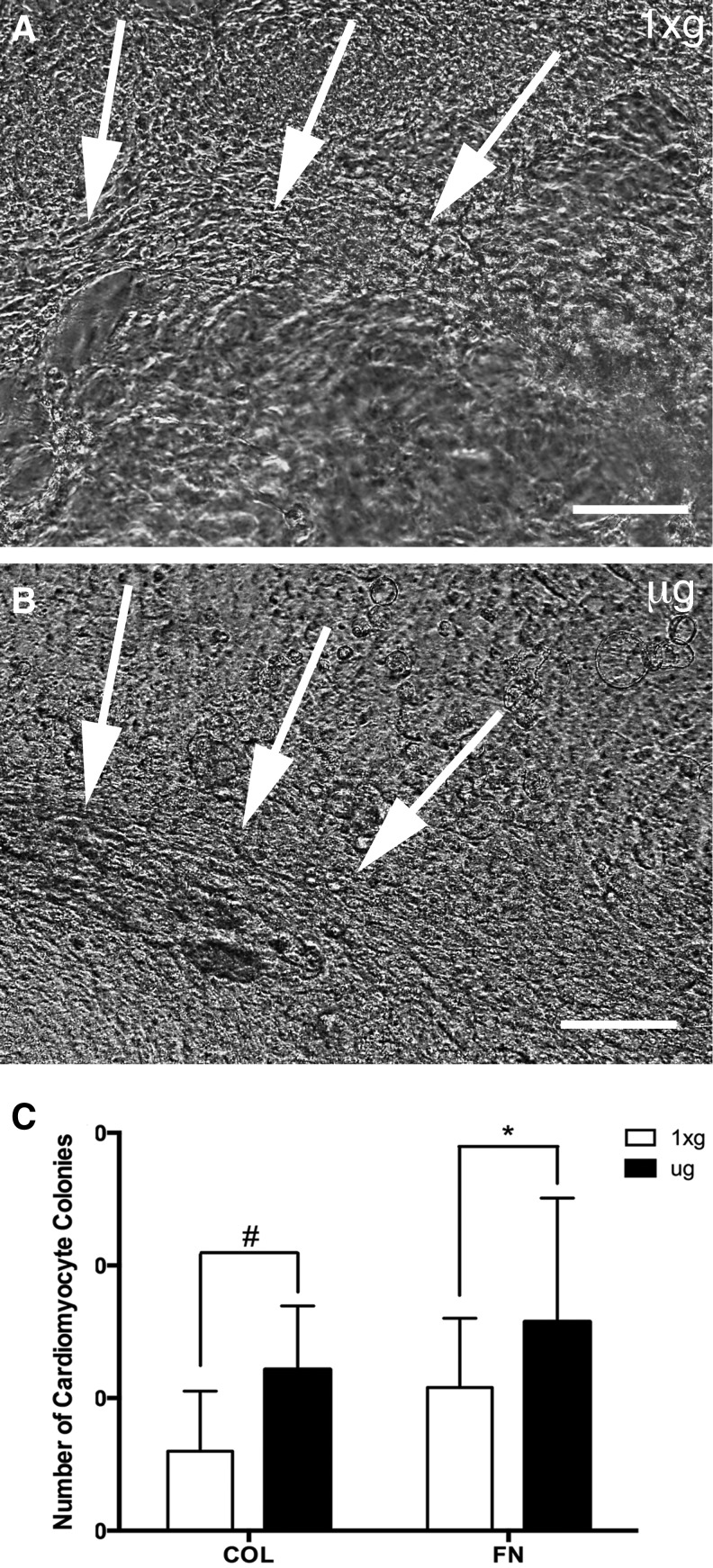
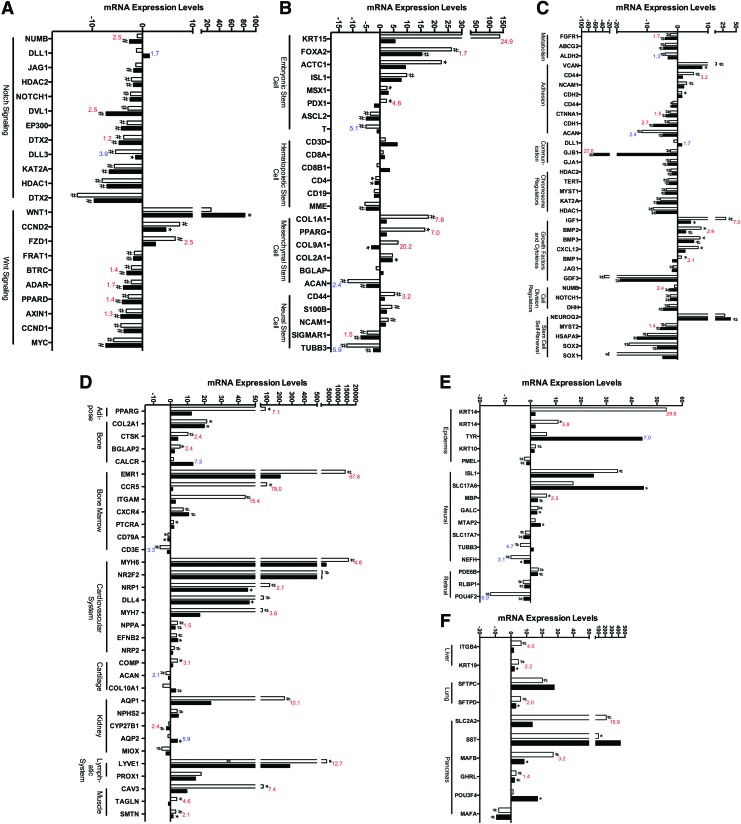
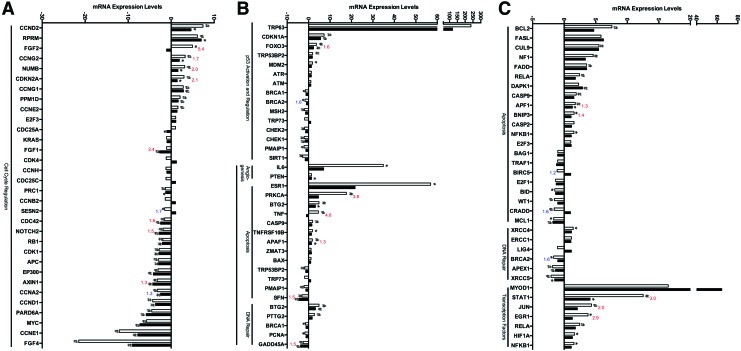
Mechanical unloading in microgravity is thought to induce tissue degeneration by various mechanisms, including inhibition of regenerative stem cell differentiation. To address this hypothesis, we investigated the effects of microgravity on early lineage commitment of mouse embryonic stem cells (mESCs) using the embryoid body (EB) model of tissue differentiation. We found that exposure to microgravity for 15 days inhibits mESC differentiation and expression of terminal germ layer lineage markers in EBs. Additionally, microgravity-unloaded EBs retained stem cell self-renewal markers, suggesting that mechanical loading at Earth's gravity is required for normal differentiation of mESCs. Finally, cells recovered from microgravity-unloaded EBs and then cultured at Earth's gravity showed greater stemness, differentiating more readily into contractile cardiomyocyte colonies. These results indicate that mechanical unloading of stem cells in microgravity inhibits their differentiation and preserves stemness, possibly providing a cellular mechanistic basis for the inhibition of tissue regeneration in space and in disuse conditions on earth.
微重力环境下的机械卸载被认为会通过多种机制诱导组织退化,包括抑制再生干细胞分化。为了验证这一假设,我们使用组织分化的胚状体(EB)模型研究了微重力对小鼠胚胎干细胞(mESC)早期谱系定向的影响。我们发现,暴露于微重力环境15天会抑制mESC在EB中的分化以及终末胚层谱系标志物的表达。此外,未受微重力作用的EB保留了干细胞自我更新标志物,这表明地球重力下的机械加载是mESC正常分化所必需的。最后,从未受微重力作用的EB中回收的细胞在地球重力下培养时表现出更强的干性,更容易分化为收缩性心肌细胞集落。这些结果表明,微重力环境下干细胞的机械卸载会抑制其分化并维持干性,这可能为太空及地球上废用状态下组织再生的抑制提供细胞机制基础。