Department of Pharmacology and Toxicology; College of Pharmacy; University of Arizona; Tucson, AZ USA.
National Toxicology Program Laboratory; National Institute of Environmental Health Sciences; Research Triangle Park, NC USA.
Epigenetics. 2013 Oct;8(10):1080-8. doi: 10.4161/epi.25926. Epub 2013 Aug 6.
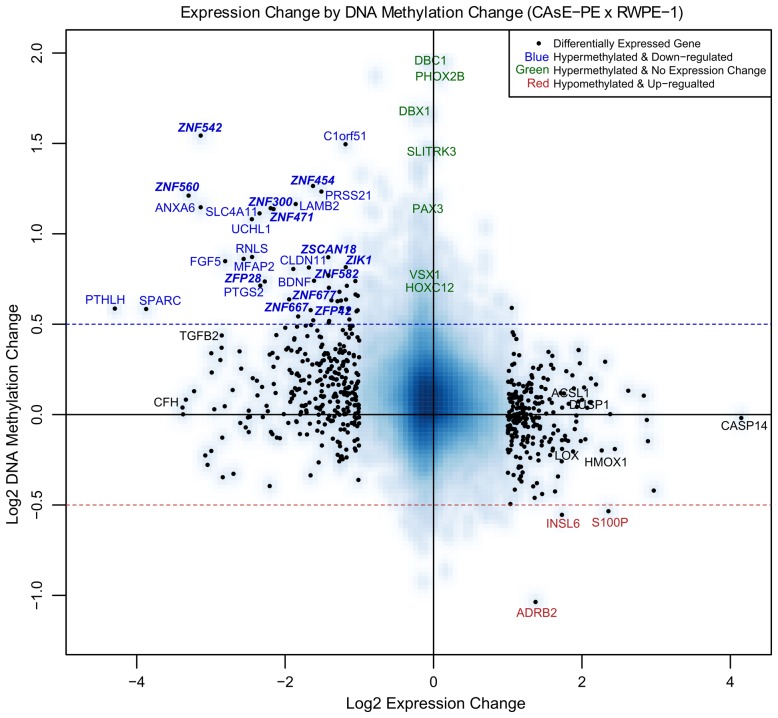
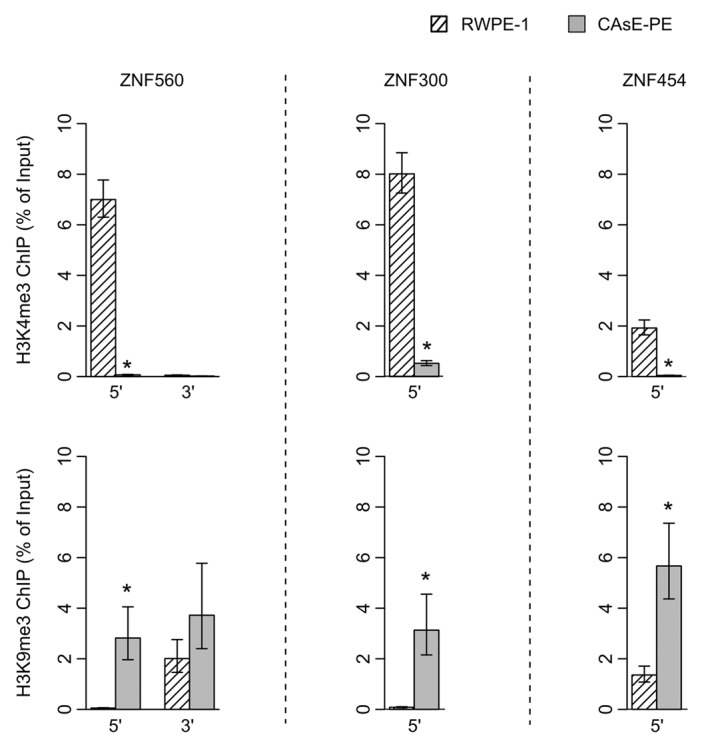
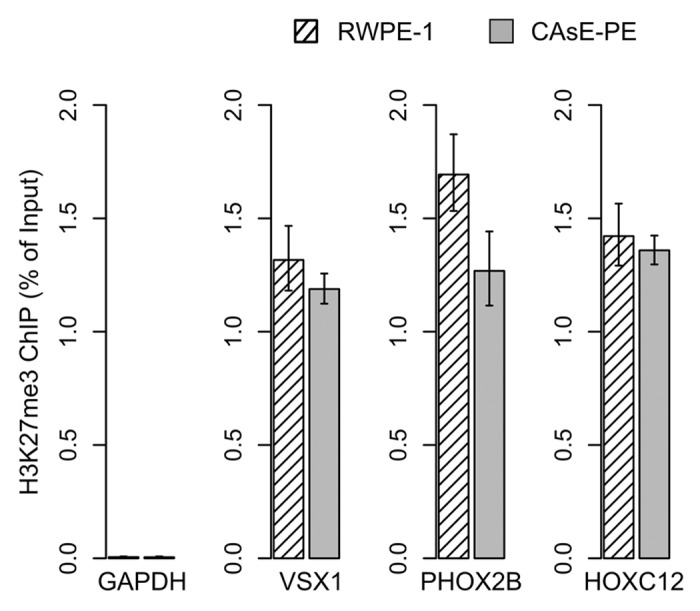
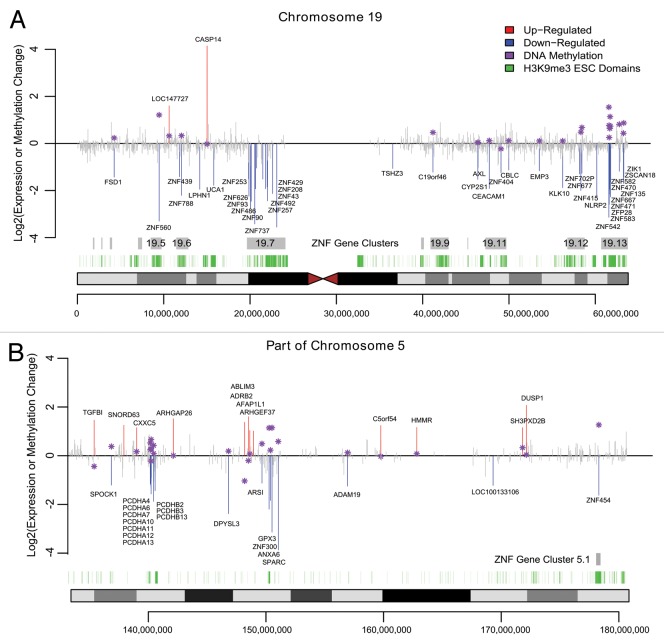
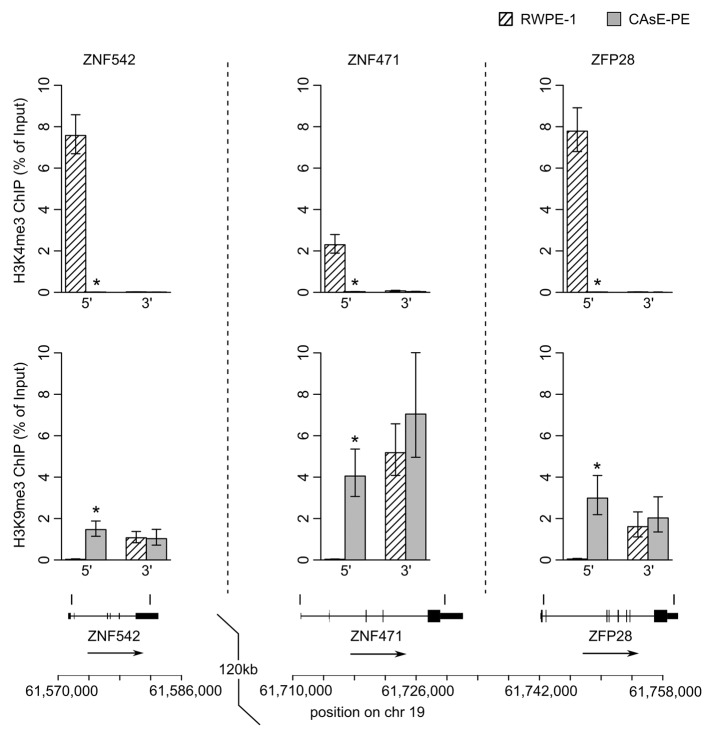
Genome-wide disruption of the epigenetic code is a hallmark of malignancy that encompasses many distinct, highly interactive modifications. Delineating the aberrant epigenome produced during toxicant-mediated malignant transformation will help identify the underlying epigenetic drivers of environmental toxicant-induced carcinogenesis. Gene promoter DNA methylation and gene expression profiling of arsenite-transformed prostate epithelial cells showed a negative correlation between gene expression changes and DNA methylation changes; however, less than 10% of the genes with increased promoter methylation were downregulated. Studies described herein confirm that a majority of the DNA hypermethylation events occur at H3K27me3 marked genes that were already transcriptionally repressed. In contrast to aberrant DNA methylation targeting H3K27me3 pre-marked silent genes, we found that actively expressed C2H2 zinc finger genes (ZNFs) marked with H3K9me3 on their 3' ends, were the favored targets of DNA methylation linked gene silencing. DNA methylation coupled, H3K9me3 mediated gene silencing of ZNF genes was widespread, occurring at individual ZNF genes on multiple chromosomes and across ZNF gene family clusters. At ZNF gene promoters, H3K9me3 and DNA hypermethylation replaced H3K4me3, resulting in a widespread downregulation of ZNF gene expression, which accounted for 8% of all the downregulated genes in the arsenical-transformed cells. In summary, these studies associate toxicant exposure with widespread silencing of ZNF genes by DNA hypermethylation-linked H3K9me3 spreading, further implicating epigenetic dysfunction as a driver of toxicant associated carcinogenesis.
基因组范围内的表观遗传密码破坏是恶性肿瘤的一个标志,包括许多不同的、高度交互的修饰。描述毒物介导的恶性转化过程中产生的异常表观基因组将有助于确定环境毒物诱导致癌作用的潜在表观遗传驱动因素。亚砷酸盐转化的前列腺上皮细胞的基因启动子 DNA 甲基化和基因表达谱分析显示,基因表达变化与 DNA 甲基化变化之间呈负相关;然而,只有不到 10%的基因启动子甲基化增加的基因被下调。本文所述的研究证实,大多数 DNA 高甲基化事件发生在 H3K27me3 标记的基因上,这些基因已经被转录抑制。与针对 H3K27me3 预先标记的沉默基因的异常 DNA 甲基化不同,我们发现,在其 3' 末端用 H3K9me3 标记的活跃表达的 C2H2 锌指基因 (ZNFs) 是与 DNA 甲基化相关的基因沉默的首选靶标。DNA 甲基化与 H3K9me3 介导的 ZNF 基因沉默广泛发生,发生在多个染色体上的单个 ZNF 基因和 ZNF 基因家族簇上。在 ZNF 基因启动子上,H3K9me3 和 DNA 高甲基化取代了 H3K4me3,导致 ZNF 基因表达的广泛下调,占砷转化细胞中所有下调基因的 8%。总之,这些研究将毒物暴露与 DNA 高甲基化相关的 H3K9me3 扩散引起的 ZNF 基因广泛沉默联系起来,进一步表明表观遗传功能障碍是毒物相关致癌作用的驱动因素。