Epicentre, Paris, France.
Int J Womens Health. 2013 Aug 13;5:495-9. doi: 10.2147/IJWH.S48179. eCollection 2013.
Despite considerable efforts to reduce the maternal mortality ratio, numerous pregnant women continue to die in many developing countries, including Nigeria. We conducted a study to determine the incidence and causes of maternal mortality over an 8-month period in a rural-based secondary health facility located in Jahun, northern Nigeria.
A retrospective observational study was performed in a 41-bed obstetric ward. From October 2010 to May 2011, demographic data, obstetric characteristics, and outcome were collected from all pregnant women admitted. The total number of live births during the study period was recorded in order to calculate the maternal mortality ratio.
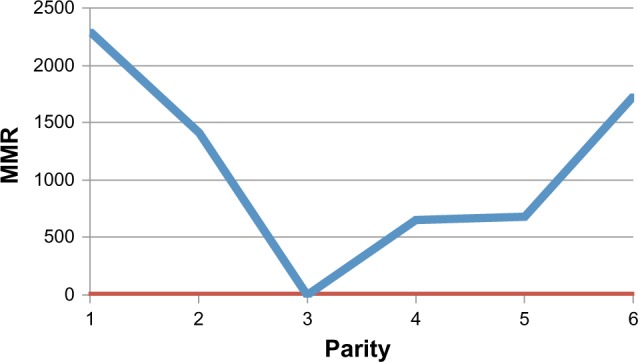
There were 2,177 deliveries and 39 maternal deaths during the study period, with a maternal mortality ratio of 1,791/100,000 live births. The most common causes of maternal mortality were hemorrhage (26%), puerperal sepsis (19%), and obstructed labor (5%). No significant difference (P = 0.07) in mean time to reach the hospital was noted between fatal cases (1.9 hours, 95% confidence interval [CI] 1.1-2.6) and nonfatal cases (1.4 hours, 95% CI 1.4-1.5). Two hundred and sixty-six women were admitted presenting with stillbirth. Maternal mortality was higher for unbooked patients than for booked patients (odds ratio 5.1, 95% CI 3.5-6.2, P < 0.0001). The neonatal mortality rate was calculated at 46/1,000 live births. The main primary causes of neonatal deaths were prematurity (44%) and birth asphyxia (22%).
Maternal and neonatal mortality remains unacceptably high in this setting. Reducing unbooked emergencies should be a priority with continuous programs including orthodox practices in order to meet the fifth Millennium Development Goal.
尽管为降低孕产妇死亡率付出了巨大努力,但在许多发展中国家,包括尼日利亚,仍有大量孕妇死亡。我们在尼日利亚北部的一个农村二级保健机构进行了一项研究,以确定在 8 个月期间的孕产妇死亡率及其原因。
采用回顾性观察研究,对一个 41 张床位的产科病房进行研究。从 2010 年 10 月至 2011 年 5 月,收集所有入院孕妇的人口统计学数据、产科特征和结局。记录研究期间的活产总数,以计算孕产妇死亡率。
研究期间共有 2177 例分娩和 39 例孕产妇死亡,孕产妇死亡率为 1791/100000 活产。孕产妇死亡的最常见原因是出血(26%)、产褥期败血症(19%)和产程梗阻(5%)。致命病例(1.9 小时,95%置信区间 [CI] 1.1-2.6)和非致命病例(1.4 小时,95% CI 1.4-1.5)到达医院的平均时间无显著差异(P=0.07)。266 例死胎孕妇入院。与预约患者相比,未预约患者的孕产妇死亡率更高(比值比 5.1,95% CI 3.5-6.2,P<0.0001)。新生儿死亡率为 46/1000 活产。新生儿死亡的主要主要原因是早产(44%)和出生窒息(22%)。
在这种情况下,孕产妇和新生儿死亡率仍然高得令人无法接受。减少未预约的紧急情况应成为优先事项,应持续开展包括正统做法在内的方案,以实现第五个千年发展目标。