Winkler Paige A, Ekenstedt Kari J, Occelli Laurence M, Frattaroli Anton V, Bartoe Joshua T, Venta Patrick J, Petersen-Jones Simon M
Department of Small Animal Clinical Sciences, College of Veterinary Medicine, Michigan State University, East Lansing, Michigan, United States of America.
PLoS One. 2013 Aug 19;8(8):e72229. doi: 10.1371/journal.pone.0072229. eCollection 2013.
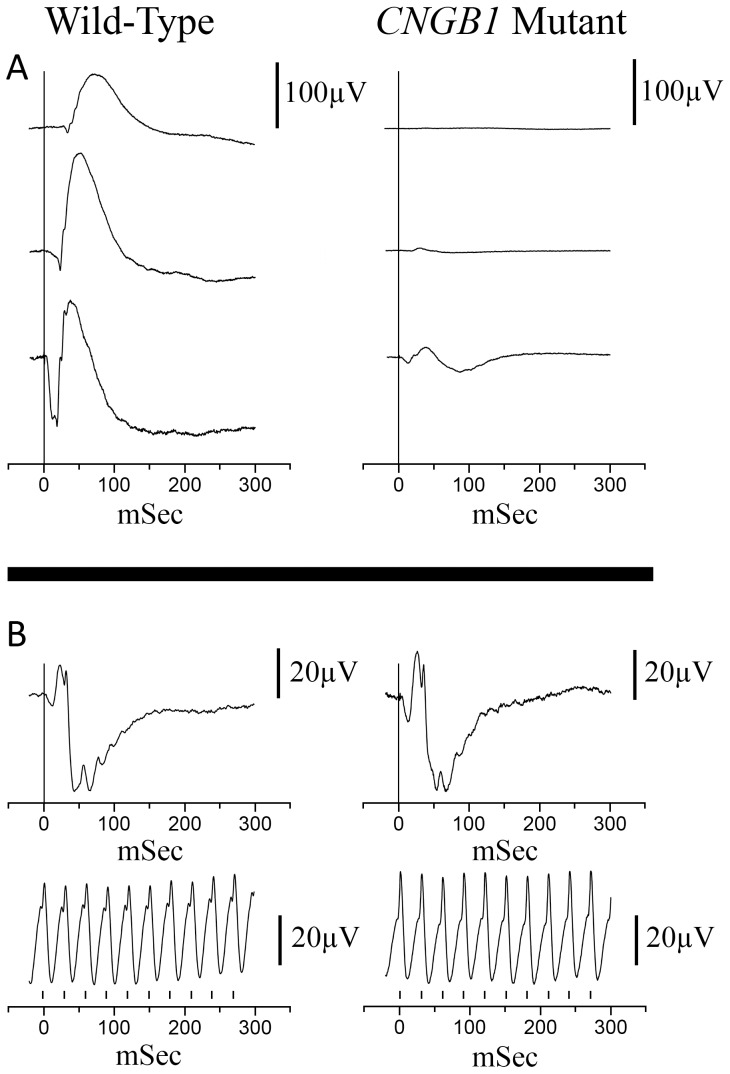
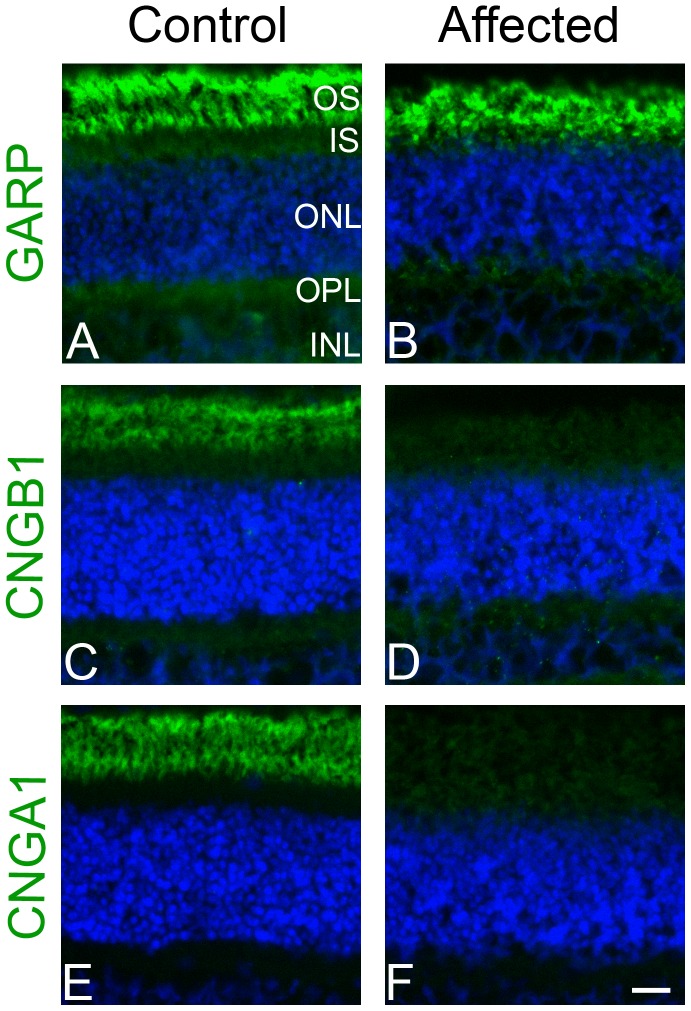
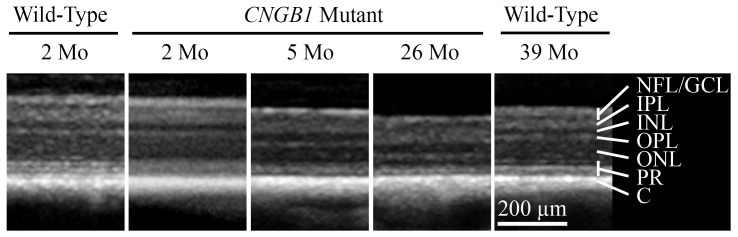
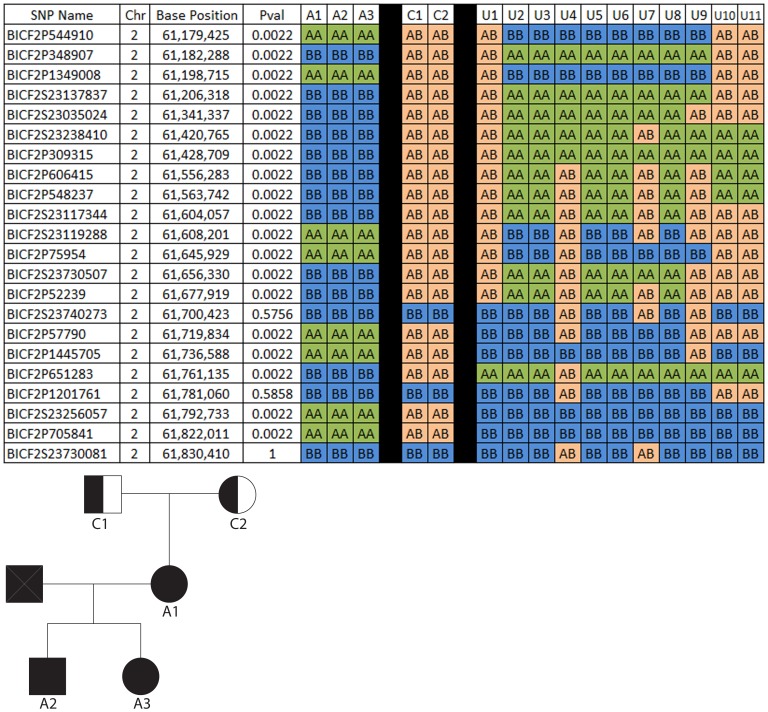
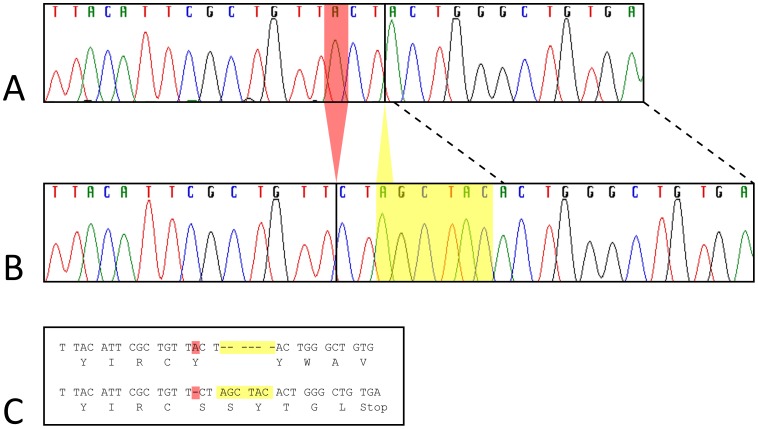
Retinal dystrophies in dogs are invaluable models of human disease. Progressive retinal atrophy (PRA) is the canine equivalent of retinitis pigmentosa (RP). Similar to RP, PRA is a genetically heterogenous condition. We investigated PRA in the Papillon breed of dog using homozygosity mapping and haplotype construction of single nucleotide polymorphisms within a small family group to identify potential positional candidate genes. Based on the phenotypic similarities between the PRA-affected Papillons, mouse models and human patients, CNGB1 was selected as the most promising positional candidate gene. CNGB1 was sequenced and a complex mutation consisting of the combination of a one basepair deletion and a 6 basepair insertion was identified in exon 26 (c.2387delA;2389_2390insAGCTAC) leading to a frameshift and premature stop codon. Immunohistochemistry (IHC) of pre-degenerate retinal sections from a young affected dog showed absence of labeling using a C-terminal CNGB1 antibody. Whereas an antibody directed against the N-terminus of the protein, which also recognizes the glutamic acid rich proteins arising from alternative splicing of the CNGB1 transcript (upstream of the premature stop codon), labeled rod outer segments. CNGB1 combines with CNGA1 to form the rod cyclic nucleotide gated channel and previous studies have shown the requirement of CNGB1 for normal targeting of CNGA1 to the rod outer segment. In keeping with these previous observations, IHC showed a lack of detectable CNGA1 protein in the rod outer segments of the affected dog. A population study did not identify the CNGB1 mutation in PRA-affected dogs in other breeds and documented that the CNGB1 mutation accounts for ~70% of cases of Papillon PRA in our PRA-affected canine DNA bank. CNGB1 mutations are one cause of autosomal recessive RP making the CNGB1 mutant dog a valuable large animal model of the condition.
犬类视网膜营养不良是人类疾病的宝贵模型。进行性视网膜萎缩(PRA)相当于犬类的色素性视网膜炎(RP)。与RP相似,PRA是一种基因异质性疾病。我们在一个小家族群体中使用纯合性定位和单核苷酸多态性的单倍型构建来研究巴比龙犬种的PRA,以确定潜在的定位候选基因。基于受PRA影响的巴比龙犬、小鼠模型和人类患者之间的表型相似性,CNGB1被选为最有希望的定位候选基因。对CNGB1进行测序,在第26外显子中鉴定出一个由一个碱基对缺失和一个6碱基对插入组合而成的复杂突变(c.2387delA;2389_2390insAGCTAC),导致移码和提前终止密码子。对一只年轻患病犬的视网膜退化前切片进行免疫组织化学(IHC)检测,结果显示使用C端CNGB1抗体未出现标记。而针对该蛋白N端的抗体,该抗体也能识别由CNGB1转录本(提前终止密码子上游)可变剪接产生的富含谷氨酸的蛋白,标记了视杆外段。CNGB1与CNGA1结合形成视杆环核苷酸门控通道,先前的研究表明CNGB1是CNGA1正常靶向视杆外段所必需的。与这些先前的观察结果一致,IHC显示在患病犬的视杆外段中缺乏可检测到的CNGA1蛋白。一项群体研究在其他犬种受PRA影响的犬中未发现CNGB1突变,并记录在我们受PRA影响的犬类DNA库中,CNGB1突变约占巴比龙犬PRA病例的70%。CNGB1突变是常染色体隐性RP的一个病因,这使得CNGB1突变犬成为该疾病有价值的大型动物模型。