Lin Qingsheng, Jin Fengliang, Hu Zhendi, Chen Huanyu, Yin Fei, Li Zhenyu, Dong Xiaolin, Zhang Deyong, Ren Shunxiang, Feng Xia
Insititute of Plant Protection, Guangdong Academy of Agricultural Sciences, Guangzhou, PR China.
PLoS One. 2013 Aug 20;8(8):e72314. doi: 10.1371/journal.pone.0072314. eCollection 2013.
The diamondback moth Plutella xyllostella has developed a high level of resistance to the latest insecticide chlorantraniliprole. A better understanding of P. xylostella's resistance mechanism to chlorantraniliprole is needed to develop effective approaches for insecticide resistance management.
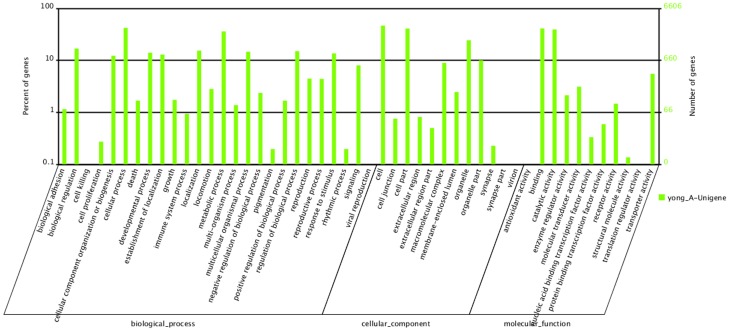
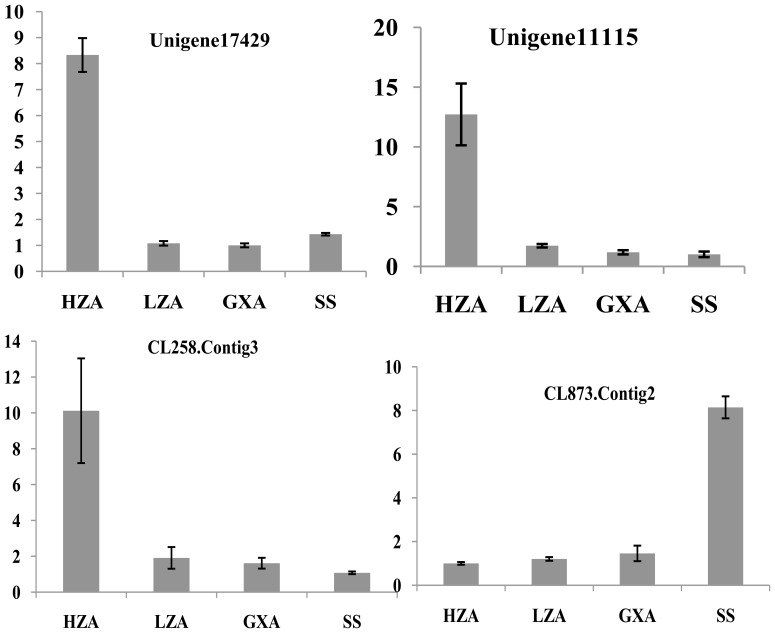
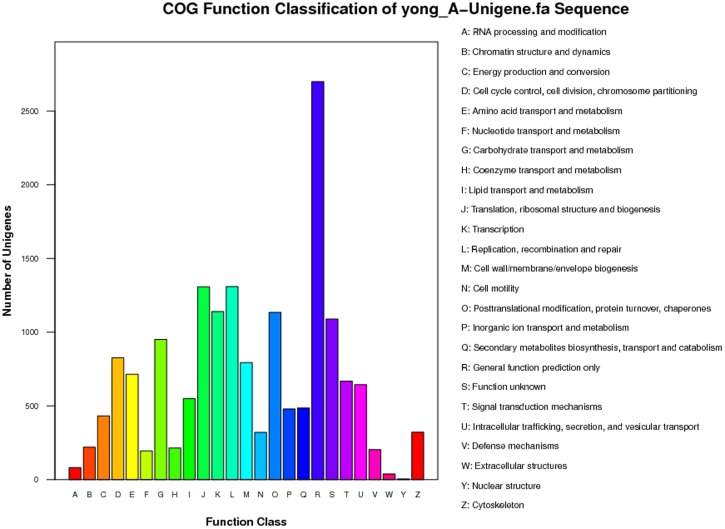
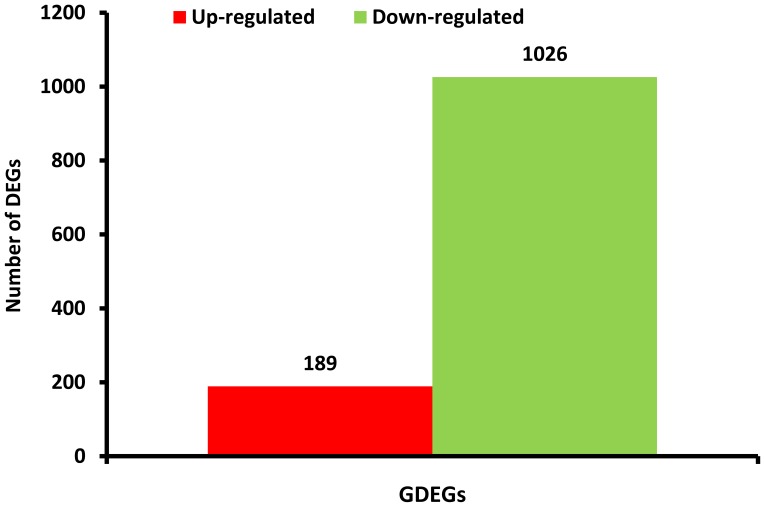
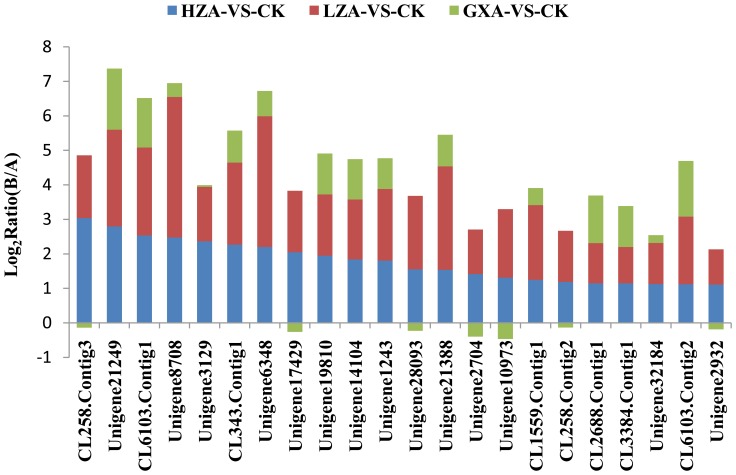
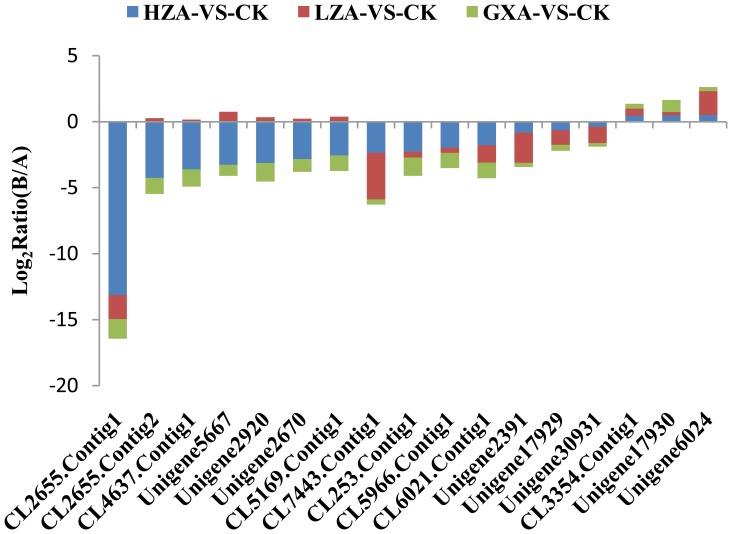
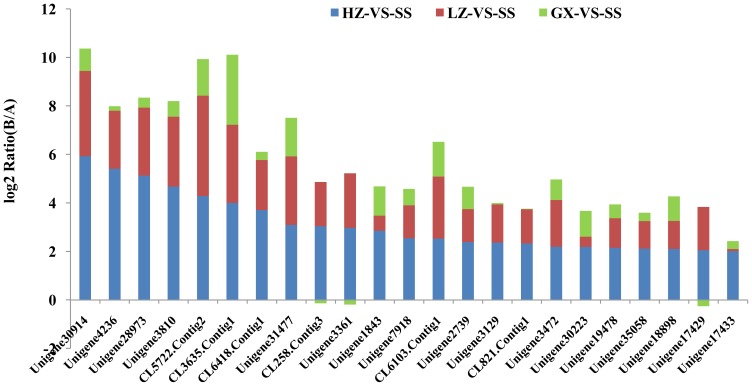
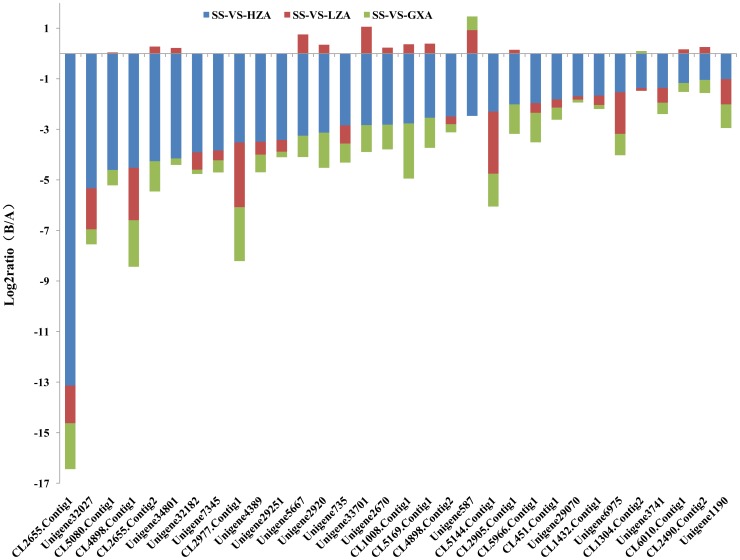
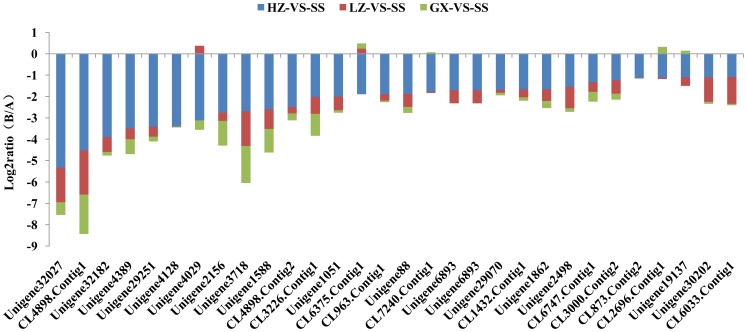
To provide a comprehensive insight into the resistance mechanisms of P. xylostella to chlorantraniliprole, transcriptome assembly and tag-based digital gene expression (DGE) system were performed using Illumina HiSeq™ 2000. The transcriptome analysis of the susceptible strain (SS) provided 45,231 unigenes (with the size ranging from 200 bp to 13,799 bp), which would be efficient for analyzing the differences in different chlorantraniliprole-resistant P. xylostella stains. DGE analysis indicated that a total of 1215 genes (189 up-regulated and 1026 down-regulated) were gradient differentially expressed among the susceptible strain (SS) and different chlorantraniliprole-resistant P. xylostella strains, including low-level resistance (GXA), moderate resistance (LZA) and high resistance strains (HZA). A detailed analysis of gradient differentially expressed genes elucidated the existence of a phase-dependent divergence of biological investment at the molecular level. The genes related to insecticide resistance, such as P450, GST, the ryanodine receptor, and connectin, had different expression profiles in the different chlorantraniliprole-resistant DGE libraries, suggesting that the genes related to insecticide resistance are involved in P. xylostella resistance development against chlorantraniliprole. To confirm the results from the DGE, the expressional profiles of 4 genes related to insecticide resistance were further validated by qRT-PCR analysis.
The obtained transcriptome information provides large gene resources available for further studying the resistance development of P. xylostella to pesticides. The DGE data provide comprehensive insights into the gene expression profiles of the different chlorantraniliprole-resistant stains. These genes are specifically related to insecticide resistance, with different expressional profiles facilitating the study of the role of each gene in chlorantraniliprole resistance development.
小菜蛾对最新的杀虫剂氯虫苯甲酰胺已产生高度抗性。为制定有效的抗药性管理方法,需要更好地了解小菜蛾对氯虫苯甲酰胺的抗性机制。
为全面深入了解小菜蛾对氯虫苯甲酰胺的抗性机制,使用Illumina HiSeq™ 2000进行了转录组组装和基于标签的数字基因表达(DGE)系统分析。敏感品系(SS)的转录组分析产生了45,231个单基因(大小从200 bp到13,799 bp),这将有助于分析不同氯虫苯甲酰胺抗性小菜蛾品系之间的差异。DGE分析表明,在敏感品系(SS)与不同氯虫苯甲酰胺抗性小菜蛾品系(包括低水平抗性品系(GXA)、中等抗性品系(LZA)和高水平抗性品系(HZA))之间,共有1215个基因(189个上调和1026个下调)呈梯度差异表达。对梯度差异表达基因的详细分析揭示了在分子水平上生物投资存在阶段依赖性差异。与抗药性相关的基因,如P450、GST、ryanodine受体和连接蛋白,在不同氯虫苯甲酰胺抗性DGE文库中的表达谱不同,表明与抗药性相关的基因参与了小菜蛾对氯虫苯甲酰胺的抗性发展。为了证实DGE的结果,通过qRT-PCR分析进一步验证了4个与抗药性相关基因的表达谱。
获得的转录组信息为进一步研究小菜蛾对杀虫剂的抗性发展提供了大量基因资源。DGE数据全面深入地了解了不同氯虫苯甲酰胺抗性品系的基因表达谱。这些基因与抗药性特异性相关,不同的表达谱有助于研究每个基因在氯虫苯甲酰胺抗性发展中的作用。