Zhang Xufei, Shen Weike, Dong Xiaomin, Fan Jiangping, Liu Lixia, Gao Xu, Kernstine Kemp H, Zhong Li
Department of Cell Biology, Hebei University College of Life Sciences, Baoding, Hebei, PR China.
PLoS One. 2013 Aug 19;8(8):e72458. doi: 10.1371/journal.pone.0072458. eCollection 2013.
The malignant mesothelioma (MM) survival rate has been hampered by the lack of efficient and accurate early detection methods. The immune system may detect the early changes of tumor progression by responding with tumor-associated autoantibody production. Hence, in this study, we translated the humoral immune response to cancer proteins into a potential blood test for MM.
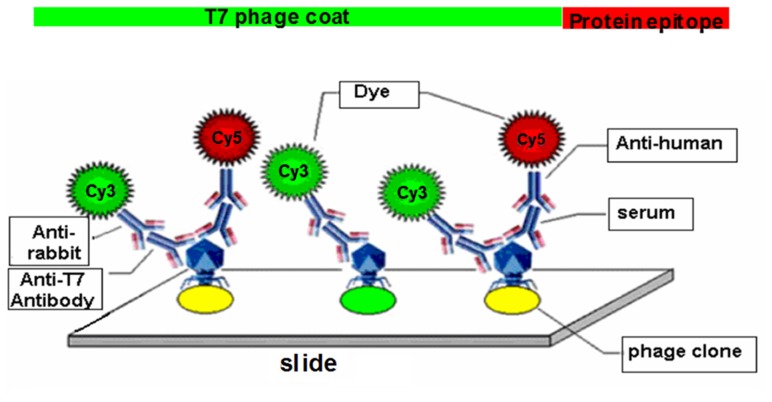
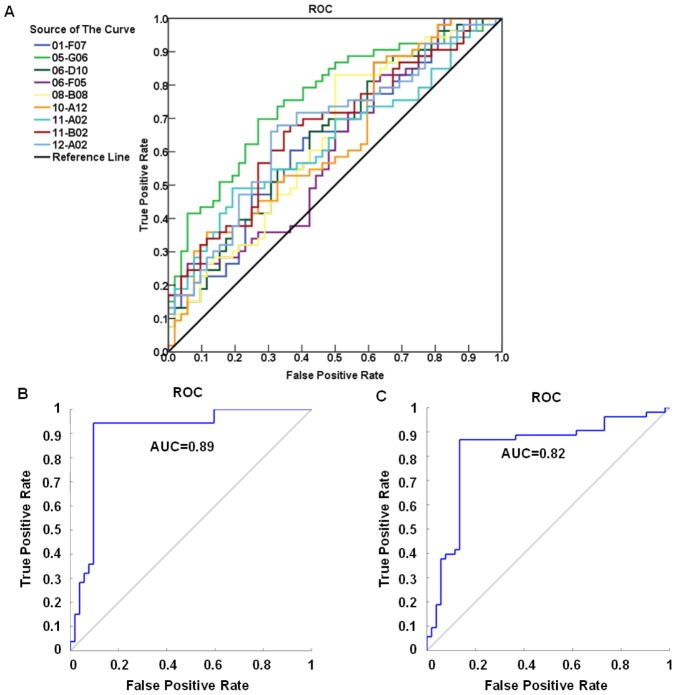
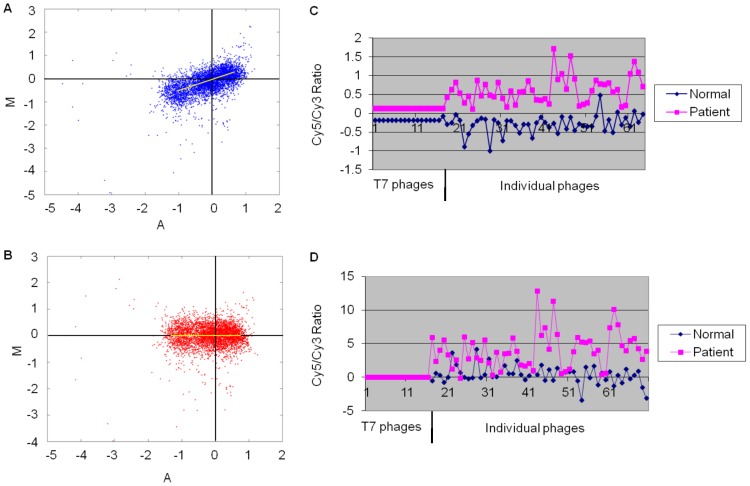
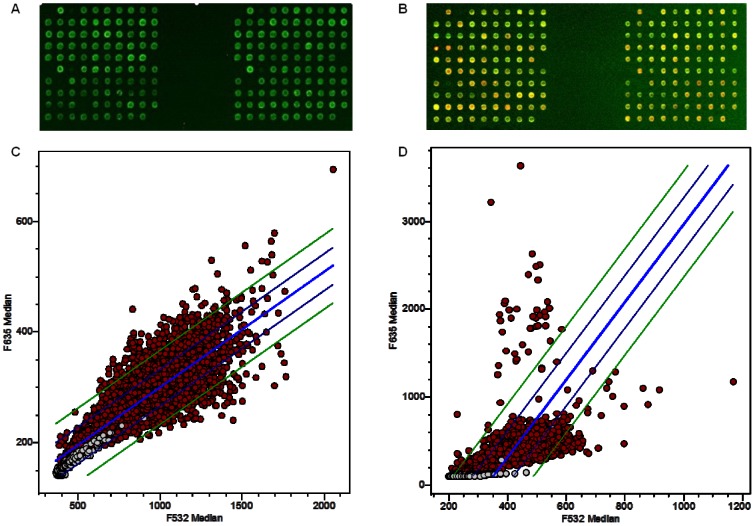
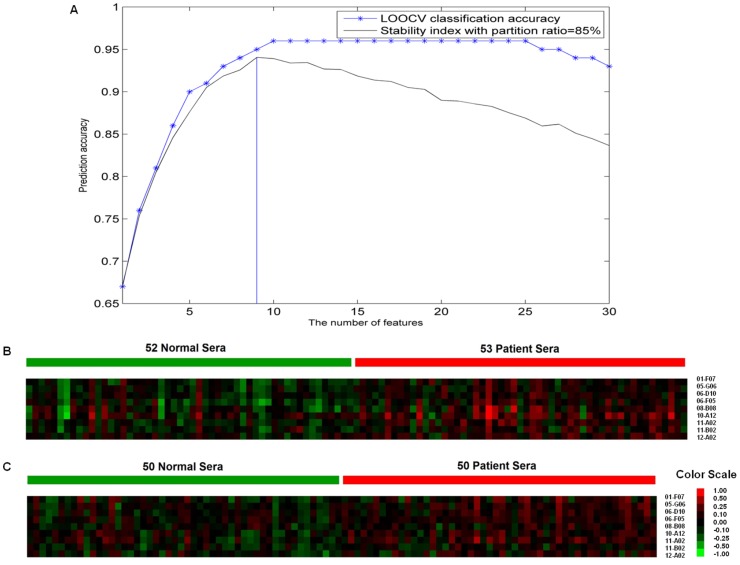
METHODOLOGY/PRINCIPAL FINDINGS: A T7 phage MM cDNA library was constructed using MM tumor tissues and biopanned for tumor-associated antigens (TAAs) using pooled MM patient and normal serum samples. About 1008 individual phage TAA clones from the biopanned library were subjected to protein microarray construction and tested with 53 MM and 52 control serum samples as a training group. Nine candidate autoantibody markers were selected from the training group using Tclass system and logistic regression statistical analysis, which achieved 94.3% sensitivity and 90.4% specificity with an AUC value of 0.89 in receiver operating characteristic analysis. The classifier was further evaluated with 50 patient and 50 normal serum samples as an independent blind validation, and the sensitivity of 86.0% and the specificity of 86.0% were obtained with an AUC of 0.82. Sequencing and BLASTN analysis of the classifier revealed that five of these nine candidate markers were found to have strong homology to cancer related proteins (PDIA6, MEG3, SDCCAG3, IGHG3, IGHG1).
CONCLUSIONS/SIGNIFICANCE: Our results indicated that using a panel of 9 autoantibody markers presented a promising accuracy for MM detection. Although the results need further validation in high-risk groups, they provided the potentials in developing a serum-based assay for MM diagnosis.
恶性间皮瘤(MM)的生存率因缺乏高效准确的早期检测方法而受到影响。免疫系统可能通过产生肿瘤相关自身抗体来检测肿瘤进展的早期变化。因此,在本研究中,我们将针对癌症蛋白的体液免疫反应转化为一种潜在的MM血液检测方法。
方法/主要发现:利用MM肿瘤组织构建T7噬菌体MM cDNA文库,并使用MM患者混合血清样本和正常血清样本对肿瘤相关抗原(TAA)进行生物淘选。从生物淘选文库中挑选约1008个单个噬菌体TAA克隆进行蛋白质微阵列构建,并以53份MM血清样本和52份对照血清样本作为训练组进行检测。使用Tclass系统和逻辑回归统计分析从训练组中筛选出9种候选自身抗体标志物,在受试者工作特征分析中,其灵敏度达到94.3%,特异性达到90.4%,曲线下面积(AUC)值为0.89。该分类器进一步以50份患者血清样本和50份正常血清样本作为独立盲法验证,灵敏度为86.0%,特异性为86.0%,AUC为0.82。对该分类器进行测序和BLASTN分析发现,这9种候选标志物中有5种与癌症相关蛋白(PDIA6、MEG3, SDCCAG3、IGHG3、IGHG1)具有高度同源性。
结论/意义:我们的结果表明,使用一组9种自身抗体标志物对MM检测具有较高的准确性。尽管结果需要在高危人群中进一步验证,但它们为开发基于血清的MM诊断检测方法提供了潜力。