MRC Centre for Reproductive Health, Queen's Medical Research Institute, University of Edinburgh, 47 Little France Crescent, Edinburgh EH16 4TJ, UK and.
Mol Hum Reprod. 2014 Jan;20(1):42-8. doi: 10.1093/molehr/gat059. Epub 2013 Aug 26.
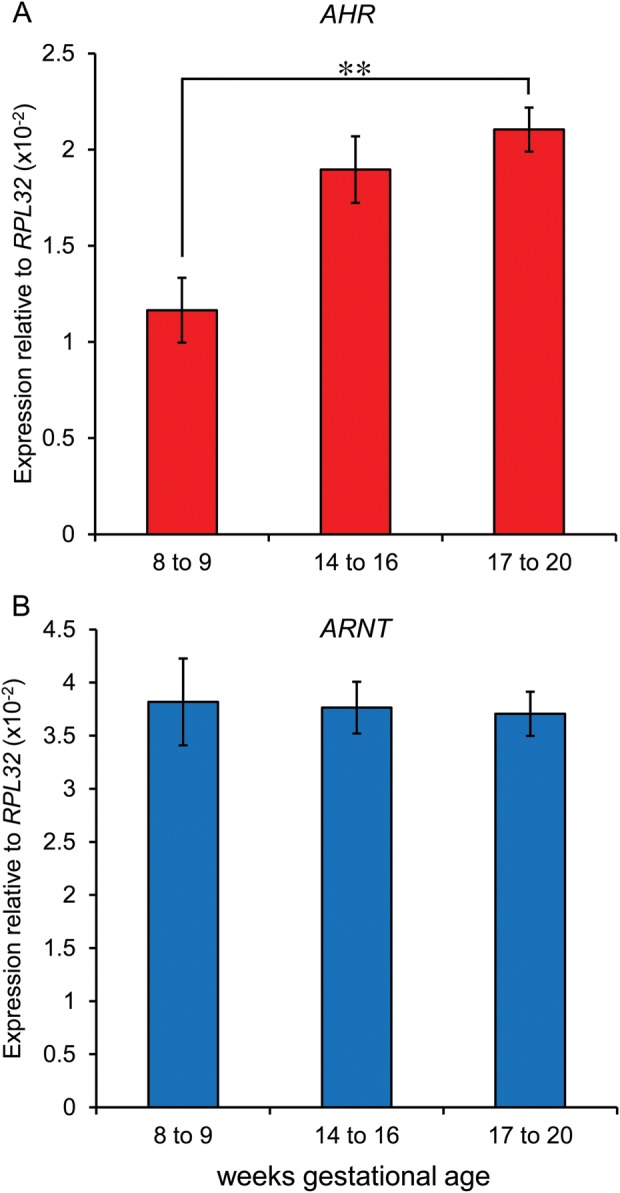
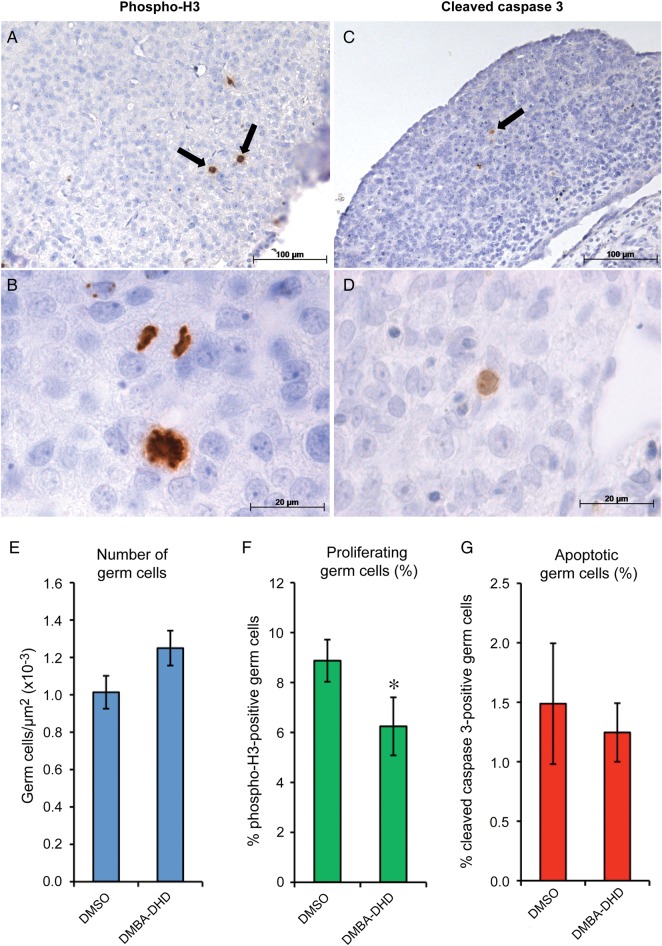
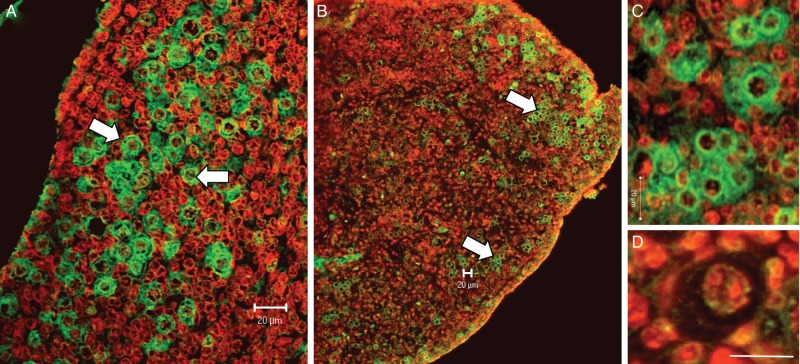
Fetal life is a critical time for female fertility, when germ cells complete proliferation, initiate meiosis and ultimately form the lifetime stock of primordial follicles. Female fertility may be reduced by in utero exposure to cigarette smoke, which contains ligands for the aryl hydrocarbon receptor (AhR). The AhR is a critical regulator of ovarian germ cell survival in mice; thus activation of this receptor in the ovaries of fetuses exposed to maternal cigarette smoke in utero may provide a mechanism by which female fertility is reduced in later life. We have therefore investigated AhR expression in the human fetal ovary, and examined the effects of an AhR ligand present in cigarette smoke, on germ cells in human fetal ovaries cultured in vitro. The results showed that AHR mRNA expression increased 2-fold between first and late second trimester (P = 0.008). AhR protein was confined to germ cells at all gestations, but varied from expression in most germ cells during the first trimester, to only patchy expression by clusters of germ cells at later gestations. Culture of human fetal ovaries with the AhR ligand 9,10-dimethyl-1,2-benzanthracene-3,4-dihydrodiol (DMBA-DHD; a component of cigarette smoke) did not affect germ cell number in vitro, but significantly reduced the proportion of proliferating germ cells by 29% (as assessed by phospho-histone H3 staining (P = 0.04)). Germ cell apoptosis was not significantly affected. These results reveal that germ cells in the human fetal ovary express AhR from the proliferative stage of development through entry into meiosis and beyond, and demonstrate that AhR ligands found in cigarette smoke have the capacity to impair human fetal ovarian germ cell proliferation.
胎儿期是女性生育力的关键时期,在此期间生殖细胞完成增殖,启动减数分裂,并最终形成终生原始卵泡储备。宫内暴露于香烟烟雾会降低女性生育力,香烟烟雾中含有芳烃受体 (AhR) 的配体。AhR 是调节小鼠卵巢生殖细胞存活的关键因子;因此,宫内暴露于母体香烟烟雾的胎儿卵巢中该受体的激活可能为日后女性生育力降低提供了一种机制。因此,我们研究了人类胎儿卵巢中 AhR 的表达,并检测了香烟烟雾中存在的一种 AhR 配体对体外培养的人类胎儿卵巢生殖细胞的影响。结果表明,AhR mRNA 表达在第一和第二 trimester 之间增加了 2 倍(P = 0.008)。AhR 蛋白在所有胎龄均局限于生殖细胞,但在第一 trimester 中大多数生殖细胞均有表达,而在后期胎龄中仅呈簇状生殖细胞的局灶性表达。用 AhR 配体 9,10-二甲基-1,2-苯并蒽-3,4-二氢二醇(DMBA-DHD;香烟烟雾的成分)培养人类胎儿卵巢不会影响体外生殖细胞数量,但显著降低了 29%的增殖性生殖细胞比例(通过磷酸化组蛋白 H3 染色评估(P = 0.04))。生殖细胞凋亡没有明显影响。这些结果表明,人类胎儿卵巢生殖细胞从增殖阶段发育到进入减数分裂期及以后均表达 AhR,并证明香烟烟雾中发现的 AhR 配体具有损害人类胎儿卵巢生殖细胞增殖的能力。