Veterans Affairs Palo Alto Health Care System/Stanford University, Palo Alto, CA 94304, USA.
Sci Transl Med. 2013 Aug 28;5(200):200ra117. doi: 10.1126/scitranslmed.3006674.
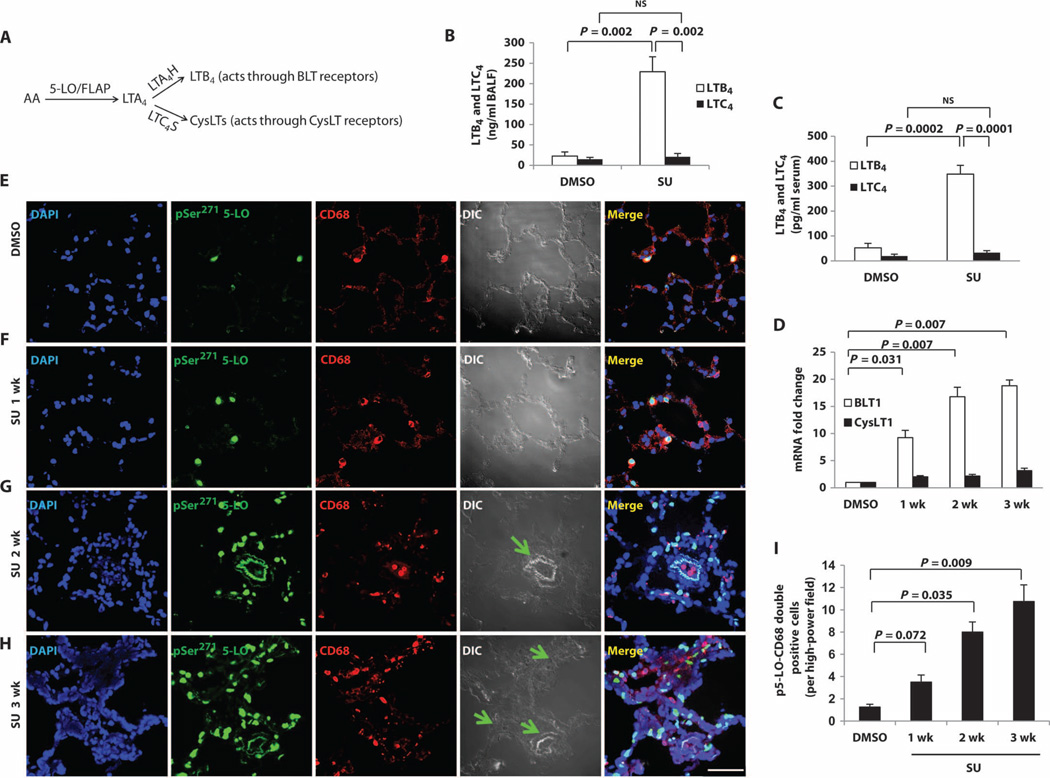
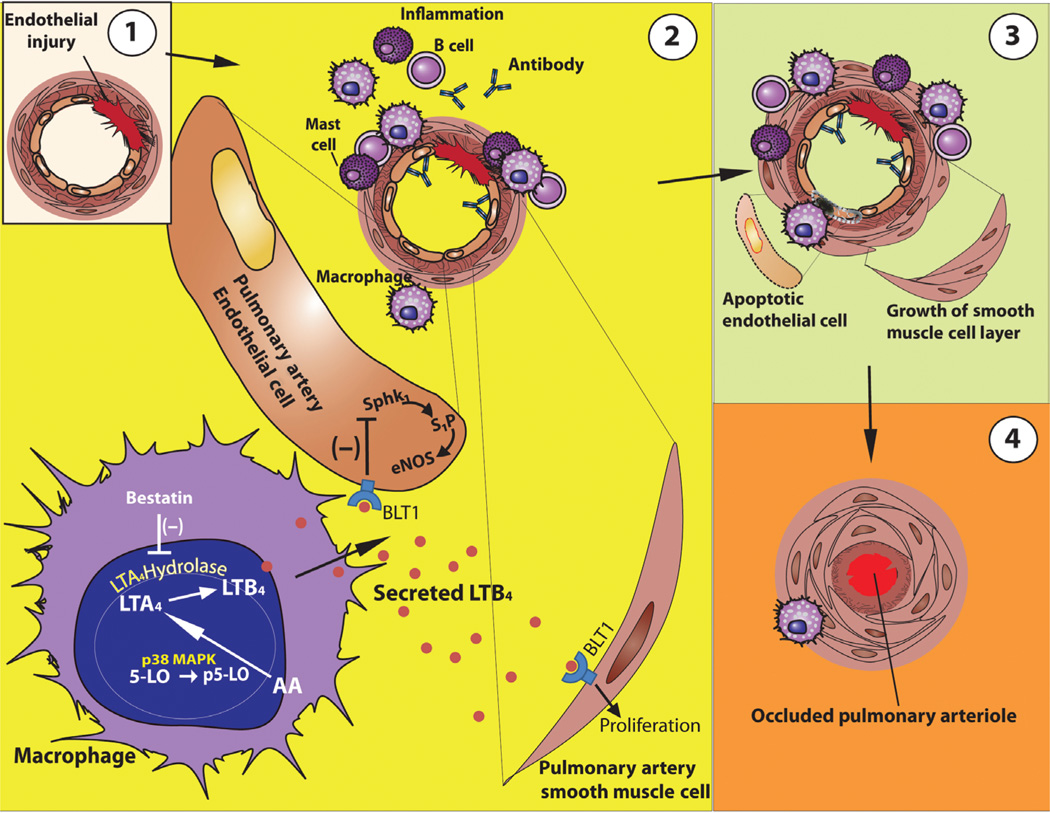
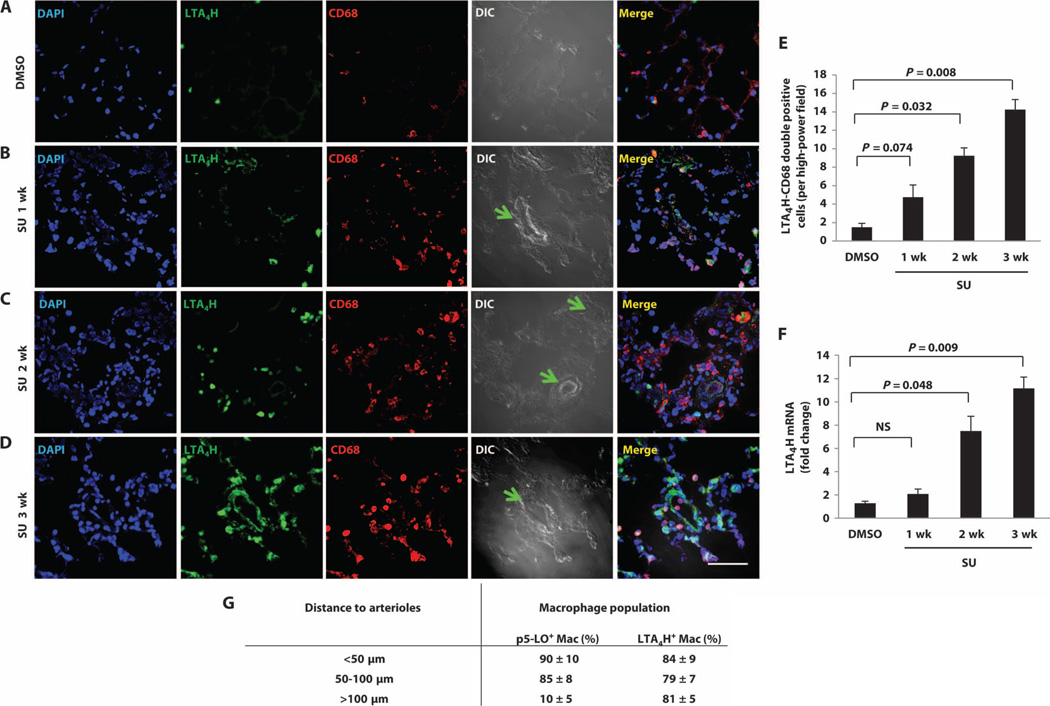
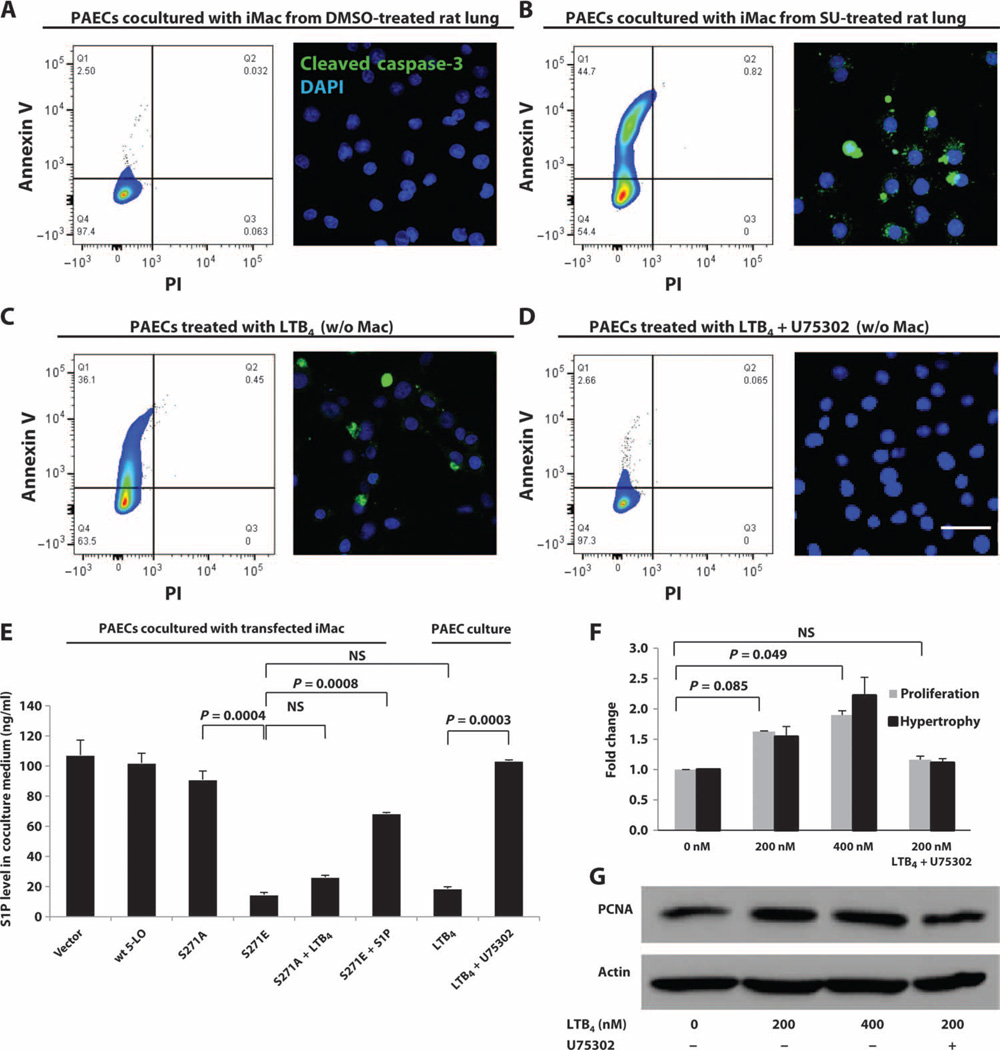
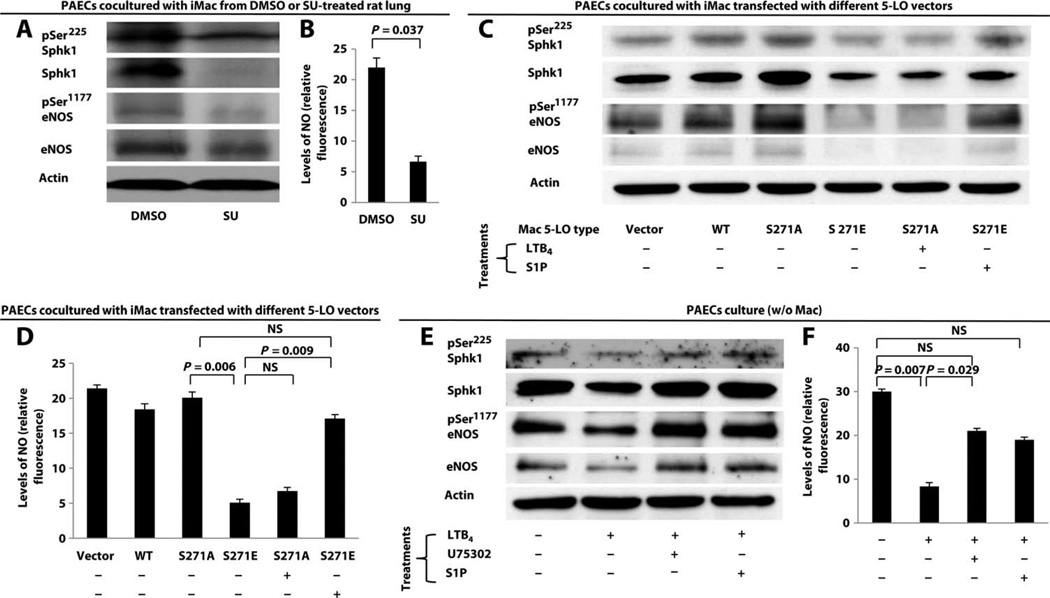
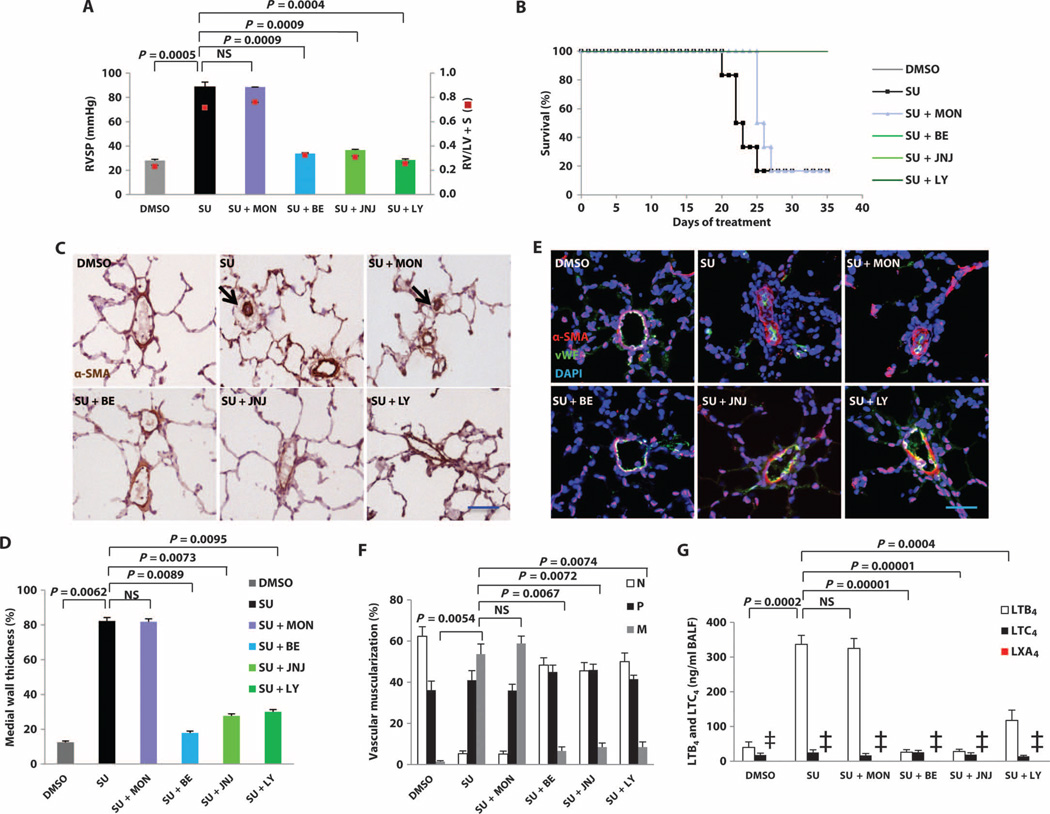
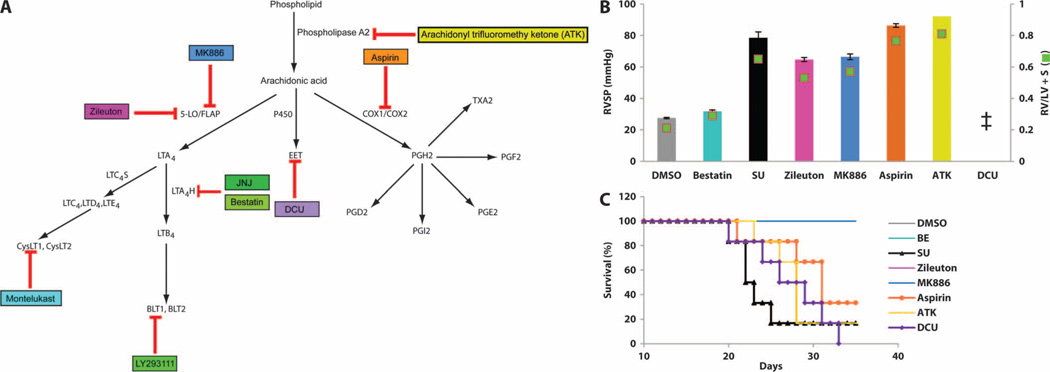
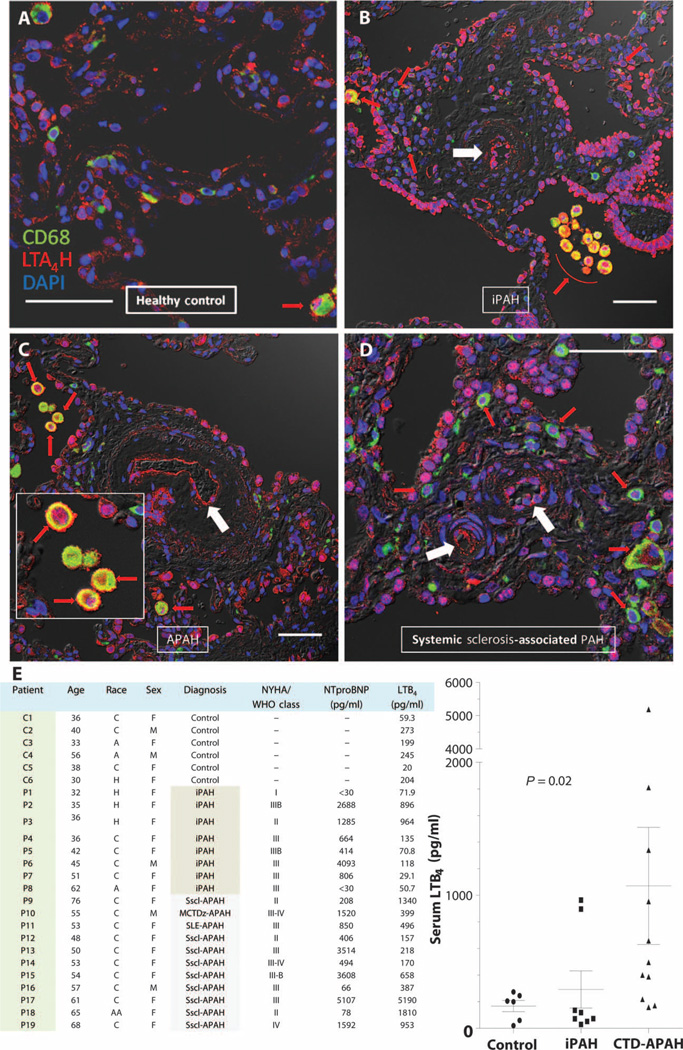
Pulmonary hypertension (PH) is a serious condition that affects mainly young and middle-aged women, and its etiology is poorly understood. A prominent pathological feature of PH is accumulation of macrophages near the arterioles of the lung. In both clinical tissue and the SU5416 (SU)/athymic rat model of severe PH, we found that the accumulated macrophages expressed high levels of leukotriene A4 hydrolase (LTA4H), the biosynthetic enzyme for leukotriene B4 (LTB4). Moreover, macrophage-derived LTB4 directly induced apoptosis in pulmonary artery endothelial cells (PAECs). Further, LTB4 induced proliferation and hypertrophy of human pulmonary artery smooth muscle cells. We found that LTB4 acted through its receptor, BLT1, to induce PAEC apoptosis by inhibiting the protective endothelial sphingosine kinase 1 (Sphk1)-endothelial nitric oxide synthase (eNOS) pathway. Blocking LTA4H decreased in vivo LTB4 levels, prevented PAEC apoptosis, restored Sphk1-eNOS signaling, and reversed fulminant PH in the SU/athymic rat model of PH. Antagonizing BLT1 similarly reversed established PH. Inhibition of LTB4 biosynthesis or signal transduction in SU-treated athymic rats with established disease also improved cardiac function and reopened obstructed arterioles; this approach was also effective in the monocrotaline model of severe PH. Human plexiform lesions, one hallmark of PH, showed increased numbers of macrophages, which expressed LTA4H, and patients with connective tissue disease-associated pulmonary arterial hypertension exhibited significantly higher LTB4 concentrations in the systemic circulation than did healthy subjects. These results uncover a possible role for macrophage-derived LTB4 in PH pathogenesis and identify a pathway that may be amenable to therapeutic targeting.
肺动脉高压(PH)是一种严重的疾病,主要影响中青年女性,其病因尚不清楚。PH 的一个突出的病理特征是肺小动脉周围积聚巨噬细胞。在临床组织和 SU5416(SU)/无胸腺大鼠严重 PH 模型中,我们发现积聚的巨噬细胞表达高水平的白三烯 A4 水解酶(LTA4H),这是白三烯 B4(LTB4)的生物合成酶。此外,巨噬细胞衍生的 LTB4 直接诱导肺动脉内皮细胞(PAEC)凋亡。进一步,LTB4 诱导人肺动脉平滑肌细胞增殖和肥大。我们发现 LTB4 通过其受体 BLT1 作用,通过抑制保护性内皮鞘氨醇激酶 1(Sphk1)-内皮型一氧化氮合酶(eNOS)通路诱导 PAEC 凋亡。阻断 LTA4H 可降低体内 LTB4 水平,防止 PAEC 凋亡,恢复 Sphk1-eNOS 信号,并逆转 SU/无胸腺大鼠 PH 模型中的暴发性 PH。拮抗 BLT1 也可逆转已建立的 PH。在已患有疾病的 SU 处理的无胸腺大鼠中抑制 LTB4 生物合成或信号转导也改善了心脏功能并重新开放阻塞的小动脉;这种方法在严重 PH 的单克隆抗体模型中也有效。PH 的一个标志是人类丛状病变,显示出更多表达 LTA4H 的巨噬细胞,患有结缔组织病相关肺动脉高压的患者在体循环中表现出明显更高的 LTB4 浓度,高于健康受试者。这些结果揭示了巨噬细胞衍生的 LTB4 在 PH 发病机制中的可能作用,并确定了一条可能适合治疗靶向的途径。