1] Pole of Pharmacology and Therapeutics, Institut de Recherche Expérimentale et Clinique (IREC), Université catholique de Louvain (UCL), Brussels, Belgium [2] Pole of Molecular Imaging, Radiotherapy and Oncology, Institut de Recherche Expérimentale et Clinique (IREC), Université catholique de Louvain (UCL), Brussels, Belgium [3] Department of Medical Oncology, Centre du Cancer, Cliniques Universitaires Saint-Luc, Brussels, Belgium.
Br J Cancer. 2013 Sep 17;109(6):1586-92. doi: 10.1038/bjc.2013.505. Epub 2013 Aug 29.
Preclinical studies have shown that PTEN loss enhances sensitivity to mammalian target of Rapamycin (mTOR) inhibitors because of facilitated PI3K (phosphatidylinositol-3 kinase)/Akt activation and consecutive stimulation of the mTOR pathway. In patients with advanced transitional cell carcinoma (TCC) treated with the mTOR inhibitor everolimus, PTEN loss was, however, associated with resistance to treatment.
Transitional cell carcinoma specimens, human bladder cancer cells and derived mouse xenografts were used to evaluate how the PTEN status influences the activity of mTOR inhibitors.
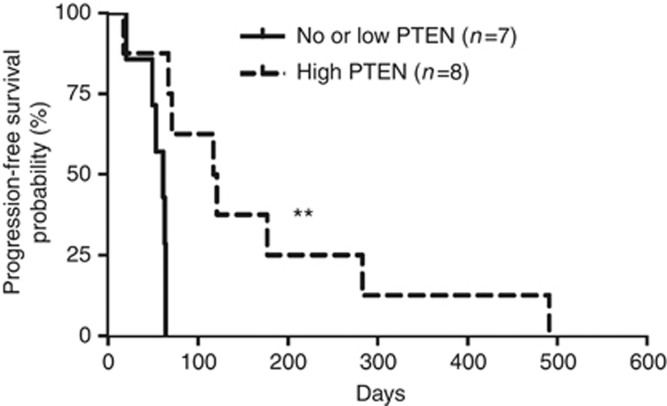
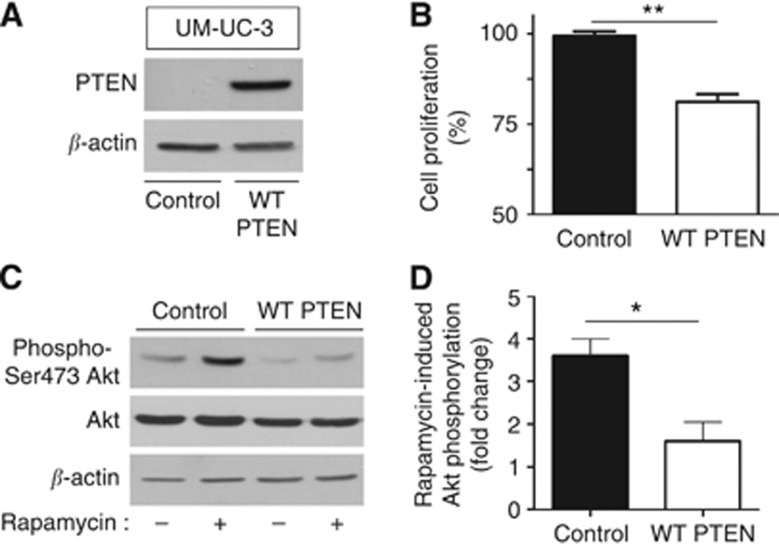
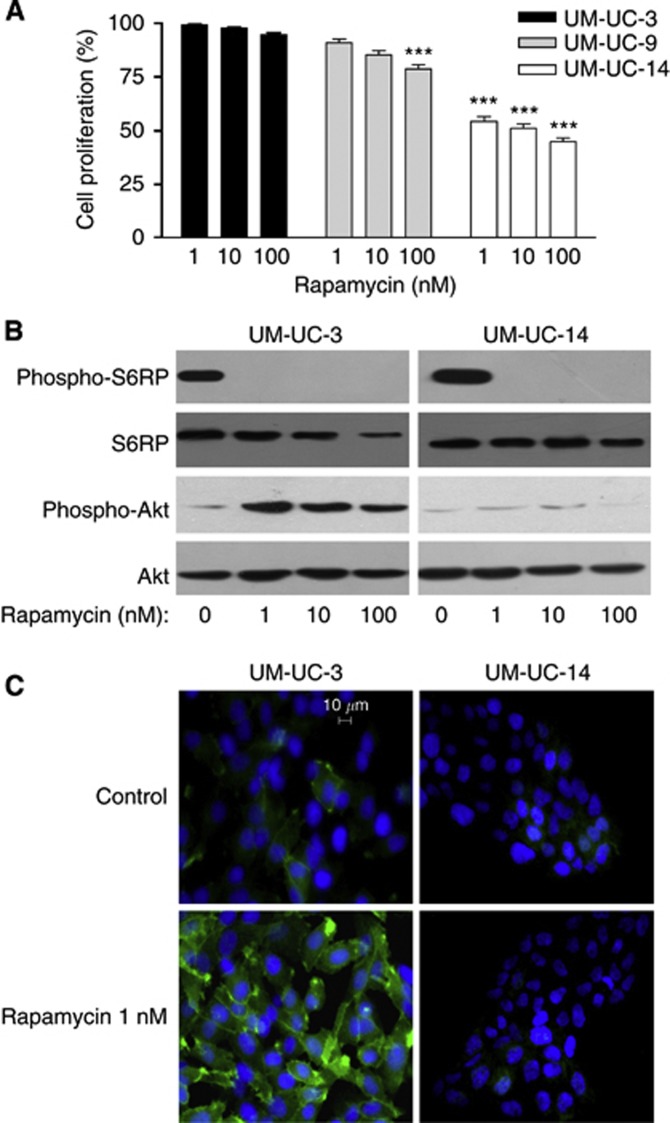
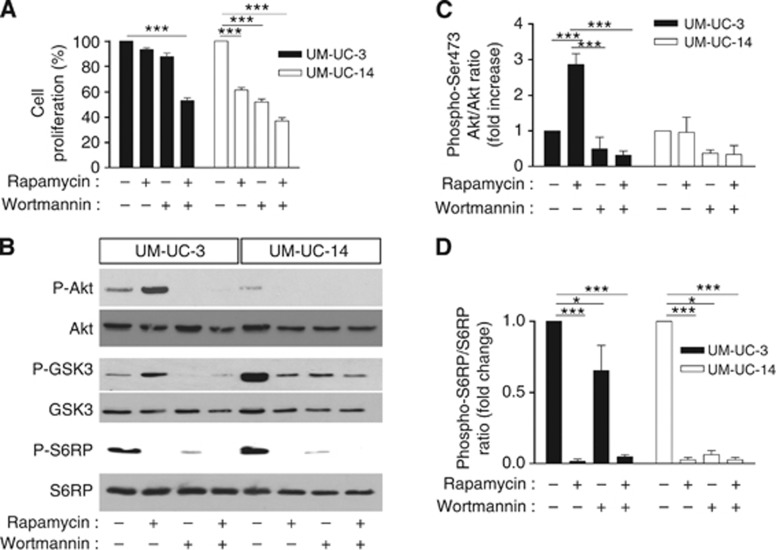
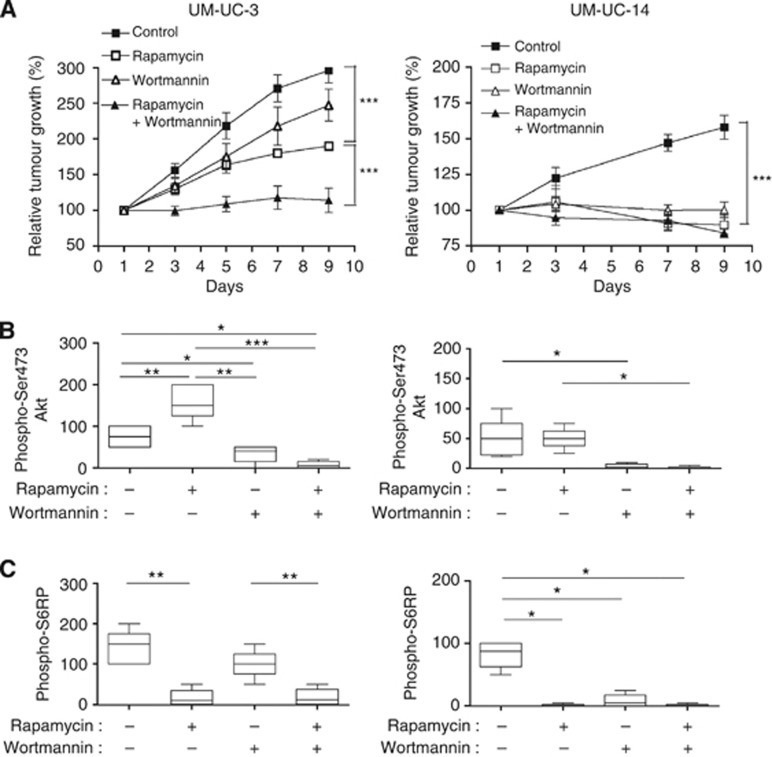
Transitional cell carcinoma patients with a shorter progression-free survival under everolimus exhibited PTEN deficiency and increased Akt activation. Moreover, PTEN-deficient bladder cancer cells were less sensitive to rapamycin than cells expressing wild-type PTEN, and rapamycin strikingly induced Akt activation in the absence of functional PTEN. Inhibition of Akt activation by the PI3K inhibitor wortmannin interrupted this rapamycin-induced feedback loop, thereby enhancing the antiproliferative effects of the mTOR inhibitor both in vitro and in vivo.
Facilitation of Akt activation upon PTEN loss can have a more prominent role in driving the feedback loop in response to mTOR inhibition than in promoting the mTOR pathway. These data support the use of both PI3K and mTOR inhibitors to treat urothelial carcinoma, in particular in the absence of functional PTEN.
临床前研究表明,由于 PI3K(磷脂酰肌醇-3 激酶)/Akt 激活的促进和 mTOR 通路的连续刺激,PTEN 缺失增强了对哺乳动物雷帕霉素靶蛋白(mTOR)抑制剂的敏感性。然而,在接受 mTOR 抑制剂依维莫司治疗的晚期移行细胞癌(TCC)患者中,PTEN 缺失与治疗耐药性相关。
使用移行细胞癌标本、人膀胱癌细胞和衍生的小鼠异种移植模型来评估 PTEN 状态如何影响 mTOR 抑制剂的活性。
在依维莫司治疗下无进展生存期较短的移行细胞癌患者表现出 PTEN 缺乏和 Akt 激活增加。此外,与表达野生型 PTEN 的细胞相比,PTEN 缺陷的膀胱癌细胞对雷帕霉素的敏感性降低,并且在缺乏功能性 PTEN 的情况下,雷帕霉素可显著诱导 Akt 激活。PI3K 抑制剂 wortmannin 抑制 Akt 激活中断了这种雷帕霉素诱导的反馈回路,从而增强了 mTOR 抑制剂在体外和体内的抗增殖作用。
PTEN 缺失时 Akt 激活的促进作用在驱动 mTOR 抑制的反馈回路中可能比促进 mTOR 通路更重要。这些数据支持使用 PI3K 和 mTOR 抑制剂联合治疗尿路上皮癌,特别是在缺乏功能性 PTEN 的情况下。