Department of Medical Microbiology and Parasitology, College of Health Sciences, Ladoke Akintola University of Technology, Ogbomoso, Nigeria.
Infect Drug Resist. 2013 Aug 20;6:87-92. doi: 10.2147/IDR.S48809. eCollection 2013.
The characteristics and antimicrobial resistance profiles of Staphylococcus aureus differs according to geographical regions and in relation to antibiotic usage. The aim of this study was to determine the biochemical characteristics of the prevalent S. aureus from Ekiti State, Nigeria, and to evaluate three commonly used disk diffusion methods (cefoxitin, oxacillin, and methicillin) for the detection of methicillin resistance in comparison with mecA gene detection by polymerase chain reaction.
A total of 208 isolates of S. aureus recovered from clinical specimens were included in this study. Standard microbiological procedures were employed in isolating the strains. Susceptibility of each isolate to methicillin (5 μg), oxacillin (1 μg), and cefoxitin (30 μg) was carried out using the modified Kirby-Bauer/Clinical and Laboratory Standard Institute disk diffusion technique. They were also tested against panels of antibiotics including vancomycin. The conventional polymerase chain reaction method was used to detect the presence of the mecA gene.
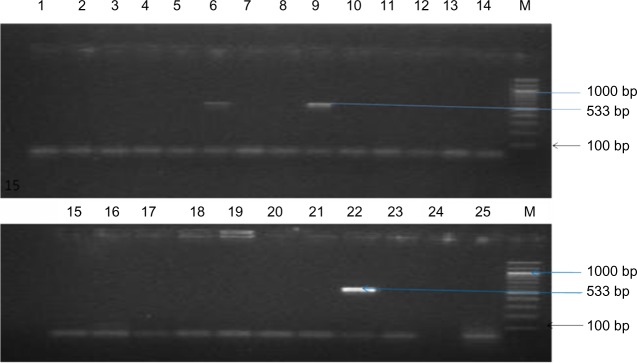
Phenotypic resistance to methicillin, oxacillin, and cefoxitin were 32.7%, 40.3%, and 46.5%, respectively. The mecA gene was detected in 40 isolates, giving a methicillin-resistant S. aureus (MRSA) prevalence of 19.2%. The S. aureus isolates were resistant to penicillin (82.7%) and tetracycline (65.4%), but largely susceptible to erythromycin (78.8% sensitive), pefloxacin (82.7%), and gentamicin (88.5%). When compared to the mecA gene as the gold standard for MRSA detection, methicillin, oxacillin, and cefoxitin gave sensitivity rates of 70%, 80%, and 100%, and specificity rates of 76.2%, 69.1%, and 78.5% respectively.
When compared with previous studies employing mecA polymerase chain reaction for MRSA detection, the prevalence of 19.2% reported in Ekiti State, Nigeria in this study is an indication of gradual rise in the prevalence of MRSA in Nigeria. A cefoxitin (30 μg) disk diffusion test is recommended above methicillin and oxacillin for the phenotypic detection of MRSA in clinical laboratories.
金黄色葡萄球菌(Staphylococcus aureus)的特征和抗生素耐药谱因地理位置和抗生素使用情况而异。本研究旨在确定尼日利亚埃基提州流行的金黄色葡萄球菌的生化特征,并评估三种常用的纸片扩散法(头孢西丁、苯唑西林和头孢唑啉)与聚合酶链反应(PCR)检测 mecA 基因检测相比,检测耐甲氧西林金黄色葡萄球菌(MRSA)的效果。
本研究共纳入 208 株从临床标本中分离的金黄色葡萄球菌。采用标准微生物学方法分离菌株。采用改良 Kirby-Bauer/临床和实验室标准协会纸片扩散法检测每株金黄色葡萄球菌对甲氧西林(5μg)、苯唑西林(1μg)和头孢西丁(30μg)的药敏性。还对万古霉素等抗生素进行了药敏试验。采用常规 PCR 方法检测 mecA 基因的存在。
对甲氧西林、苯唑西林和头孢西丁的表型耐药率分别为 32.7%、40.3%和 46.5%。40 株检测到 mecA 基因,MRSA 检出率为 19.2%。金黄色葡萄球菌对青霉素(82.7%)和四环素(65.4%)耐药,但对红霉素(78.8%敏感)、培氟沙星(82.7%)和庆大霉素(88.5%)高度敏感。与 mecA 基因作为 MRSA 检测的金标准相比,甲氧西林、苯唑西林和头孢西丁的敏感性分别为 70%、80%和 100%,特异性分别为 76.2%、69.1%和 78.5%。
与采用 mecA PCR 检测 MRSA 的既往研究相比,尼日利亚埃基提州 19.2%的报告率表明尼日利亚 MRSA 的流行率正在逐渐上升。建议在临床实验室中,使用头孢西丁(30μg)纸片扩散试验替代甲氧西林和苯唑西林,用于 MRSA 的表型检测。