Department of Otorhinolaryngology, Seoul National University Bundang Hospital, Seongnam, Korea.
PLoS One. 2013 Aug 22;8(8):e68692. doi: 10.1371/journal.pone.0068692. eCollection 2013.
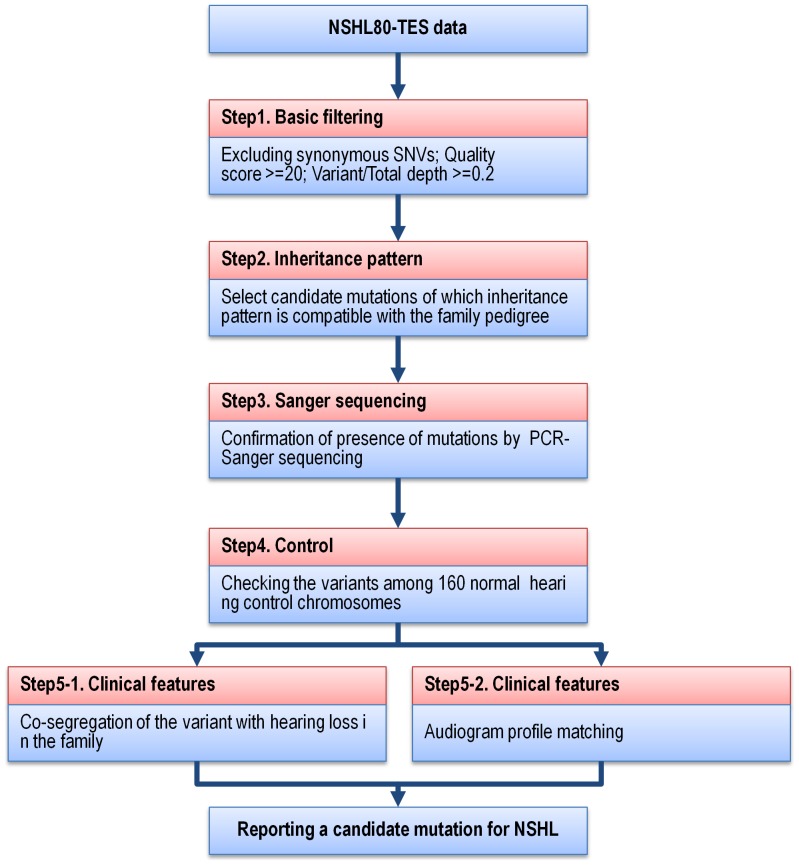
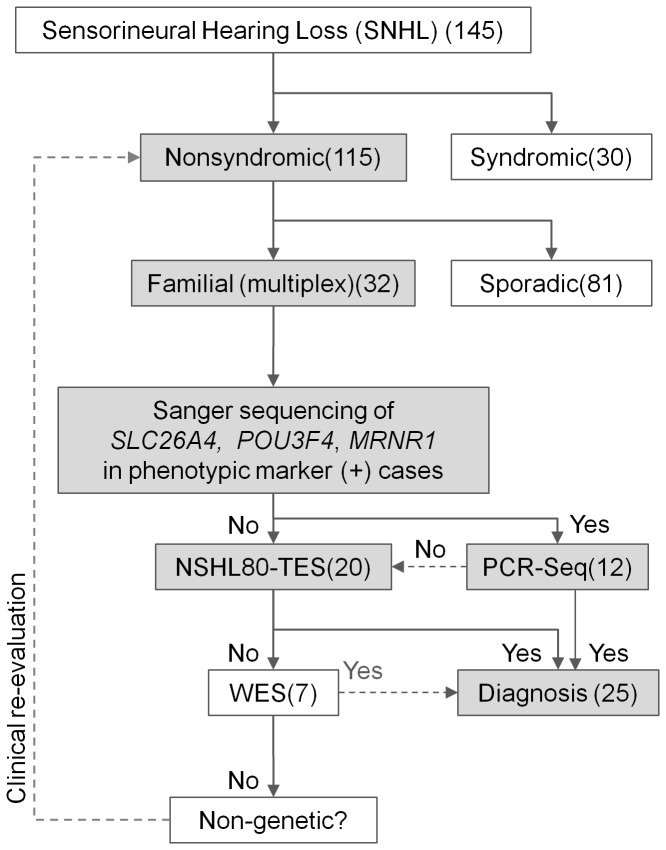
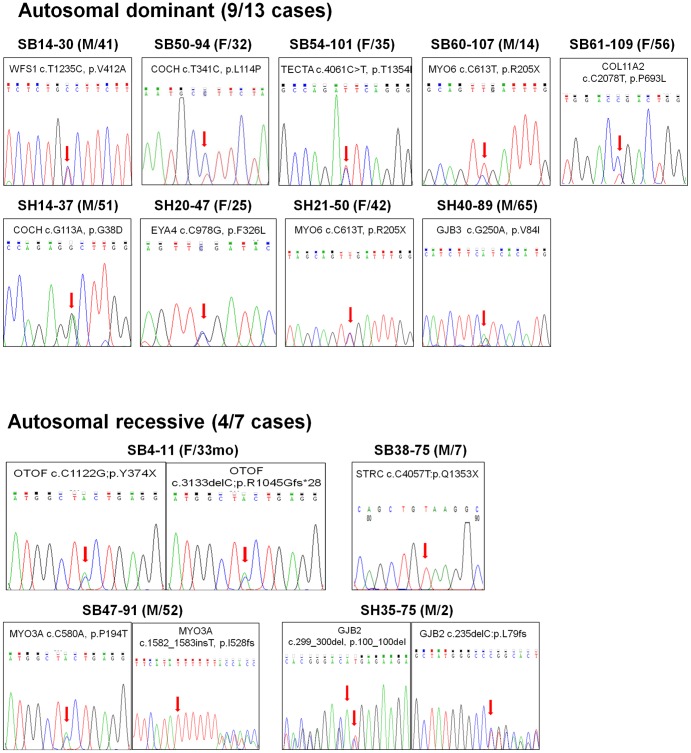
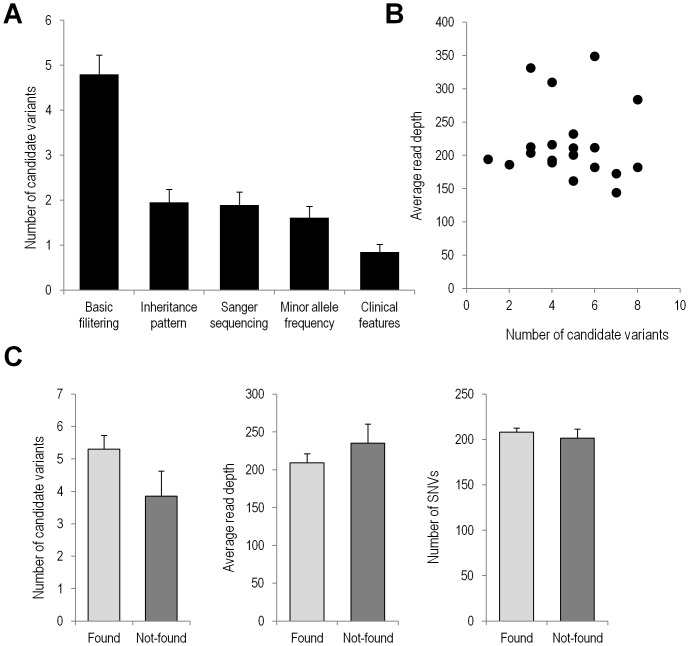
Identification of causative genes for hereditary nonsyndromic hearing loss (NSHL) is important to decide treatment modalities and to counsel the patients. Due to the genetic heterogeneity in sensorineural genetic disorders, the high-throughput method can be adapted for the efficient diagnosis. To this end, we designed a new diagnostic pipeline to screen all the reported candidate genes for NSHL. For validation of the diagnostic pipeline, we focused upon familial NSHL cases that are most likely to be genetic, rather than to be infectious or environmental. Among the 32 familial NSHL cases, we were able to make a molecular genetic diagnosis from 12 probands (37.5%) in the first stage by their clinical features, characteristic inheritance pattern and further candidate gene sequencing of GJB2, SLC26A4, POU3F4 or mitochondrial DNA. Next we applied targeted resequencing on 80 NSHL genes in the remaining 20 probands. Each proband carried 4.8 variants that were not synonymous and had the occurring frequency of less than three among the 20 probands. These variants were then filtered out with the inheritance pattern of the family, allele frequency in normal hearing 80 control subjects, clinical features. Finally NSHL-causing candidate mutations were identified in 13(65%) of the 20 probands of multiplex families, bringing the total solve rate (or detection rate) in our familial cases to be 78.1% (25/32) Damaging mutations discovered by the targeted resequencing were distributed in nine genes such as WFS1, COCH, EYA4, MYO6, GJB3, COL11A2, OTOF, STRC and MYO3A, most of which were private. Despite the advent of whole genome and whole exome sequencing, we propose targeted resequencing and filtering strategy as a screening and diagnostic tool at least for familial NSHL to find mutations based upon its efficacy and cost-effectiveness.
遗传性非综合征型听力损失(NSHL)的致病基因鉴定对于决定治疗方式和为患者提供咨询非常重要。由于感音神经性遗传疾病存在遗传异质性,因此可以采用高通量方法进行高效诊断。为此,我们设计了一种新的诊断方案,用于筛选所有报道的 NSHL 候选基因。为了验证诊断方案的有效性,我们专注于最有可能具有遗传性质的家族性 NSHL 病例,而不是感染性或环境性病例。在 32 个家族性 NSHL 病例中,我们根据临床特征、特征性遗传模式以及 GJB2、SLC26A4、POU3F4 或线粒体 DNA 的进一步候选基因测序,在第一阶段能够对 12 个先证者(37.5%)做出分子遗传学诊断。接下来,我们对其余 20 个先证者的 80 个 NSHL 基因进行了靶向重测序。每个先证者携带 4.8 种非同义变体,这些变体在 20 个先证者中出现频率均低于 3。然后,根据家族的遗传模式、80 名正常听力对照者的等位基因频率和临床特征对这些变体进行过滤。最终,在 20 个家系中的 13 个(65%)先证者中鉴定出 NSHL 致病候选突变,使我们的家族性病例的总解决率(或检测率)达到 78.1%(25/32)。通过靶向重测序发现的有害突变分布在 9 个基因中,如 WFS1、COCH、EYA4、MYO6、GJB3、COL11A2、OTOF、STRC 和 MYO3A,其中大多数为个体突变。尽管全基因组和全外显子组测序已经问世,但我们建议至少对于家族性 NSHL,采用靶向重测序和过滤策略作为一种基于其功效和成本效益的筛查和诊断工具来寻找突变。