Booderee National Park, Jervis Bay, Australia.
PLoS One. 2013 Aug 21;8(8):e69087. doi: 10.1371/journal.pone.0069087. eCollection 2013.
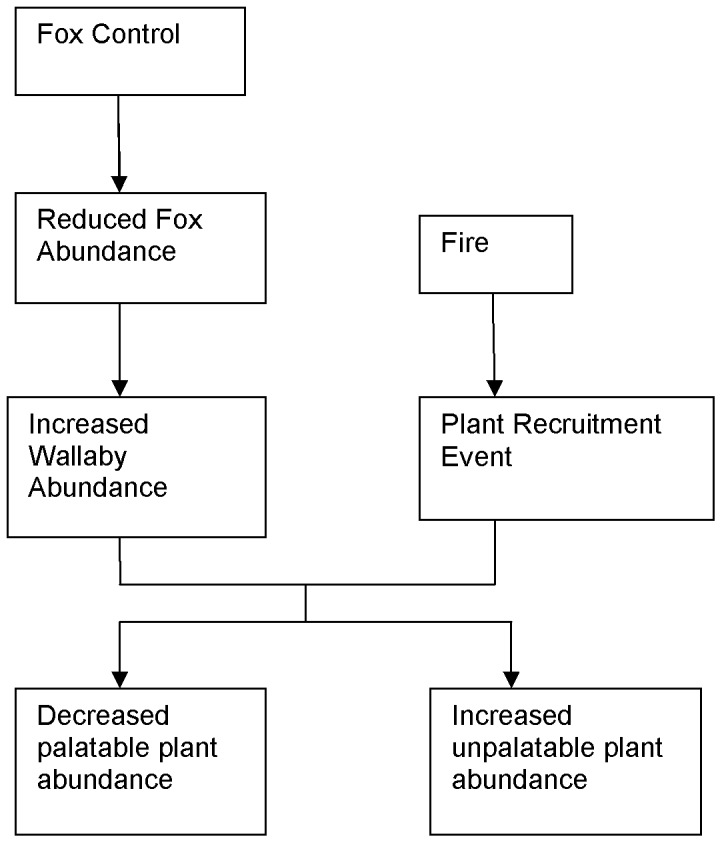
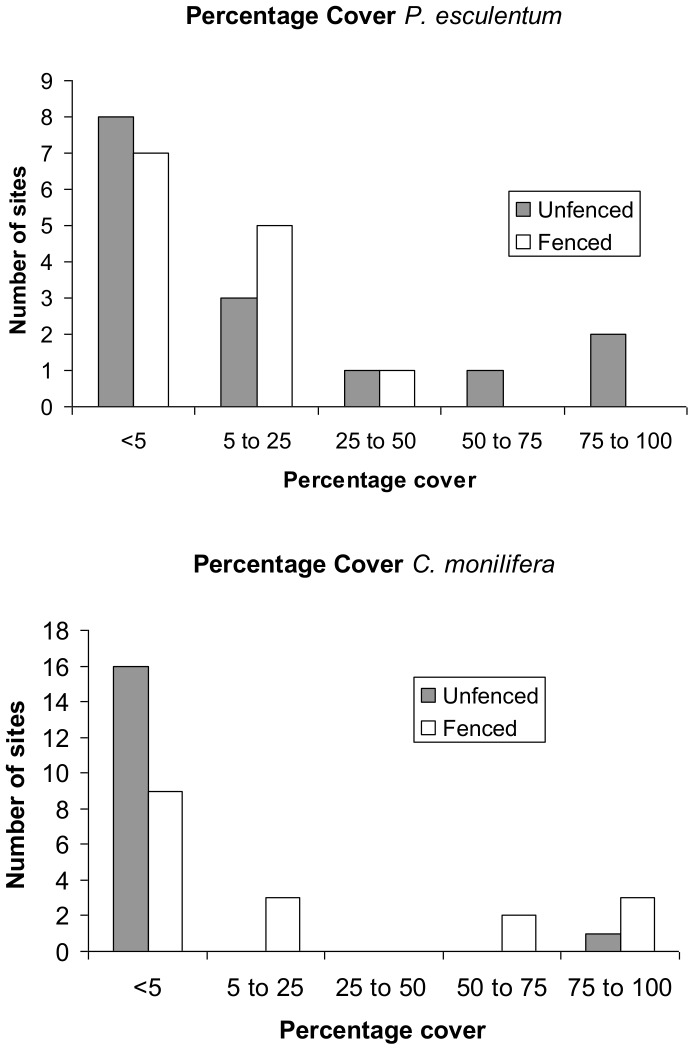
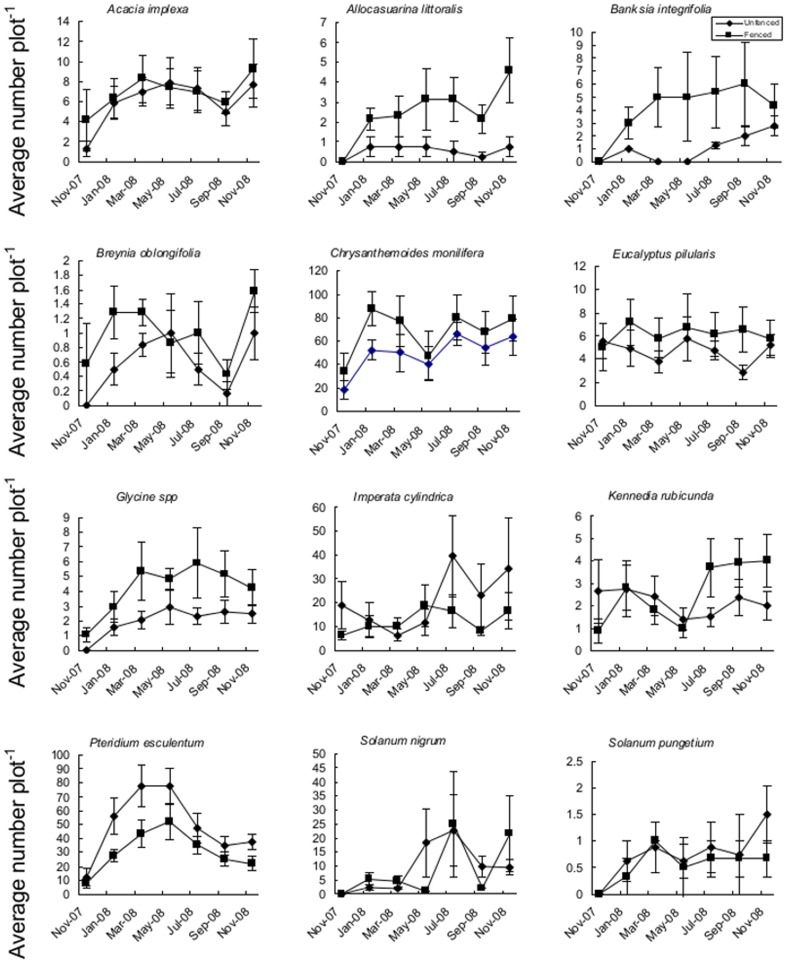
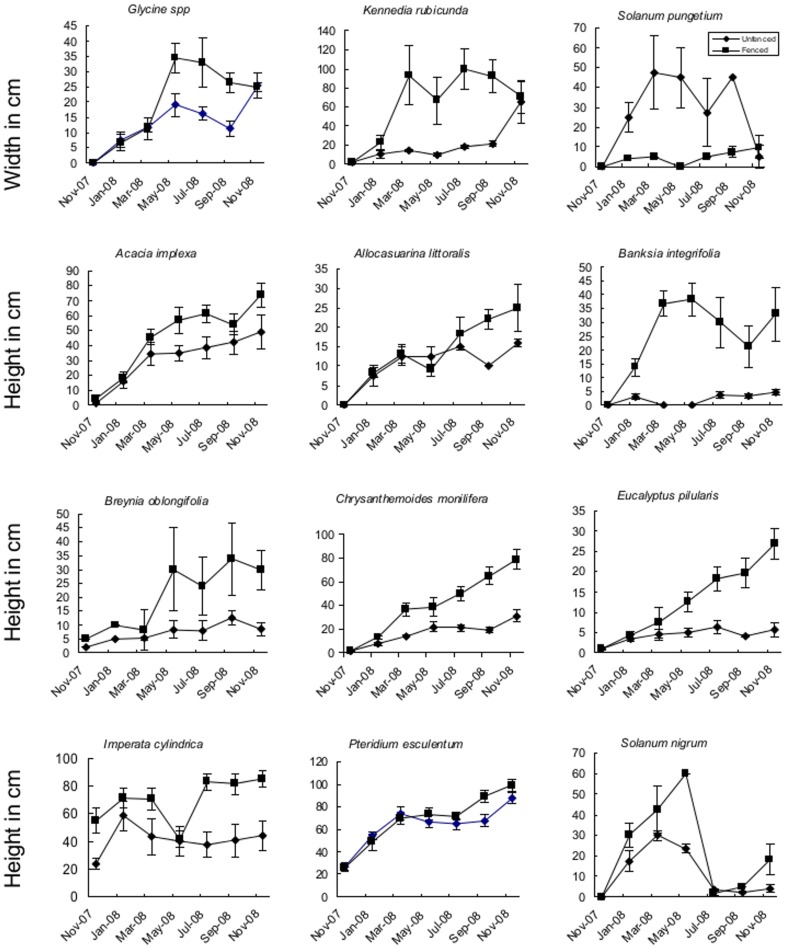
Over-abundance of native herbivores is a problem in many forests worldwide. The abundance of native macropod wallabies is extremely high at Booderee National Park (BNP) in south-eastern Australia. This has occurred because of the reduction of exotic predators through an intensive baiting program, coupled with the absence of other predators. The high density of wallabies at BNP may be inhibiting the recruitment of many plant species following fire-induced recruitment events. We experimentally examined the post-fire response of a range of plant species to browsing by wallabies in a forest heavily infested with the invasive species, bitou bush Chrysanthemoides monilifera. We recorded the abundance and size of a range of plant species in 18 unfenced (browsed) and 16 fenced (unbrowsed) plots. We found the abundance and size of bitou bush was suppressed in browsed plots compared to unbrowsed plots. Regenerating seedlings of the canopy or middle storey tree species Eucalyptus pilularis, Acacia implexa, Allocasuarina littoralis, Breynia oblongifolia and Banksia integrifolia were either smaller or fewer in number in grazed plots than treatment plots as were the vines Kennedia rubicunda, Glycine tabacina and Glycine clandestina. In contrast, the understorey fern, Pteridium esculentum increased in abundance in the browsed plots relative to unbrowsed plots probably because of reduced competition with more palatable angiosperms. Twelve months after plots were installed the community structure of the browsed and unbrowsed plots was significantly different (P = 0.023, Global R = 0.091). The relative abundance of C. monilifera and P. esculentum contributed most to the differences. We discuss the possible development of a low diversity bracken fern parkland in Booderee National Park through a trophic cascade, similar to that caused by overabundant deer in the northern hemisphere. We also discuss its implications for broad scale fox control in southern Australian forests.
在世界范围内,许多森林都存在本地食草动物过多的问题。在澳大利亚东南部的布德里国家公园(BNP),本地大型沙袋鼠的数量极其庞大。这是由于通过密集的诱捕计划减少了外来捕食者,同时也没有其他捕食者。在 BNP,沙袋鼠的高密度可能会抑制许多植物物种在火灾后进行的繁殖。我们在一个受到入侵物种 Bitou bush(Chrysanthemoides monilifera)严重侵袭的森林中,实验性地研究了一系列植物物种在沙袋鼠取食后的火后反应。我们在 18 个未围蔽(取食)和 16 个围蔽(未取食)的样方中记录了一系列植物物种的丰度和大小。我们发现,与未取食的样方相比,取食样方中的 Bitou bush 丰度和大小受到抑制。在取食样方中,树冠或中层树种桉树(Eucalyptus pilularis)、相思树(Acacia implexa)、滨藜(Allocasuarina littoralis)、薄叶野牡丹(Breynia oblongifolia)和瓶干树(Banksia integrifolia)的再生幼苗要么更小,要么数量更少,而藤本植物 Kennedia rubicunda、菘蓝(Glycine tabacina)和野菰(Glycine clandestina)也同样如此。相比之下,取食样方中的下层蕨类植物 Pteridium esculentum 的丰度相对于未取食样方有所增加,这可能是因为与更可口的被子植物竞争减少。在样方设置 12 个月后,取食和未取食样方的群落结构有显著差异(P=0.023,全局 R=0.091)。C. monilifera 和 P. esculentum 的相对丰度对差异的贡献最大。我们讨论了通过营养级联可能在布德里国家公园形成低多样性的芒萁草地,类似于北半球因过度繁殖的鹿而造成的情况。我们还讨论了其对澳大利亚南部森林中广泛的狐狸控制的影响。