Department of Microbiology and Immunology, Tohoku University Graduate School of Medicine, Sendai, Japan ; Department of Pediatrics, Tohoku University Graduate School of Medicine, Sendai, Japan.
PLoS One. 2013 Aug 21;8(8):e71594. doi: 10.1371/journal.pone.0071594. eCollection 2013.
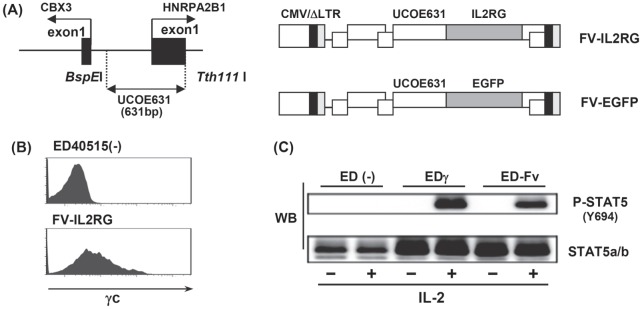
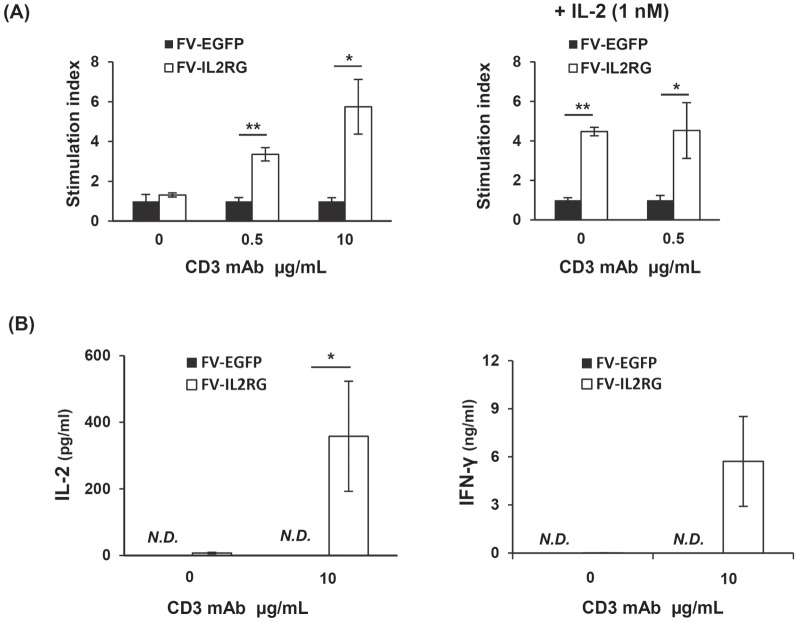
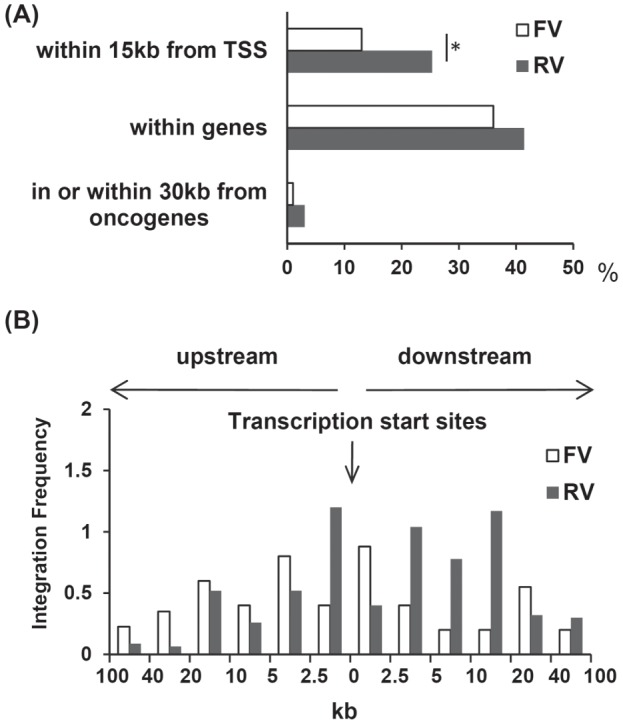
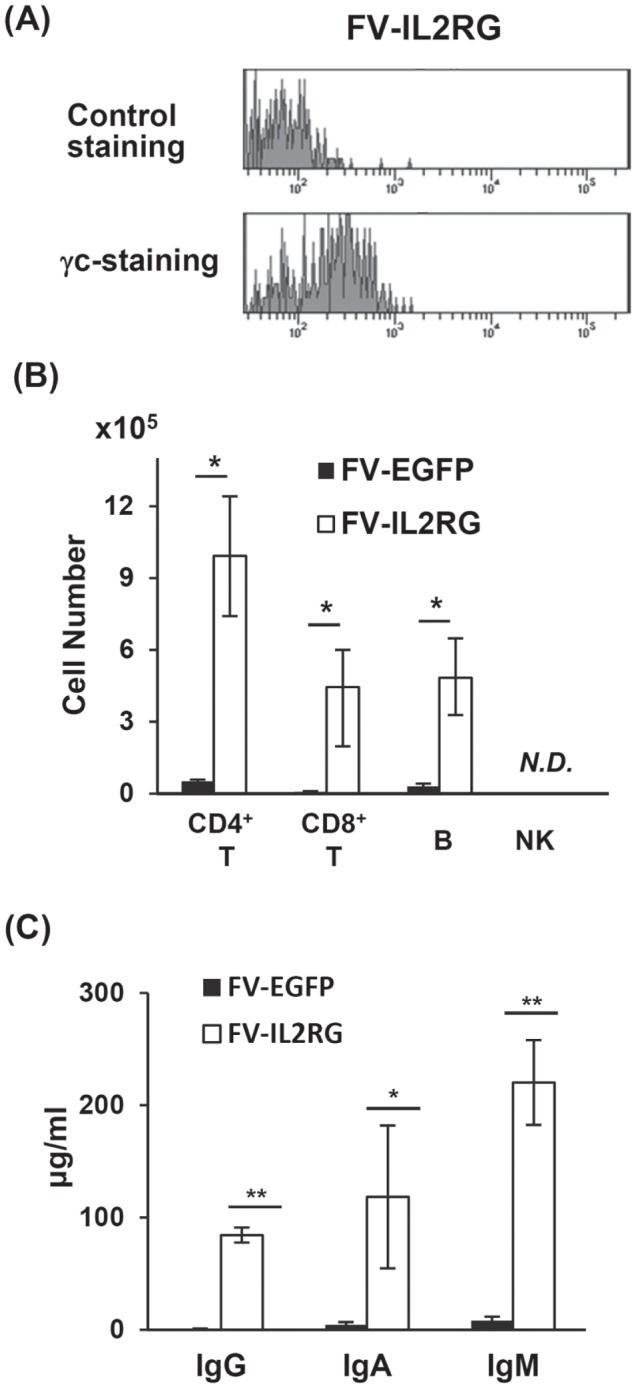
X-linked severe combined immunodeficiency (SCID-X1) is an inherited genetic immunodeficiency associated with mutations in the common cytokine receptor γ chain (γc) gene, and characterized by a complete defect of T and natural killer (NK) cells. Gene therapy for SCID-X1 using conventional retroviral (RV) vectors carrying the γc gene results in the successful reconstitution of T cell immunity. However, the high incidence of vector-mediated T cell leukemia, caused by vector insertion near or within cancer-related genes has been a serious problem. In this study, we established a gene therapy model of mouse SCID-X1 using a modified foamy virus (FV) vector expressing human γc. Analysis of vector integration in a human T cell line demonstrated that the FV vector integration sites were significantly less likely to be located within or near transcriptional start sites than RV vector integration sites. To evaluate the therapeutic efficacy, bone marrow cells from γc-knockout (γc-KO) mice were infected with the FV vector and transplanted into γc-KO mice. Transplantation of the FV-treated cells resulted in the successful reconstitution of functionally active T and B cells. These data suggest that FV vectors can be effective and may be safer than conventional RV vectors for gene therapy for SCID-X1.
X 连锁重症联合免疫缺陷病(SCID-X1)是一种遗传性免疫缺陷病,与常见细胞因子受体γ链(γc)基因突变有关,其特征是 T 细胞和自然杀伤(NK)细胞完全缺失。使用携带 γc 基因的传统逆转录病毒(RV)载体对 SCID-X1 进行基因治疗可成功重建 T 细胞免疫。然而,由于载体插入到癌症相关基因附近或内部,导致载体介导的 T 细胞白血病的发生率很高,这是一个严重的问题。在这项研究中,我们使用表达人 γc 的改良泡沫病毒(FV)载体建立了小鼠 SCID-X1 的基因治疗模型。对人 T 细胞系中载体整合的分析表明,FV 载体的整合位点明显比 RV 载体的整合位点更不可能位于转录起始位点内或附近。为了评估治疗效果,将 γc 敲除(γc-KO)小鼠的骨髓细胞用 FV 载体感染,并移植到 γc-KO 小鼠中。FV 处理细胞的移植导致功能活跃的 T 和 B 细胞的成功重建。这些数据表明,FV 载体可有效用于治疗 SCID-X1,并且可能比传统的 RV 载体更安全。