Department of Chemistry and Biochemistry, Baylor University, One Bear Place #97348, Waco, TX 76798-7348, USA.
Bioorg Med Chem. 2013 Nov 1;21(21):6831-43. doi: 10.1016/j.bmc.2013.07.028. Epub 2013 Jul 23.
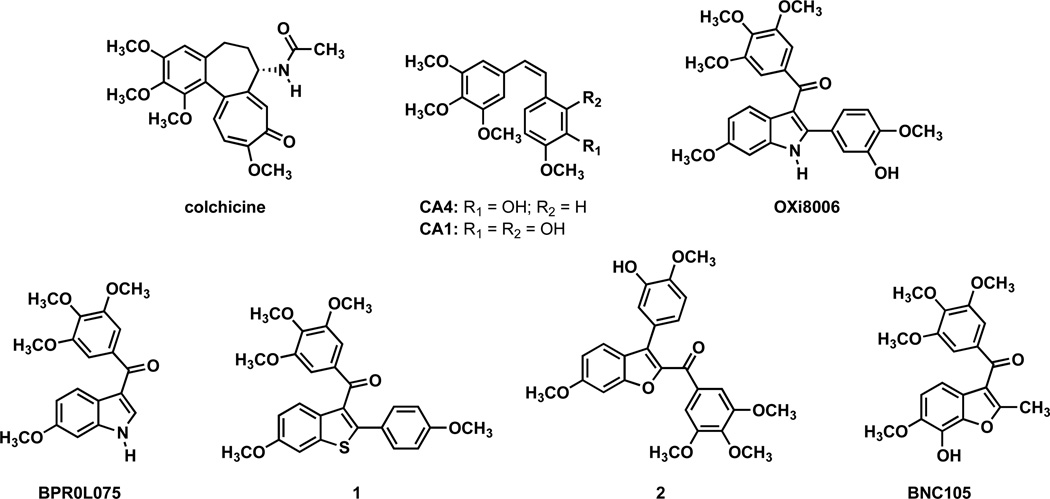
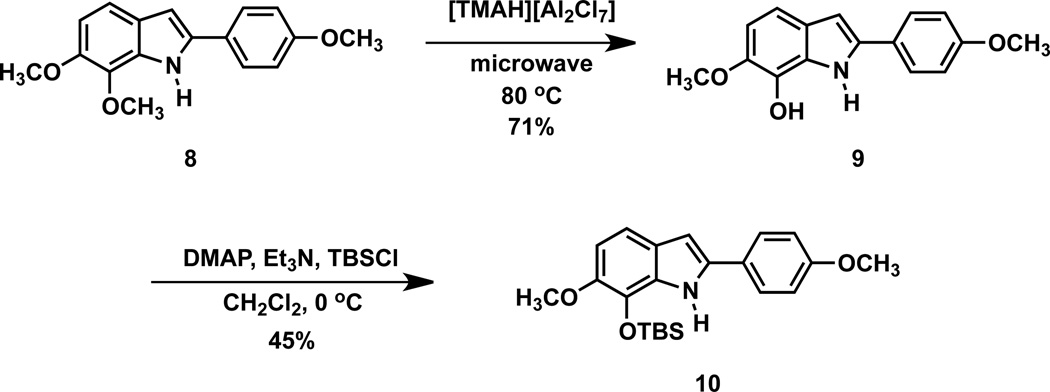
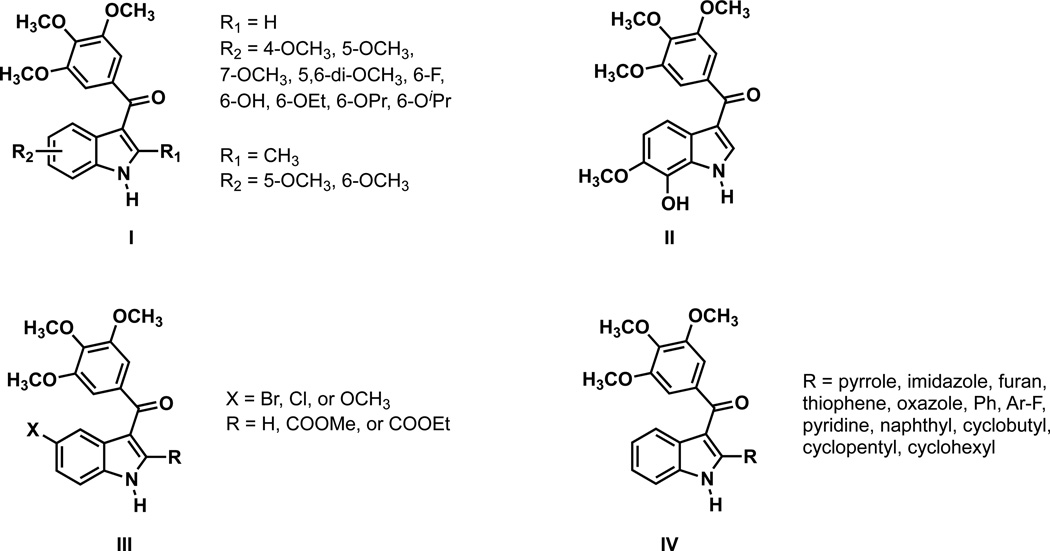
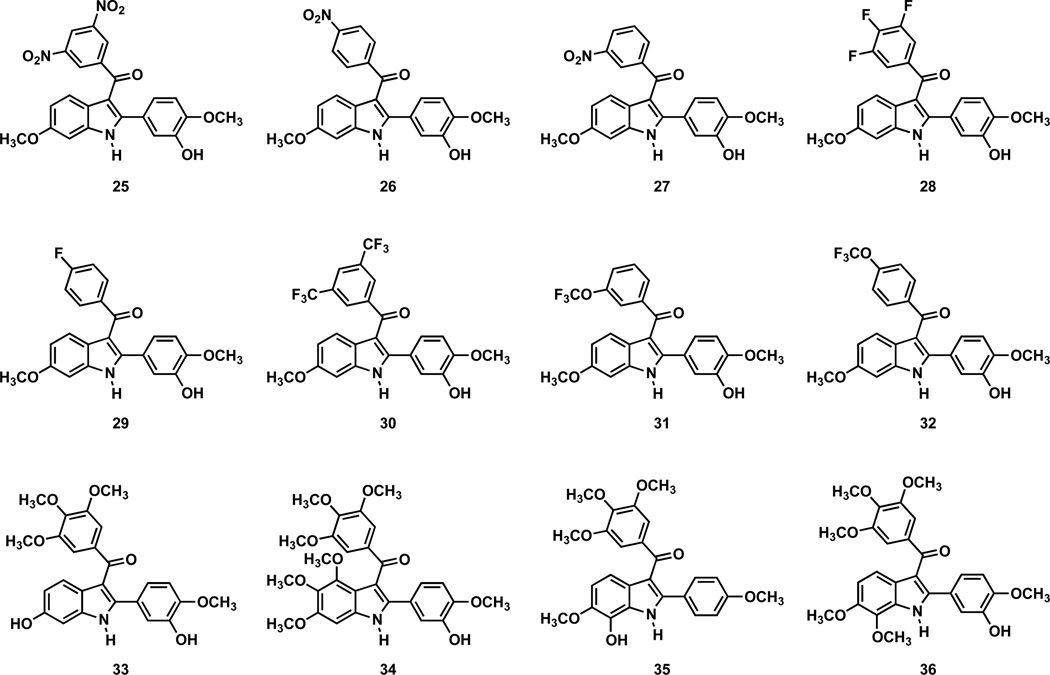
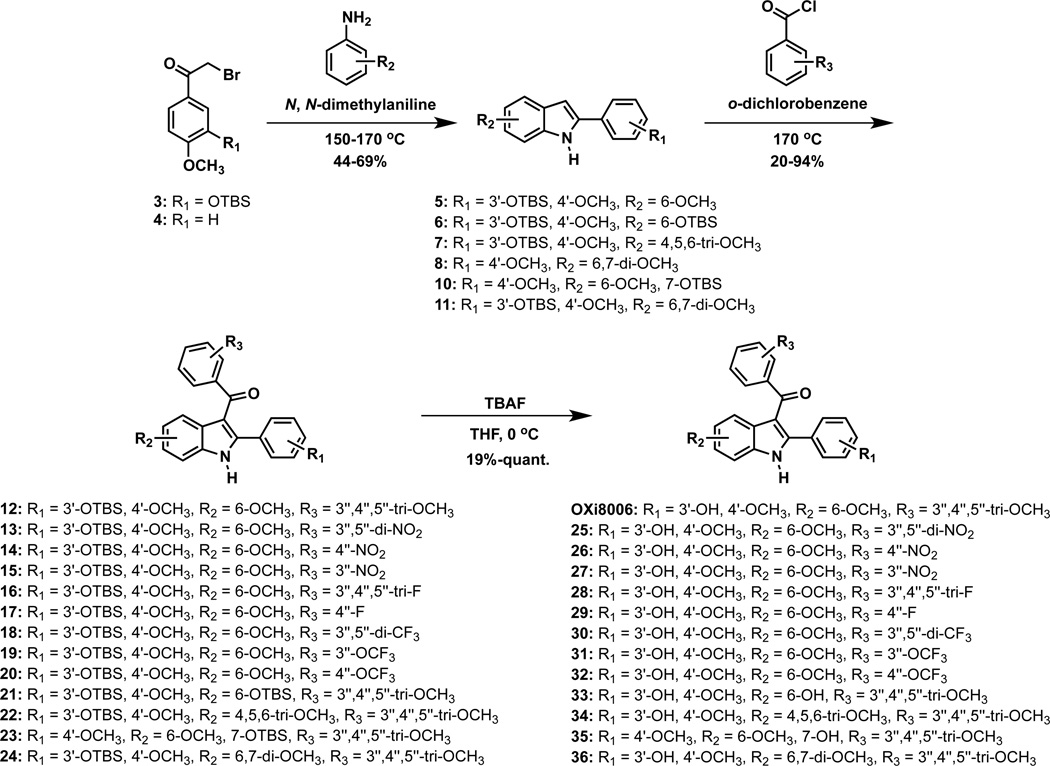
The discovery of a 2-aryl-3-aroyl indole-based small-molecule inhibitor of tubulin assembly (referred to as OXi8006) inspired the design, synthesis, and biological evaluation of a series of diversely functionalized analogues. In the majority of examples, the pendant 2-aryl ring contained a 3-hydroxy-4-methoxy substitution pattern, and the fused aryl ring featured a 6-methoxy group. Most of the variability was in the 3-aroyl moiety, which was modified to incorporate methoxy (33-36), nitro (25-27), halogen (28-29), trifluoromethyl (30), or trifluoromethoxy (31-32) functionalities. In two analogues (34 and 36), the methoxy substitution pattern in the fused aryl ring varied, while in another derivative (35) the phenolic moiety was translocated from the pendant 2-aryl ring to position-7 of the fused aryl ring. Each of the compounds were evaluated for their cytotoxicity (in vitro) against the SK-OV-3 (ovarian), NCI-H460 (lung), and DU-145 (prostate) human cancer cell lines and for their ability to inhibit tubulin assembly. Four of the compounds (30, 31, 35, 36) proved to be potent inhibitors of tubulin assembly (IC50 <5μM), and three of these compounds (31, 35, 36) were strongly cytotoxic against the three cancer cell lines. The most active compound (36) in this series, which incorporated a methoxy group at position-7, was comparable in terms of inhibition of tubulin assembly and cytotoxicity to the lead compound OXi8006.
基于 2-芳基-3-芳酰基吲哚的微管组装小分子抑制剂(简称 OXi8006)的发现,激发了一系列多样化功能化类似物的设计、合成和生物评估。在大多数情况下,侧链的 2-芳基环含有 3-羟基-4-甲氧基取代模式,稠合芳基环具有 6-甲氧基取代模式。大部分变化发生在 3-芳酰基部分,其中包括甲氧基(33-36)、硝基(25-27)、卤素(28-29)、三氟甲基(30)或三氟甲氧基(31-32)取代基。在两个类似物(34 和 36)中,稠合芳基环中的甲氧基取代模式发生了变化,而在另一个衍生物(35)中,酚部分从侧链 2-芳基环转移到稠合芳基环的 7 位。每个化合物都进行了细胞毒性(体外)评估,以测试其对 SK-OV-3(卵巢)、NCI-H460(肺)和 DU-145(前列腺)人类癌细胞系的杀伤力,并评估其抑制微管组装的能力。其中四种化合物(30、31、35、36)被证明是微管组装的有效抑制剂(IC50<5μM),其中三种化合物(31、35、36)对三种癌细胞系具有很强的细胞毒性。该系列中最有效的化合物(36),在 7 位引入了一个甲氧基取代基,在抑制微管组装和细胞毒性方面与先导化合物 OXi8006相当。