Department of Medicine, Section of Pulmonary, Critical Care, Sleep and Allergy Medicine, University of Illinois at Chicago, Chicago, Illinois, USA.
Pulm Circ. 2013 Apr;3(2):396-405. doi: 10.4103/2045-8932.114776.
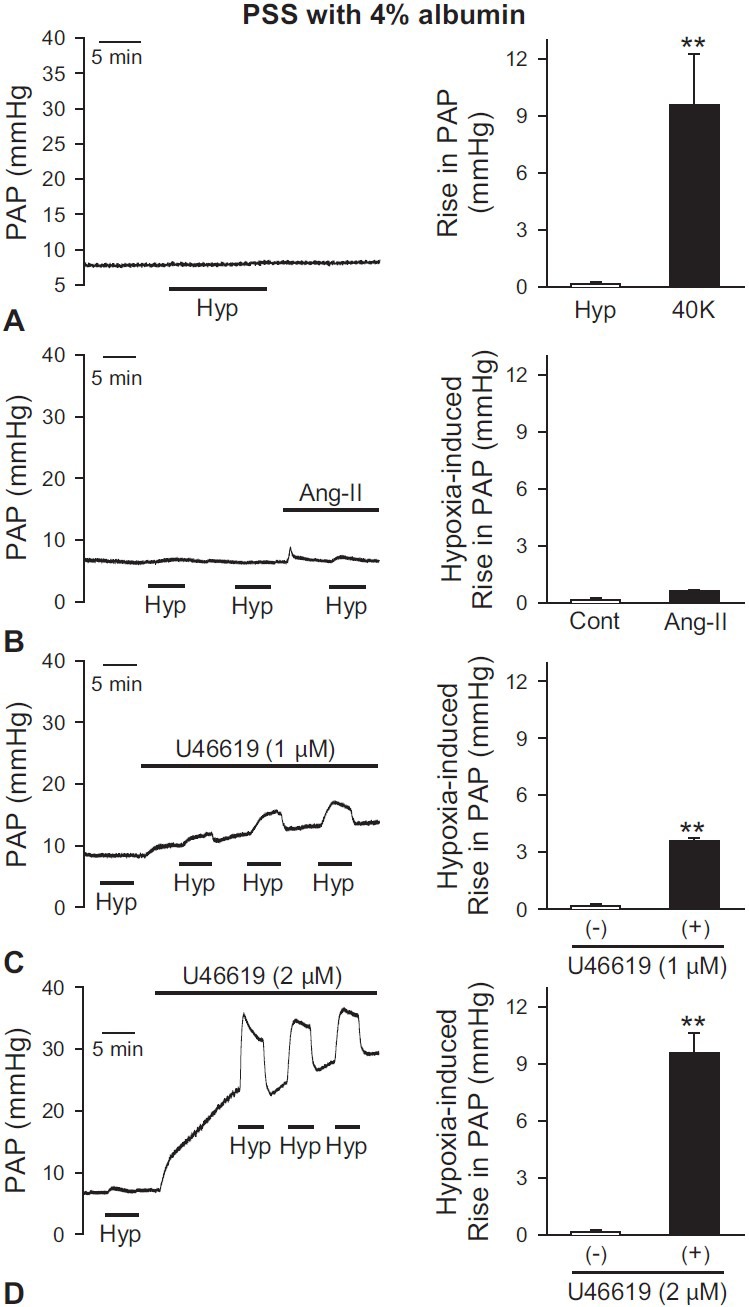
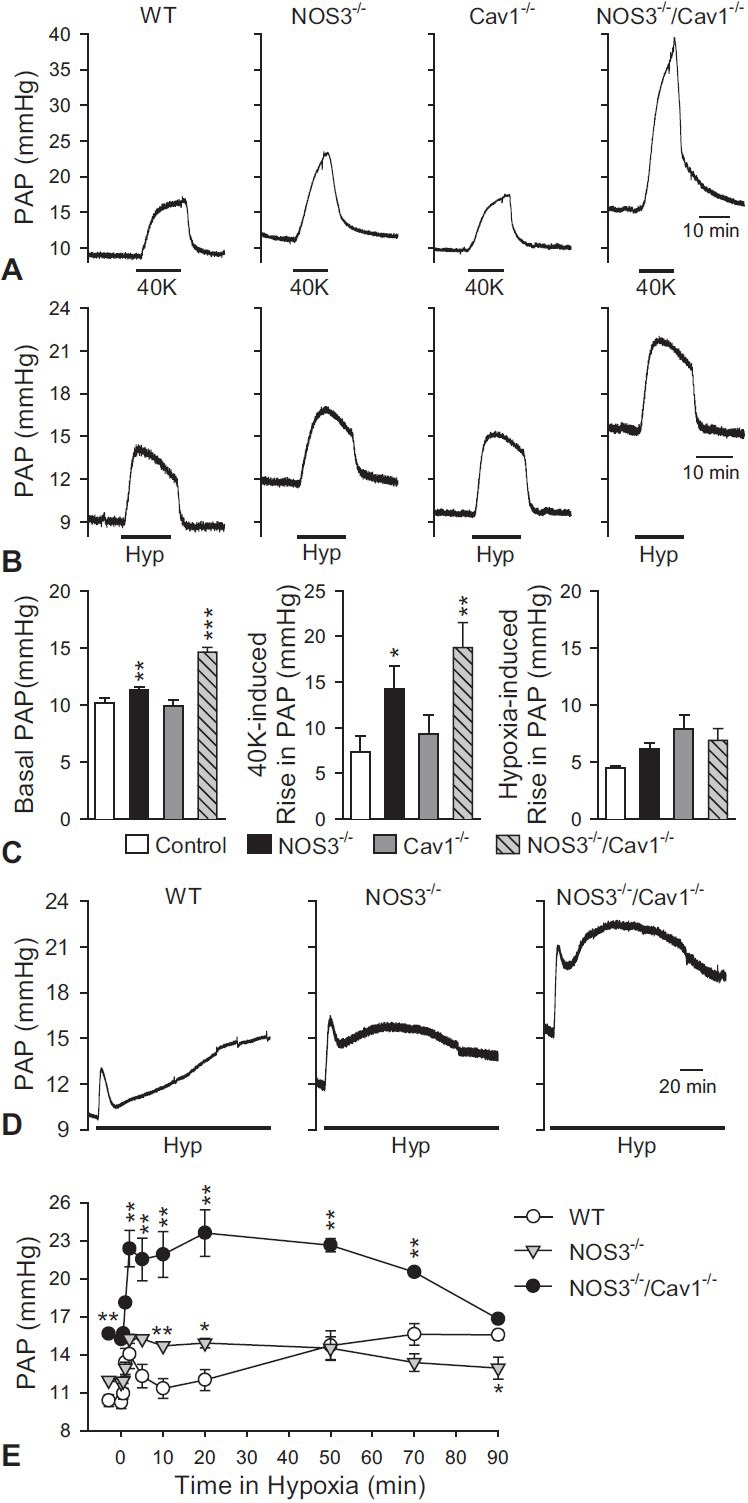
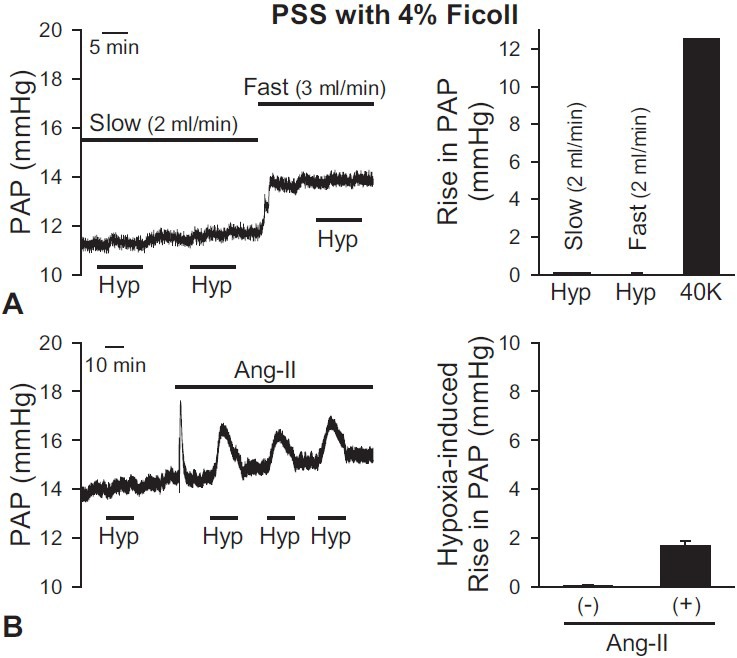
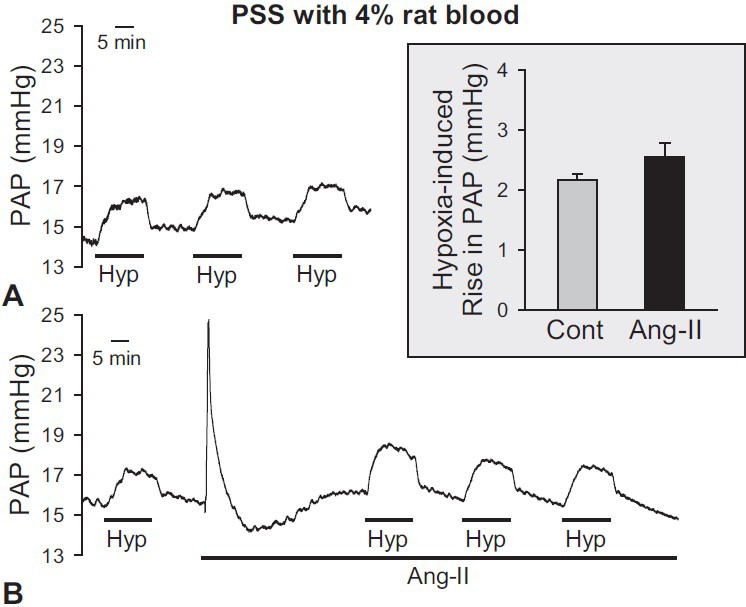
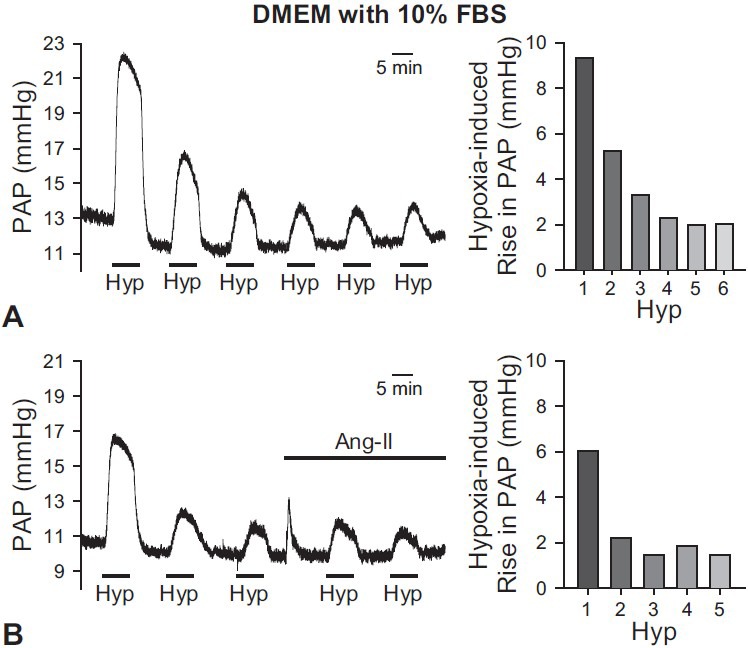
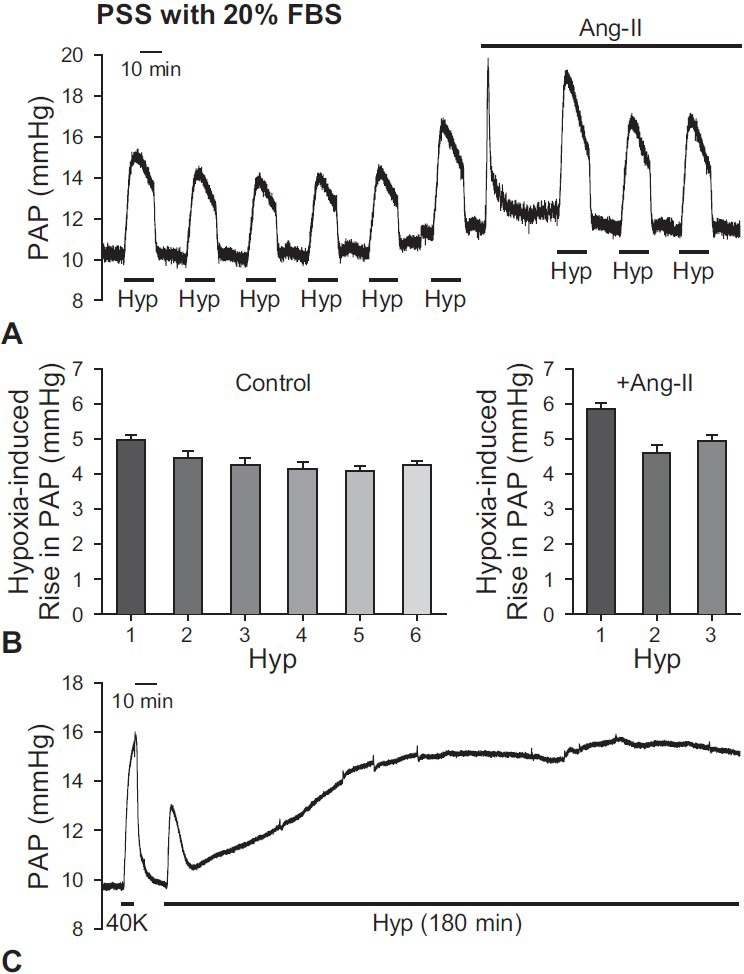
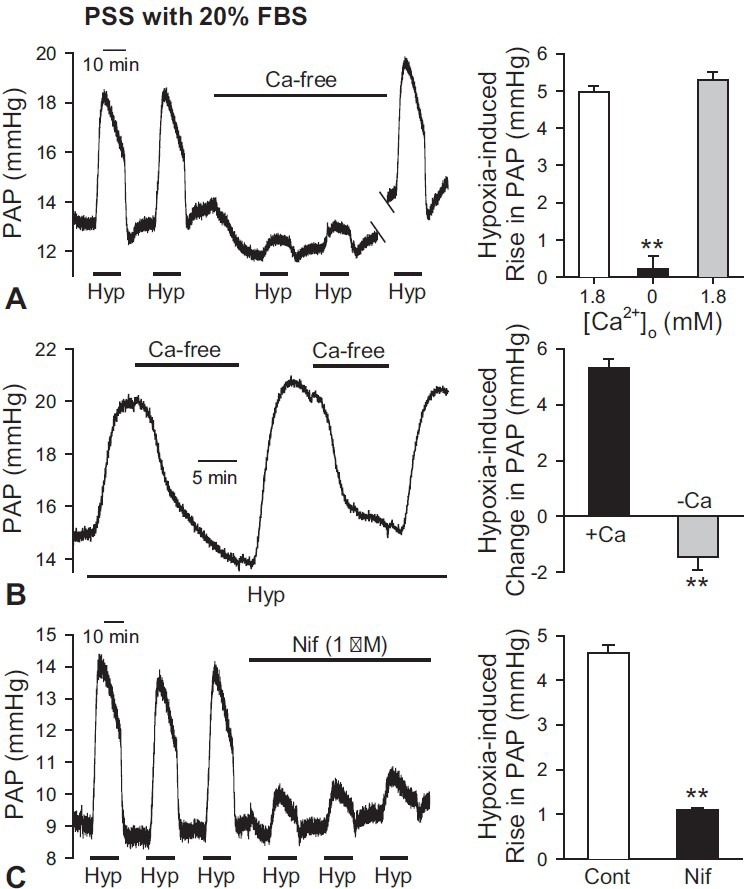
Hypoxic pulmonary vasoconstriction (HPV) is a compensatory physiological mechanism in the lung that optimizes the matching of ventilation to perfusion and thereby maximizes gas exchange. Historically, HPV has been primarily studied in isolated perfused/ventilated lungs; however, the results of these studies have varied greatly due to different experimental conditions and species. Therefore, in the present study, we utilized the mouse isolated perfused/ventilated lung model for investigation of the role of extracellular Ca(2+) and caveolin-1 and endothelial nitric oxide synthase expression on HPV. We also compared HPV using different perfusate solutions: Physiological salt solution (PSS) with albumin, Ficoll, rat blood, fetal bovine serum (FBS), or Dulbecco's Modified Eagle Medium (DMEM). After stabilization of the pulmonary arterial pressure (PAP), hypoxic (1% O2) and normoxic (21% O2) gases were applied via a ventilator in five-minute intervals to measure HPV. The addition of albumin or Ficoll with PSS did not induce persistent and strong HPV with or without a pretone agent. DMEM with the inclusion of FBS in the perfusate induced strong HPV in the first hypoxic challenge, but the HPV was neither persistent nor repetitive. PSS with rat blood only induced a small increase in HPV amplitude. Persistent and repetitive HPV occurred with PSS with 20% FBS as perfusate. HPV was significantly decreased by the removal of extracellular Ca(2+) along with addition of 1 mM EGTA to chelate residual Ca(2+) and voltage-dependent Ca(2+) channel blocker (nifedipine 1 μM). PAP was also reactive to contractile stimulation by high K(+) depolarization and U46619 (a stable analogue of thromboxane A2). In summary, optimal conditions for measuring HPV were established in the isolated perfused/ventilated mouse lung. Using this method, we further confirmed that HPV is dependent on Ca(2+) influx.
低氧性肺血管收缩(HPV)是肺部的一种代偿性生理机制,它优化了通气与灌注的匹配,从而最大限度地提高气体交换效率。历史上,HPV 主要在离体灌注/通气的肺中进行研究;然而,由于不同的实验条件和物种,这些研究的结果差异很大。因此,在本研究中,我们利用小鼠离体灌注/通气肺模型来研究细胞外 Ca(2+)和 caveolin-1 以及内皮型一氧化氮合酶表达在 HPV 中的作用。我们还比较了使用不同灌注液的 HPV:含白蛋白、Ficoll、鼠血、胎牛血清(FBS)或 Dulbecco's Modified Eagle Medium(DMEM)的生理盐水(PSS)。在稳定肺动脉压(PAP)后,通过呼吸机在五分钟的间隔内施加低氧(1% O2)和常氧(21% O2)气体,以测量 HPV。在没有预张力剂的情况下,添加白蛋白或 Ficoll 与 PSS 均不能诱导持续且强烈的 HPV。DMEM 中加入 FBS 可在第一次低氧刺激时诱导强烈的 HPV,但 HPV 既不持续也不重复。仅用鼠血的 PSS 仅引起 HPV 幅度略有增加。用含 20% FBS 的 PSS 作为灌注液会导致 HPV 持续且重复。去除细胞外 Ca(2+)并加入 1 mM EGTA 螯合残留 Ca(2+)和电压依赖性 Ca(2+)通道阻滞剂(1 μM 硝苯地平)可显著降低 HPV。PAP 还对高 K(+)去极化和 U46619(血栓烷 A2 的稳定类似物)的收缩性刺激产生反应。总之,在离体灌注/通气的小鼠肺中建立了测量 HPV 的最佳条件。使用这种方法,我们进一步证实 HPV 依赖于 Ca(2+)内流。