1] Cardiovascular Research Center, Massachusetts General Hospital, Boston, MA 02114, USA [2] Department of Stem Cell and Regenerative Biology, Harvard University, Cambridge, MA 01238, USA [3] Stem Cell and Regenerative Medicine Consortium, LKS Faculty of Medicine, University of Hong Kong, Pokfulam, Hong Kong SAR, China.
Cell Res. 2013 Oct;23(10):1172-86. doi: 10.1038/cr.2013.112. Epub 2013 Sep 10.
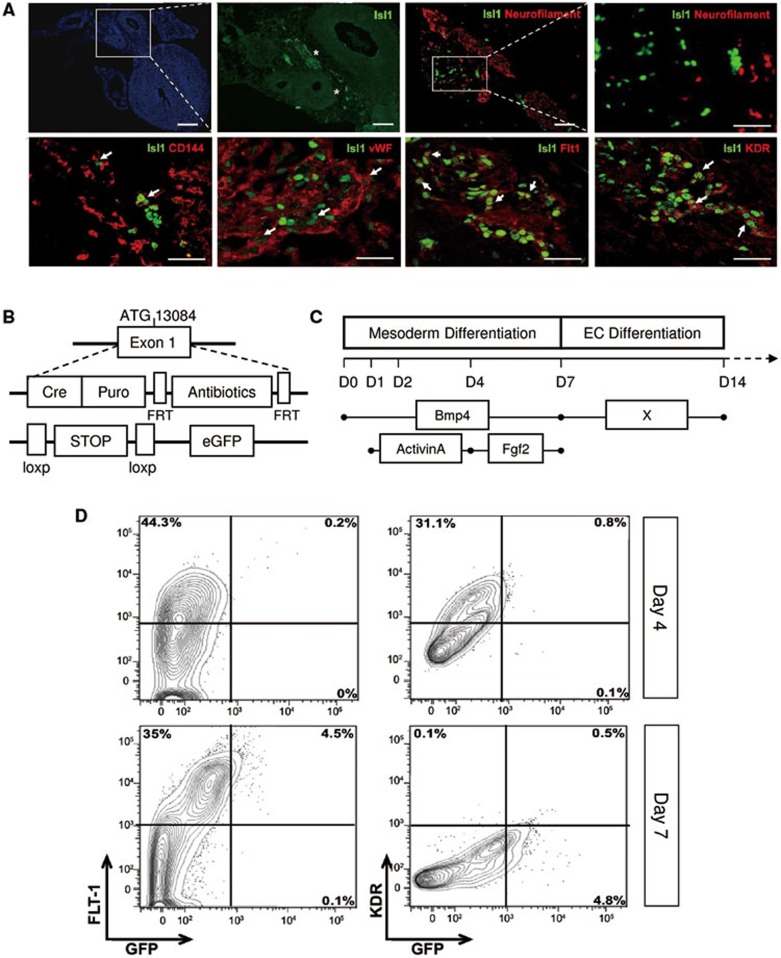
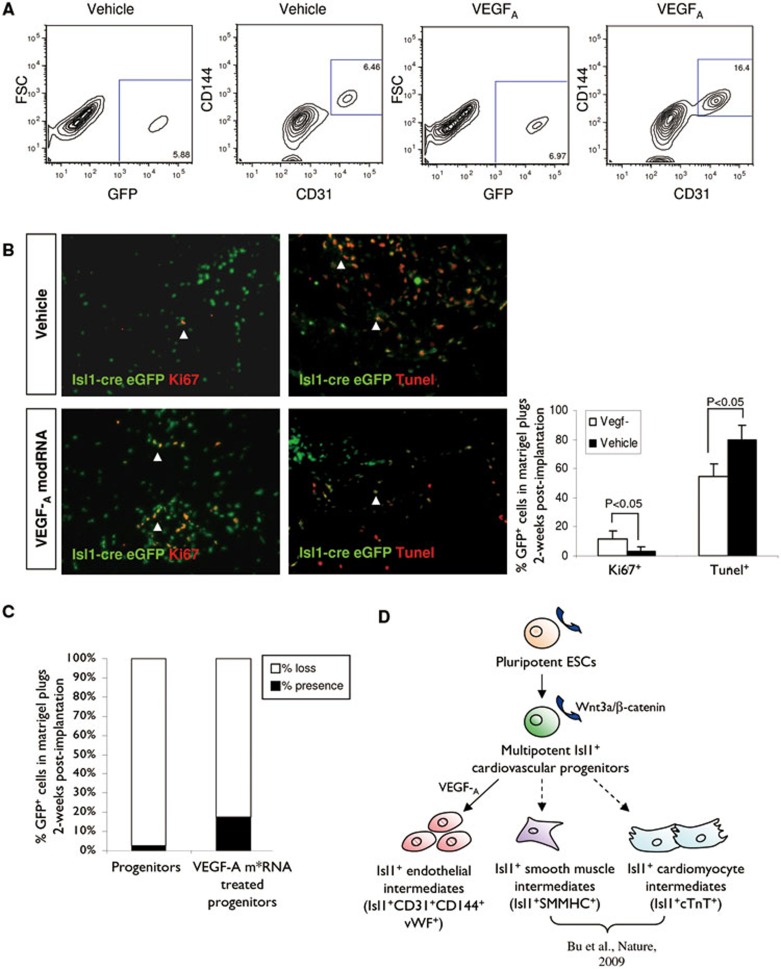
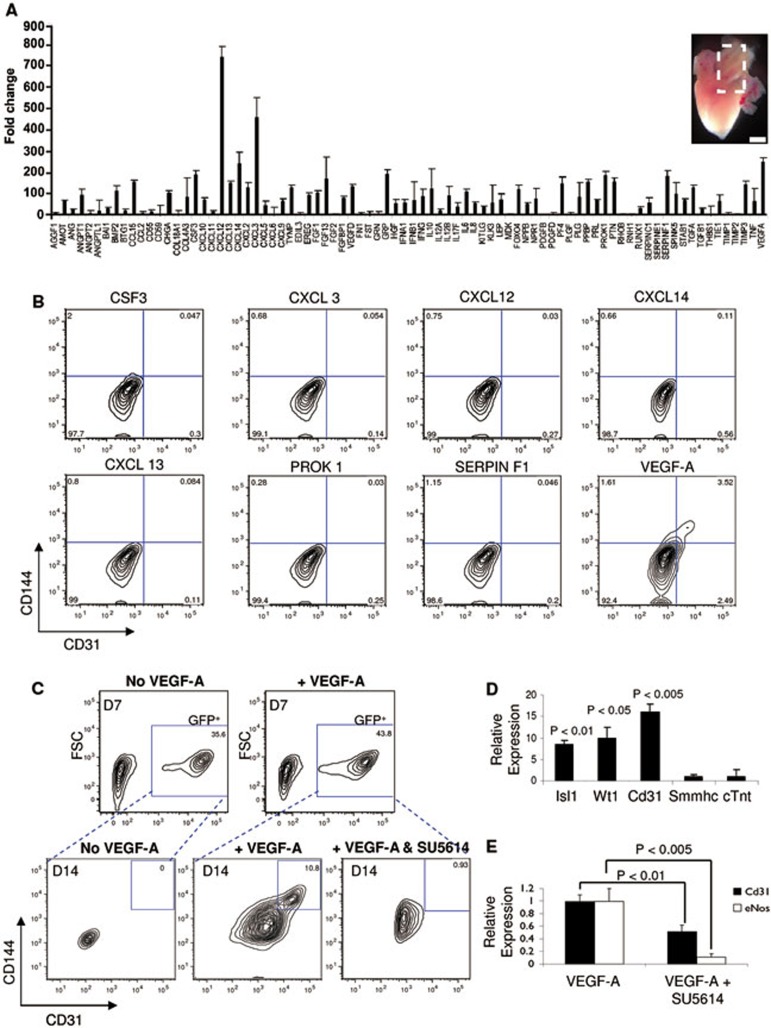
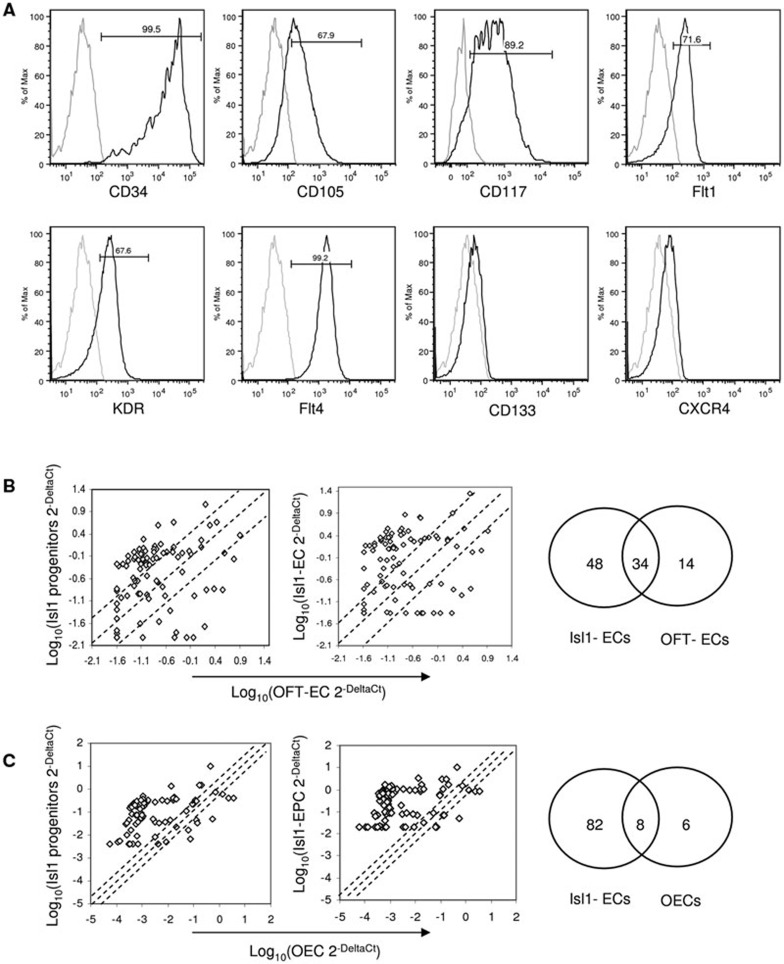
Distinct families of multipotent heart progenitors play a central role in the generation of diverse cardiac, smooth muscle and endothelial cell lineages during mammalian cardiogenesis. The identification of precise paracrine signals that drive the cell-fate decision of these multipotent progenitors, and the development of novel approaches to deliver these signals in vivo, are critical steps towards unlocking their regenerative therapeutic potential. Herein, we have identified a family of human cardiac endothelial intermediates located in outflow tract of the early human fetal hearts (OFT-ECs), characterized by coexpression of Isl1 and CD144/vWF. By comparing angiocrine factors expressed by the human OFT-ECs and non-cardiac ECs, vascular endothelial growth factor (VEGF)-A was identified as the most abundantly expressed factor, and clonal assays documented its ability to drive endothelial specification of human embryonic stem cell (ESC)-derived Isl1+ progenitors in a VEGF receptor-dependent manner. Human Isl1-ECs (endothelial cells differentiated from hESC-derived ISL1+ progenitors) resemble OFT-ECs in terms of expression of the cardiac endothelial progenitor- and endocardial cell-specific genes, confirming their organ specificity. To determine whether VEGF-A might serve as an in vivo cell-fate switch for human ESC-derived Isl1-ECs, we established a novel approach using chemically modified mRNA as a platform for transient, yet highly efficient expression of paracrine factors in cardiovascular progenitors. Overexpression of VEGF-A promotes not only the endothelial specification but also engraftment, proliferation and survival (reduced apoptosis) of the human Isl1+ progenitors in vivo. The large-scale derivation of cardiac-specific human Isl1-ECs from human pluripotent stem cells, coupled with the ability to drive endothelial specification, engraftment, and survival following transplantation, suggest a novel strategy for vascular regeneration in the heart.
多能心脏祖细胞家族在哺乳动物心脏发生过程中对于生成不同的心脏、平滑肌和内皮细胞谱系起着核心作用。鉴定出确切的旁分泌信号,这些信号驱动这些多能祖细胞的细胞命运决定,以及开发在体内传递这些信号的新方法,是实现其再生治疗潜力的关键步骤。在此,我们鉴定了一组位于早期人胎儿心脏流出道(OFT-ECs)的人心脏内皮中间细胞,其特征是共表达 Isl1 和 CD144/vWF。通过比较人 OFT-ECs 和非心脏 ECs 表达的血管生成因子,发现血管内皮生长因子(VEGF)-A 是表达最丰富的因子,克隆分析证明其能够以 VEGF 受体依赖性方式驱动人胚胎干细胞(ESC)衍生的 Isl1+祖细胞的内皮特化。人 Isl1-ECs(从 hESC 衍生的 ISL1+祖细胞分化而来的内皮细胞)在心脏内皮祖细胞和心内膜细胞特异性基因的表达方面与 OFT-ECs 相似,证实了其器官特异性。为了确定 VEGF-A 是否可以作为人 ESC 衍生的 Isl1-ECs 的体内细胞命运开关,我们建立了一种新方法,使用化学修饰的 mRNA 作为平台,用于在心血管祖细胞中瞬时但高效地表达旁分泌因子。VEGF-A 的过表达不仅促进了内皮特化,还促进了人 Isl1+祖细胞在体内的植入、增殖和存活(减少凋亡)。从人多能干细胞大量衍生出心脏特异性的人 Isl1-ECs,加上在移植后驱动内皮特化、植入和存活的能力,为心脏血管再生提供了一种新策略。