Amgen, Seattle, Washington, United States of America.
PLoS One. 2013 Sep 3;8(9):e74071. doi: 10.1371/journal.pone.0074071. eCollection 2013.
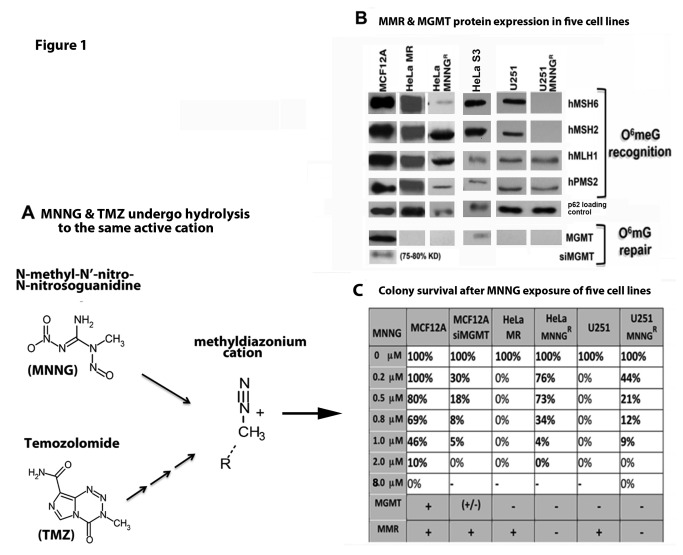
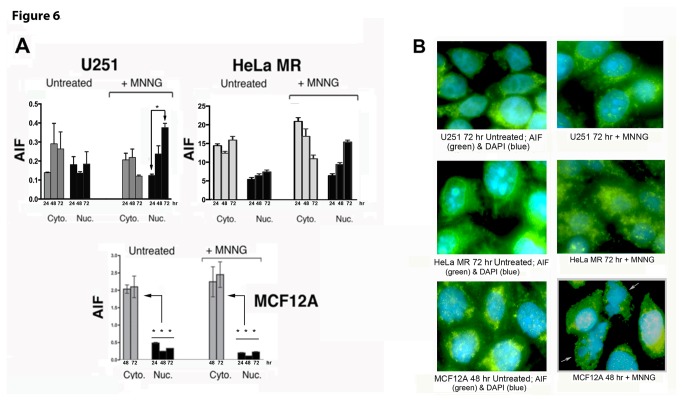
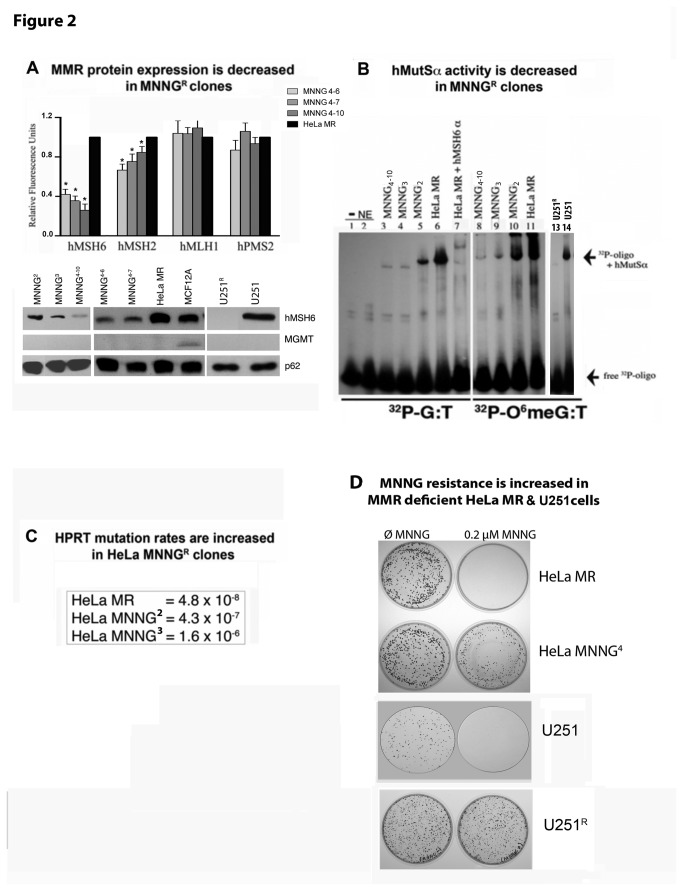
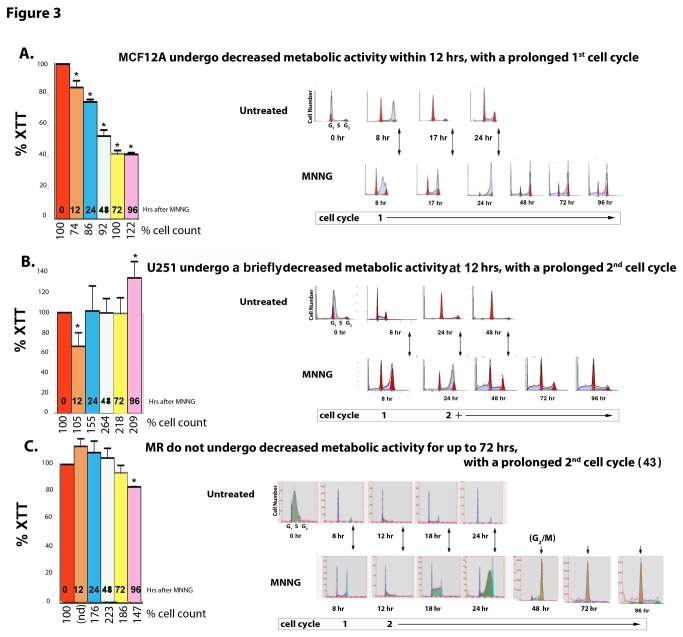
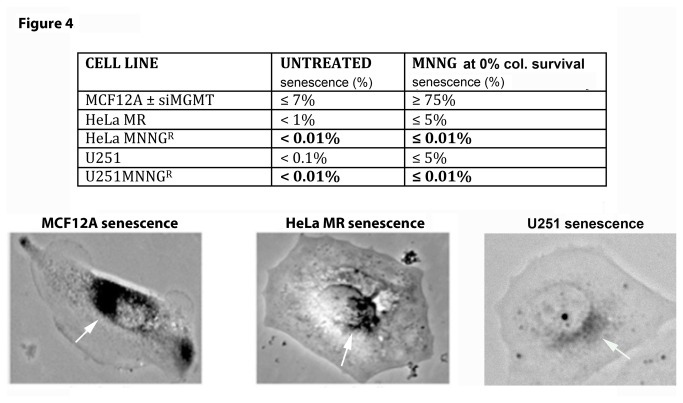
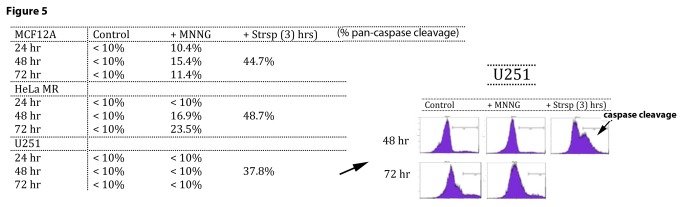
The major dilemma of cancer chemotherapy has always been a double-edged sword, producing resistance in tumor cells and life-threatening destruction of nontumorigenic tissue. Glioblastoma is the most common form of primary brain tumor, with median survival at 14 months after surgery, radiation and temozolomide (monofunctional alkylator) therapy. Treatment failure is most often due to temozolomide-resistant tumor growth. The underlying basis for development of tumor cell resistance to temozolomide instead of death is not understood. Our current results demonstrate that both cervical carcinoma (HeLa MR) and glioblastoma (U251) tumor cells exposed to an equivalent chemotherapeutic concentration of a monofunctional alkylator undergo multiple cell cycles, maintenance of metabolic activity, and a prolonged time to death that involves accumulation of Apoptosis Inducing Factor (AIF) within the nucleus. A minority of the tumor cell population undergoes senescence, with minimal caspase cleavage. Surviving tumor cells are comprised of a very small subpopulation of individual cells that eventually resume proliferation, out of which resistant cells emerge. In contrast, normal human cells (MCF12A) exposed to a monofunctional alkylator undergo an immediate decrease in metabolic activity and subsequent senescence. A minority of the normal cell population undergoes cell death by the caspase cleavage pathway. All cytotoxic events occur within the first cell cycle in nontumorigenic cells. In summation, we have demonstrated that two different highly malignant tumor cell lines slowly undergo very altered cellular and temporal responses to chemotherapeutic monofunctional alkylation, as compared to rapid responses of normal cells. In the clinic, this produces resistance and growth of tumor cells, cytotoxicity of normal cells, and death of the patient.
癌症化疗的主要困境一直是一把双刃剑,在肿瘤细胞中产生耐药性,并对非肿瘤组织造成危及生命的破坏。胶质母细胞瘤是最常见的原发性脑肿瘤,手术后中位生存时间为 14 个月,采用手术、放疗和替莫唑胺(单功能烷化剂)治疗。治疗失败最常因替莫唑胺耐药肿瘤生长所致。肿瘤细胞对替莫唑胺产生耐药性而不是死亡的潜在基础尚不清楚。我们目前的研究结果表明,暴露于单功能烷化剂等效化疗浓度的宫颈癌(HeLa MR)和胶质母细胞瘤(U251)肿瘤细胞均经历多个细胞周期、维持代谢活性以及延长的死亡时间,在此期间凋亡诱导因子(AIF)在核内积累。肿瘤细胞群体中的一小部分经历衰老,caspase 切割最小。存活的肿瘤细胞由一小部分个体细胞组成,这些细胞最终会恢复增殖,其中耐药细胞出现。相比之下,暴露于单功能烷化剂的正常人类细胞(MCF12A)立即降低代谢活性,随后衰老。一小部分正常细胞群通过 caspase 切割途径发生细胞死亡。所有细胞毒性事件均发生在非肿瘤细胞的第一个细胞周期内。总之,我们已经证明,两种不同的高度恶性肿瘤细胞系对化疗单功能烷化的细胞和时间反应非常缓慢,而正常细胞则迅速反应。在临床上,这会产生耐药性和肿瘤细胞生长、正常细胞的细胞毒性以及患者的死亡。