1] State Key Laboratory of Biogeology and Environmental Geology, China University of Geosciences, Beijing 100083, China [2] School of Ocean Sciences, China University of Geosciences, Beijing 100083, China.
Nat Commun. 2013;4:2452. doi: 10.1038/ncomms3452.
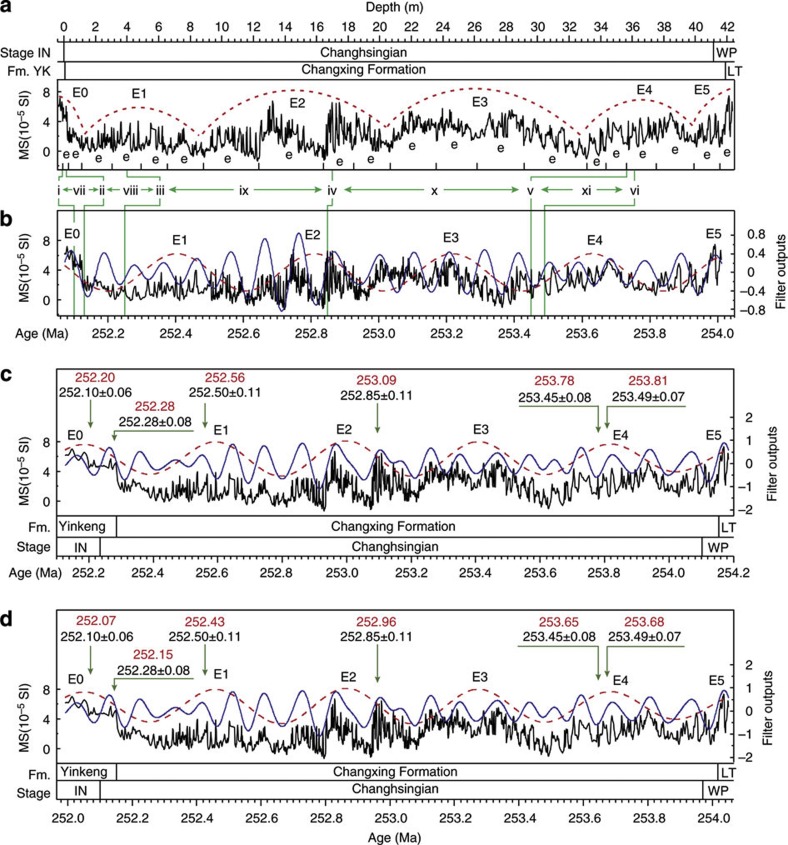
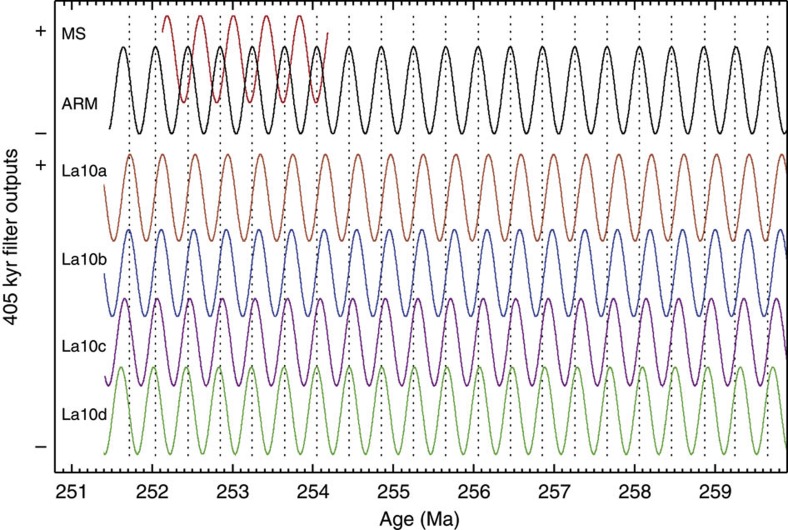
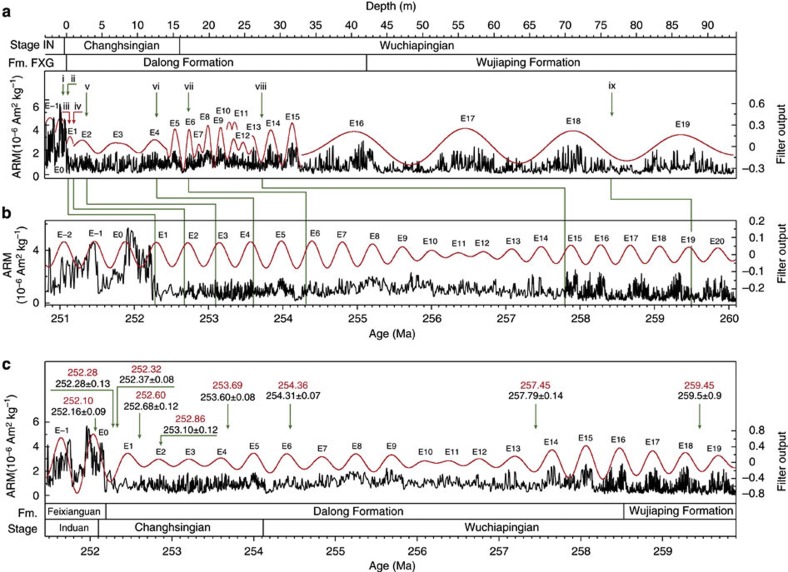
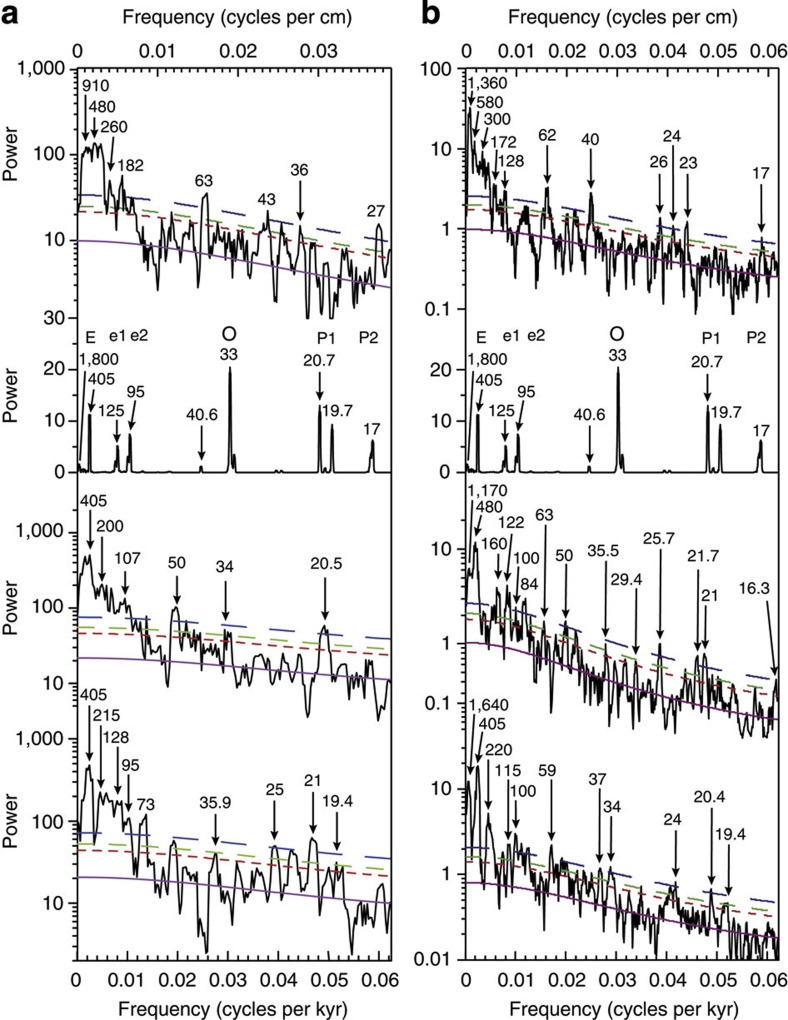
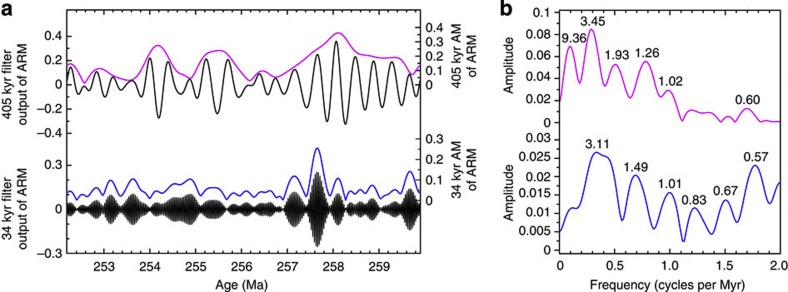
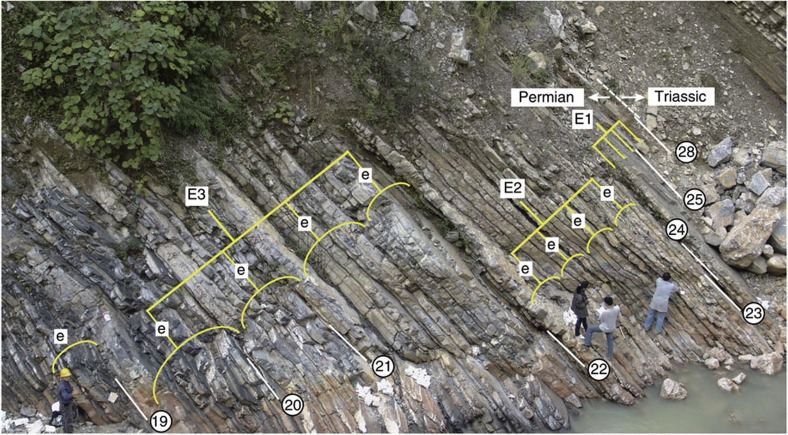
An important innovation in the geosciences is the astronomical time scale. The astronomical time scale is based on the Milankovitch-forced stratigraphy that has been calibrated to astronomical models of paleoclimate forcing; it is defined for much of Cenozoic-Mesozoic. For the Palaeozoic era, however, astronomical forcing has not been widely explored because of lack of high-precision geochronology or astronomical modelling. Here we report Milankovitch cycles from late Permian (Lopingian) strata at Meishan and Shangsi, South China, time calibrated by recent high-precision U-Pb dating. The evidence extends empirical knowledge of Earth's astronomical parameters before 250 million years ago. Observed obliquity and precession terms support a 22-h length-of-day. The reconstructed astronomical time scale indicates a 7.793-million year duration for the Lopingian epoch, when strong 405-kyr cycles constrain astronomical modelling. This is the first significant advance in defining the Palaeozoic astronomical time scale, anchored to absolute time, bridging the Palaeozoic-Mesozoic transition.
地质科学的一项重要创新是天文时间尺度。天文时间尺度基于米兰科维奇强迫地层学,该地层学已经通过古气候强迫的天文模型进行了校准;它的定义适用于新生代-中生代的大部分时期。然而,由于缺乏高精度的地质年代学或天文模型,古生代的天文强迫还没有得到广泛的探索。在这里,我们报告了来自华南湄山和上思的晚二叠世(长兴期)地层中的米兰科维奇旋回,这些旋回的时间通过最近的高精度 U-Pb 定年进行了校准。这些证据扩展了对 2.5 亿年前地球天文参数的经验认识。观测到的倾斜和岁差项支持一个 22 小时的太阳日长度。重建的天文时间尺度表明长兴期的持续时间为 779.3 万年,当时强烈的 405 千周周期限制了天文模型的构建。这是定义以绝对时间为基准的古生代天文时间尺度的首次重大进展,它连接了古生代和中生代的过渡期。