Centre for Rare Diseases and Personalised Medicine, School of Clinical and Experimental Medicine, College of Medical and Dental Sciences, University of Birmingham, Birmingham B15 2TT, UK.
School of Applied Sciences University of Wolverhampton, Wolverhampton WV1 1SV, UK.
Clin Epigenetics. 2013 Sep 13;5(1):16. doi: 10.1186/1868-7083-5-16.
Despite therapeutic advances in targeted therapy, metastatic renal cell carcinoma (RCC) remains incurable for the vast majority of patients. Key molecular events in the pathogenesis of RCC include inactivation of the VHL tumour suppressor gene (TSG), inactivation of chromosome 3p TSGs implicated in chromatin modification and remodelling and de novo tumour-specific promoter methylation of renal TSGs. In the light of these observations it can be proposed that, as in some haematological malignancies, demethylating agents such as azacitidine might be beneficial for the treatment of advanced RCC.
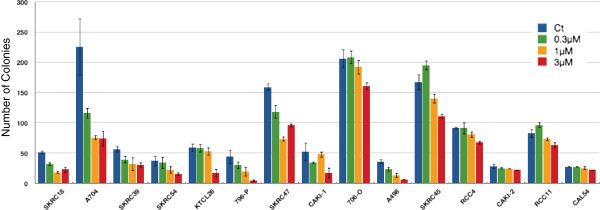
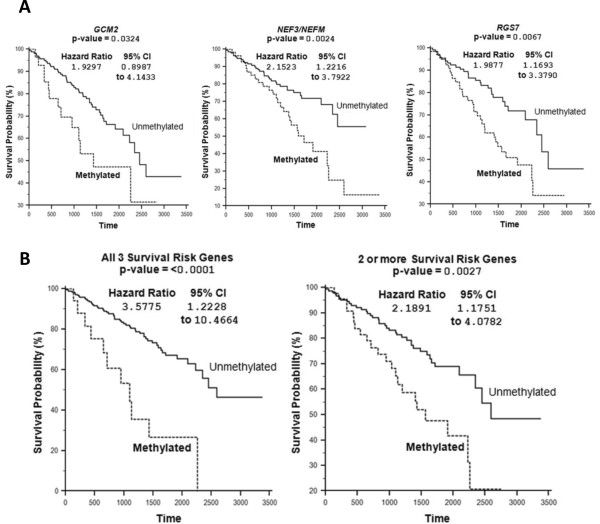
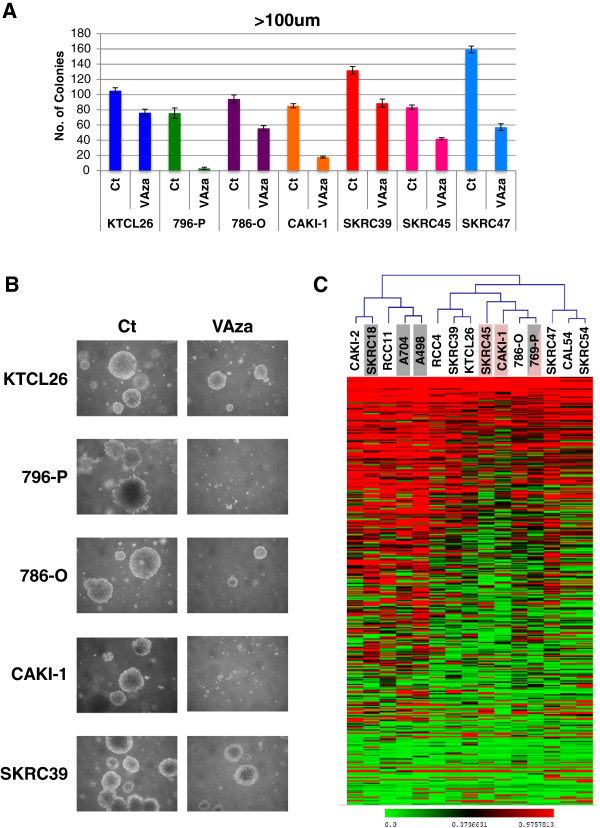
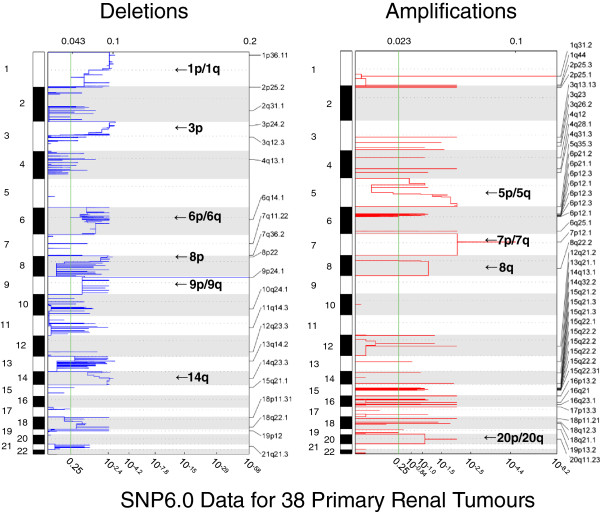
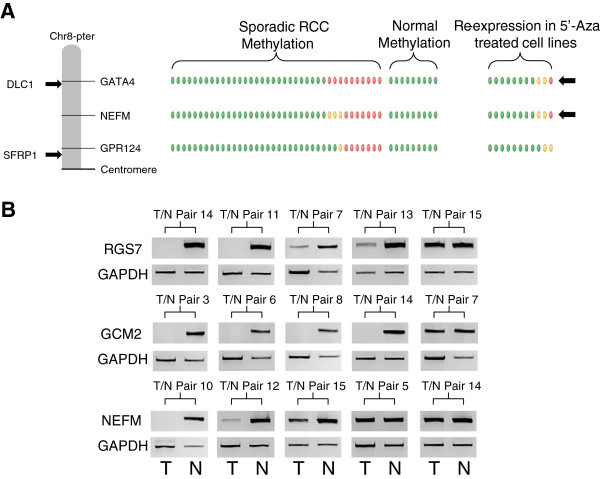
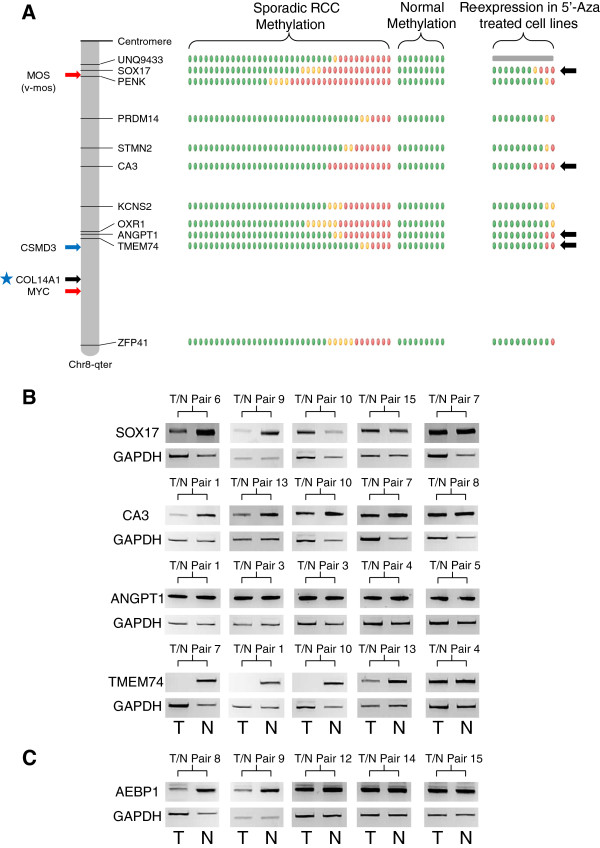
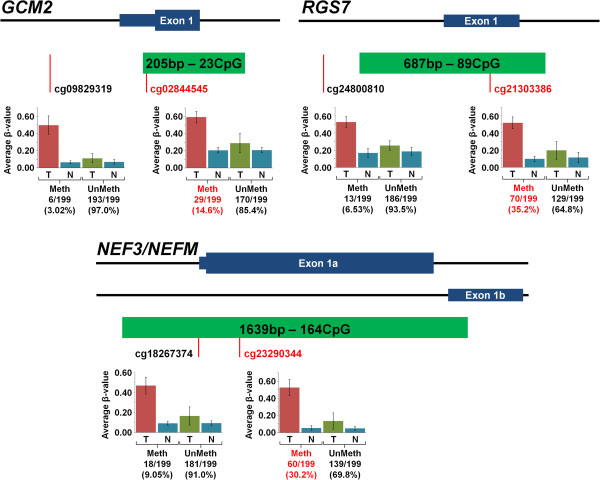
Here we report that the treatment of RCC cell lines with azacitidine suppressed cell proliferation in all 15 lines tested. A marked response to azacitidine therapy (>50% reduction in colony formation assay) was detected in the three cell lines with VHL promoter methylation but some RCC cell lines without VHL TSG methylation also demonstrated a similar response suggesting that multiple methylated TSGs might determine the response to demethylating therapies. To identify novel candidate methylated TSGs implicated in RCC we undertook a combined analysis of copy number and CpG methylation array data. Candidate novel epigenetically inactivated TSGs were further prioritised by expression analysis of RCC cell lines pre and post-azacitidine therapy and comparative expression analysis of tumour/normal pairs. Thus, with subsequent investigation two candidate genes were found to be methylated in more than 25% of our series and in the TCGA methylation dataset for 199 RCC samples: RGS7 (25.6% and 35.2% of tumours respectively) and NEFM in (25.6% and 30.2%). In addition three candidate genes were methylated in >10% of both datasets (TMEM74 (15.4% and 14.6%), GCM2 (41.0% and 14.6%) and AEBP1 (30.8% and 13.1%)). Methylation of GCM2 (P = 0.0324), NEFM (P = 0.0024) and RGS7 (P = 0.0067) was associated with prognosis.
These findings provide preclinical evidence that treatment with demethylating agents such as azacitidine might be useful for the treatment of advanced RCC and further insights into the role of epigenetic changes in the pathogenesis of RCC.
尽管在靶向治疗方面取得了治疗进展,但对于大多数患者来说,转移性肾细胞癌(RCC)仍然无法治愈。RCC 发病机制中的关键分子事件包括 VHL 肿瘤抑制基因(TSG)失活、参与染色质修饰和重塑的染色体 3p TSG 失活以及肾 TSG 的新肿瘤特异性启动子甲基化。鉴于这些观察结果,可以提出,与一些血液恶性肿瘤一样,去甲基化剂如阿扎胞苷可能对治疗晚期 RCC 有益。
在这里,我们报告说,用阿扎胞苷治疗 RCC 细胞系可抑制所有 15 种测试细胞系的细胞增殖。在三个 VHL 启动子甲基化的细胞系中检测到对阿扎胞苷治疗的明显反应(>50%减少集落形成试验),但一些没有 VHL TSG 甲基化的 RCC 细胞系也表现出类似的反应,表明多个甲基化 TSG 可能决定对去甲基化治疗的反应。为了确定参与 RCC 的新的候选甲基化 TSG,我们对拷贝数和 CpG 甲基化阵列数据进行了综合分析。候选新的表观遗传失活 TSG 通过阿扎胞苷治疗前后 RCC 细胞系的表达分析和肿瘤/正常对的比较表达分析进一步进行了优先级排序。因此,通过后续研究,在我们的系列中超过 25%的肿瘤和 TCGA 甲基化数据集的 199 个 RCC 样本中发现了两个候选基因甲基化:RGS7(分别为 25.6%和 35.2%的肿瘤)和 NEFM(分别为 25.6%和 30.2%)。此外,在两个数据集(TMEM74(分别为 15.4%和 14.6%)、GCM2(分别为 41.0%和 14.6%)和 AEBP1(分别为 30.8%和 13.1%))中,有三个候选基因甲基化超过 10%。GCM2(P=0.0324)、NEFM(P=0.0024)和 RGS7(P=0.0067)的甲基化与预后相关。
这些发现为用去甲基化剂如阿扎胞苷治疗提供了临床前证据,可能对治疗晚期 RCC 有用,并进一步深入了解表观遗传变化在 RCC 发病机制中的作用。