Department of Pharmacy, CIRPEB and DFM-University of Naples "Federico II", Via Mezzocannone 16, 80134 Napoli, Italy.
Int J Mol Sci. 2013 Sep 12;14(9):18758-89. doi: 10.3390/ijms140918758.
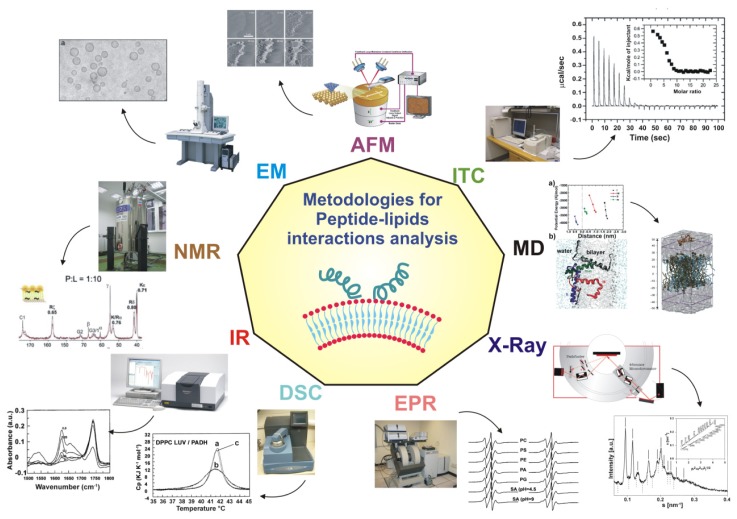
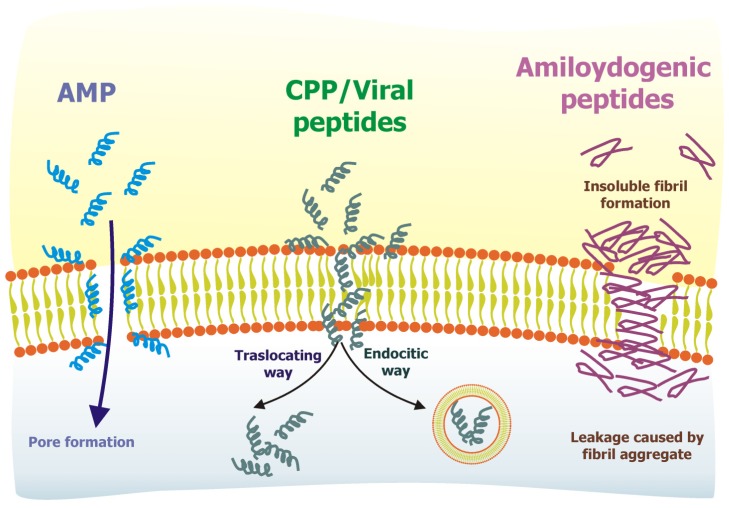
The interactions between peptides and lipids are of fundamental importance in the functioning of numerous membrane-mediated cellular processes including antimicrobial peptide action, hormone-receptor interactions, drug bioavailability across the blood-brain barrier and viral fusion processes. Moreover, a major goal of modern biotechnology is obtaining new potent pharmaceutical agents whose biological action is dependent on the binding of peptides to lipid-bilayers. Several issues need to be addressed such as secondary structure, orientation, oligomerization and localization inside the membrane. At the same time, the structural effects which the peptides cause on the lipid bilayer are important for the interactions and need to be elucidated. The structural characterization of membrane active peptides in membranes is a harsh experimental challenge. It is in fact accepted that no single experimental technique can give a complete structural picture of the interaction, but rather a combination of different techniques is necessary.
肽和脂质之间的相互作用对许多膜介导的细胞过程的功能至关重要,包括抗菌肽作用、激素受体相互作用、药物通过血脑屏障的生物利用度和病毒融合过程。此外,现代生物技术的主要目标是获得新的有效药物制剂,其生物作用依赖于肽与脂质双层的结合。需要解决几个问题,如二级结构、定向、寡聚化和在膜内的定位。同时,肽对脂质双层造成的结构效应对于相互作用很重要,需要加以阐明。在膜中对膜活性肽进行结构表征是一个严峻的实验挑战。事实上,人们普遍认为,没有单一的实验技术可以完全描述相互作用的结构,而是需要结合使用不同的技术。