Hospital for Special Surgery, 535 East 70th Street, New York, NY 10021 USA.
HSS J. 2013 Oct;9(3):214-7. doi: 10.1007/s11420-013-9346-8. Epub 2013 Aug 16.
Preoperative donation of autologous blood has been widely used to minimize the potential risk of allogeneic transfusions in total knee arthroplasty. A previous study from our center revealed that preoperative autologous donation reduces the allogeneic blood exposure for anemic patients but has no effect for non-anemic patients.
QUESTIONS/PURPOSES: The current study investigates the impact of a targeted blood donation protocol on overall transfusion rates and the incidence of allogeneic blood transfusions.
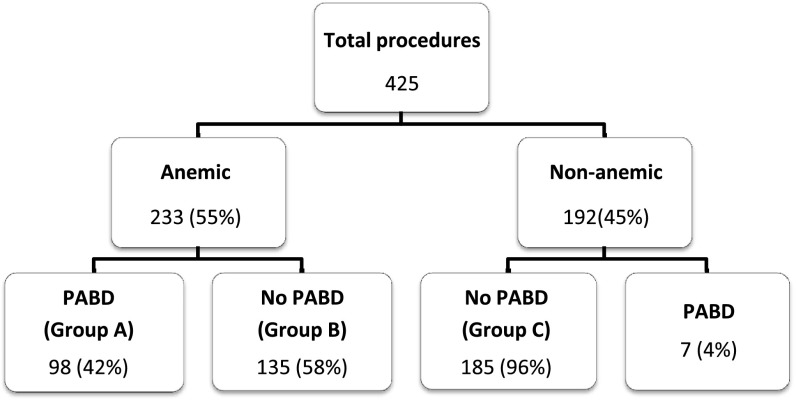
Prospectively, 372 patients undergoing 425 unilateral primary knee replacements were preoperatively screened by the Blood Preservation Center between 2009 and 2012. Anemic patients with a hemoglobin level less than 13.5 g/dL were advised to donate blood, while non-anemic patients did not donate.
Non-anemic patients who did not donate blood required allogeneic blood transfusions in 5.9% of the patients. The overall rate of allogeneic transfusion was significantly lower for anemic patients who donated autologous blood (group A, 9%) than those who did not donate (group B, 33%; p < 0.001). Donating autologous blood did increase the overall transfusion rate of anemic patients to 0.84 per patient in group A compared to 0.41 per patient in group B (p < 0.001).
This investigation confirms that abandoning preoperative autologous blood donation for non-anemic patients does not increase allogeneic blood transfusion rates but significantly lowers overall transfusion rates.
术前自体输血已广泛用于减少全膝关节置换术的异体输血风险。本中心的一项先前研究表明,术前自体输血可减少贫血患者的异体血液暴露,但对非贫血患者无影响。
问题/目的:本研究调查了靶向献血方案对总输血率和异体输血发生率的影响。
前瞻性地,2009 年至 2012 年期间,血液保存中心对 372 例行单侧初次膝关节置换术的患者进行了术前筛查。血红蛋白水平<13.5g/dL 的贫血患者被建议献血,而非贫血患者不献血。
未献血的非贫血患者中有 5.9%需要异体输血。与未献血的患者(组 B,33%)相比,献血的贫血患者(组 A,9%)异体输血的总体发生率显著降低(p<0.001)。与组 B(0.41 个/患者)相比,组 A(0.84 个/患者)的献血确实增加了贫血患者的总体输血率(p<0.001)。
本研究证实,放弃非贫血患者的术前自体输血不会增加异体输血率,但会显著降低总体输血率。