Tanz Centre for Research in Neurodegenerative Diseases, University of Toronto, Toronto, Ontario, Canada.
PLoS One. 2013 Sep 6;8(9):e72446. doi: 10.1371/journal.pone.0072446. eCollection 2013.
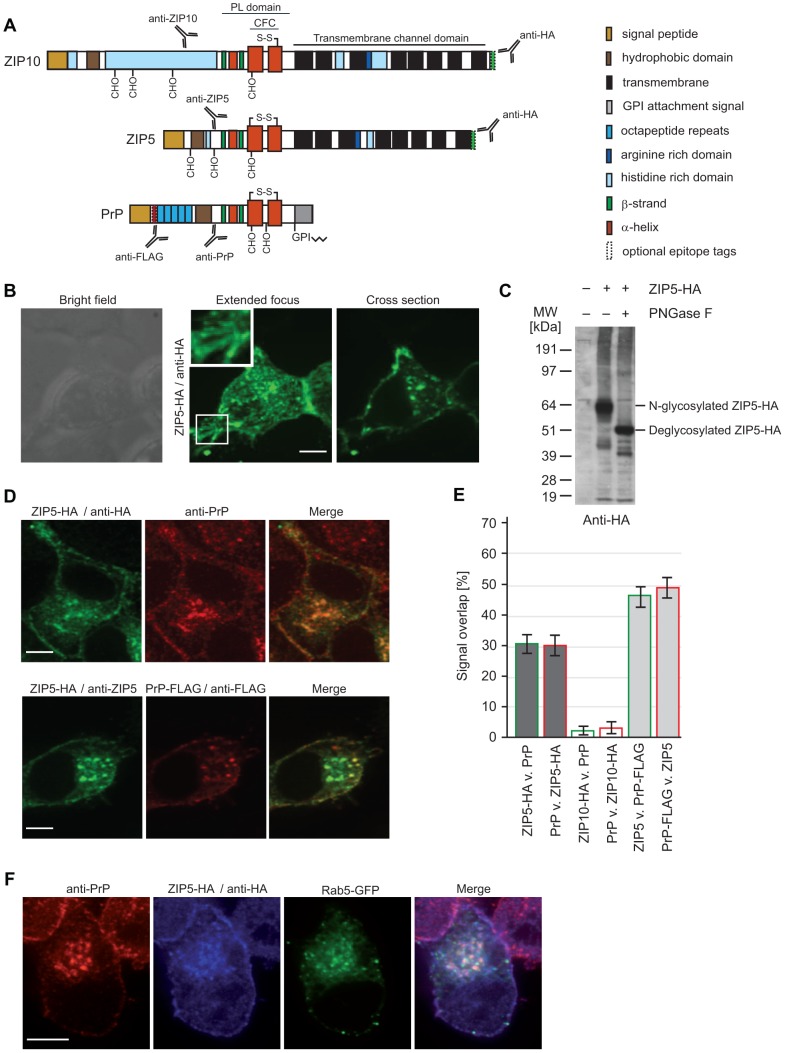
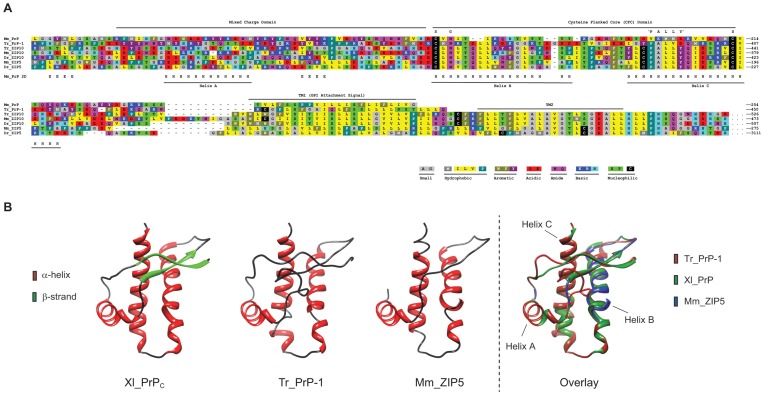
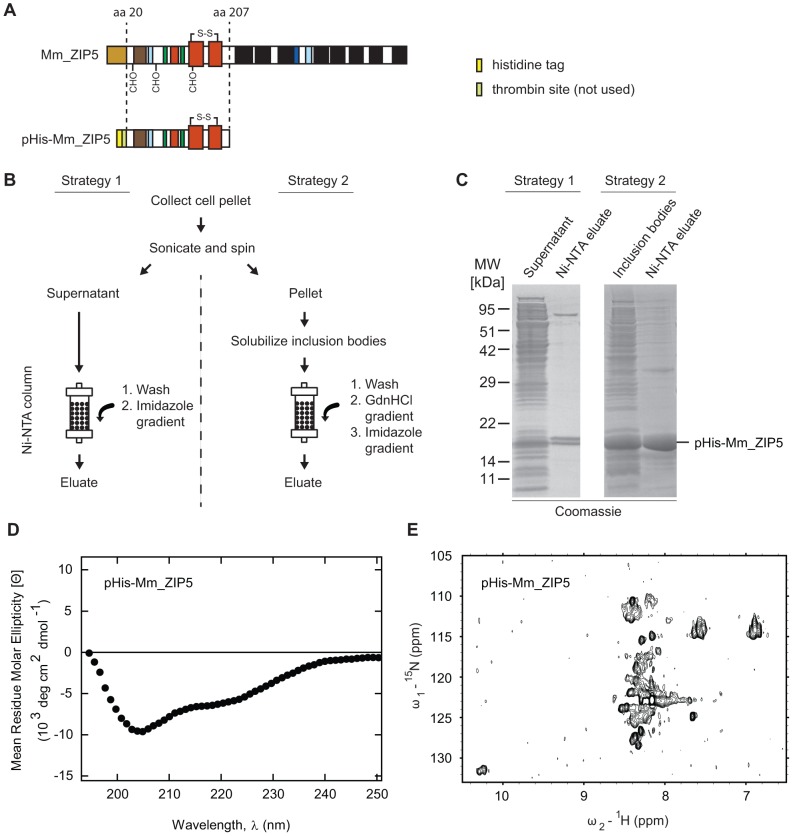
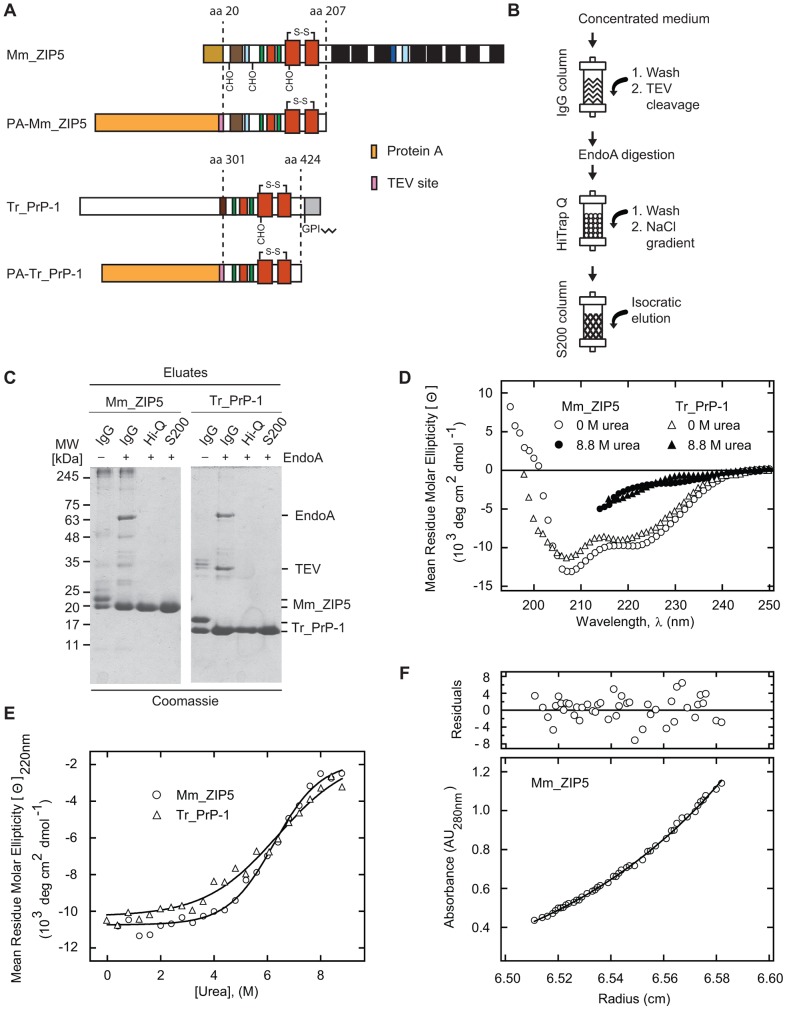
The cellular prion protein (PrP(C)) was recently observed to co-purify with members of the LIV-1 subfamily of ZIP zinc transporters (LZTs), precipitating the surprising discovery that the prion gene family descended from an ancestral LZT gene. Here, we compared the subcellular distribution and biophysical characteristics of LZTs and their PrP-like ectodomains. When expressed in neuroblastoma cells, the ZIP5 member of the LZT subfamily was observed to be largely directed to the same subcellular locations as PrP(C) and both proteins were seen to be endocytosed through vesicles decorated with the Rab5 marker protein. When recombinantly expressed, the PrP-like domain of ZIP5 could be obtained with yields and levels of purity sufficient for structural analyses but it tended to aggregate, thereby precluding attempts to study its structure. These obstacles were overcome by moving to a mammalian cell expression system. The subsequent biophysical characterization of a homogeneous preparation of the ZIP5 PrP-like ectodomain shows that this protein acquires a dimeric, largely globular fold with an α-helical content similar to that of mammalian PrP(C). The use of a mammalian cell expression system also allowed for the expression and purification of stable preparations of Takifugu rubripes PrP-1, thereby overcoming a key hindrance to high-resolution work on a fish PrP(C).
细胞朊蛋白 (PrP(C)) 最近被观察到与 LIV-1 亚家族的 ZIP 锌转运体 (LZTs) 成员共同纯化,这一惊人的发现表明朊病毒基因家族起源于一个祖先的 LZT 基因。在这里,我们比较了 LZTs 及其 PrP 样胞外结构域的亚细胞分布和生物物理特性。当在神经母细胞瘤细胞中表达时,LZT 亚家族的 ZIP5 成员被观察到主要定位于与 PrP(C) 相同的亚细胞位置,并且两种蛋白质都被观察到通过带有 Rab5 标记蛋白的囊泡内吞。当重组表达时,ZIP5 的 PrP 样结构域可以获得足够的产量和纯度,用于结构分析,但它往往会聚集,从而排除了研究其结构的尝试。通过转移到哺乳动物细胞表达系统可以克服这些障碍。随后对 ZIP5 PrP 样胞外结构域的均相制剂进行的生物物理特性分析表明,该蛋白获得了二聚体、主要球状折叠,其α-螺旋含量与哺乳动物 PrP(C) 相似。使用哺乳动物细胞表达系统还允许稳定表达和纯化 Takifugu rubripes PrP-1,从而克服了在鱼类 PrP(C) 上进行高分辨率工作的关键障碍。