Gaviño Michael A, Wenemoser Danielle, Wang Irving E, Reddien Peter W
Department of Biology , Howard Hughes Medical Institute, Whitehead Institute, Massachusetts Institute of Technology , Cambridge , United States.
Elife. 2013 Sep 10;2:e00247. doi: 10.7554/eLife.00247.
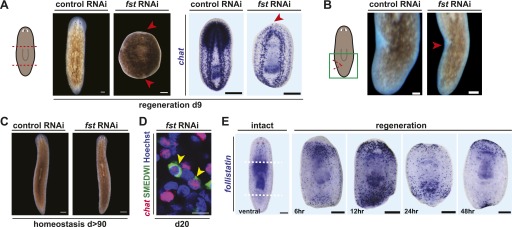
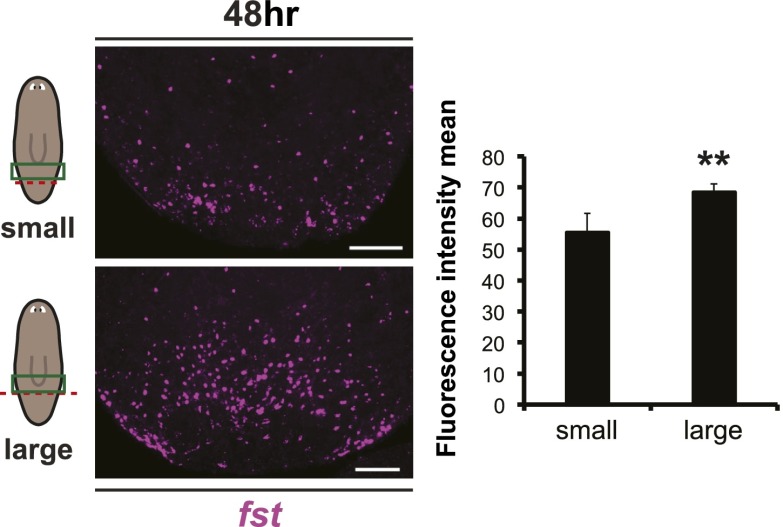
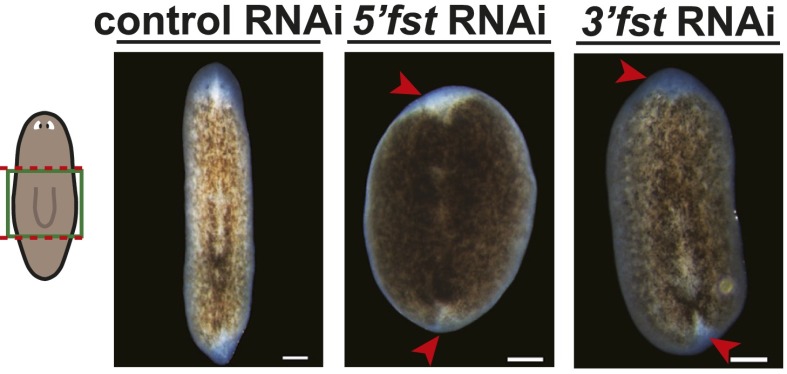
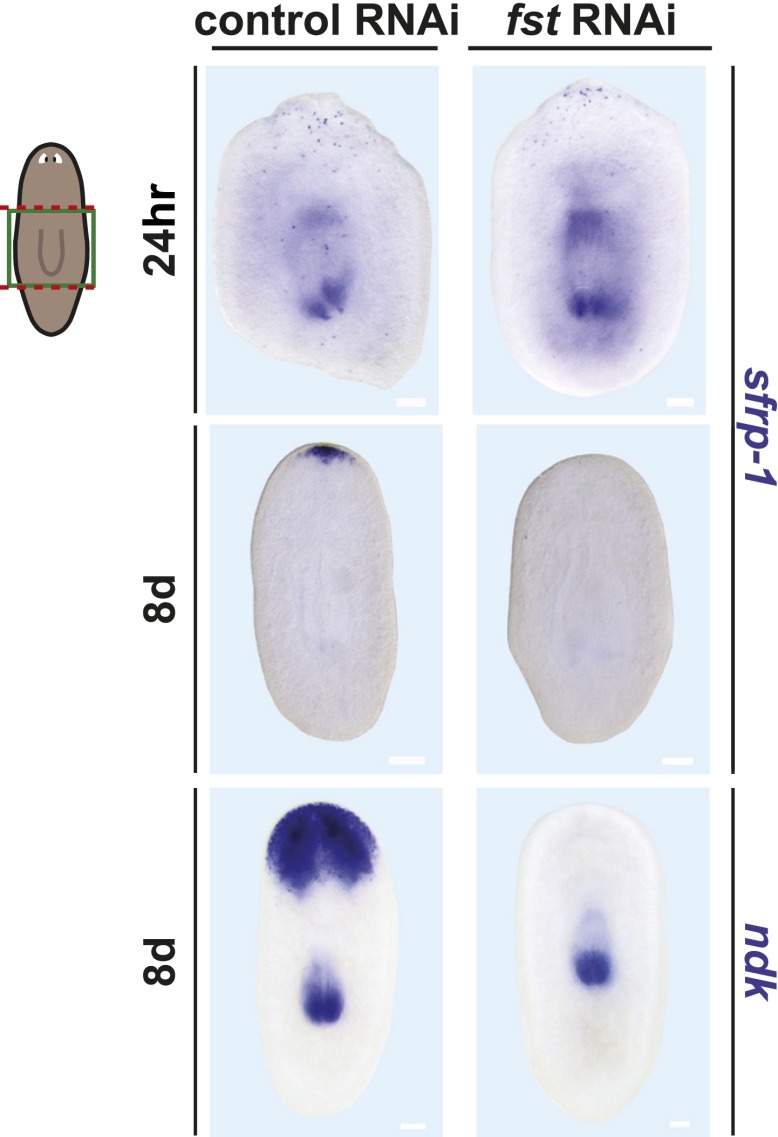
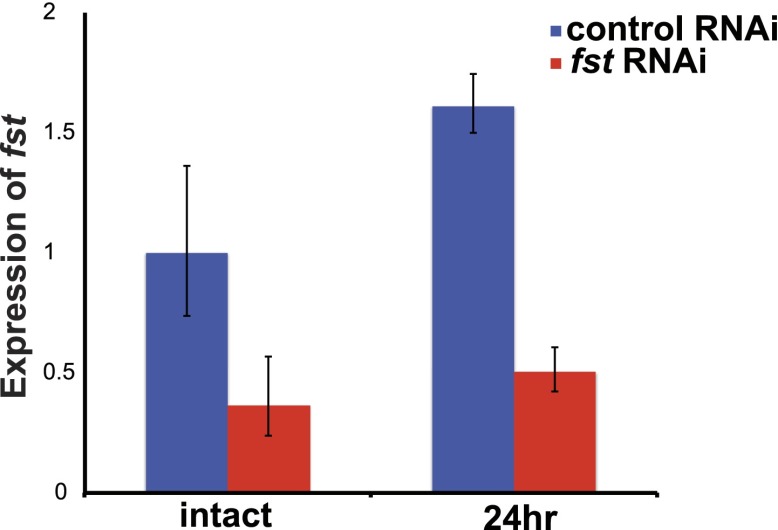
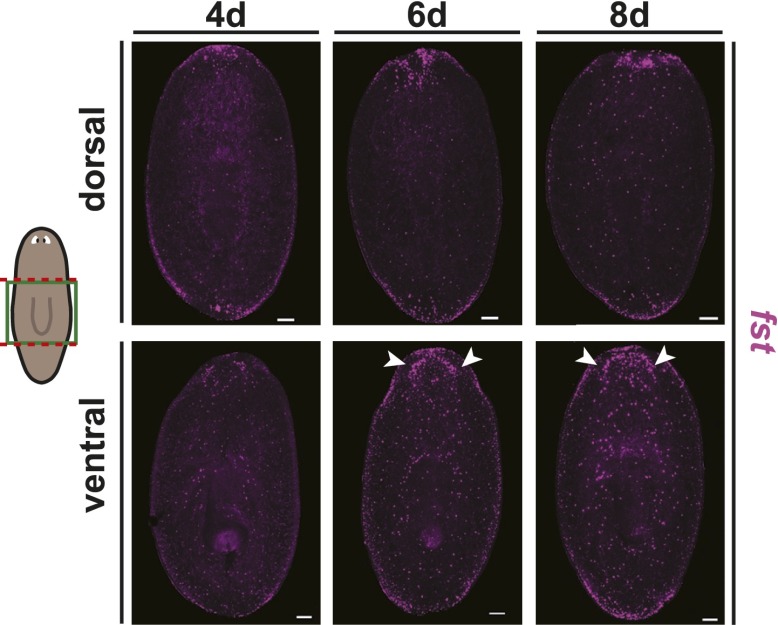
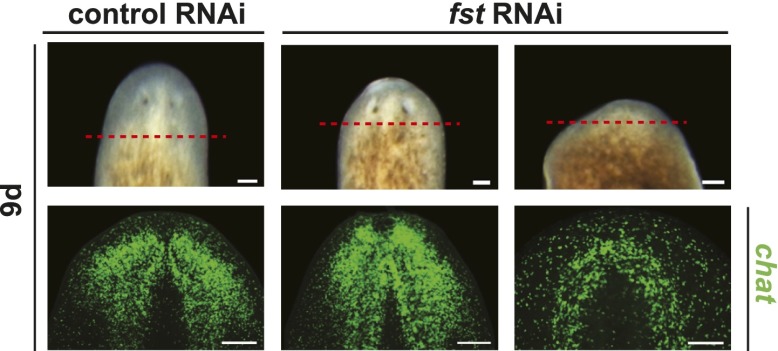
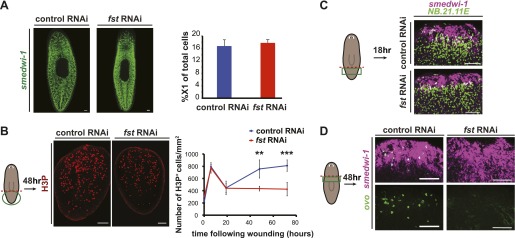
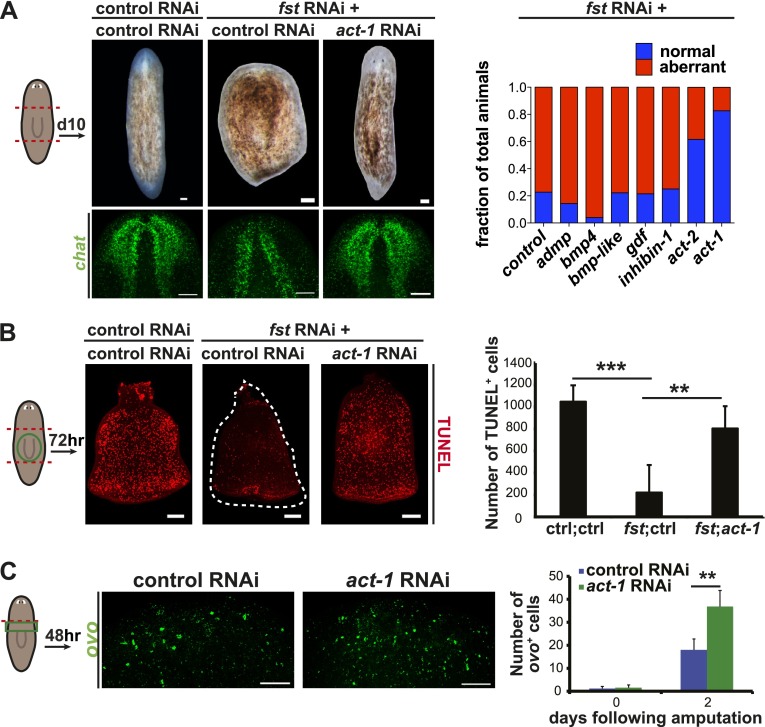
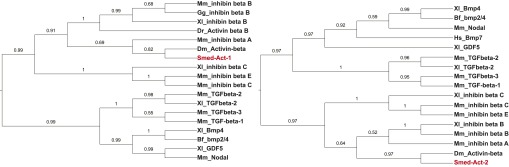
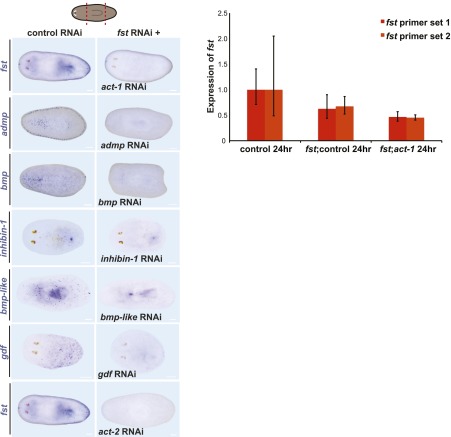
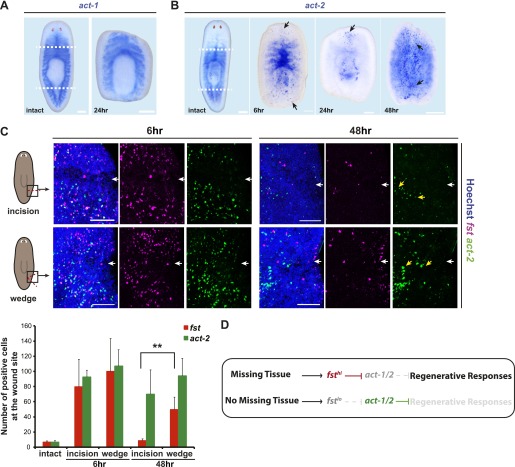
Regeneration is widespread, but mechanisms that activate regeneration remain mysterious. Planarians are capable of whole-body regeneration and mount distinct molecular responses to wounds that result in tissue absence and those that do not. A major question is how these distinct responses are activated. We describe a follistatin homolog (Smed-follistatin) required for planarian regeneration. Smed-follistatin inhibition blocks responses to tissue absence but does not prevent normal tissue turnover. Two activin homologs (Smed-activin-1 and Smed-activin-2) are required for the Smed-follistatin phenotype. Finally, Smed-follistatin is wound-induced and expressed at higher levels following injuries that cause tissue absence. These data suggest that Smed-follistatin inhibits Smed-Activin proteins to trigger regeneration specifically following injuries involving tissue absence and identify a mechanism critical for regeneration initiation, a process important across the animal kingdom. DOI:http://dx.doi.org/10.7554/eLife.00247.001.
再生现象广泛存在,但激活再生的机制仍然神秘莫测。涡虫能够进行全身再生,并对导致组织缺失和未导致组织缺失的伤口产生不同的分子反应。一个主要问题是这些不同的反应是如何被激活的。我们描述了一种涡虫再生所需的卵泡抑素同源物(Smed-卵泡抑素)。抑制Smed-卵泡抑素会阻断对组织缺失的反应,但不会阻止正常的组织更新。Smed-卵泡抑素的表型需要两种激活素同源物(Smed-激活素-1和Smed-激活素-2)。最后,Smed-卵泡抑素是由伤口诱导的,在导致组织缺失的损伤后表达水平更高。这些数据表明,Smed-卵泡抑素抑制Smed-激活素蛋白,从而在涉及组织缺失的损伤后特异性地触发再生,并确定了一个对再生起始至关重要的机制,这一过程在整个动物界都很重要。DOI:http://dx.doi.org/10.7554/eLife.00247.001