Institut für Experimentelle Onkologie & Therapieforschung, Klinikum rechts der Isar, Technische Universität München, Ismaninger Str, 22, 81675 München, Germany.
J Transl Med. 2013 Sep 18;11:216. doi: 10.1186/1479-5876-11-216.
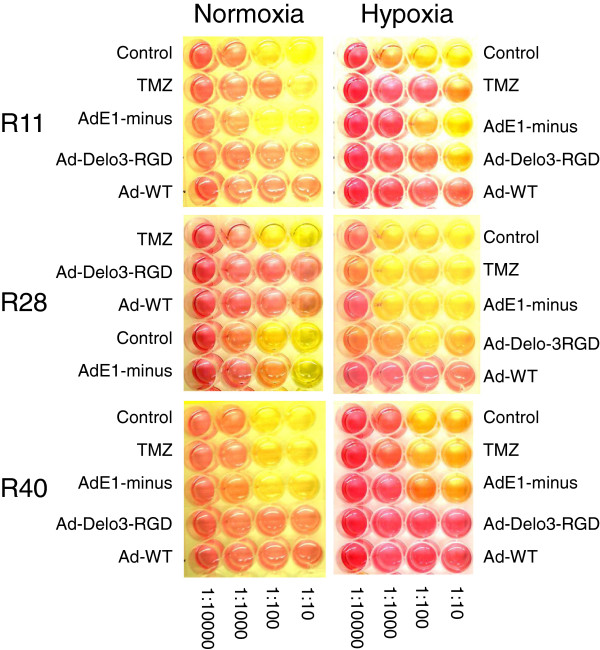
The brain cancer stem cell (CSC) model describes a small subset of glioma cells as being responsible for tumor initiation, conferring therapy resistance and tumor recurrence. In brain CSC, the PI3-K/AKT and the RAS/mitogen activated protein kinase (MAPK) pathways are found to be activated. In consequence, the human transcription factor YB-1, knowing to be responsible for the emergence of drug resistance and driving adenoviral replication, is phosphorylated and activated. With this knowledge, YB-1 was established in the past as a biomarker for disease progression and prognosis. This study determines the expression of YB-1 in glioblastoma (GBM) specimen in vivo and in brain CSC lines. In addition, the capacity of Ad-Delo3-RGD, an YB-1 dependent oncolytic adenovirus, to eradicate CSC was evaluated both in vitro and in vivo.
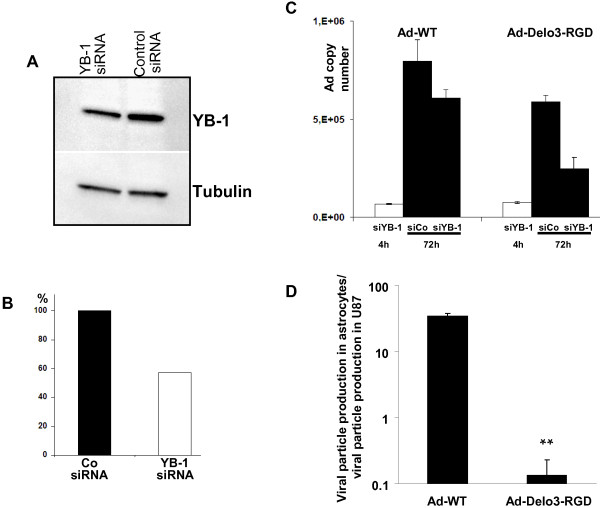
YB-1 expression was investigated by immunoblot and immuno-histochemistry. In vitro, viral replication as well as the capacity of Ad-Delo3-RGD to replicate in and, in consequence, to kill CSC was determined by real-time PCR and clonogenic dilution assays. In vivo, Ad-Delo3-RGD-mediated tumor growth inhibition was evaluated in an orthotopic mouse GBM model. Safety and specificity of Ad-Delo3-RGD were investigated in immortalized human astrocytes and by siRNA-mediated downregulation of YB-1.
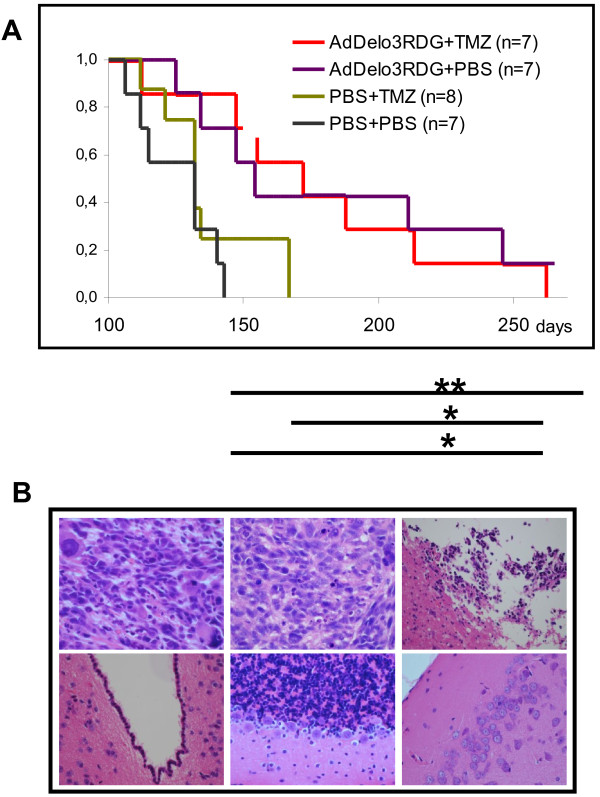
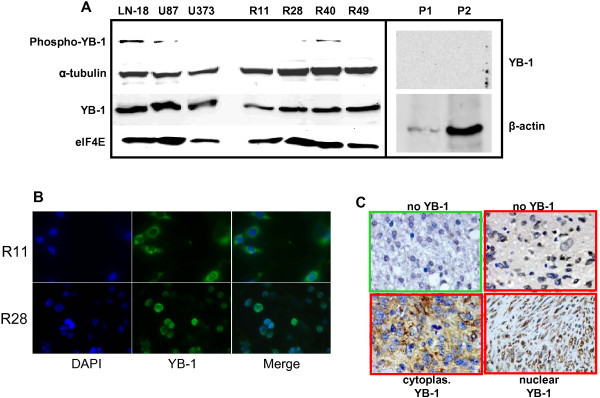
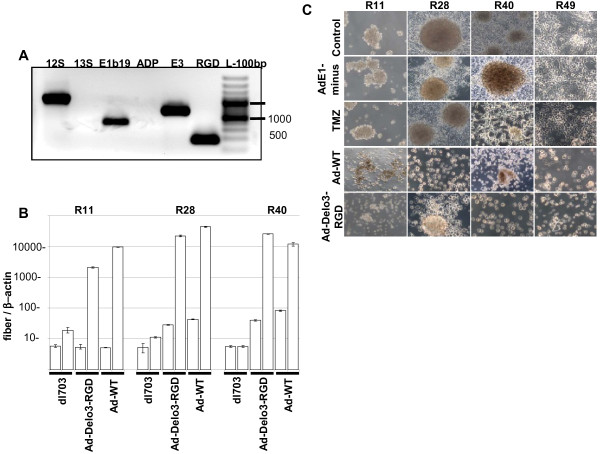
YB-1 is highly expressed in brain CSC lines and in GBM specimen. Efficient viral replication in and virus-mediated lysis of CSC was observed in vitro. Experiments addressing safety aspects of Ad-Delo3-RGD showed that (i) virus production in human astrocytes was significantly reduced compared to wild type adenovirus (Ad-WT) and (ii) knockdown of YB-1 significantly reduced virus replication. Mice harboring othotopic GBM developed from a temozolomide (TMZ)-resistant GBM derived CSC line which was intratumorally injected with Ad-Delo3-RGD survived significantly longer than mice receiving PBS-injections or TMZ treatment.
The results of this study supported YB-1 based virotherapy as an attractive therapeutic strategy for GBM treatment which will be exploited further in multimodal treatment concepts.
脑肿瘤干细胞(CSC)模型描述了一小部分神经胶质瘤细胞是肿瘤发生的原因,使它们具有抗治疗性和肿瘤复发的能力。在脑 CSC 中,发现 PI3-K/AKT 和 RAS/丝裂原活化蛋白激酶(MAPK)通路被激活。结果,人类转录因子 YB-1 被磷酸化并激活,已知它负责产生耐药性并驱动腺病毒复制。基于这一知识,YB-1 过去曾被确立为疾病进展和预后的生物标志物。本研究旨在确定 YB-1 在体内脑胶质瘤(GBM)标本和脑 CSC 系中的表达。此外,还评估了依赖 YB-1 的溶瘤腺病毒 Ad-Delo3-RGD 在体外和体内根除 CSC 的能力。
通过免疫印迹和免疫组织化学研究 YB-1 的表达。在体外,通过实时 PCR 和克隆形成稀释试验确定病毒复制以及 Ad-Delo3-RGD 在 CSC 中的复制和因此杀死 CSC 的能力。在体内,在原位 GBM 小鼠模型中评估 Ad-Delo3-RGD 介导的肿瘤生长抑制作用。通过在永生化人星形胶质细胞中进行 Ad-Delo3-RGD 的安全性和特异性研究,并通过 siRNA 介导的 YB-1 下调来研究其安全性和特异性。
YB-1 在脑 CSC 系和 GBM 标本中高度表达。在体外观察到有效的病毒复制和病毒介导的 CSC 裂解。针对 Ad-Delo3-RGD 安全性方面的实验表明,(i)与野生型腺病毒(Ad-WT)相比,病毒在人星形胶质细胞中的产生显著减少,(ii)YB-1 的敲低显著降低了病毒复制。从替莫唑胺(TMZ)耐药性 GBM 衍生的 CSC 系中建立的原位 GBM 小鼠,经 Ad-Delo3-RGD 瘤内注射后,其存活时间明显长于接受 PBS 注射或 TMZ 治疗的小鼠。
本研究的结果支持基于 YB-1 的病毒疗法作为 GBM 治疗的一种有吸引力的治疗策略,将在多模式治疗概念中进一步探索。