Institute for Systems Biology, Seattle WA 98109, USA.
Faculty of Life Sciences, University of Manchester, Manchester M13 9PT, UK.
Nat Commun. 2013;4:2467. doi: 10.1038/ncomms3467.
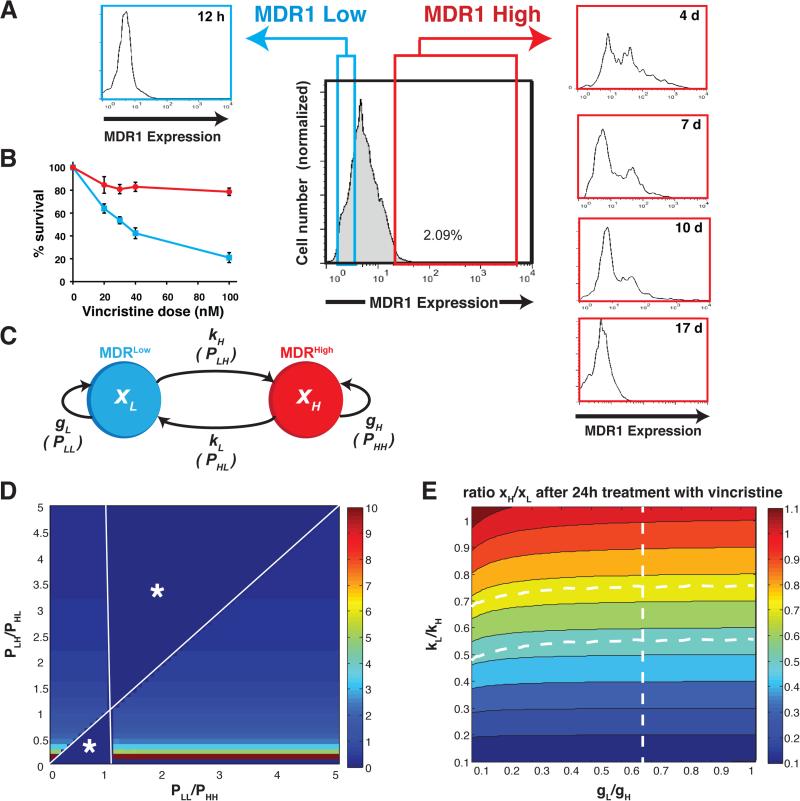
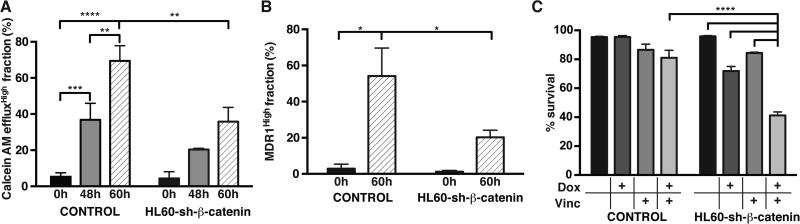
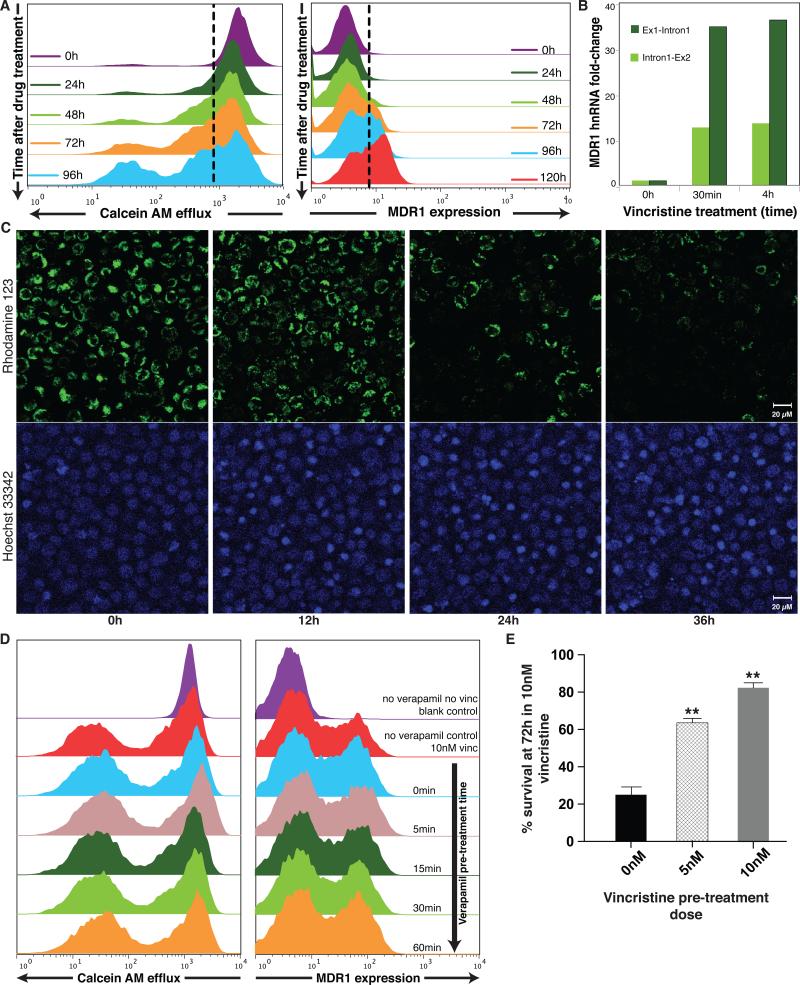
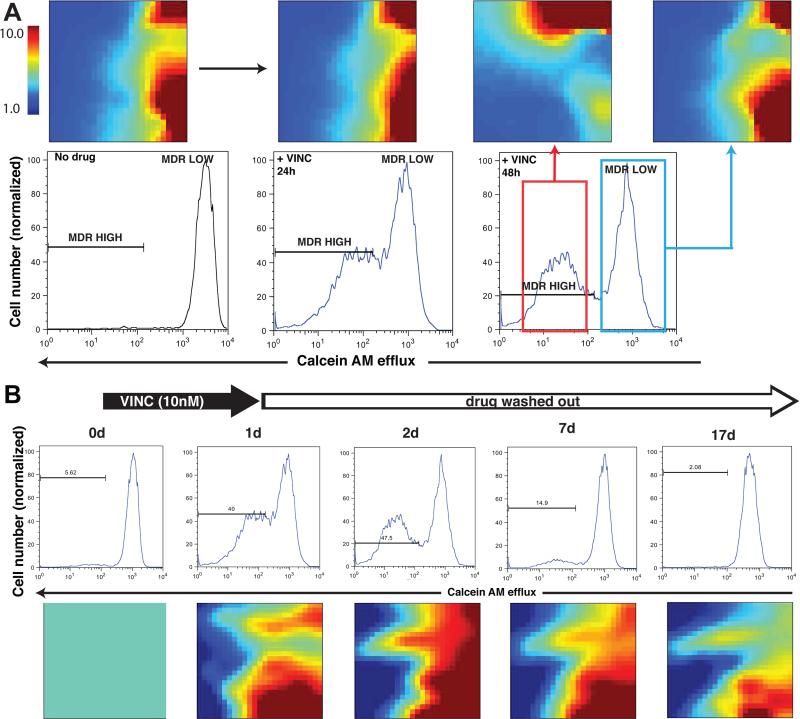
The development of drug resistance, the prime cause of failure in cancer therapy, is commonly explained by the selection of resistant mutant cancer cells. However, dynamic non-genetic heterogeneity of clonal cell populations continuously produces metastable phenotypic variants (persisters), some of which represent stem-like states that confer resistance. Even without genetic mutations, Darwinian selection can expand these resistant variants, which would explain the invariably rapid emergence of stem-like resistant cells. Here, by using quantitative measurements and modelling, we show that appearance of multidrug resistance in HL60 leukemic cells following treatment with vincristine is not explained by Darwinian selection but by Lamarckian induction. Single-cell longitudinal monitoring confirms the induction of multidrug resistance in individual cells. Associated transcriptome changes indicate a lasting stress response consistent with a drug-induced switch between high-dimensional cancer attractors. Resistance induction correlates with Wnt pathway upregulation and is suppressed by β-catenin knockdown, revealing a new opportunity for early therapeutic intervention against the development of drug resistance.
耐药性的发展是癌症治疗失败的主要原因,通常可以通过选择耐药性突变癌细胞来解释。然而,克隆细胞群体的动态非遗传异质性不断产生亚稳定的表型变体(持久细胞),其中一些代表赋予抗性的干细胞样状态。即使没有基因突变,达尔文选择也可以扩展这些抗性变体,这可以解释为什么总是会迅速出现干细胞样耐药细胞。在这里,我们通过使用定量测量和建模表明,长春新碱治疗后 HL60 白血病细胞中多药耐药性的出现不是由达尔文选择而是由拉马克诱导引起的。单细胞纵向监测证实了单个细胞中多药耐药性的诱导。相关的转录组变化表明存在持久的应激反应,与高维癌症吸引子之间的药物诱导转换一致。耐药性诱导与 Wnt 途径的上调相关,并且可以通过β-连环蛋白敲低来抑制,这为早期治疗干预以防止耐药性的发展提供了新的机会。