
基于电压依赖性阴离子通道 1(VDAC1)的肽:新型促凋亡剂及治疗 B 细胞慢性淋巴细胞白血病的潜在药物。
VDAC1-based peptides: novel pro-apoptotic agents and potential therapeutics for B-cell chronic lymphocytic leukemia.
机构信息
Department of Life Sciences and the National Institute for Biotechnology in the Negev, BeerSheva, Israel.
出版信息
Cell Death Dis. 2013 Sep 19;4(9):e809. doi: 10.1038/cddis.2013.316.
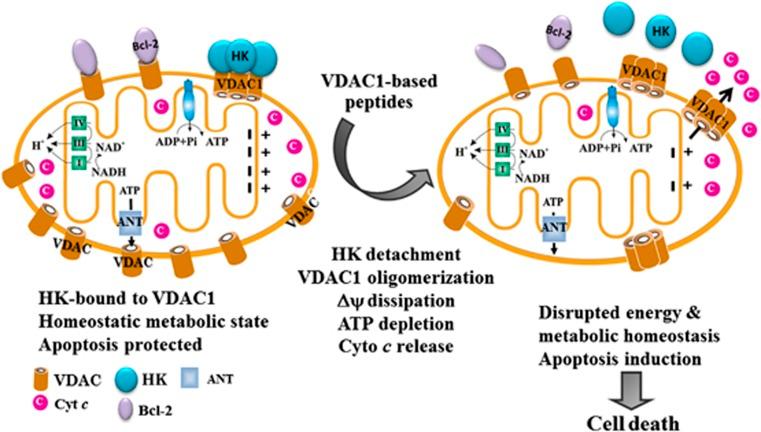
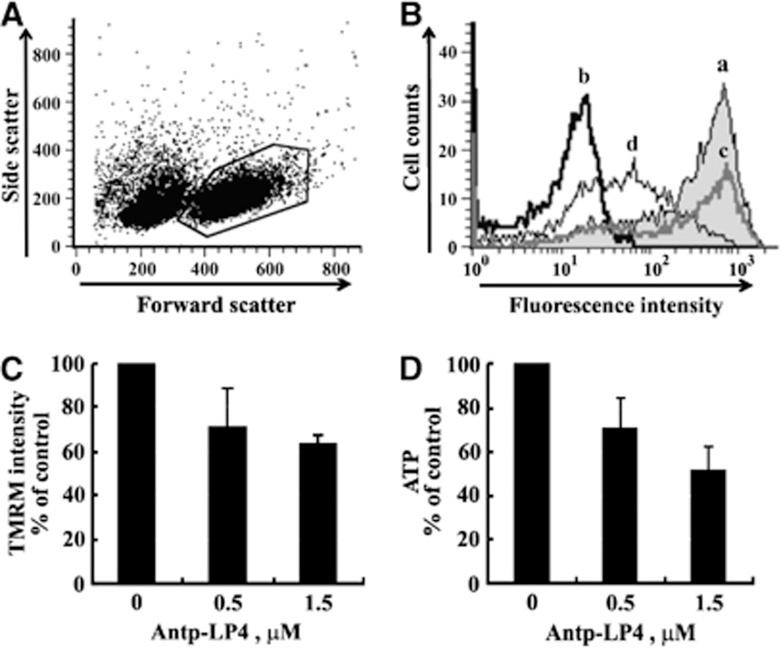
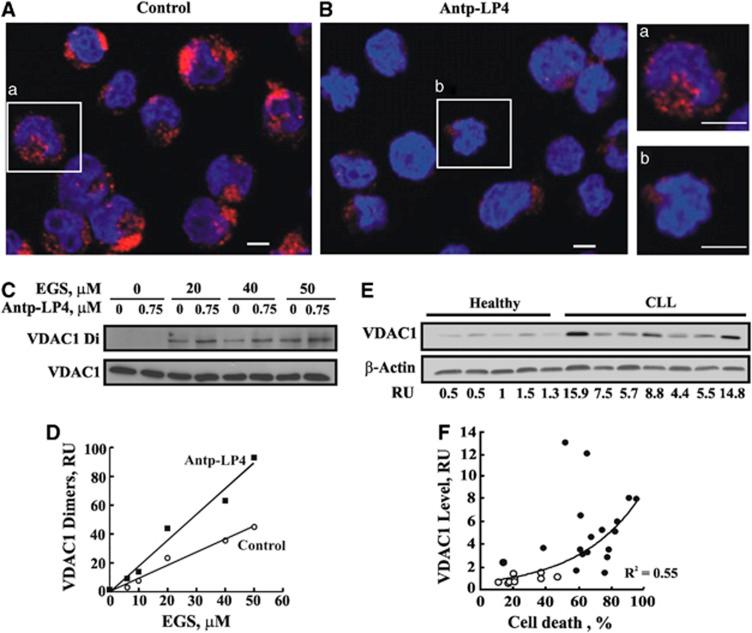
The voltage-dependent anion channel 1 (VDAC1), localized in the outer mitochondrial membrane, mediates metabolic cross-talk between the mitochondrion and the cytoplasm and thus serves a fundamental role in cell energy metabolism. VDAC1 also plays a key role in mitochondria-mediated apoptosis, interacting with anti-apoptotic proteins. Resistance of cancer cells to apoptosis involves quenching the mitochondrial apoptotic pathway by over-expression of anti-apoptotic/pro-survival hexokinase (HK) and Bcl-2 family proteins, proteins that mediate their anti-apoptotic activities via interaction with VDAC1. Using specifically designed VDAC1-based cell-penetrating peptides, we targeted these anti-apoptotic proteins to prevent their pro-survival/anti-apoptotic activities. Anti-apoptotic proteins are expressed at high levels in B-cell chronic lymphocytic leukemia (CLL), an incurable disease requiring innovative new approaches to improve therapeutic outcome. CLL is characterized by a clonal accumulation of mature neoplastic B cells that are resistant to apoptosis. Specifically, we demonstrate that the VDAC1-based peptides (Antp-LP4 and N-Terminal-Antp) selectively kill peripheral blood mononuclear cells (PBMCs) obtained from CLL patients, yet spare those obtained from healthy donors. The cell death induction competence of the peptides was well correlated with the amount of double positive CD19/CD5 cancerous CLL PBMCs, further illustrating their selectivity toward cancer cells. Moreover, these VDAC1-based peptides induced apoptosis by activating the mitochondria-mediated pathway, reflected in membrane blebbing, condensation of nuclei, DNA fragmentation, release of mitochondrial cytochrome c, loss of mitochondrial membrane potential, decreased cellular ATP levels and detachment of HK, all leading to apoptotic cell death. Thus, the mode of action of the peptides involves decreasing energy production and inducing apoptosis. Over 27 versions of cell-penetrating VDAC1-based peptides were designed and screened to identify the most stable, short and apoptosis-inducing peptides toward CLL-derived lymphocytes. In this manner, three optimized peptides suitable for in vivo studies were identified. This study thus reveals the potential of VDAC1-based peptides as an innovative and effective anti-CLL therapy.
电压依赖性阴离子通道 1(VDAC1)位于线粒体外膜,介导线粒体和细胞质之间的代谢串扰,因此在细胞能量代谢中起着基本作用。VDAC1 还在由线粒体介导的细胞凋亡中发挥关键作用,与抗凋亡蛋白相互作用。癌细胞对凋亡的抵抗涉及通过过度表达抗凋亡/存活己糖激酶(HK)和 Bcl-2 家族蛋白来抑制线粒体凋亡途径,这些蛋白通过与 VDAC1 相互作用来发挥其抗凋亡活性。使用专门设计的基于 VDAC1 的细胞穿透肽,我们将这些抗凋亡蛋白靶向以防止其发挥促生存/抗凋亡活性。抗凋亡蛋白在 B 细胞慢性淋巴细胞白血病(CLL)中高表达,这是一种无法治愈的疾病,需要创新的新方法来改善治疗效果。CLL 的特征是成熟的肿瘤性 B 细胞克隆性积累,对凋亡有抵抗力。具体而言,我们证明基于 VDAC1 的肽(Antp-LP4 和 N 端-Antp)选择性杀死来自 CLL 患者的外周血单核细胞(PBMC),而对来自健康供体的 PBMC 无影响。肽的细胞死亡诱导能力与双阳性 CD19/CD5 癌性 CLL PBMC 的数量密切相关,进一步说明了它们对癌细胞的选择性。此外,这些基于 VDAC1 的肽通过激活线粒体介导的途径诱导细胞凋亡,表现在细胞膜起泡、核浓缩、DNA 片段化、线粒体细胞色素 c 释放、线粒体膜电位丧失、细胞内 ATP 水平降低和 HK 脱落,所有这些都导致凋亡性细胞死亡。因此,肽的作用方式涉及降低能量产生并诱导细胞凋亡。设计并筛选了超过 27 种穿透细胞的基于 VDAC1 的肽,以鉴定针对 CLL 衍生淋巴细胞最稳定、最短和诱导凋亡的肽。通过这种方式,鉴定了三种适合体内研究的优化肽。因此,这项研究揭示了基于 VDAC1 的肽作为一种创新和有效的抗 CLL 疗法的潜力。



 Zotero 插件