Division of Human Genetics, School of Pathology, University of the Witwatersrand, Faculty of Health Sciences, Johannesburg, South Africa.
BMC Genomics. 2013 Sep 23;14:644. doi: 10.1186/1471-2164-14-644.
Due to the unparalleled genetic diversity of its peoples, Africa is attracting growing research attention. Several African populations have been assessed in global initiatives such as the International HapMap and 1000 Genomes Projects. Notably excluded, however, is the southern Africa region, which is inhabited predominantly by southeastern Bantu-speakers, currently suffering under the dual burden of infectious and non-communicable diseases. Limited reference data for these individuals hampers medical research and prevents thorough understanding of the underlying population substructure. Here, we present the most detailed exploration, to date, of genetic diversity in 94 unrelated southeastern Bantu-speaking South Africans, resident in urban Soweto (Johannesburg).
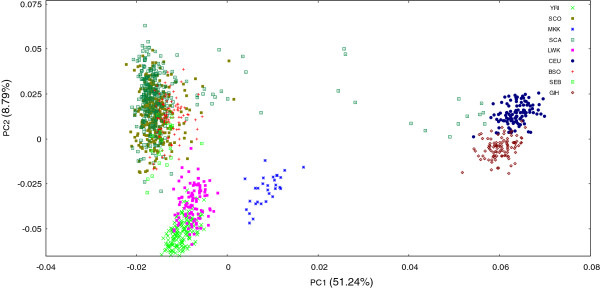
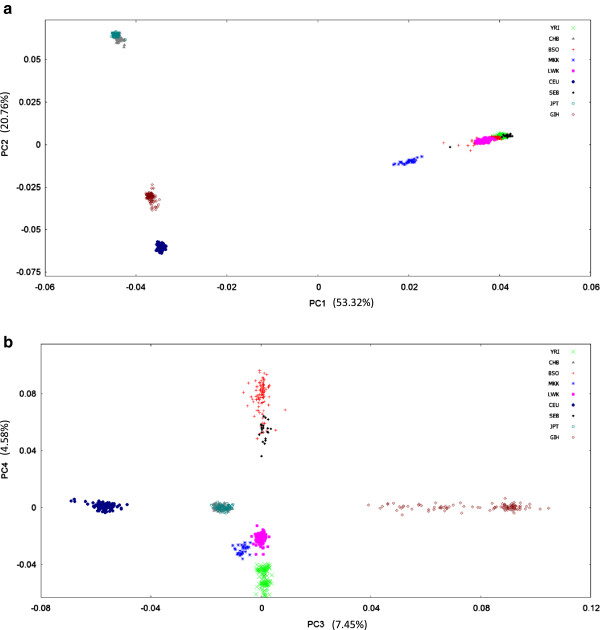
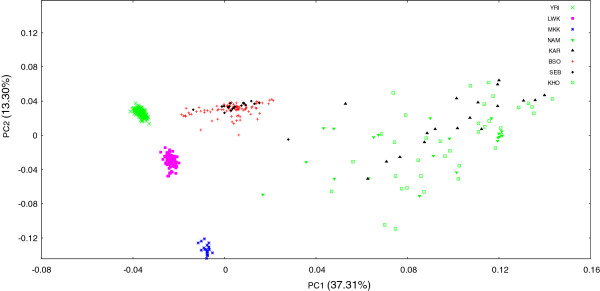
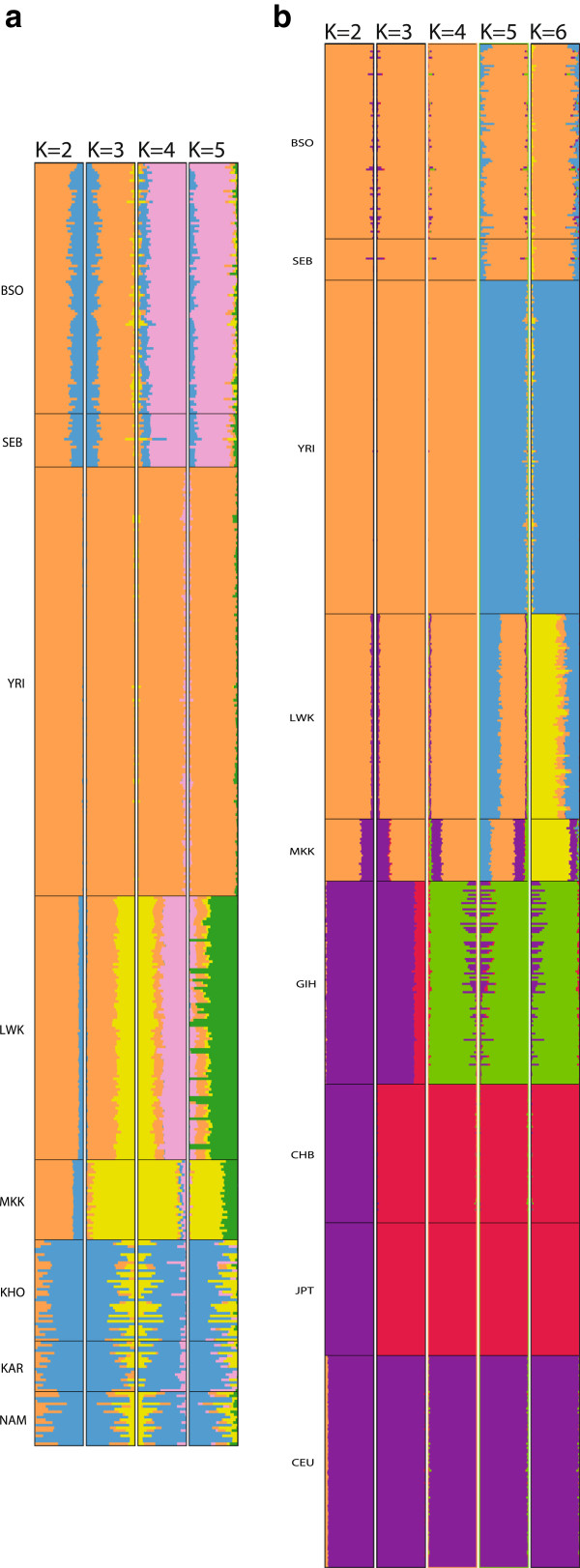
Participants were typed for ~4.3 million SNPs using the Illumina Omni5 beadchip. PCA and ADMIXTURE plots were used to compare the observed variation with that seen in selected populations worldwide. Results indicated that Sowetans, and other southeastern Bantu-speakers, are a clearly distinct group from other African populations previously investigated, reflecting a unique genetic history with small, but significant contributions from diverse sources. To assess the suitability of our sample as representative of Sowetans, we compared our results to participants in a larger rheumatoid arthritis case-control study. The control group showed good clustering with our sample, but among the cases were individuals who demonstrated notable admixture.
Sowetan population structure appears unique compared to other black Africans, and may have clinical implications. Our data represent a suitable reference set for southeastern Bantu-speakers, on par with a HapMap type reference population, and constitute a prelude to the Southern African Human Genome Programme.
由于其人民无与伦比的遗传多样性,非洲正吸引着越来越多的研究关注。一些非洲人群已经在全球倡议中得到评估,如国际人类基因组单体型图计划和 1000 基因组计划。然而,显著排除在外的是南部非洲地区,该地区主要居住着讲东南班图语的人,目前正遭受传染病和非传染性疾病的双重负担。这些人的参考数据有限,阻碍了医学研究,并阻止了对人口亚结构的深入了解。在这里,我们展示了迄今为止对居住在城市索韦托(约翰内斯堡)的 94 名无亲属关系的东南班图语南非人的遗传多样性的最详细探索。
参与者使用 Illumina Omni5 珠芯片进行了约 430 万个 SNPs 的分型。主成分分析和 ADMIXTURE 图用于比较观察到的变异与全球选定人群中的变异。结果表明,索韦托人和其他讲东南班图语的人是与以前研究的其他非洲人群明显不同的群体,反映了独特的遗传历史,具有来自多种来源的微小但显著的贡献。为了评估我们的样本作为索韦托人的代表性,我们将我们的结果与一项更大的类风湿关节炎病例对照研究的参与者进行了比较。对照组与我们的样本聚类良好,但在病例中,有些个体表现出明显的混合。
与其他非洲黑人相比,索韦托人的人口结构似乎是独特的,可能具有临床意义。我们的数据代表了东南班图语者的合适参考集,与 HapMap 类型参考人群相当,是南部非洲人类基因组计划的前奏。