Department of Evolution and Ecology & Center for Population Biology, University of California - Davis, Davis, California, United States of America.
PLoS Genet. 2013;9(9):e1003754. doi: 10.1371/journal.pgen.1003754. Epub 2013 Sep 12.
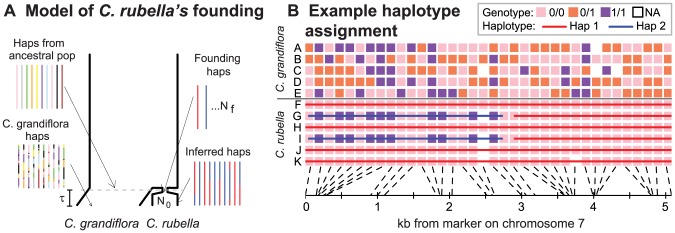
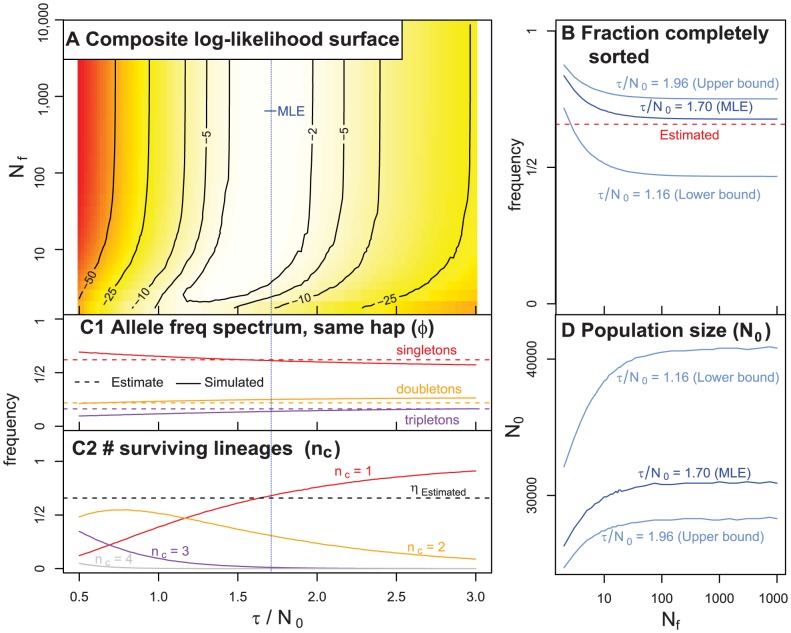
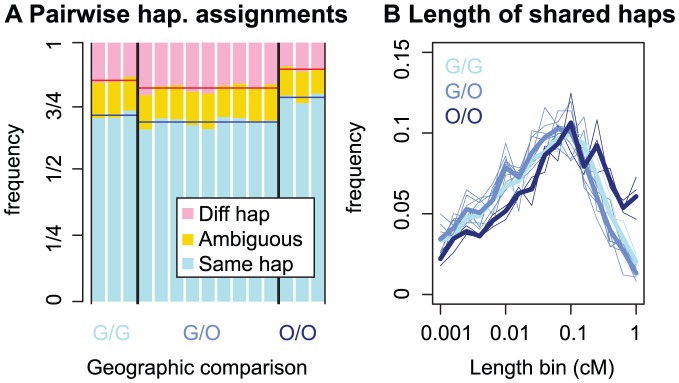
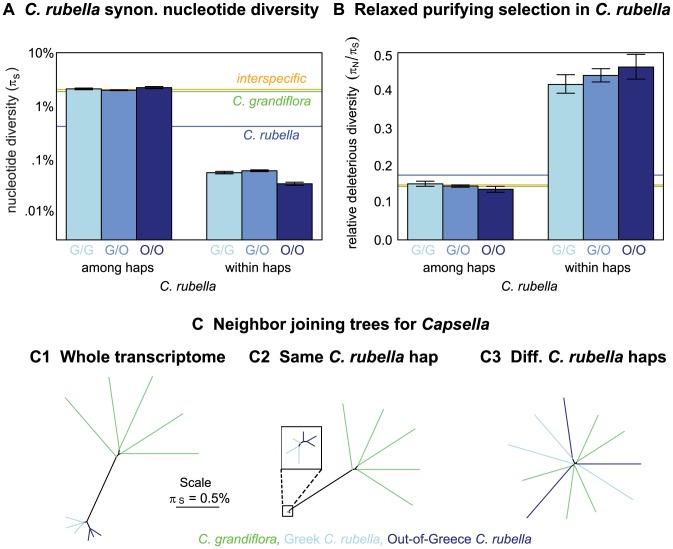
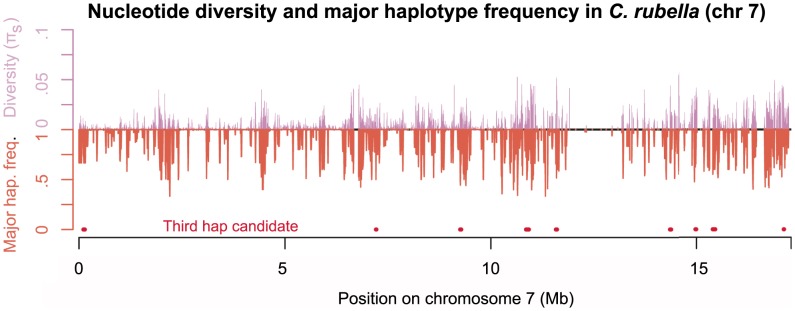
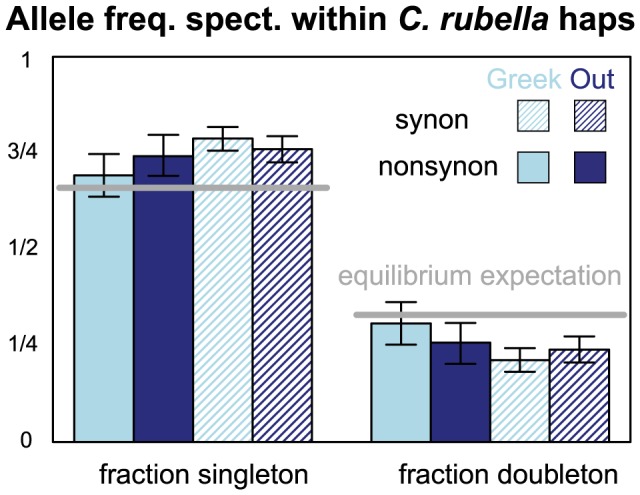
The shift from outcrossing to self-fertilization is among the most common evolutionary transitions in flowering plants. Until recently, however, a genome-wide view of this transition has been obscured by both a dearth of appropriate data and the lack of appropriate population genomic methods to interpret such data. Here, we present a novel population genomic analysis detailing the origin of the selfing species, Capsella rubella, which recently split from its outcrossing sister, Capsella grandiflora. Due to the recency of the split, much of the variation within C. rubella is also found within C. grandiflora. We can therefore identify genomic regions where two C. rubella individuals have inherited the same or different segments of ancestral diversity (i.e. founding haplotypes) present in C. rubella's founder(s). Based on this analysis, we show that C. rubella was founded by multiple individuals drawn from a diverse ancestral population closely related to extant C. grandiflora, that drift and selection have rapidly homogenized most of this ancestral variation since C. rubella's founding, and that little novel variation has accumulated within this time. Despite the extensive loss of ancestral variation, the approximately 25% of the genome for which two C. rubella individuals have inherited different founding haplotypes makes up roughly 90% of the genetic variation between them. To extend these findings, we develop a coalescent model that utilizes the inferred frequency of founding haplotypes and variation within founding haplotypes to estimate that C. rubella was founded by a potentially large number of individuals between 50 and 100 kya, and has subsequently experienced a twenty-fold reduction in its effective population size. As population genomic data from an increasing number of outcrossing/selfing pairs are generated, analyses like the one developed here will facilitate a fine-scaled view of the evolutionary and demographic impact of the transition to self-fertilization.
从异交到自交的转变是有花植物中最常见的进化转变之一。然而,直到最近,由于缺乏适当的数据和解释此类数据的适当群体基因组学方法,这种转变的全基因组观点仍然模糊不清。在这里,我们提出了一种新的群体基因组分析,详细描述了自交物种Capsella rubella 的起源,该物种最近与其异交姐妹种Capsella grandiflora 分离。由于分裂的时间较短,因此在 C. rubella 中发现的许多变异也存在于 C. grandiflora 中。因此,我们可以确定基因组区域,在这些区域中,两个 C. rubella 个体继承了 C. rubella 的创始人中存在的相同或不同的祖先多样性片段(即创始单倍型)。基于此分析,我们表明 C. rubella 是由来自与现存 C. grandiflora 密切相关的多样化祖先种群的多个个体创立的,自 C. rubella 创立以来,漂移和选择迅速使大多数祖先变异趋同,并且在此期间几乎没有新的变异积累。尽管大量丧失了祖先的变异,但两个 C. rubella 个体继承了不同的创始单倍型的基因组的大约 25%,占它们之间遗传变异的大约 90%。为了扩展这些发现,我们开发了一个合并模型,该模型利用推断的创始单倍型频率和创始单倍型内的变异来估计 C. rubella 是由潜在的大量个体在 50 到 100 千年前创立的,并且随后其有效种群数量减少了二十倍。随着越来越多的异交/自交对的群体基因组数据的产生,像这里开发的分析将有助于对向自交的转变的进化和人口统计学影响进行精细的研究。