Department of Microbiology, University of Delhi South Campus, New Delhi, India.
PLoS One. 2013 Sep 19;8(9):e73612. doi: 10.1371/journal.pone.0073612. eCollection 2013.
Maltogenic amylases belong to a subclass of cyclodextrin-hydrolyzing enzymes and hydrolyze cyclodextrins more efficiently than starch unlike typical α-amylases. Several bacterial malto-genic amylases with temperature optima of 40-60°C have been previously characterized. The thermo-adaption, substrate preferences and transglycosylation aspects of extremely thermostable bacterial maltogenic amylases have not yet been reported.
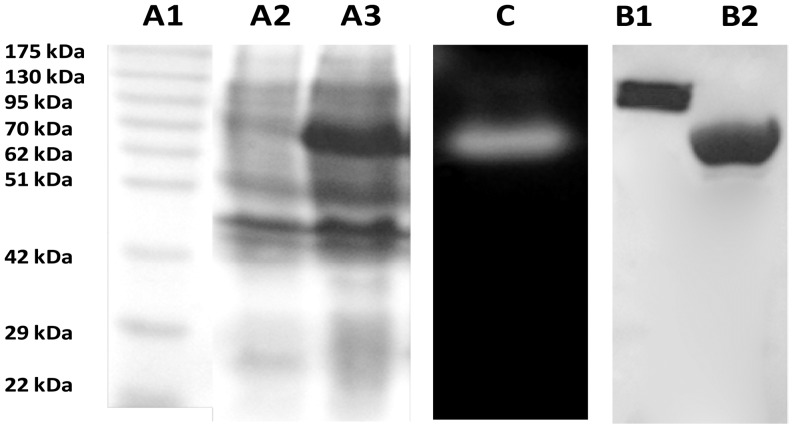
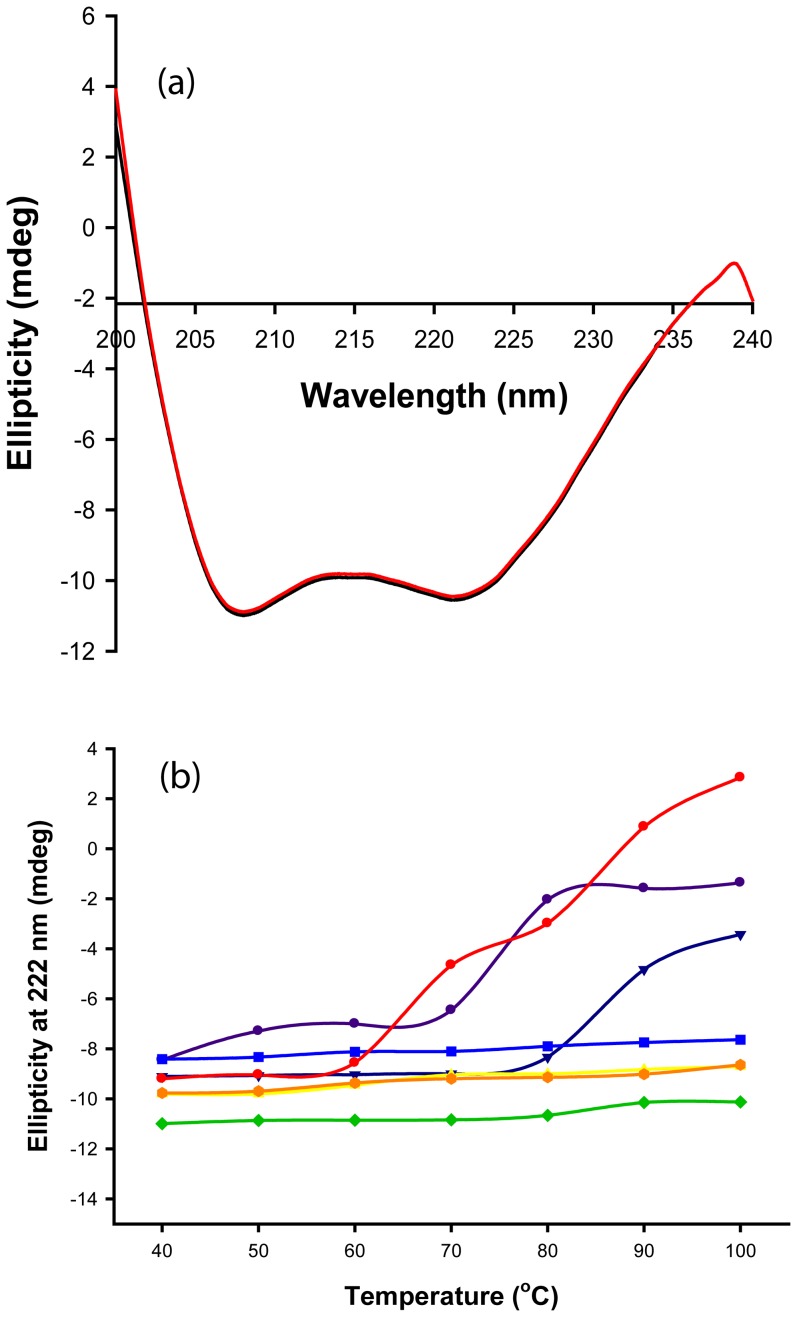
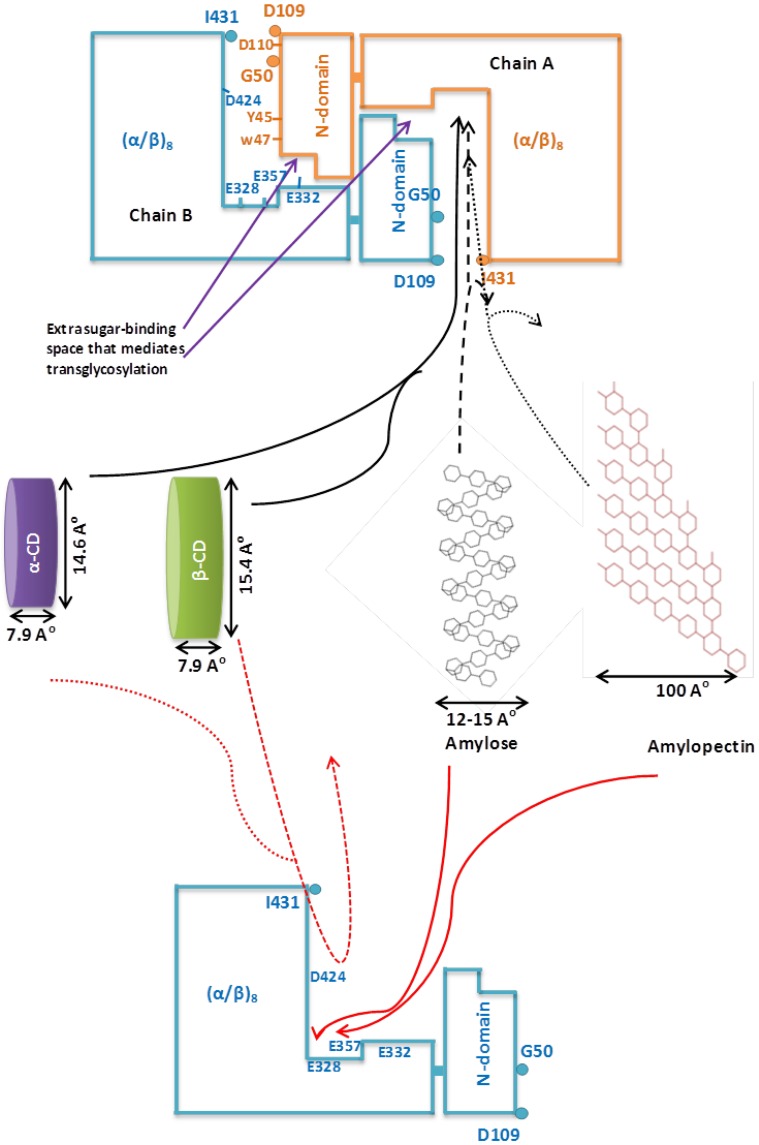
METHODOLOGY/PRINCIPAL FINDINGS: The recombinant monomeric and dimeric forms of maltogenic α-amylase (Gt-Mamy) of the extremely thermophilic bacterium Geobacillus thermoleovorans are of 72.5 and 145 kDa, which are active optimally at 80°C. Extreme thermostability of this enzyme has been explained by analyzing far-UV CD spectra. Dimerization increases T1/2 of Gt-Mamy from 8.2 h to 12.63 h at 90°C and mediates its enthalpy-driven conformational thermostabilization. Furthermore, dime-rization regulates preferential substrate binding of the enzyme. The substrate preference switching of Gt-Mamy upon dimerization has been confirmed from the substrate-binding affinities of the enzyme for various high and low molecular weight substrates. There is an alteration in Km and substrate hydrolysis efficiency (Vmax/Km) of the enzyme (for cyclodex-trins/starch) upon dimerization. N-terminal truncation indicated the role of N-terminal 128 amino acids in the thermostabilization and modulation of substrate-binding affinity. This has been confirmed by molecular docking of β-cyclodextrin to Gt-Mamy that indicated the requirement of homodimer formation by the interaction of a few N-terminal residues of chain A with the catalytic residues of (α/β)8 barrel of chain B and vice-versa for stable cyclodextrin binding. Site directed mutagenesis provided evidence for the role of N-terminal D109 at the dimeric interface in substrate affinity modulation and thermostabilization. The dimeric Gt-Mamy transglycosylates hydrolytic products of G4/G5 and acarbose, while the truncated form does not because of the lack of extra sugar-binding space formed due to dimerization.
CONCLUSION/SIGNIFICANCE: N-terminal domain controls enthalpy-driven thermostabilization, substrate-binding affinity and transglycosylation activity of Gt-Mamy by homodimer formation.
麦芽糖淀粉酶属于环糊精水解酶的一个亚类,与典型的α-淀粉酶不同,它能更有效地水解环糊精。以前已经对几种具有 40-60°C 温度最佳值的细菌麦芽糖淀粉酶进行了特征描述。然而,关于极其耐热的细菌麦芽糖淀粉酶的热适应、底物偏好和转糖苷作用方面还没有报道。
方法/主要发现:来自极端嗜热细菌Thermoleovorans 的重组单体和二聚体形式的麦芽糖α-淀粉酶(Gt-Mamy)的分子量分别为 72.5kDa 和 145kDa,在 80°C 时活性最佳。通过分析远紫外 CD 光谱,解释了该酶的极端热稳定性。二聚化将 Gt-Mamy 的 T1/2 从 8.2 小时延长至 90°C 时的 12.63 小时,并介导其焓驱动的构象热稳定性。此外,二聚化调节了酶的优先底物结合。通过酶对各种高分子量和低分子量底物的结合亲和力证实了 Gt-Mamy 二聚化后的底物偏好转换。二聚化后,酶(对环糊精/淀粉)的 Km 和底物水解效率(Vmax/Km)发生变化。N 端截断表明 N 端 128 个氨基酸在热稳定性和调节底物结合亲和力方面的作用。这已通过 Gt-Mamy 与β-环糊精的分子对接得到证实,表明链 A 的几个 N 端残基与链 B 的(α/β)8 桶的催化残基相互作用形成同源二聚体是稳定结合环糊精所必需的。定点突变提供了证据,证明 N 端 D109 在二聚体界面在调节底物亲和力和热稳定性方面的作用。二聚体 Gt-Mamy 转糖苷水解产物 G4/G5 和阿卡波糖,而截短形式则不能,因为由于二聚化而缺乏形成的额外糖结合空间。
结论/意义:N 端结构域通过同源二聚体形成控制 Gt-Mamy 的焓驱动热稳定性、底物结合亲和力和转糖苷活性。