Department of Respiratory Medicine, the 1st Affiliated Hospital of Guangzhou Medical University, Guangzhou, Guangdong, China ; Guangzhou Institute of Respiratory Disease, Guangzhou, Guangdong, China ; State Key Laboratory of Respiratory Disease, Guangzhou Medical University, Guangzhou, Guangdong, China.
PLoS One. 2013 Sep 20;8(9):e75195. doi: 10.1371/journal.pone.0075195. eCollection 2013.
To investigate whether eosinophilic bronchitis without airway hyperresponsiveness will develop bronchial asthma in allergic mice.
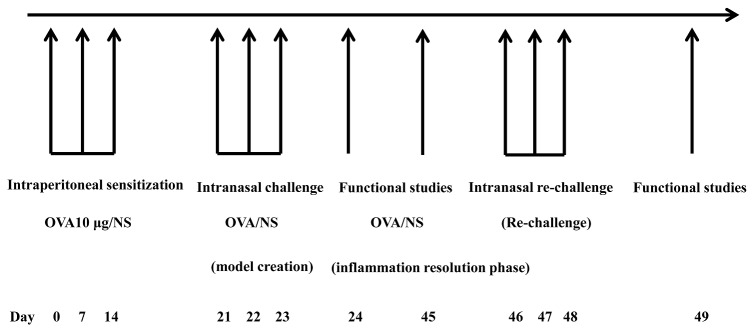
Mice were sensitized with OVA on days 0, 7, and 14, challenged on days 21 to 23 (1(st) OVA challenge), and re-challenged on days 46 to 48 (2(nd) OVA challenge), intranasally with 10 (the EB group) and 200 (the AS group) μg OVA. Lung resistance (RL) was assessed 24 h after each challenge and on day 45 followed by analysis of leukocyte distribution in the bronchoalveolar lavage (BAL) fluid and histological examination.
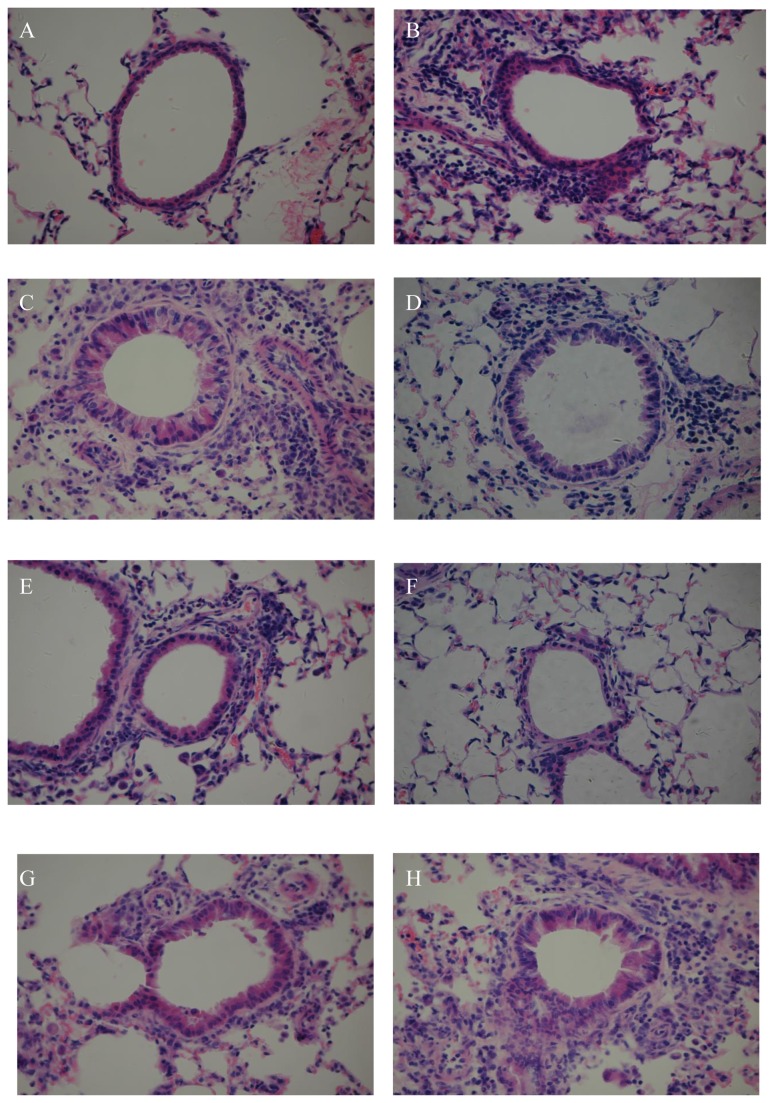
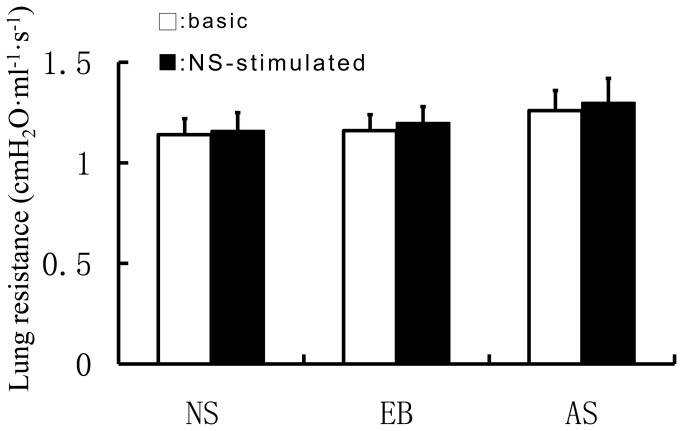
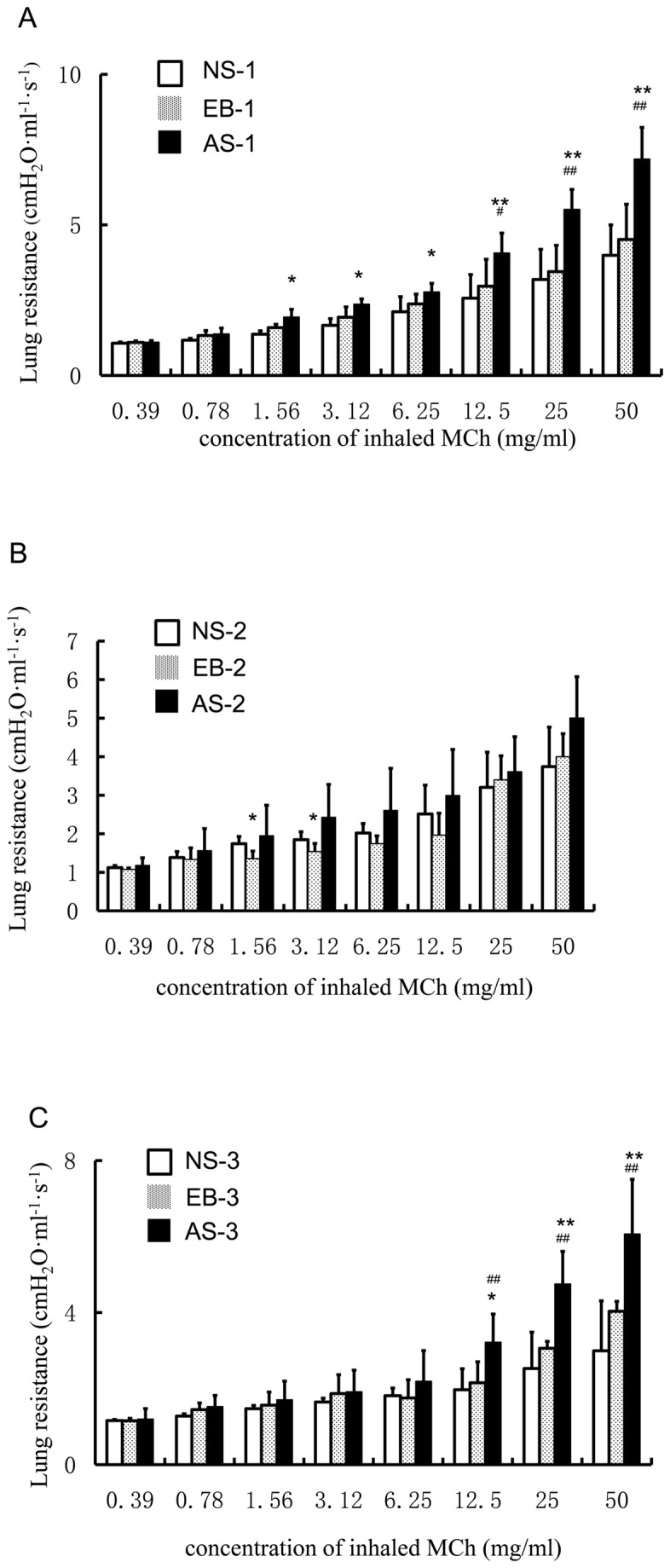
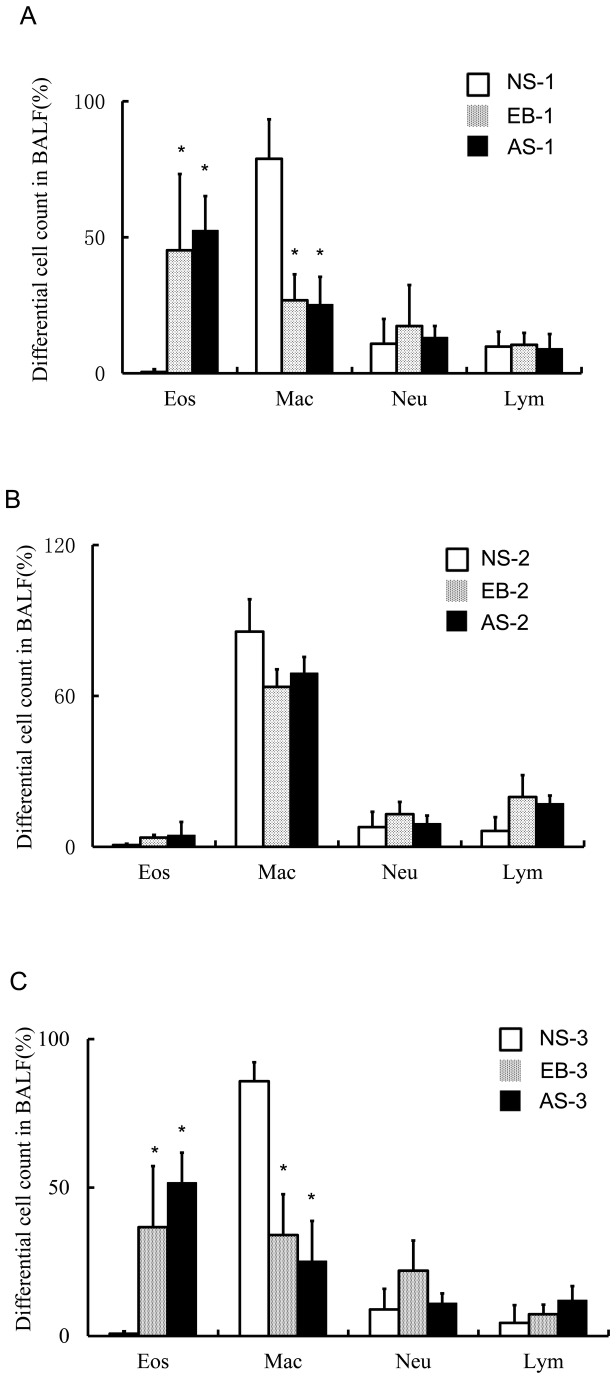
Twenty-four hours after the 1(st) OVA challenge, aerosolized methacholine caused a dose-dependent increase in RL in all groups. At doses ≥1.56 mg/mL, RL in the AS group was significantly higher than that of the NS-1 group (P<0.01 or 0.05) and at doses ≥12.5 mg/mL, RL was markedly higher in the AS group than that of the EB group (P<0.01). The percentage of eosinophils in both the EB group and the AS group was markedly higher than that of the control group. Twenty-four hours after the 2(nd) OVA challenge, at doses ≤12.5 mg/mL, there was no significant difference in RL among all groups (P>0.05). At doses ≥12.5 mg/mL, RL in the AS group was significantly higher than that of the control group and EB group (P<0.01 or 0.05). The percentage of eosinophils in the AS group was noticeably higher than that of the EB group(P<0.05). Furthermore, there was apparent infiltration by inflammatory cells, predominantly eosinophils, into the sub-epithelial region of the bronchus and the bronchioles and around the vessels in the EB and AS group.
Re-challenge with low doses of ovalbumin did not increase airway reactivity and failed to induce bronchial asthma in mice with ovalbumin-induced EB.
研究无气道高反应性的嗜酸性支气管炎(eosinophilic bronchitis,EB)是否会在变应性小鼠中发展为支气管哮喘(asthma)。
将小鼠用卵清蛋白(ovalbumin,OVA)于第 0、7 和 14 天致敏,第 21 至 23 天(第 1 次 OVA 激发)及第 46 至 48 天(第 2 次 OVA 激发)进行鼻腔内 OVA 激发,激发浓度分别为 10(EB 组)和 200μg(AS 组)。每次激发后 24 小时测量肺阻力(RL),第 45 天进行支气管肺泡灌洗液(BAL)白细胞分布分析和组织学检查。
第 1 次 OVA 激发后 24 小时,雾化吸入乙酰甲胆碱引起所有组 RL 呈剂量依赖性增加。在剂量≥1.56mg/mL 时,AS 组 RL 明显高于 NS-1 组(P<0.01 或 0.05),在剂量≥12.5mg/mL 时,AS 组 RL 明显高于 EB 组(P<0.01)。EB 组和 AS 组的嗜酸性粒细胞百分比明显高于对照组。第 2 次 OVA 激发后 24 小时,在≤12.5mg/mL 剂量时,所有组 RL 之间无显著差异(P>0.05)。在剂量≥12.5mg/mL 时,AS 组 RL 明显高于对照组和 EB 组(P<0.01 或 0.05)。AS 组嗜酸性粒细胞百分比明显高于 EB 组(P<0.05)。此外,EB 组和 AS 组的支气管和细支气管的上皮下区域以及血管周围有明显的炎症细胞浸润,主要为嗜酸性粒细胞。
低剂量卵清蛋白再次激发未能增加气道反应性,也未能在卵清蛋白诱导的 EB 小鼠中诱发支气管哮喘。