Instituto de Neurociencias de Alicante, Universidad Miguel Hernández, Consejo Superior de Investigaciones Científicas, Sant Joan d'Alacant, Alicante, Spain.
PLoS One. 2013 Sep 20;8(9):e75845. doi: 10.1371/journal.pone.0075845. eCollection 2013.
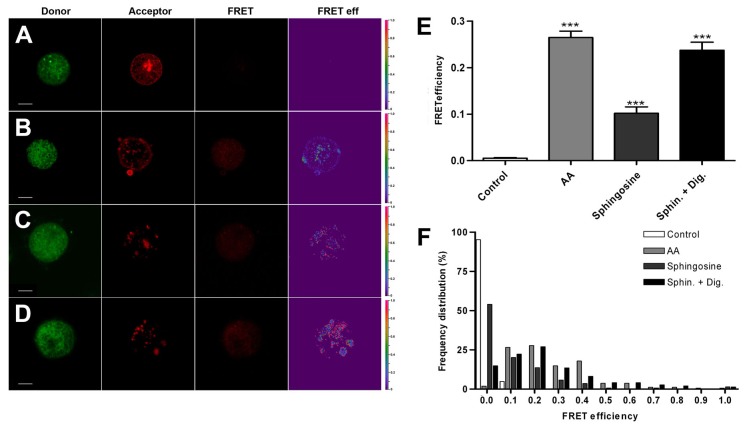
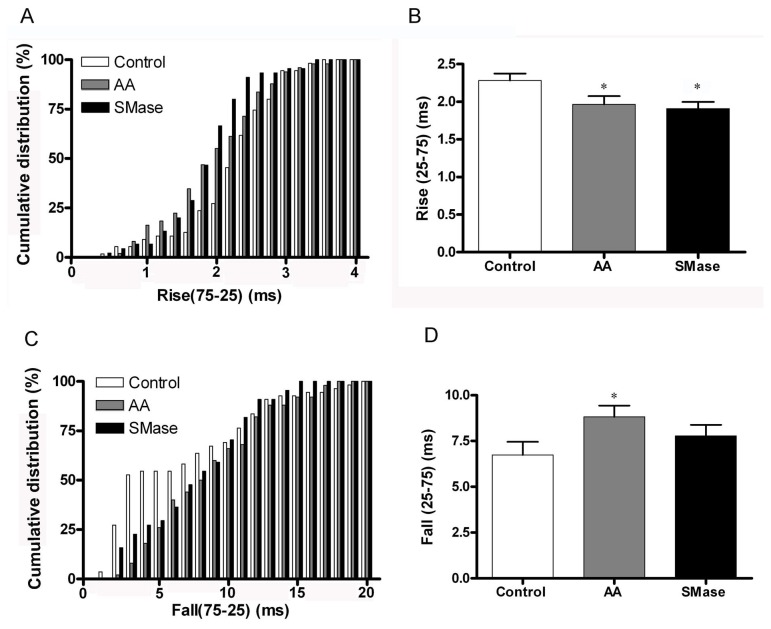
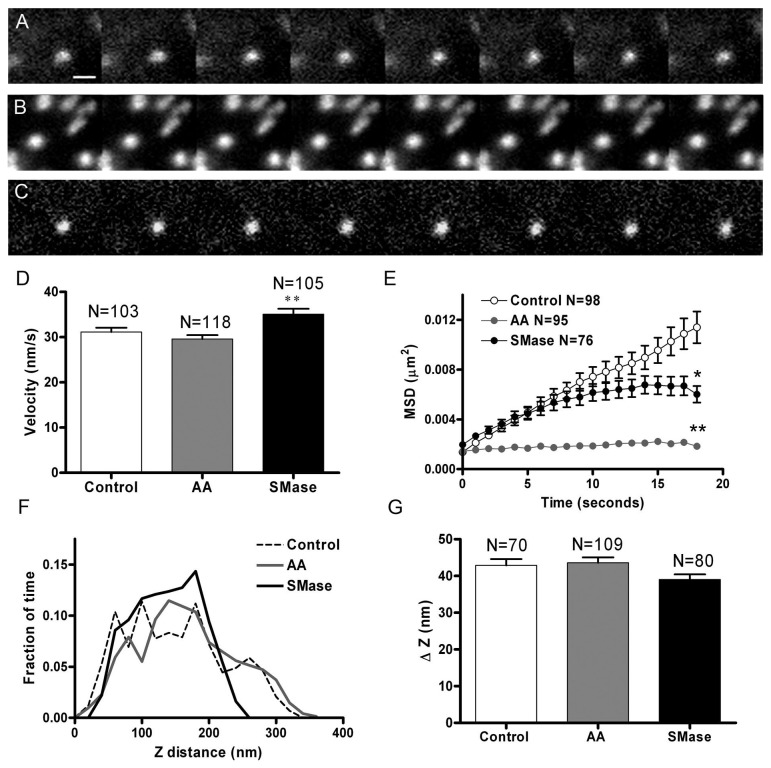
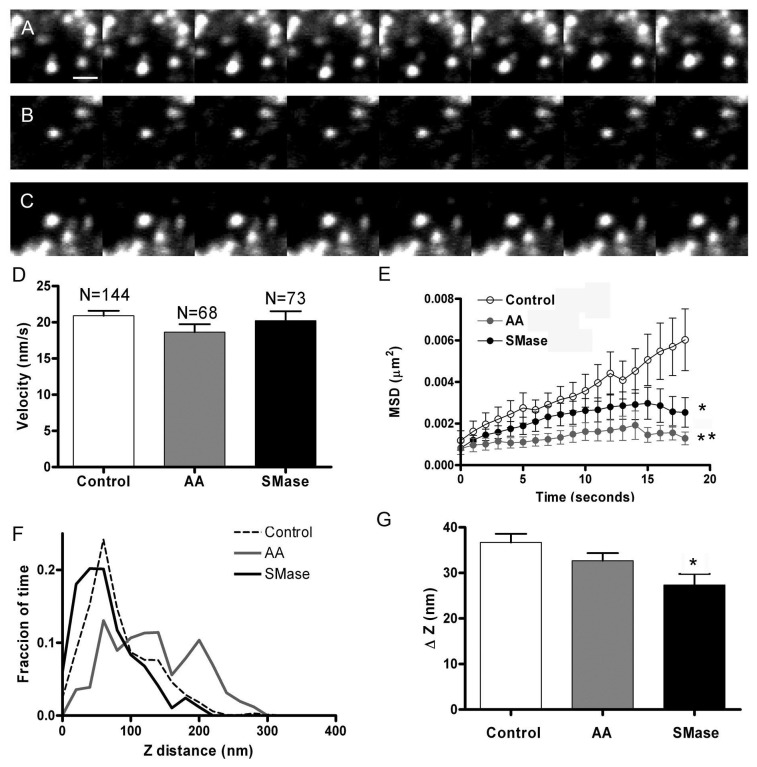
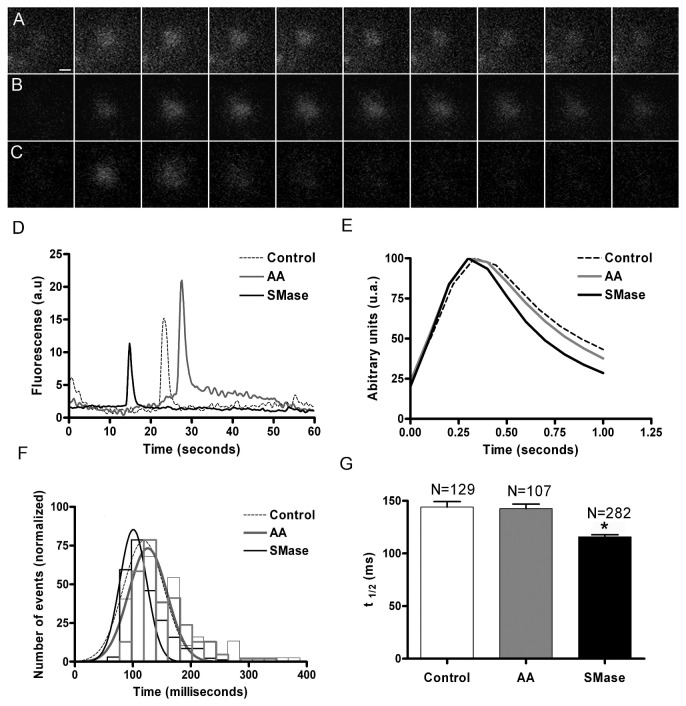
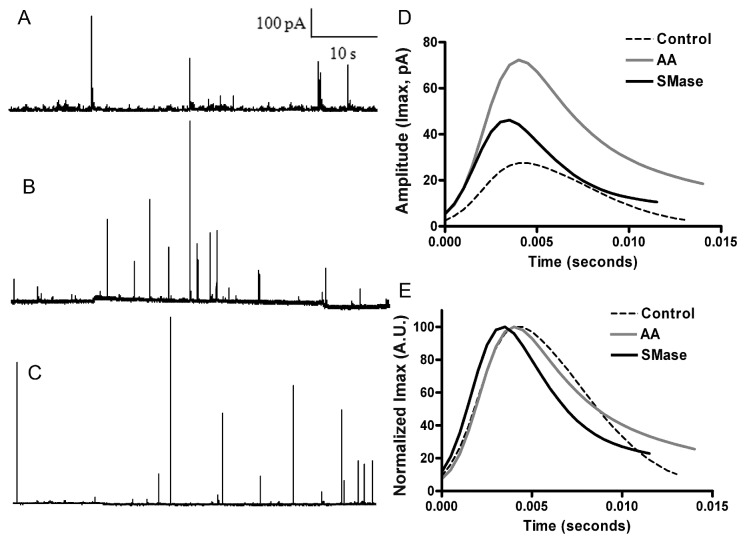
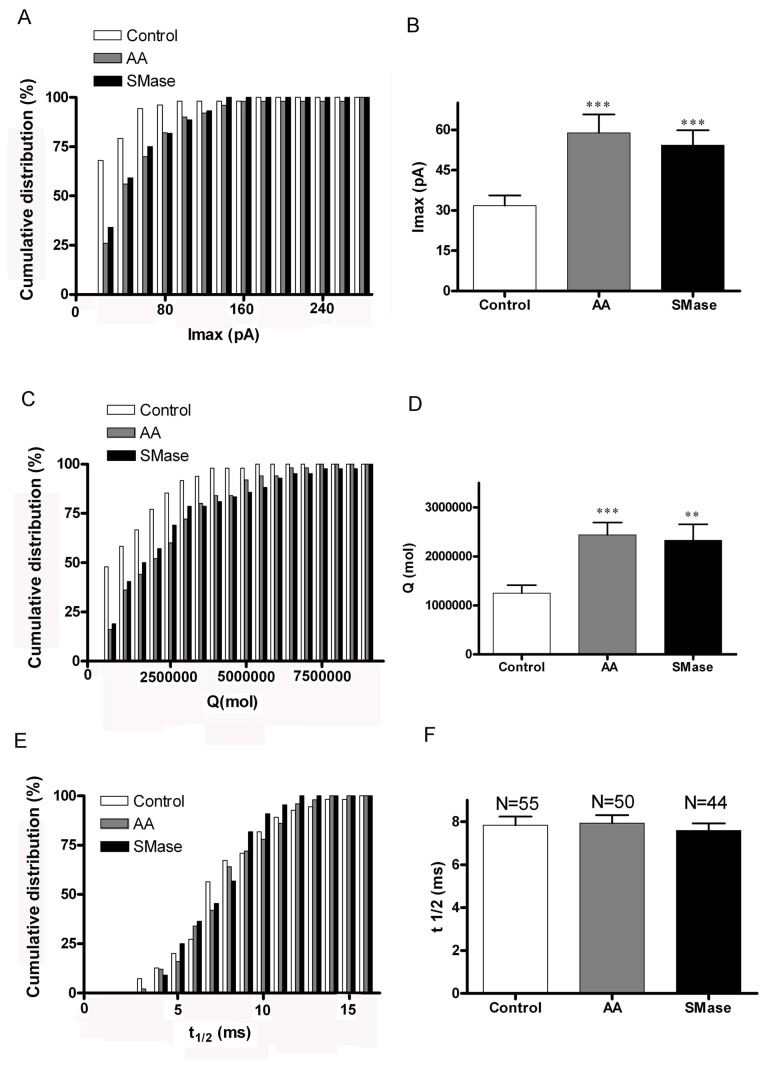
Lipid molecules such as arachidonic acid (AA) and sphingolipid metabolites have been implicated in modulation of neuronal and endocrine secretion. Here we compare the effects of these lipids on secretion from cultured bovine chromaffin cells. First, we demonstrate that exogenous sphingosine and AA interact with the secretory apparatus as confirmed by FRET experiments. Examination of plasma membrane SNARE microdomains and chromaffin granule dynamics using total internal reflection fluorescent microscopy (TIRFM) suggests that sphingosine production promotes granule tethering while arachidonic acid promotes full docking. Our analysis of single granule release kinetics by amperometry demonstrated that both sphingomyelinase and AA treatments enhanced drastically the amount of catecholamines released per individual event by either altering the onset phase of or by prolonging the off phase of single granule catecholamine release kinetics. Together these results demonstrate that the kinetics and extent of the exocytotic fusion pore formation can be modulated by specific signalling lipids through related functional mechanisms.
脂质分子,如花生四烯酸(AA)和神经酰胺代谢物,已被牵涉到神经元和内分泌分泌的调节中。在这里,我们比较了这些脂质对培养的牛肾上腺嗜铬细胞分泌的影响。首先,我们通过荧光共振能量转移(FRET)实验证实,外源性神经酰胺和 AA 与分泌装置相互作用。使用全内反射荧光显微镜(TIRFM)检查质膜 SNARE 微区和嗜铬颗粒动力学表明,神经酰胺的产生促进颗粒的连接,而花生四烯酸促进完全对接。我们通过安培法分析单个颗粒释放动力学的结果表明,鞘磷脂酶和 AA 处理都极大地增强了每个事件中儿茶酚胺的释放量,这要么改变了单个颗粒儿茶酚胺释放动力学的起始阶段,要么延长了其终止阶段。这些结果表明,特定的信号脂质可以通过相关的功能机制来调节胞吐融合孔形成的动力学和程度。