Department of Plant Agriculture, University of Guelph, Guelph, ON N1G 2W1, Canada.
BMC Plant Biol. 2013 Sep 28;13:144. doi: 10.1186/1471-2229-13-144.
The ubiquitous, non-proteinaceous amino acid GABA (γ-aminobutyrate) accumulates in plants subjected to abiotic stresses such as chilling, O2 deficiency and elevated CO2. Recent evidence indicates that controlled atmosphere storage causes the accumulation of GABA in apple (Malus x domestica Borkh.) fruit, and now there is increasing interest in the biochemical mechanisms responsible for this phenomenon. Here, we investigated whether this phenomenon could be mediated via Ca(2+)/calmodulin (CaM) activation of glutamate decarboxylase (GAD) activity.
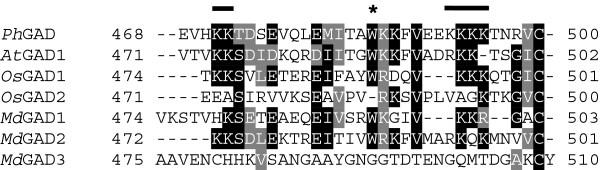
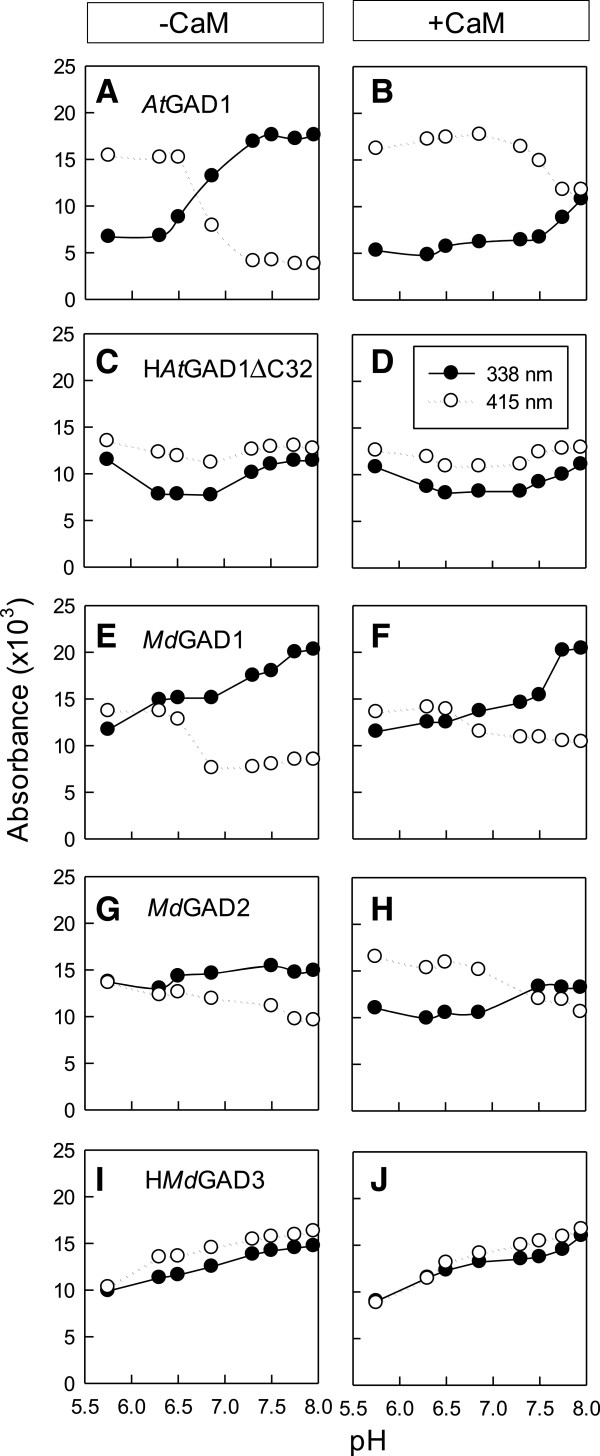
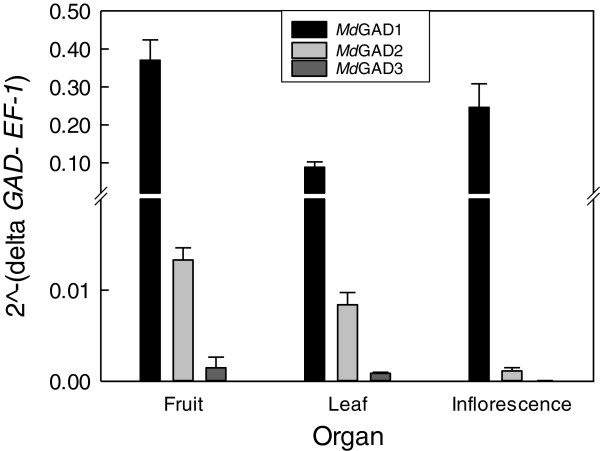
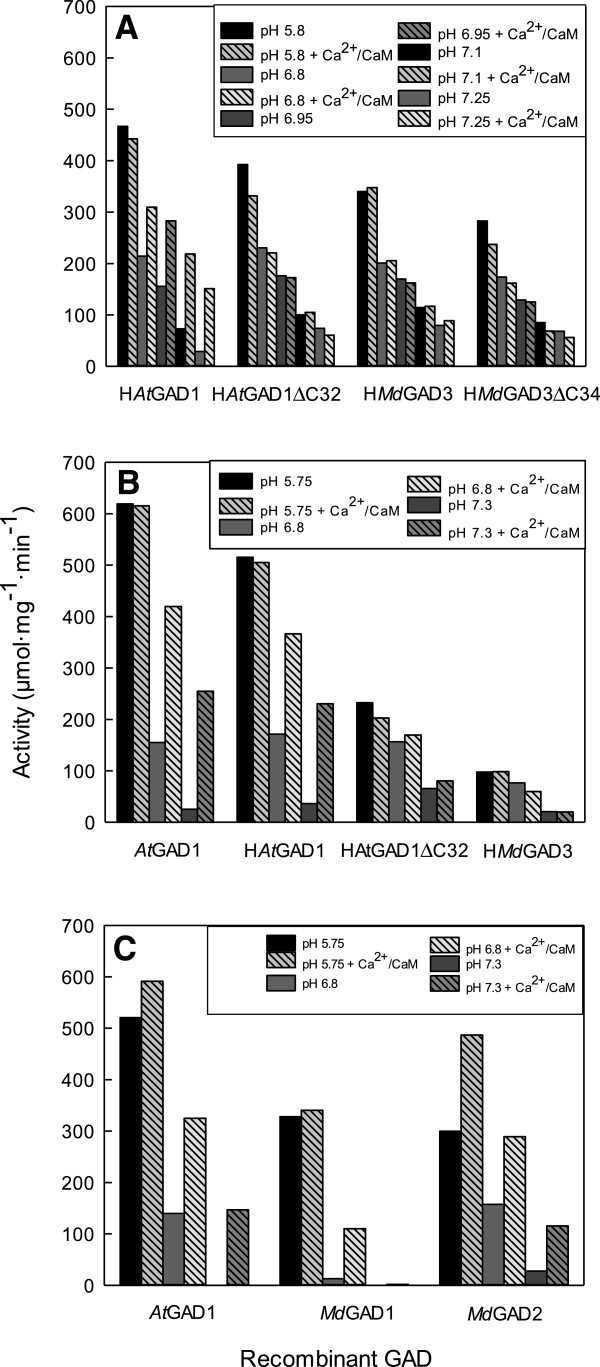
GAD activity in cell-free extracts of apple fruit was stimulated by Ca(2+)/CaM at physiological pH, but not at the acidic pH optimum. Based on bioinformatics analysis of the apple genome, three apple GAD genes were identified and their expression determined in various apple organs, including fruit. Like recombinant Arabidopsis GAD1, the activity and spectral properties of recombinant MdGAD1 and MdGAD2 were regulated by Ca(2+)/CaM at physiological pH and both enzymes possessed a highly conserved CaM-binding domain that was autoinhibitory. In contrast, the activity and spectral properties of recombinant MdGAD3 were not affected by Ca(2+)/CaM and they were much less sensitive to pH than MdGAD1, MdGAD2 and Arabidopsis GAD1; furthermore, the C-terminal region neither bound CaM nor functioned as an autoinhibitory domain.
Plant GADs typically differ from microbial and animal GAD enzymes in possessing a C-terminal 30-50 amino acid residue CaM-binding domain. To date, rice GAD2 is the only exception to this generalization; notably, the C-terminal region of this enzyme still functions as an autoinhibitory domain. In the present study, apple fruit were found to contain two CaM-dependent GADs, as well as a novel CaM-independent GAD that does not possess a C-terminal autoinhibitory domain.
非蛋白氨基酸 GABA(γ-氨基丁酸)在植物受到非生物胁迫(如寒冷、缺氧和高 CO2)时会积累。最近的证据表明,控制气氛贮藏会导致苹果(Malus x domestica Borkh.)果实中 GABA 的积累,现在人们对导致这种现象的生化机制越来越感兴趣。在这里,我们研究了这种现象是否可以通过 Ca(2+)/钙调蛋白(CaM)激活谷氨酸脱羧酶(GAD)活性来介导。
在苹果果实无细胞提取物中,GAD 活性在生理 pH 下被 Ca(2+)/CaM 刺激,但在酸性 pH 最佳条件下则不会。基于对苹果基因组的生物信息学分析,鉴定了三个苹果 GAD 基因,并在各种苹果器官(包括果实)中确定了它们的表达。与重组拟南芥 GAD1 一样,重组 MdGAD1 和 MdGAD2 的活性和光谱特性在生理 pH 下受 Ca(2+)/CaM 调节,并且这两种酶都具有高度保守的 CaM 结合结构域,该结构域是自动抑制的。相比之下,重组 MdGAD3 的活性和光谱特性不受 Ca(2+)/CaM 影响,它们对 pH 的敏感性远低于 MdGAD1、MdGAD2 和拟南芥 GAD1;此外,C 末端区域既不结合 CaM,也不作为自动抑制结构域发挥作用。
植物 GAD 通常与微生物和动物 GAD 酶不同,具有一个 C 末端 30-50 个氨基酸残基的 CaM 结合结构域。迄今为止,水稻 GAD2 是这种概括的唯一例外;值得注意的是,该酶的 C 末端区域仍然作为自动抑制结构域发挥作用。在本研究中,发现苹果果实含有两种 CaM 依赖性 GAD,以及一种不具有 C 末端自动抑制结构域的新型 CaM 非依赖性 GAD。