Department of Chemical and Systems Biology, Stanford University, Stanford, CA 94305, USA.
Cell. 2013 Oct 10;155(2):369-83. doi: 10.1016/j.cell.2013.08.062. Epub 2013 Sep 26.
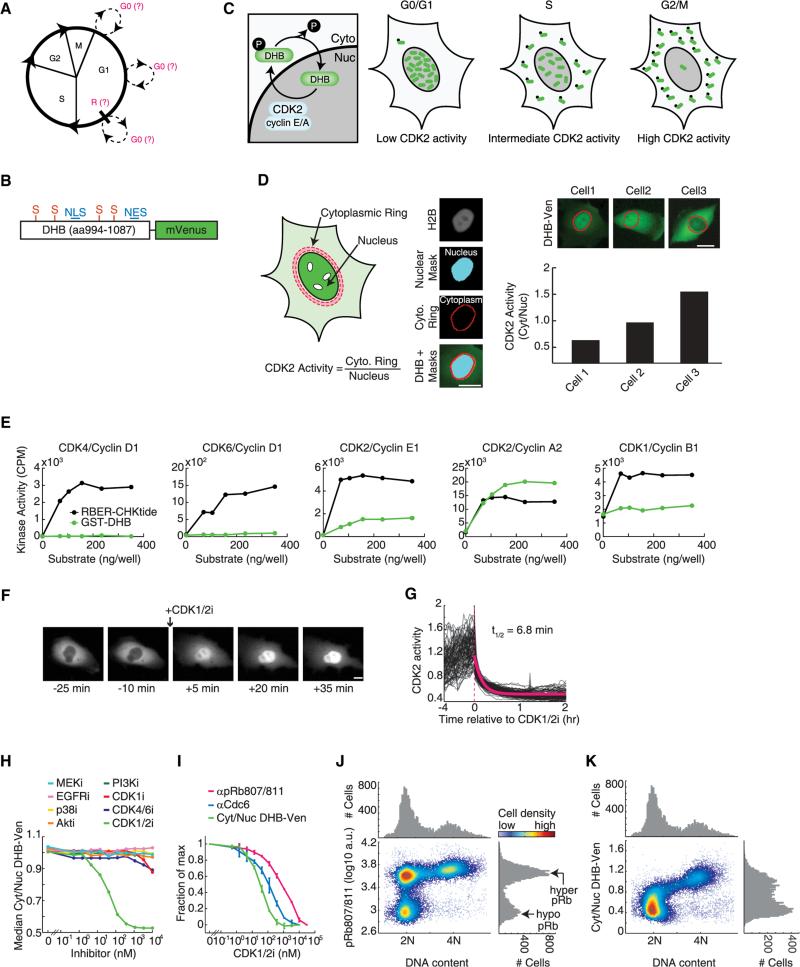
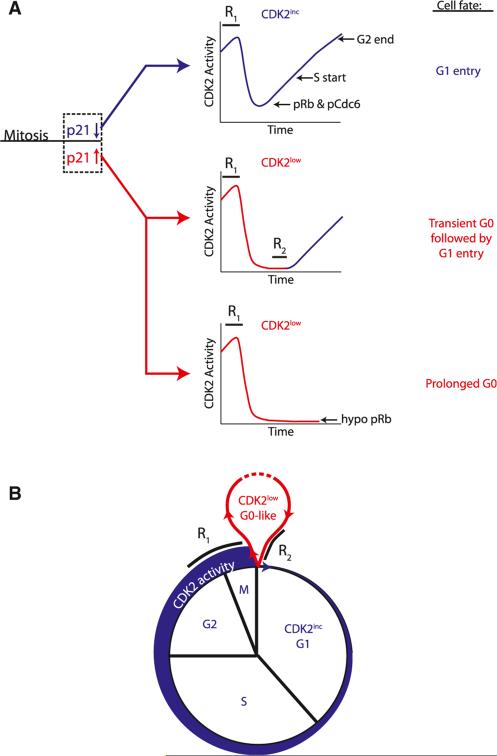
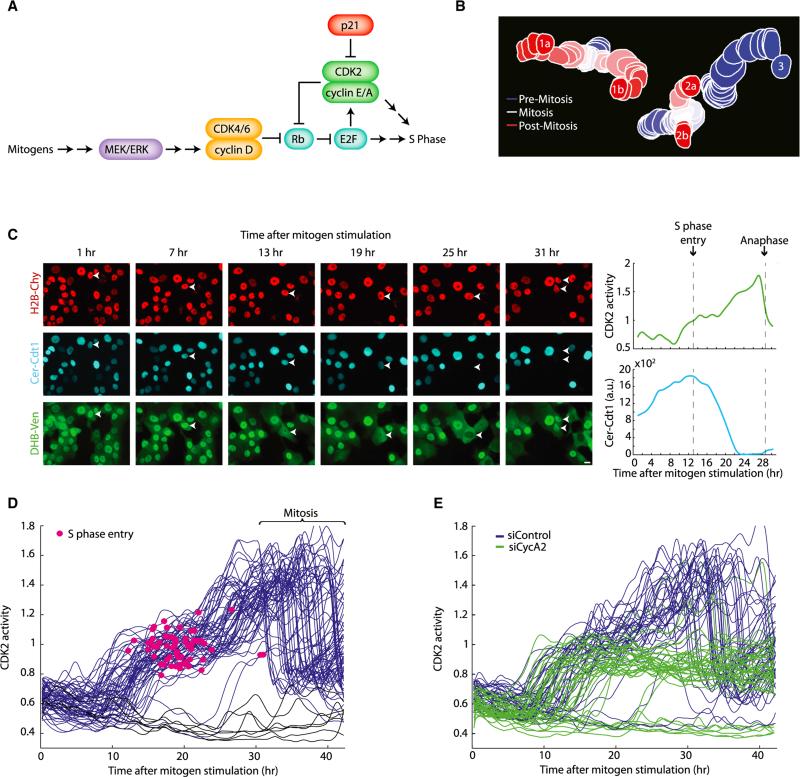
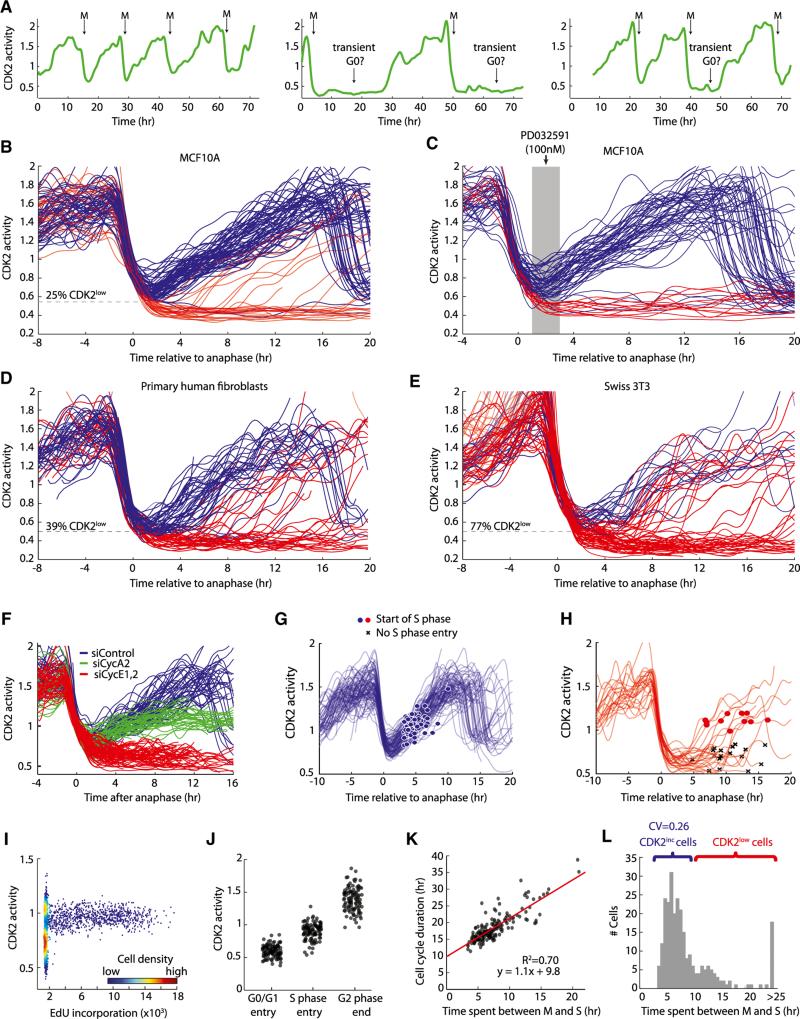
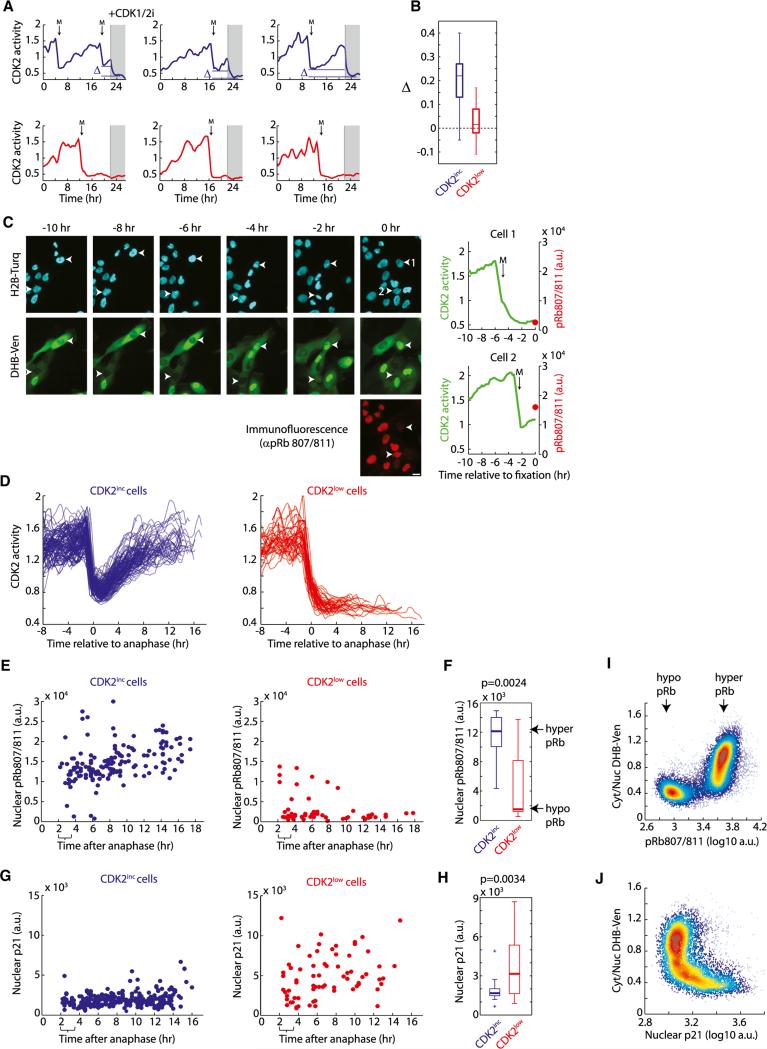
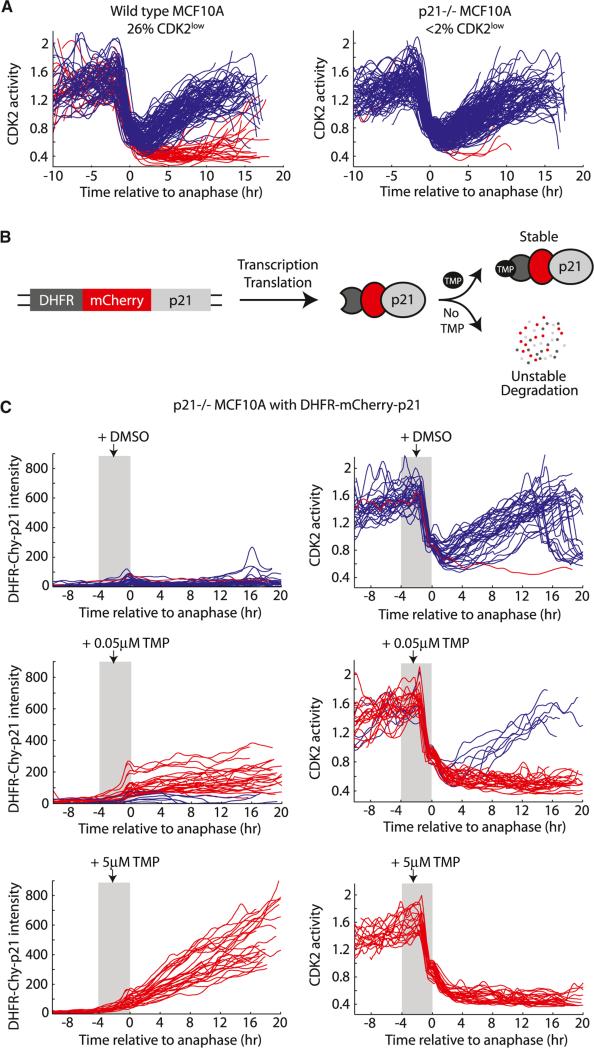
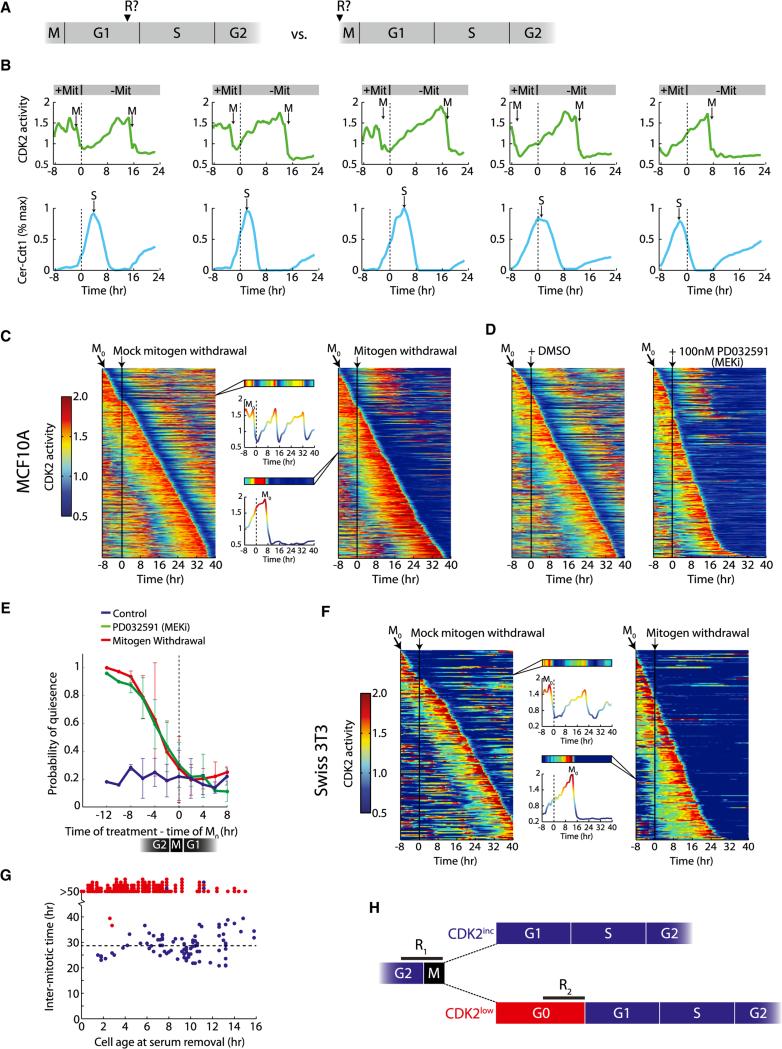
Tissue homeostasis in metazoans is regulated by transitions of cells between quiescence and proliferation. The hallmark of proliferating populations is progression through the cell cycle, which is driven by cyclin-dependent kinase (CDK) activity. Here, we introduce a live-cell sensor for CDK2 activity and unexpectedly found that proliferating cells bifurcate into two populations as they exit mitosis. Many cells immediately commit to the next cell cycle by building up CDK2 activity from an intermediate level, while other cells lack CDK2 activity and enter a transient state of quiescence. This bifurcation is directly controlled by the CDK inhibitor p21 and is regulated by mitogens during a restriction window at the end of the previous cell cycle. Thus, cells decide at the end of mitosis to either start the next cell cycle by immediately building up CDK2 activity or to enter a transient G0-like state by suppressing CDK2 activity.
真核生物的组织稳态由细胞在静止和增殖之间的转换来调节。增殖群体的标志是通过细胞周期的进展,这是由细胞周期蛋白依赖性激酶 (CDK) 活性驱动的。在这里,我们引入了一种用于 CDK2 活性的活细胞传感器,出乎意料的是,我们发现增殖细胞在有丝分裂后会分叉成两个群体。许多细胞立即通过从中等水平建立 CDK2 活性来进入下一个细胞周期,而其他细胞则缺乏 CDK2 活性并进入短暂的静止状态。这种分叉直接受 CDK 抑制剂 p21 的控制,并在先前细胞周期结束时的限制窗口期间受到有丝分裂原的调节。因此,细胞在有丝分裂结束时决定是通过立即建立 CDK2 活性来开始下一个细胞周期,还是通过抑制 CDK2 活性进入短暂的 G0 样状态。