Kwok Charlie H T, Devonshire Ian M, Bennett Andrew J, Hathway Gareth J
Laboratory of Developmental Nociception, Queens Medical Centre, University of Nottingham, Nottingham NG7 2UH, UK FRAME Laboratory, Queens Medical Centre, University of Nottingham, Nottingham NG7 2UH, UK.
Pain. 2014 Jan;155(1):168-178. doi: 10.1016/j.pain.2013.09.022. Epub 2013 Sep 27.
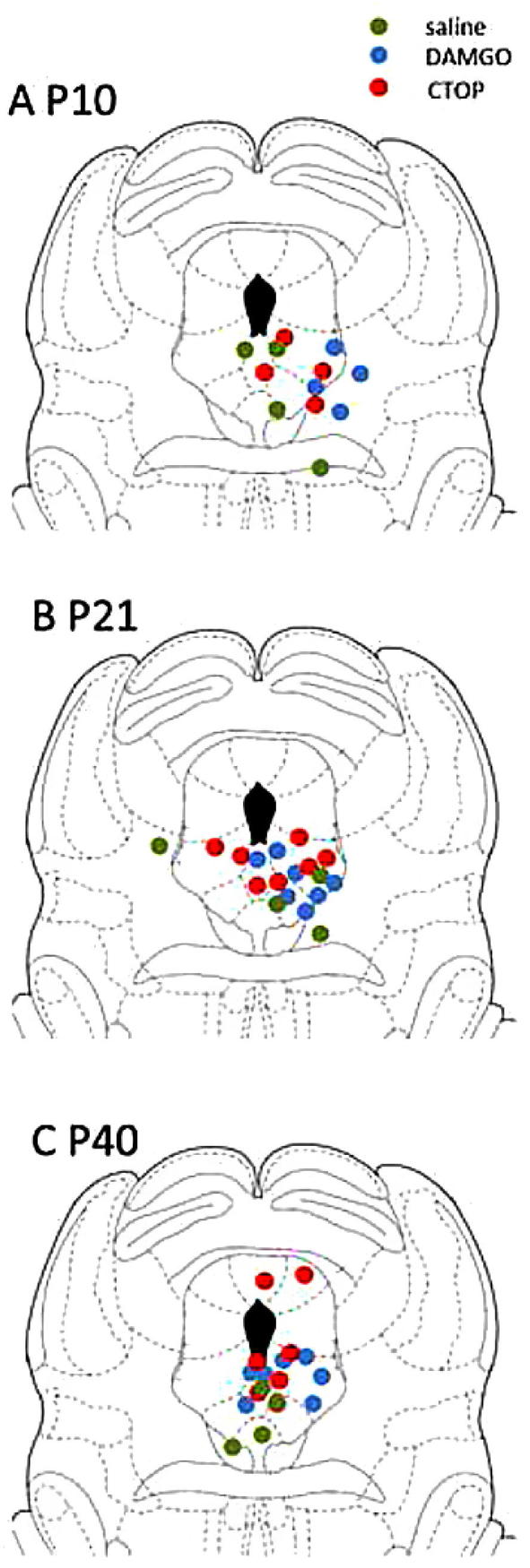
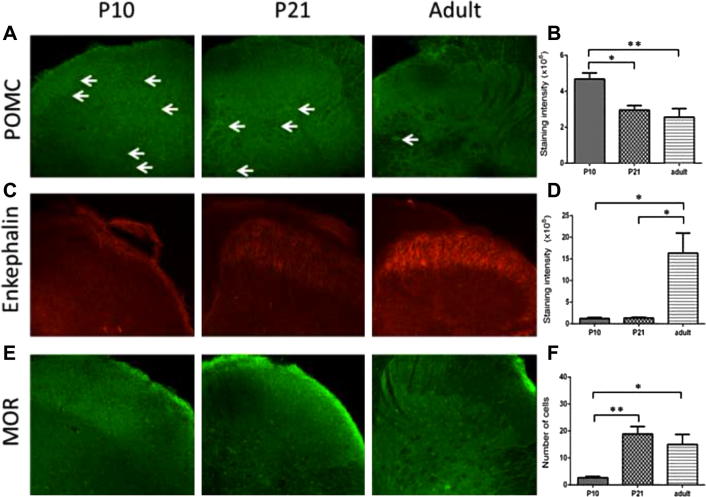
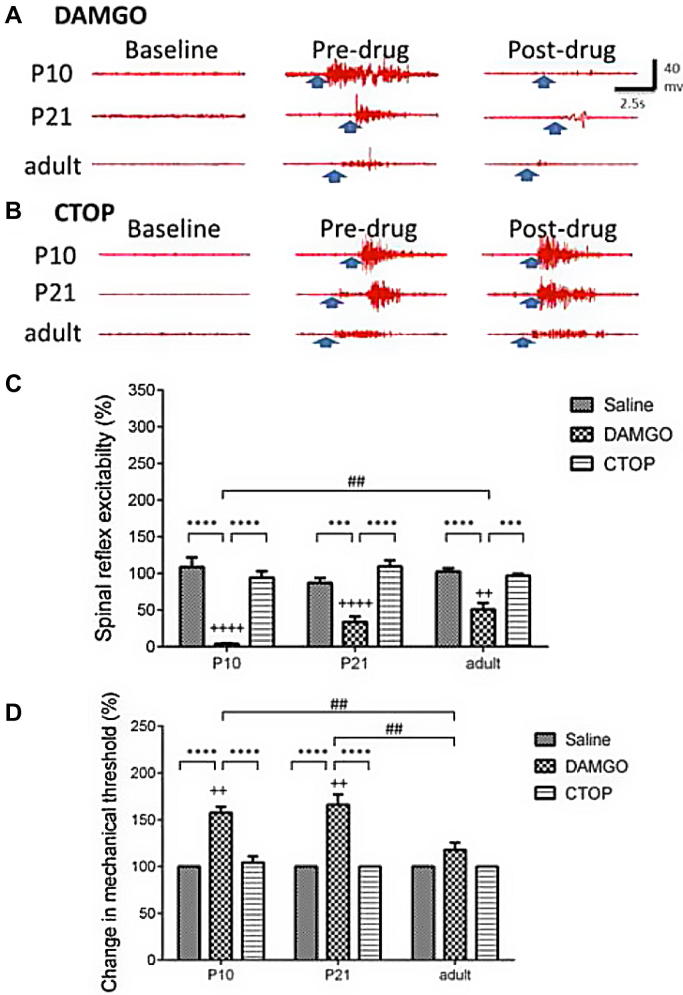
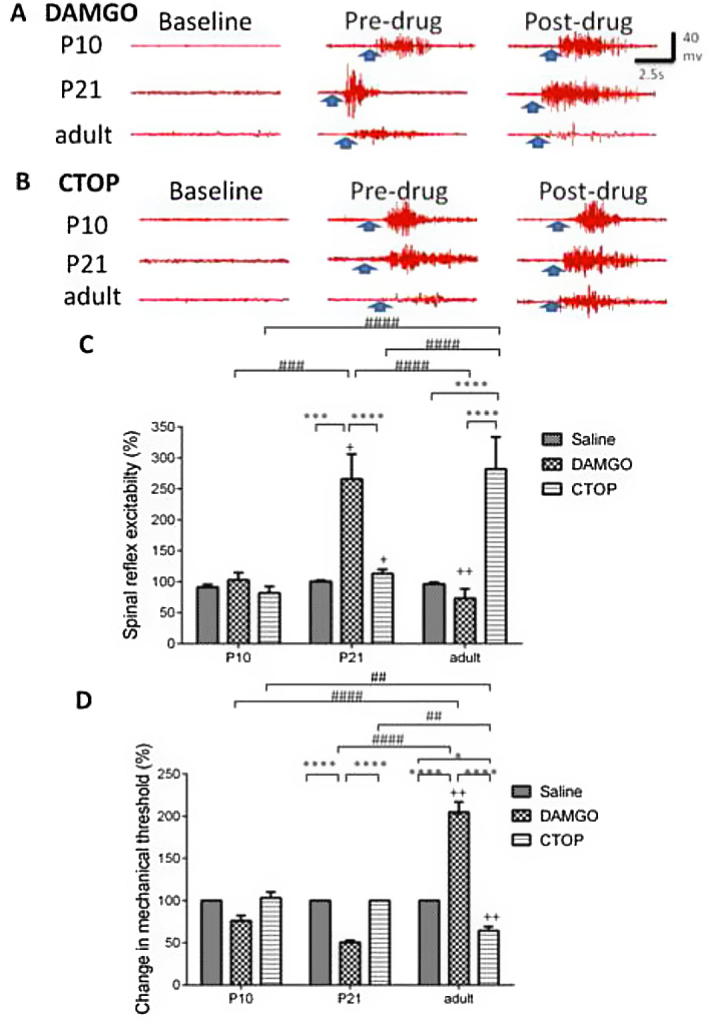
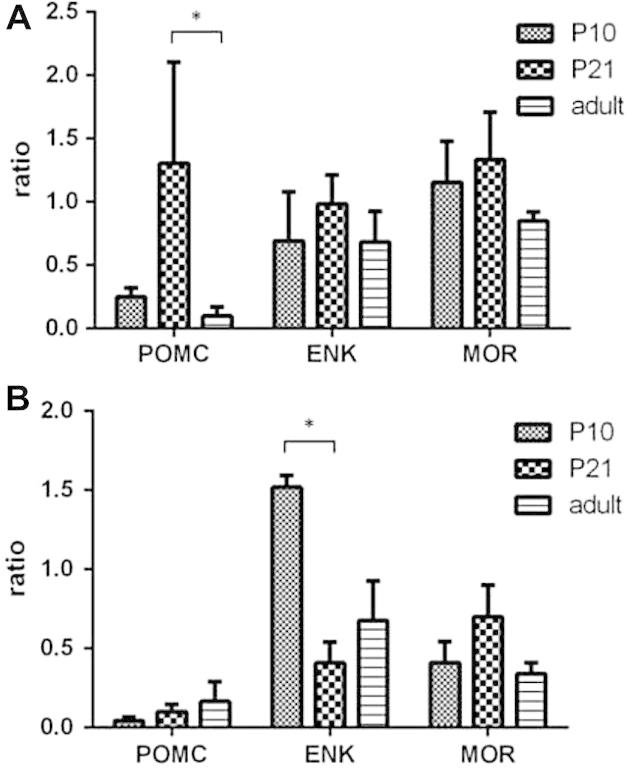
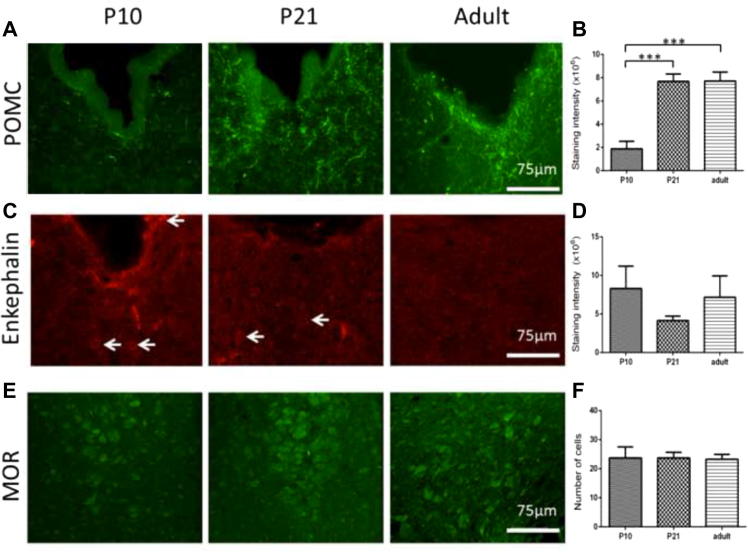
Significant opioid-dependent changes occur during the fourth postnatal week in supraspinal sites (rostroventral medulla [RVM], periaqueductal grey [PAG]) that are involved in the descending control of spinal excitability via the dorsal horn (DH). Here we report developmentally regulated changes in the opioidergic signalling within the PAG and DH, which further increase our understanding of pain processing during early life. Microinjection of the μ-opioid receptor (MOR) agonist DAMGO (30 ng) into the PAG of Sprague-Dawley rats increased spinal excitability and lowered mechanical threshold to noxious stimuli in postnatal day (P)21 rats, but had inhibitory effects in adults and lacked efficacy in P10 pups. A tonic opioidergic tone within the PAG was revealed in adult rats by intra-PAG microinjection of CTOP (120 ng, MOR antagonist), which lowered mechanical thresholds and increased spinal reflex excitability. Spinal administration of DAMGO inhibited spinal excitability in all ages, yet the magnitude of this was greater in younger animals than in adults. The expression of MOR and related peptides were also investigated using TaqMan real-time polymerase chain reaction and immunohistochemistry. We found that pro-opiomelanocortin peaked at P21 in the ventral PAG, and MOR increased significantly in the DH as the animals aged. Enkephalin mRNA transcripts preceded the increase in enkephalin immunoreactive fibres in the superficial dorsal horn from P21 onwards. These results illustrate that profound differences in the endogenous opioidergic signalling system occur throughout postnatal development.
在出生后第四周,脊髓上部位(吻侧腹内侧延髓[RVM]、导水管周围灰质[PAG])会发生显著的阿片类药物依赖变化,这些部位通过背角(DH)参与脊髓兴奋性的下行控制。在此,我们报告了PAG和DH内阿片能信号的发育调控变化,这进一步增进了我们对生命早期疼痛处理的理解。向Sprague-Dawley大鼠的PAG微量注射μ-阿片受体(MOR)激动剂DAMGO(30 ng)可增加出生后第21天(P21)大鼠的脊髓兴奋性并降低对有害刺激的机械阈值,但对成年大鼠有抑制作用,对P10幼崽则无效。成年大鼠通过向PAG内微量注射CTOP(120 ng,MOR拮抗剂)显示出PAG内的阿片能紧张性,这降低了机械阈值并增加了脊髓反射兴奋性。向脊髓注射DAMGO对所有年龄段的脊髓兴奋性均有抑制作用,但在年幼动物中的抑制程度大于成年动物。还使用TaqMan实时聚合酶链反应和免疫组织化学研究了MOR及相关肽的表达。我们发现,促肾上腺皮质激素原在腹侧PAG中于P21达到峰值,并且随着动物年龄增长,DH中的MOR显著增加。从P21开始,脑啡肽mRNA转录本先于浅背角中脑啡肽免疫反应性纤维的增加。这些结果表明,内源性阿片能信号系统在整个出生后发育过程中存在深刻差异。