Nguyen-Tran Diem-Hang, Hait Nitai C, Sperber Henrik, Qi Junlin, Fischer Karin, Ieronimakis Nick, Pantoja Mario, Hays Aislinn, Allegood Jeremy, Reyes Morayma, Spiegel Sarah, Ruohola-Baker Hannele
Molecular and Cellular Biology Graduate Program, University of Washington, Seattle, WA 98195-7350, USA.
Dis Model Mech. 2014 Jan;7(1):41-54. doi: 10.1242/dmm.013631. Epub 2013 Sep 25.
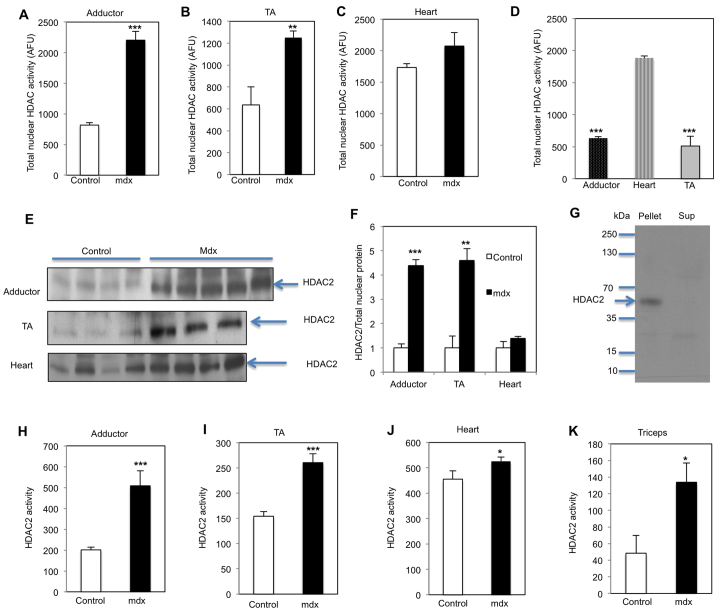
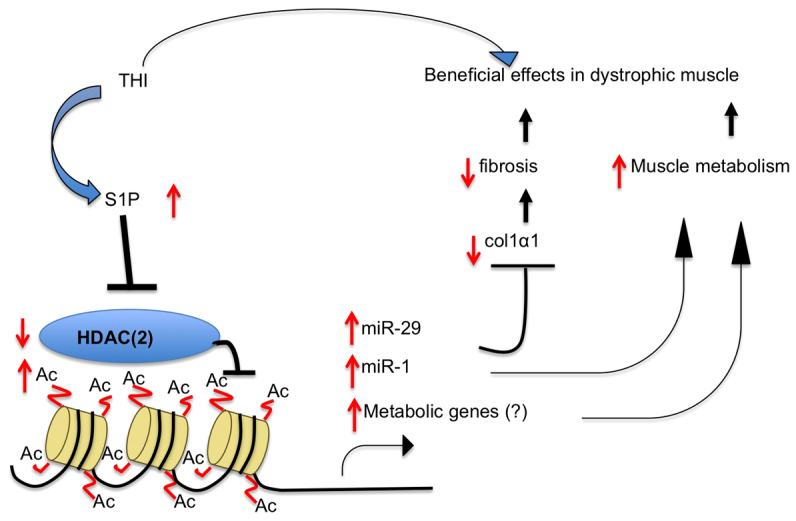
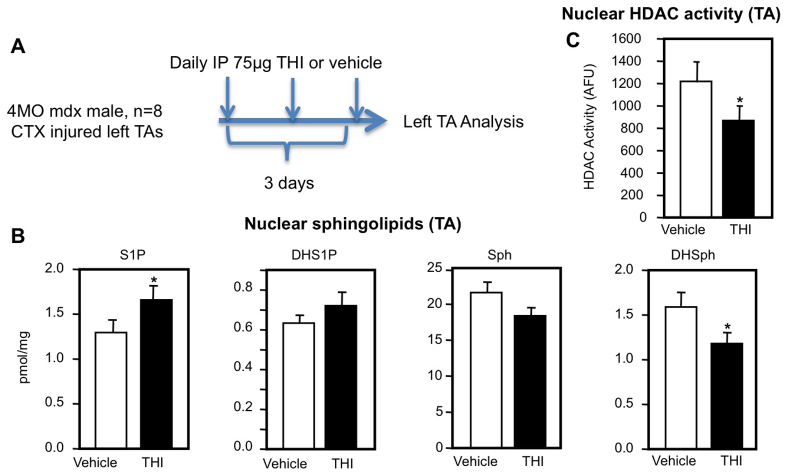
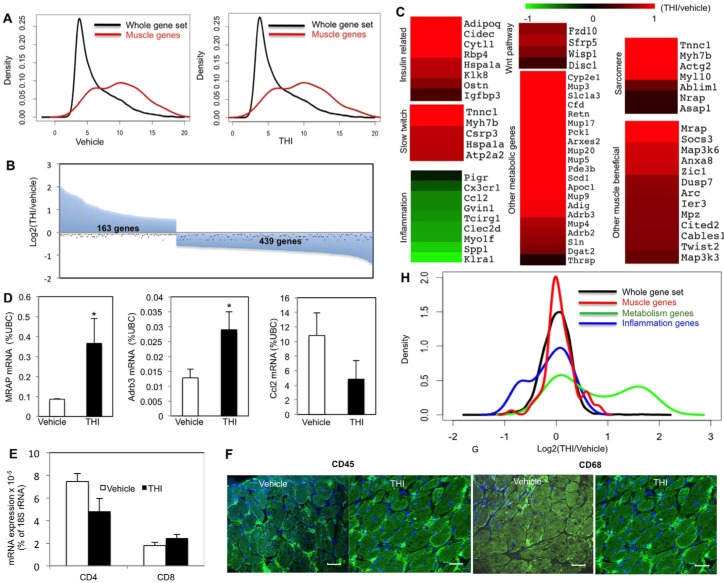
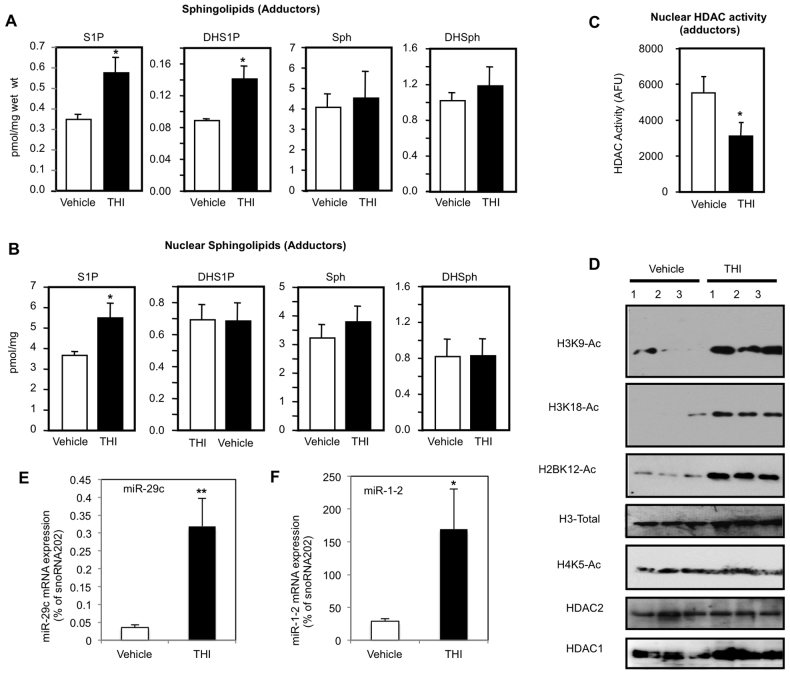
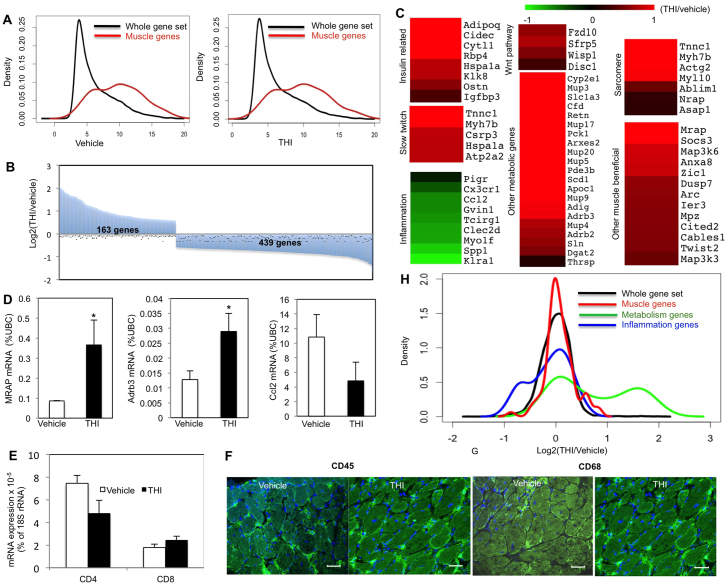
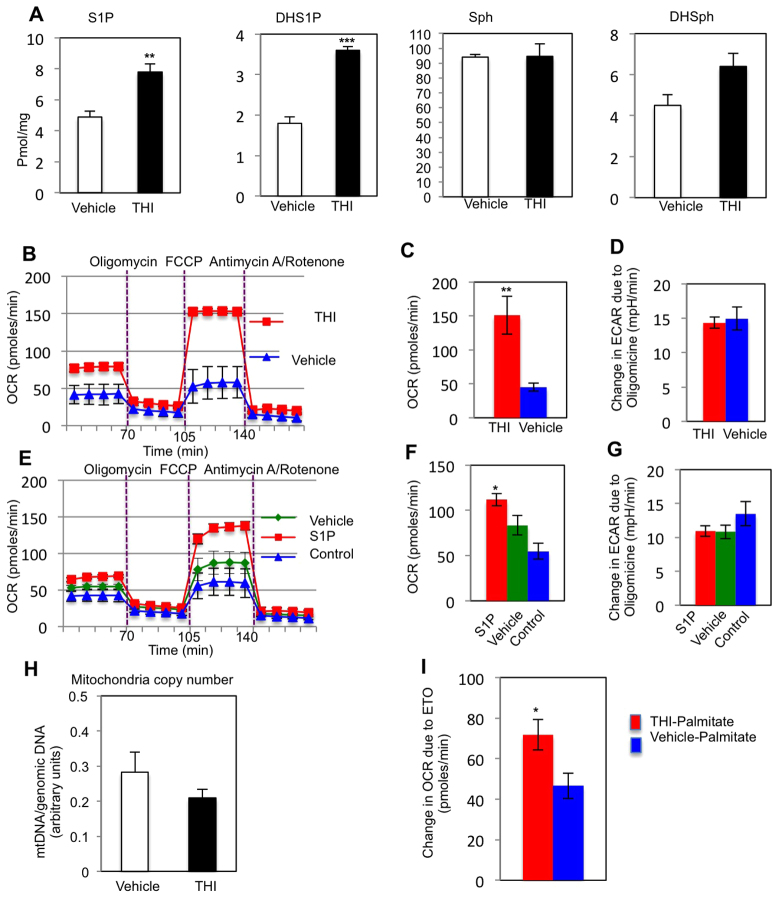
Duchenne muscular dystrophy (DMD) is a lethal muscle-wasting disease. Studies in Drosophila showed that genetic increase of the levels of the bioactive sphingolipid sphingosine-1-phosphate (S1P) or delivery of 2-acetyl-5-tetrahydroxybutyl imidazole (THI), an S1P lyase inhibitor, suppresses dystrophic muscle degeneration. In the dystrophic mouse (mdx), upregulation of S1P by THI increases regeneration and muscle force. S1P can act as a ligand for S1P receptors and as a histone deacetylase (HDAC) inhibitor. Because Drosophila has no identified S1P receptors and DMD correlates with increased HDAC2 levels, we tested whether S1P action in muscle involves HDAC inhibition. Here we show that beneficial effects of THI treatment in mdx mice correlate with significantly increased nuclear S1P, decreased HDAC activity and increased acetylation of specific histone residues. Importantly, the HDAC2 target microRNA genes miR-29 and miR-1 are significantly upregulated, correlating with the downregulation of the miR-29 target Col1a1 in the diaphragm of THI-treated mdx mice. Further gene expression analysis revealed a significant THI-dependent decrease in inflammatory genes and increase in metabolic genes. Accordingly, S1P levels and functional mitochondrial activity are increased after THI treatment of differentiating C2C12 cells. S1P increases the capacity of the muscle cell to use fatty acids as an energy source, suggesting that THI treatment could be beneficial for the maintenance of energy metabolism in mdx muscles.
杜兴氏肌肉营养不良症(DMD)是一种致命的肌肉萎缩疾病。对果蝇的研究表明,生物活性鞘脂鞘氨醇-1-磷酸(S1P)水平的基因增加或鞘氨醇-1-磷酸裂解酶抑制剂2-乙酰-5-四羟基丁基咪唑(THI)的递送可抑制营养不良性肌肉变性。在营养不良小鼠(mdx)中,THI对S1P的上调可增加再生和肌肉力量。S1P可作为S1P受体的配体以及组蛋白脱乙酰基酶(HDAC)抑制剂。由于果蝇未发现S1P受体,且DMD与HDAC2水平升高相关,因此我们测试了S1P在肌肉中的作用是否涉及HDAC抑制。在此我们表明,THI治疗对mdx小鼠的有益作用与核内S1P显著增加、HDAC活性降低以及特定组蛋白残基的乙酰化增加相关。重要的是,HDAC2靶标微小RNA基因miR-29和miR-1显著上调,这与THI治疗的mdx小鼠膈肌中miR-29靶标Col1a1的下调相关。进一步的基因表达分析显示,炎症基因显著减少,代谢基因增加,且呈THI依赖性。因此,在分化的C2C12细胞经THI处理后,S1P水平和线粒体功能活性增加。S1P增加了肌肉细胞利用脂肪酸作为能量来源的能力,这表明THI治疗可能对维持mdx肌肉的能量代谢有益。