Department of Anesthesiology, School of Medicine, University of California San Diego, La Jolla, California, United States of America ; Department of Orthopedic Surgery, Graduate School of Medicine, Chiba University, Chiba, Japan.
PLoS One. 2013 Sep 23;8(9):e75497. doi: 10.1371/journal.pone.0075497. eCollection 2013.
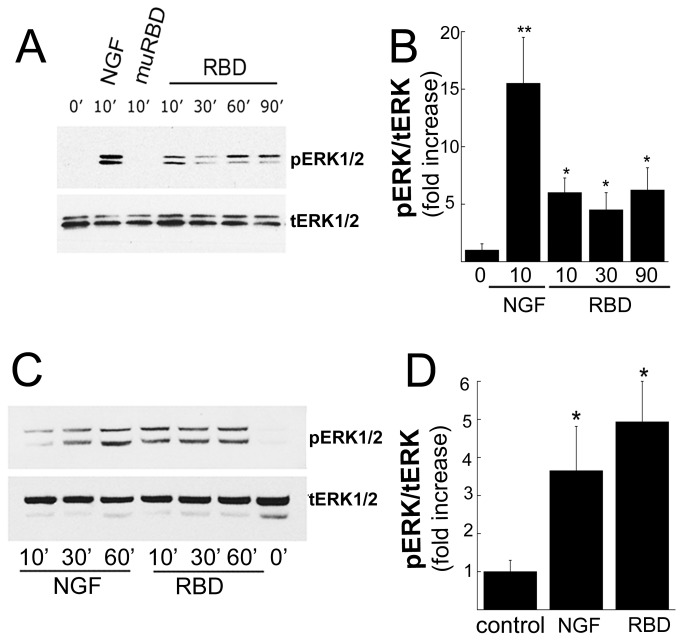
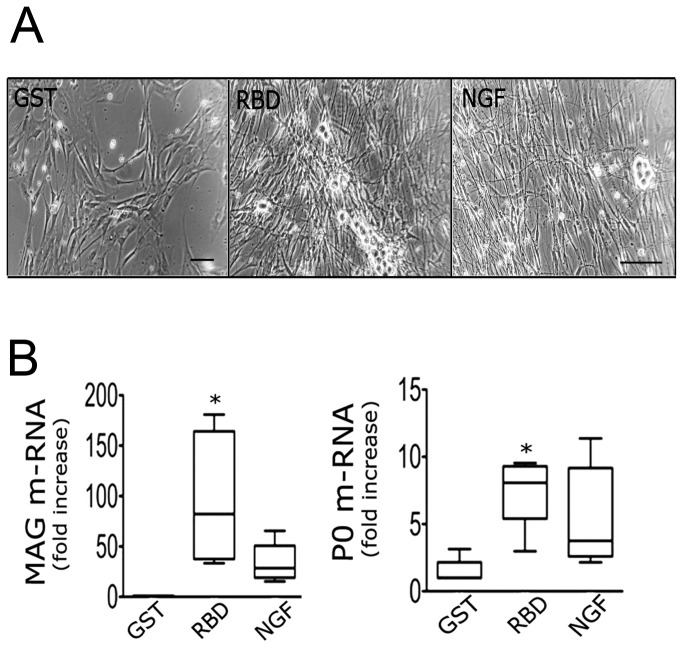
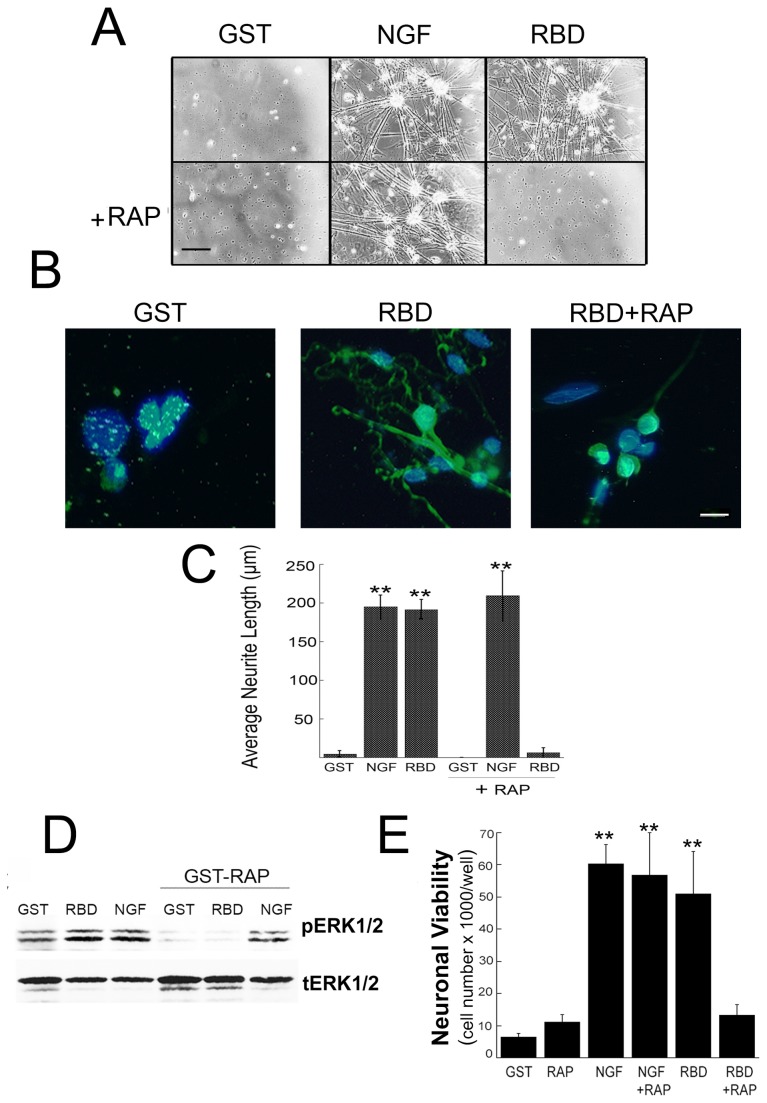
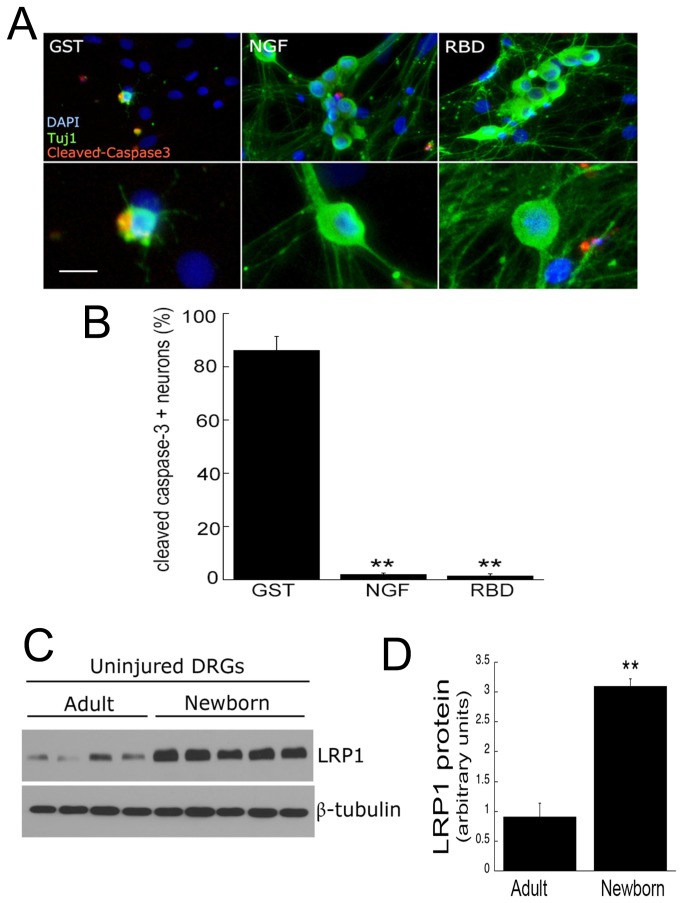
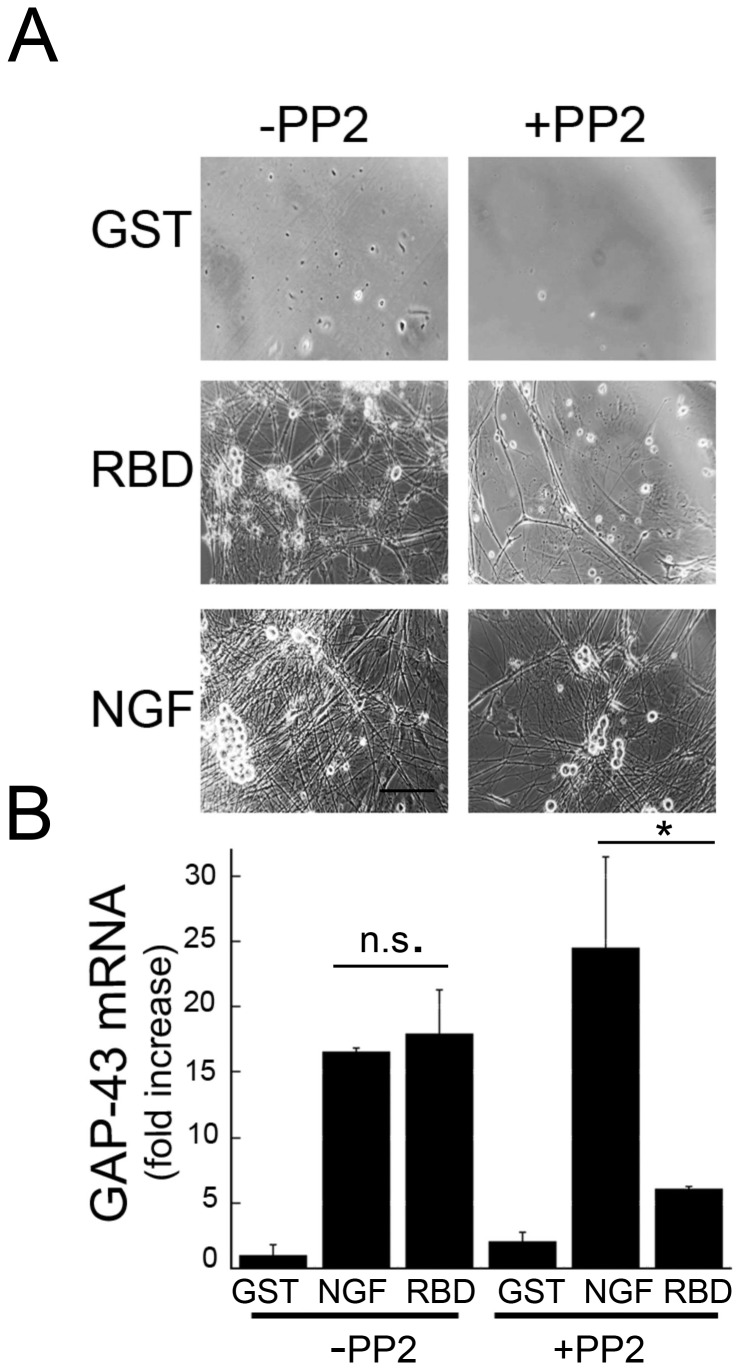
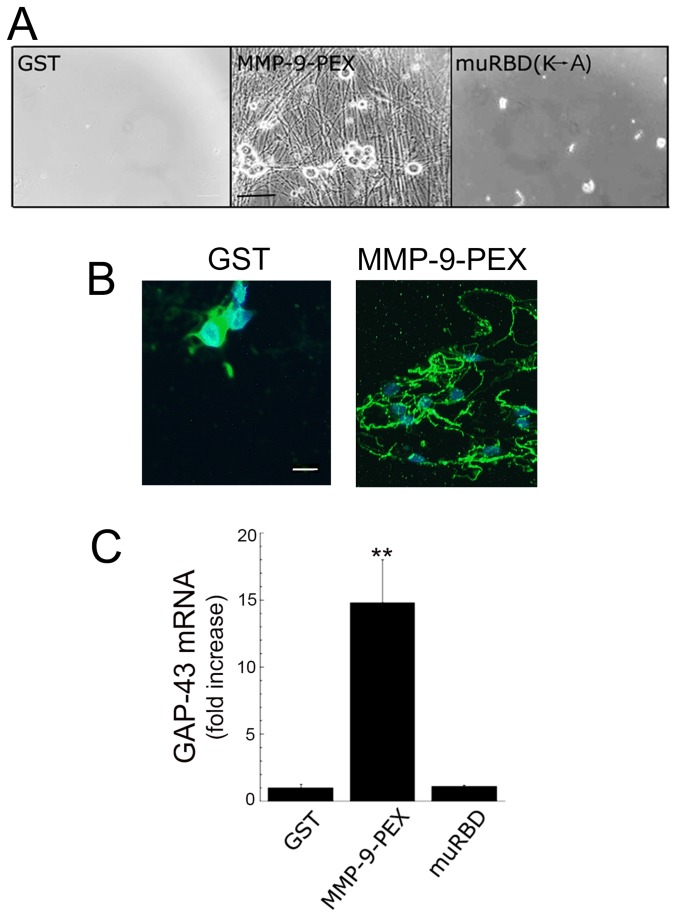
Developing sensory neurons require neurotrophic support for survival, neurite outgrowth and myelination. The low-density lipoprotein receptor-related protein-1 (LRP1) transactivates Trk receptors and thereby functions as a putative neurotrophin. Herein, we show that LRP1 is abundantly expressed in developing dorsal root ganglia (DRG) and that LRP1-dependent cell signaling supports survival, neurite extension and receptivity to Schwann cells even in the absence of neurotrophins. Cultured embryonic DRG neurons (E15) were treated with previously characterized LRP1 ligands, LRP1-receptor binding domain of α2-macroglobulin (RBD), hemopexin domain of MMP-9 (PEX) or controls (GST) for two weeks. These structurally diverse LRP1 ligands significantly activated and sustained extracellular signal-regulated kinases (ERK1/2) 5-fold (p<0.05), increased expression of growth-associated protein-43(GAP43) 15-fold (P<0.01), and increased neurite outgrowth 20-fold (P<0.01). Primary sensory neurons treated with LRP1 ligands survived > 2 weeks in vitro, to an extent equaling NGF, a finding associated with canonical signaling mechanisms and blockade of caspase-3 cleavage. LRP1 ligand-induced survival and sprouting were blocked by co-incubation with the LRP1 antagonist, receptor associated protein (RAP), whereas RAP had no effect on NGF-induced activity. Site directed mutagenesis of the LRP1 ligand, RBD, in which Lys(1370) and Lys(1374) are converted to alanine to preclude LRP1 binding, were ineffective in promoting cell signaling, survival or inducing neurite extension in primary sensory neurons, confirming LRP1 specificity. Furthermore, LRP1-induced neurite sprouting was mediated by Src-family kinase (SFK) activation, suggesting transactivation of Trk receptors. Co-cultures of primary embryonic neurons and Schwann cells showed that LRP1 agonists promoted axonal receptivity to myelination to Schwann cells. Collectively, these findings identify LRP1 as a novel and perhaps essential trophic molecule for sensory neuronal survival and development.
发育中的感觉神经元需要神经营养因子的支持才能存活、生长和髓鞘形成。低密度脂蛋白受体相关蛋白-1(LRP1)可转激活 Trk 受体,因此可作为潜在的神经营养因子。在此,我们发现 LRP1 在发育中的背根神经节(DRG)中大量表达,而且 LRP1 依赖的细胞信号支持神经元的存活、突起的延伸和对施万细胞的接受性,即使在没有神经营养因子的情况下也是如此。用先前鉴定的 LRP1 配体、α2-巨球蛋白的 LRP1 受体结合域(RBD)、MMP-9 的血红素结合域(PEX)或对照物(GST)处理培养的胚胎 DRG 神经元(E15)两周。这些结构多样的 LRP1 配体显著激活并持续维持细胞外信号调节激酶(ERK1/2)5 倍(p<0.05),增加生长相关蛋白-43(GAP43)15 倍(P<0.01),并使神经突生长增加 20 倍(P<0.01)。用 LRP1 配体处理的原代感觉神经元在体外存活超过 2 周,程度与神经生长因子(NGF)相当,这与经典信号机制和半胱天冬酶-3 切割阻断有关。LRP1 配体诱导的存活和发芽被与 LRP1 拮抗剂受体相关蛋白(RAP)共孵育阻断,而 RAP 对 NGF 诱导的活性没有影响。LRP1 配体 RBD 中的赖氨酸(1370)和赖氨酸(1374)突变为丙氨酸以排除 LRP1 结合的定点突变,在促进原代感觉神经元的细胞信号转导、存活或诱导神经突延伸方面无效,证实了 LRP1 的特异性。此外,LRP1 诱导的神经突发芽是通过Src 家族激酶(SFK)的激活介导的,提示 Trk 受体的转激活。原代胚胎神经元和施万细胞的共培养显示,LRP1 激动剂促进轴突对施万细胞的髓鞘形成的接受性。总的来说,这些发现确定 LRP1 是感觉神经元存活和发育的一种新型、或许是必需的营养分子。