Department of Neurology, University of Massachusetts Medical School, Worcester, MA, USA.
Mol Neurodegener. 2013 Aug 31;8:30. doi: 10.1186/1750-1326-8-30.
Amyotrophic lateral sclerosis (ALS)-linked fused in sarcoma/translocated in liposarcoma (FUS/TLS or FUS) is concentrated within cytoplasmic stress granules under conditions of induced stress. Since only the mutants, but not the endogenous wild-type FUS, are associated with stress granules under most of the stress conditions reported to date, the relationship between FUS and stress granules represents a mutant-specific phenotype and thus may be of significance in mutant-induced pathogenesis. While the association of mutant-FUS with stress granules is well established, the effect of the mutant protein on stress granules has not been examined. Here we investigated the effect of mutant-FUS on stress granule formation and dynamics under conditions of oxidative stress.
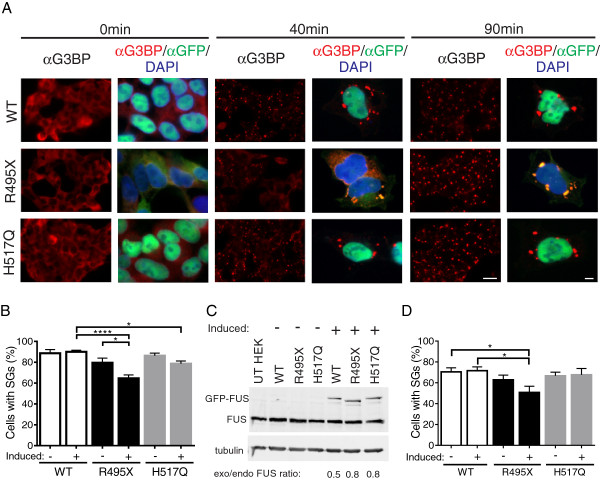
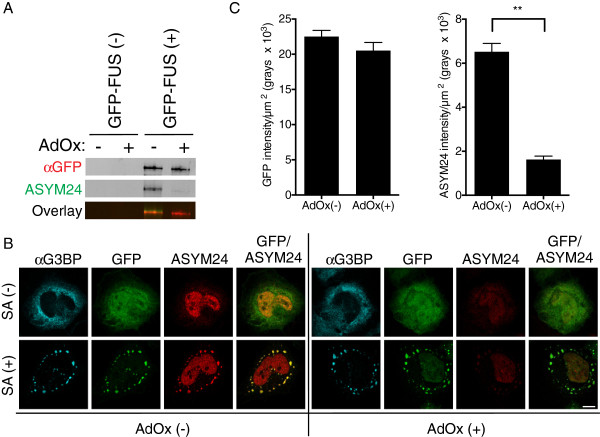
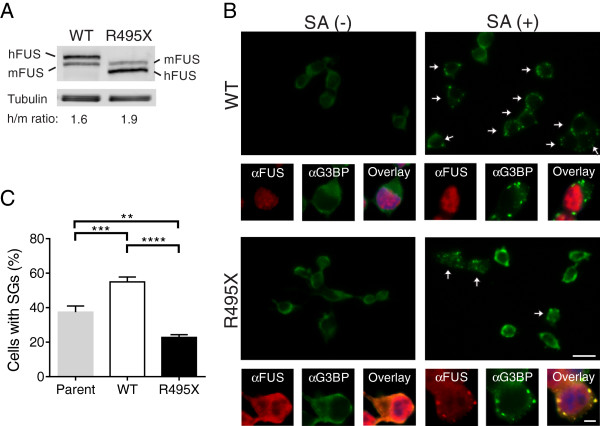
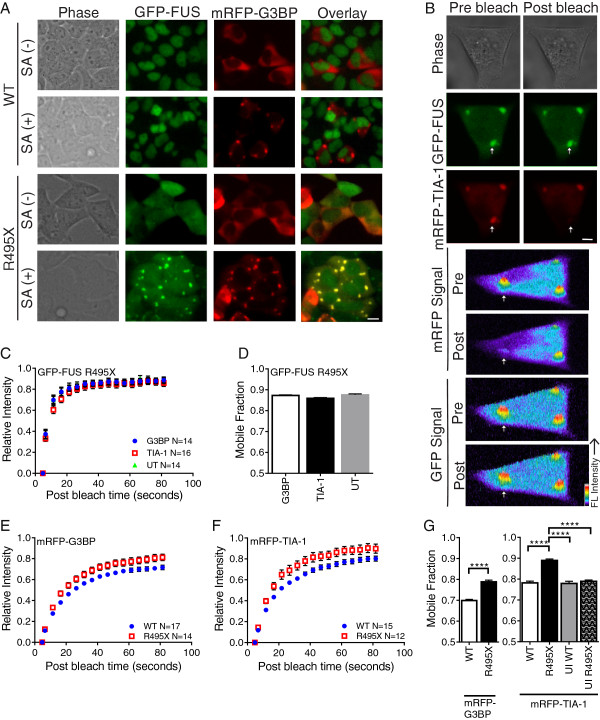
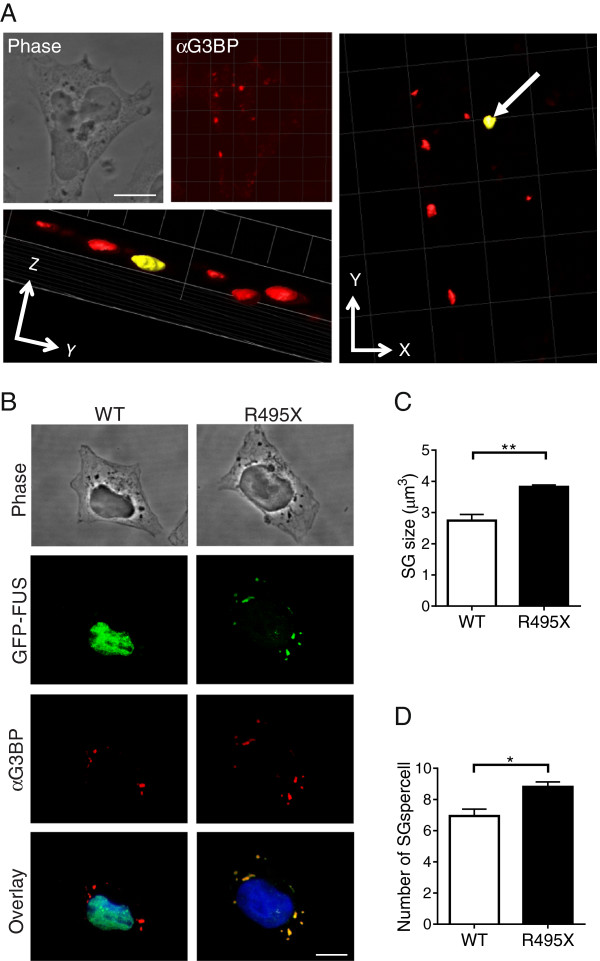
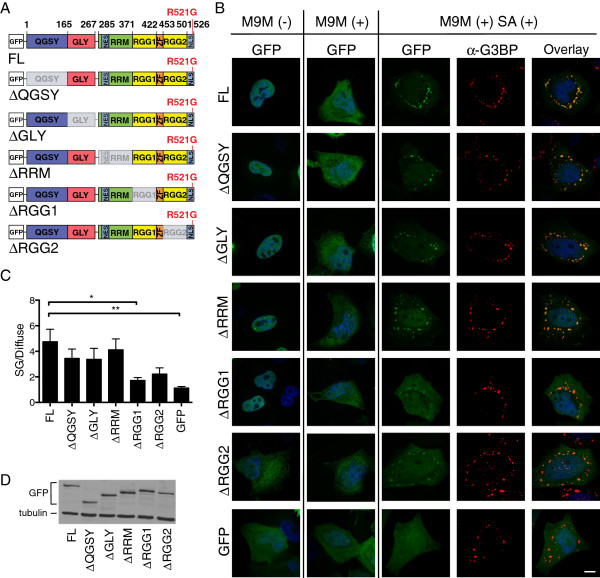
We found that expression of mutant-FUS delays the assembly of stress granules. However, once stress granules containing mutant-FUS are formed, they are more dynamic, larger and more abundant compared to stress granules lacking FUS. Once stress is removed, stress granules disassemble more rapidly in cells expressing mutant-FUS. These effects directly correlate with the degree of mutant-FUS cytoplasmic localization, which is induced by mutations in the nuclear localization signal of the protein. We also determine that the RGG domains within FUS play a key role in its association to stress granules. While there has been speculation that arginine methylation within these RGG domains modulates the incorporation of FUS into stress granules, our results demonstrate that this post-translational modification is not involved.
Our results indicate that mutant-FUS alters the dynamic properties of stress granules, which is consistent with a gain-of-toxic mechanism for mutant-FUS in stress granule assembly and cellular stress response.
肌萎缩性侧索硬化症(ALS)相关融合肉瘤/异位脂肪肉瘤(FUS/TLS 或 FUS)在诱导应激条件下集中在细胞质应激颗粒内。由于只有突变体,而不是内源性野生型 FUS,与迄今为止报告的大多数应激条件下的应激颗粒有关,因此 FUS 与应激颗粒之间的关系代表了一种突变体特异性表型,因此可能在突变体诱导的发病机制中具有重要意义。虽然突变体 FUS 与应激颗粒的关联已得到充分证实,但突变蛋白对应激颗粒的影响尚未得到检验。在这里,我们研究了在氧化应激条件下突变体 FUS 对应激颗粒形成和动力学的影响。
我们发现突变体 FUS 的表达延迟了应激颗粒的组装。然而,一旦含有突变体 FUS 的应激颗粒形成,与不含 FUS 的应激颗粒相比,它们更具动态性、更大且更丰富。一旦应激消除,表达突变体 FUS 的细胞中应激颗粒的解体速度更快。这些效应与突变体 FUS 的细胞质定位程度直接相关,这种定位是由蛋白质的核定位信号突变诱导的。我们还确定 FUS 内的 RGG 结构域在其与应激颗粒的关联中起着关键作用。虽然有人推测这些 RGG 结构域内的精氨酸甲基化调节 FUS 掺入应激颗粒,但我们的结果表明这种翻译后修饰不参与其中。
我们的结果表明,突变体 FUS 改变了应激颗粒的动态特性,这与突变体 FUS 在应激颗粒组装和细胞应激反应中的毒性获得机制一致。