1] Centre for Neuroscience and Trauma, Blizard Institute, Queen Mary University of London, London E1 2AT, UK [2] Department of Physiology, Tongji Medical College, Huazhong University of Science and Technology, Wuhan 430030, China.
Cell Death Dis. 2013 Oct 3;4(10):e829. doi: 10.1038/cddis.2013.343.
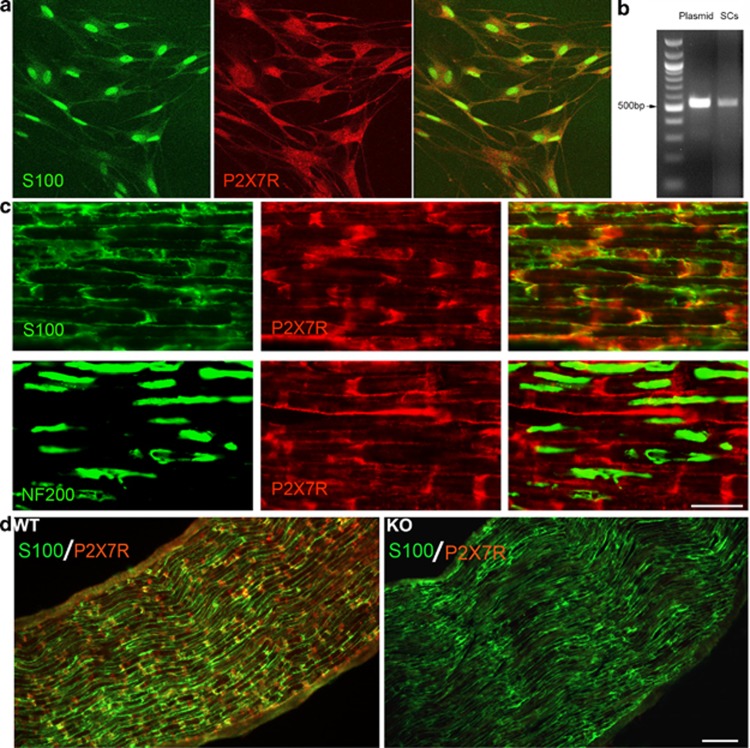
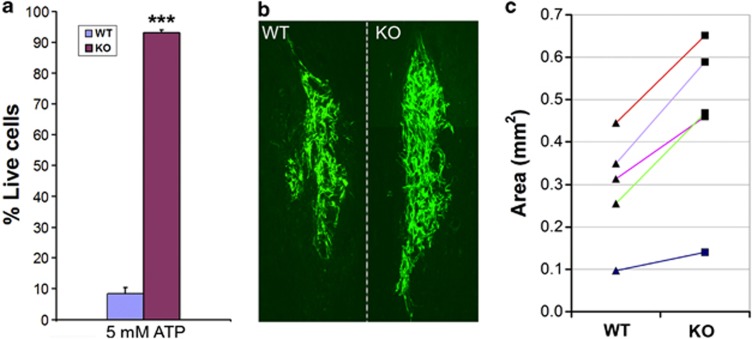
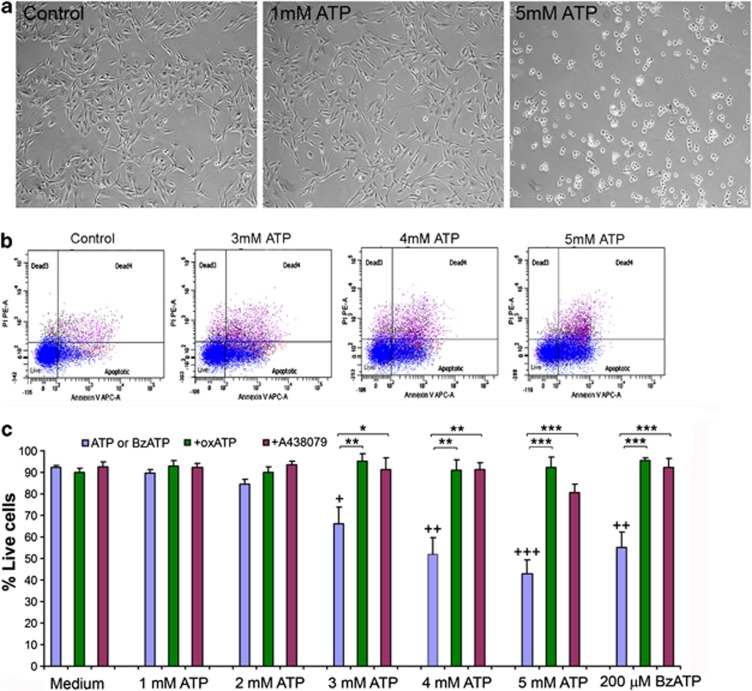
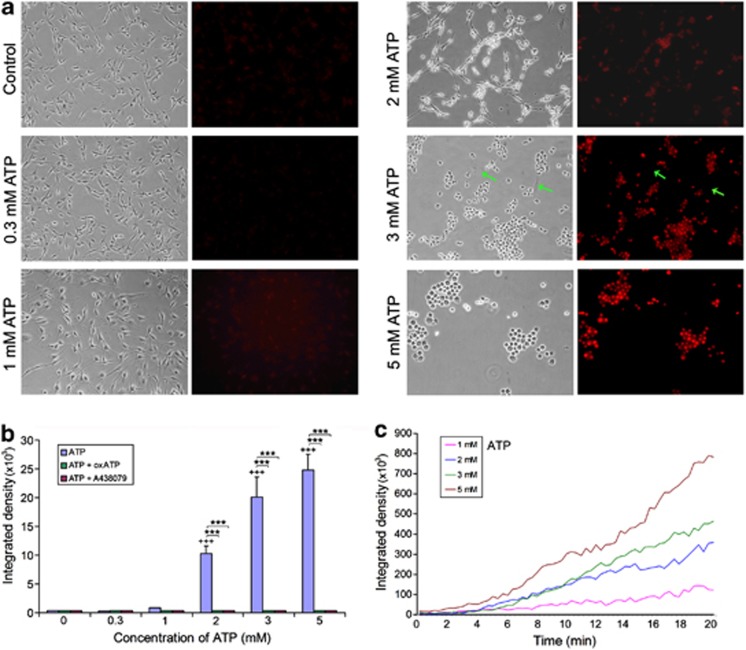
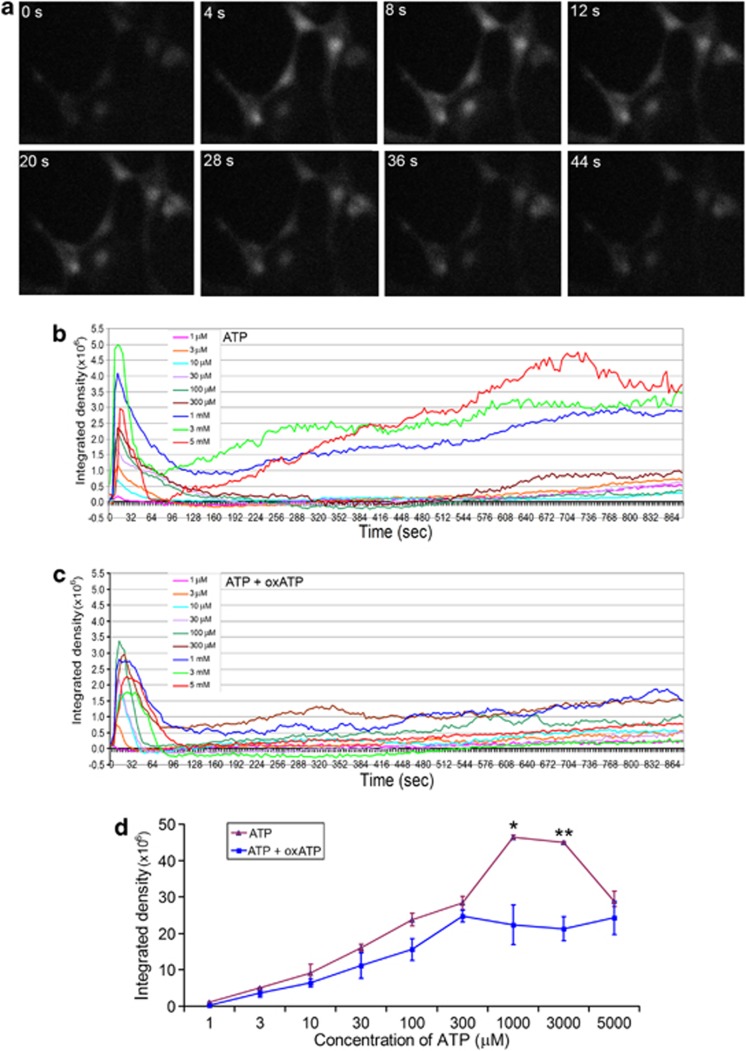
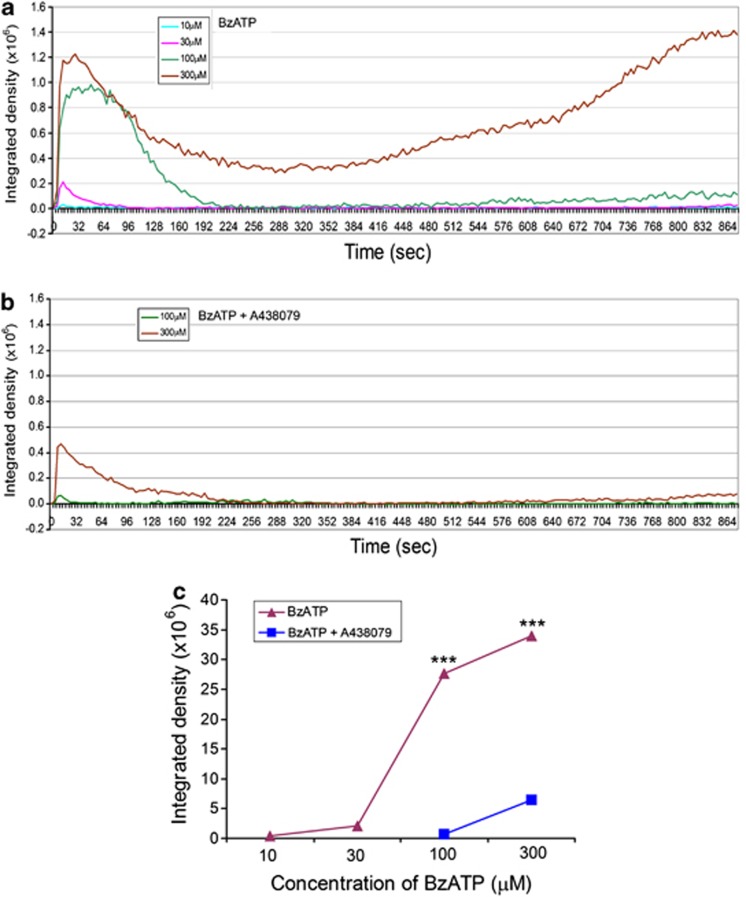
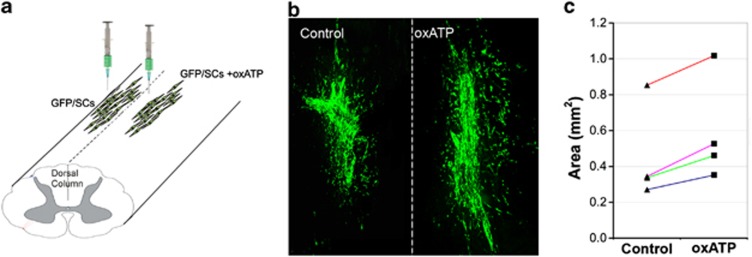
The potential to use Schwann cells (SCs) in neural repair for patients suffering from neurotrauma and neurodegenerative diseases is well recognized. However, significant cell death after transplantation hinders the clinical translation of SC-based therapies. Various factors may contribute to the death of transplanted cells. It is known that prolonged activation of P2X7 purinoceptors (P2X7R) can lead to death of certain types of cells. In this study, we show that rat SCs express P2X7R and exposure of cultured SCs to high concentrations of ATP (3-5 mM) or a P2X7R agonist, 2'(3')-O-(4-benzoylbenzoyl)ATP (BzATP) induced significant cell death rapidly. High concentrations of ATP and BzATP increased ethidium uptake by SCs, indicating increased membrane permeability to large molecules, a typical feature of prolonged P2X7R activation. SC death, as well as ethidium uptake, induced by ATP was blocked by an irreversible P2X7R antagonist oxidized ATP (oxATP) or a reversible P2X7R antagonist A438079. oxATP also significantly inhibits the increase of intracellular free calcium induced by minimolar ATP concentrations. Furthermore, ATP did not cause death of SCs isolated from P2X7R-knockout mice. All these results suggest that P2X7R is responsible for ATP-induced SC death in vitro. When rat SCs were treated with oxATP before transplantation into uninjured rat spinal cord, 35% more SCs survived than untreated SCs 1 week after transplantation. Moreover, 58% more SCs isolated from P2X7R-knockout mice survived after being transplanted into rat spinal cord than SCs from wild-type mice. This further confirms that P2X7R is involved in the death of transplanted SCs. These results indicate that targeting P2X7R on SCs could be a potential strategy to improve the survival of transplanted cells. As many other types of cells, including neural stem cells, also express P2X7R, deactivating P2X7R may improve the survival of other types of transplanted cells.
雪旺细胞(SCs)在治疗神经创伤和神经退行性疾病患者中的应用潜力已得到广泛认可。然而,移植后SCs 的大量死亡阻碍了基于 SC 的治疗方法的临床转化。多种因素可能导致移植细胞死亡。已知 P2X7 嘌呤能受体(P2X7R)的长期激活可导致某些类型的细胞死亡。在本研究中,我们发现大鼠SCs 表达 P2X7R,暴露于高浓度 ATP(3-5 mM)或 P2X7R 激动剂 2'(3')-O-(4-苯甲酰基苯甲酰基)ATP(BzATP)的培养SCs 会迅速发生显著的细胞死亡。高浓度的 ATP 和 BzATP 增加了 SCs 的 ethidium 摄取,表明细胞膜对大分子的通透性增加,这是 P2X7R 长期激活的典型特征。ATP 诱导的 SC 死亡和 ethidium 摄取可被不可逆的 P2X7R 拮抗剂氧化 ATP(oxATP)或可逆的 P2X7R 拮抗剂 A438079 阻断。oxATP 还可显著抑制低纳摩尔浓度 ATP 诱导的细胞内游离钙增加。此外,ATP 不会引起 P2X7R 敲除小鼠来源的SCs 死亡。所有这些结果表明,P2X7R 负责体外 ATP 诱导的SCs 死亡。当大鼠SCs 在移植到未受伤的大鼠脊髓前用 oxATP 处理时,与未经处理的SCs 相比,移植后 1 周时存活的SCs 多 35%。此外,与野生型小鼠来源的SCs 相比,移植到大鼠脊髓的 P2X7R 敲除小鼠来源的SCs 多 58%存活。这进一步证实 P2X7R 参与了移植SCs 的死亡。这些结果表明,针对SCs 上的 P2X7R 可能是提高移植细胞存活率的潜在策略。由于包括神经干细胞在内的许多其他类型的细胞也表达 P2X7R,失活 P2X7R 可能会提高其他类型移植细胞的存活率。