Cajander Sara, Bäckman Anders, Tina Elisabet, Strålin Kristoffer, Söderquist Bo, Källman Jan
Crit Care. 2013 Oct 6;17(5):R223. doi: 10.1186/cc13046.
Reduced monocyte human leukocyte antigen (mHLA)-DR surface expression in the late phase of sepsis is postulated as a general biomarker of sepsis-induced immunosuppression and an independent predictor of nosocomial infections.
Fifty-nine patients with sepsis and blood culture growing pathogenic bacteria were studied. Blood samples were collected at day 1 or 2 after admission, for measurement of mHLA-DR by flow cytometry and mRNA expression of HLA-DRA and class II transactivator (CIITA) by qRT-PCR. Blood samples from blood donors were used as controls (n = 30).
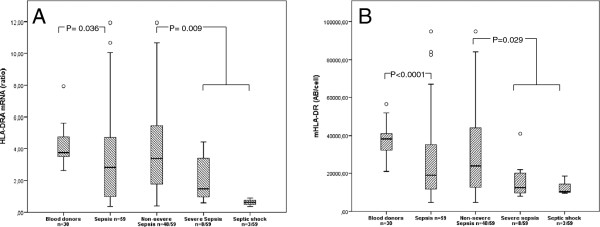
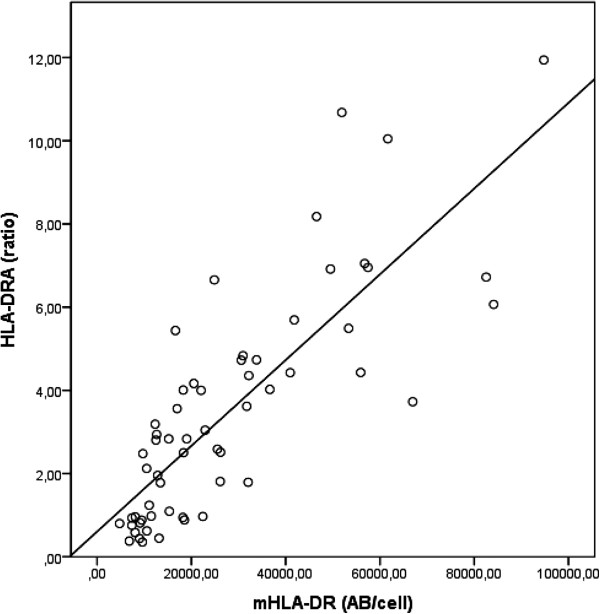
A significant reduced expression of mHLA-DR, HLA-DRA, and CIITA was seen in septic patients compared with controls. HLA-DRA mRNA level in whole blood was highly correlated with surface expression of mHLA-DR.
Patients with sepsis display a diminished expression of HLA-DR at the monocyte surface as well as in the gene expression at the mRNA level. The mRNA expression level of HLA-DRA monitored by qRT-PCR correlates highly with surface expression of HLA-DR and appears to be a possible future biomarker for evaluation of immunosuppression in sepsis.
脓毒症晚期单核细胞人类白细胞抗原(mHLA)-DR表面表达降低被认为是脓毒症诱导免疫抑制的一般生物标志物以及医院感染的独立预测指标。
对59例脓毒症且血培养出致病细菌的患者进行研究。入院后第1天或第2天采集血样,通过流式细胞术检测mHLA-DR,通过qRT-PCR检测HLA-DRA和II类反式激活因子(CIITA)的mRNA表达。以献血者的血样作为对照(n = 30)。
与对照组相比,脓毒症患者中mHLA-DR、HLA-DRA和CIITA的表达显著降低。全血中HLA-DRA mRNA水平与mHLA-DR的表面表达高度相关。
脓毒症患者单核细胞表面的HLA-DR表达以及mRNA水平的基因表达均降低。通过qRT-PCR监测的HLA-DRA mRNA表达水平与HLA-DR的表面表达高度相关,似乎是未来评估脓毒症免疫抑制的一种可能的生物标志物。