Marvar Paul J, Goodman Jared, Fuchs Sebastien, Choi Dennis C, Banerjee Sunayana, Ressler Kerry J
Behavioral Neuroscience and Psychiatric Disorders, Department of Psychiatry and Behavioral Sciences, Emory University School of Medicine, Atlanta, Georgia; Department of Physiology and Pharmacology, University of Bristol, Bristol, United Kingdom.
Behavioral Neuroscience and Psychiatric Disorders, Department of Psychiatry and Behavioral Sciences, Emory University School of Medicine, Atlanta, Georgia.
Biol Psychiatry. 2014 Jun 1;75(11):864-72. doi: 10.1016/j.biopsych.2013.08.024. Epub 2013 Oct 4.
The current effective treatment options for posttraumatic stress disorder (PTSD) are limited, and therefore the need to explore new treatment strategies is critical. Pharmacological inhibition of the renin-angiotensin system is a common approach to treat hypertension, and emerging evidence highlights the importance of this pathway in stress and anxiety. A recent clinical study from our laboratory provides evidence supporting a role for the renin-angiotensin system in the regulation of the stress response in patients diagnosed with PTSD.
With an animal model of PTSD and the selective angiotensin receptor type 1 (AT1) antagonist losartan, we investigated the acute and long-term effects of AT1 receptor inhibition on fear memory and baseline anxiety. After losartan treatment, we performed classical Pavlovian fear conditioning pairing auditory cues with footshocks and examined extinction behavior, gene expression changes in the brain, as well as neuroendocrine and cardiovascular responses.
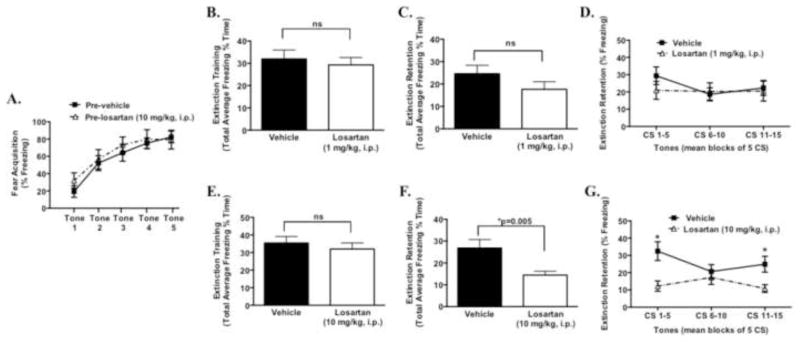
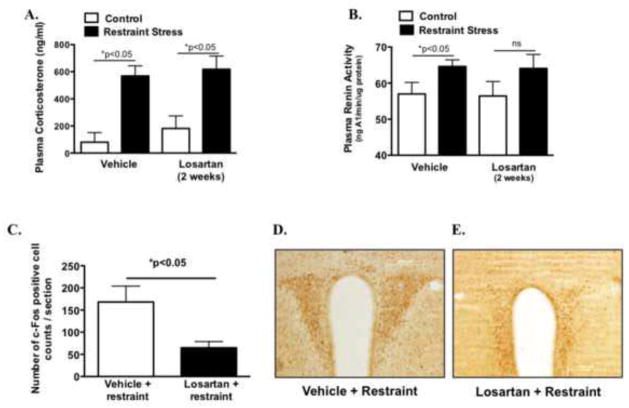
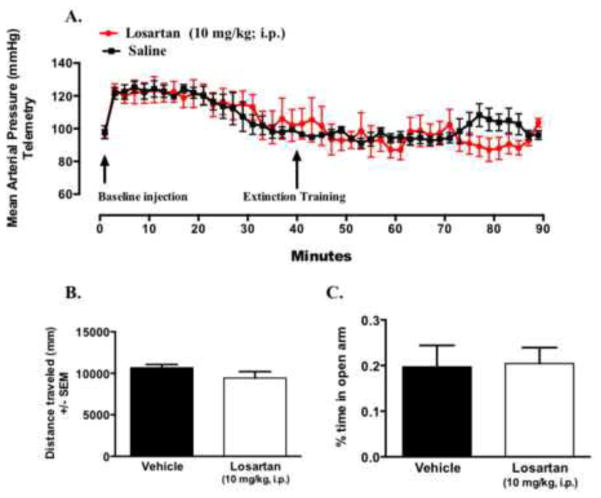
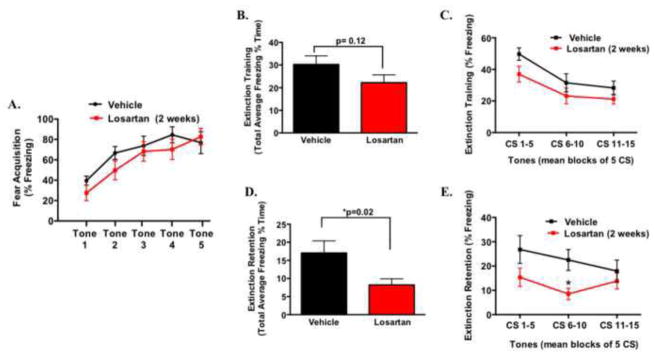
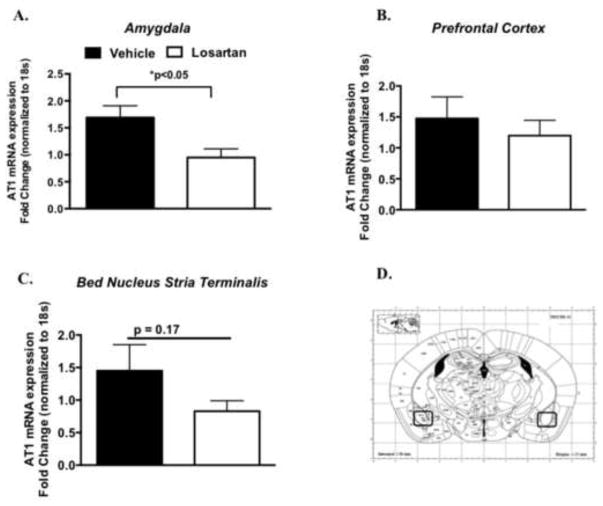
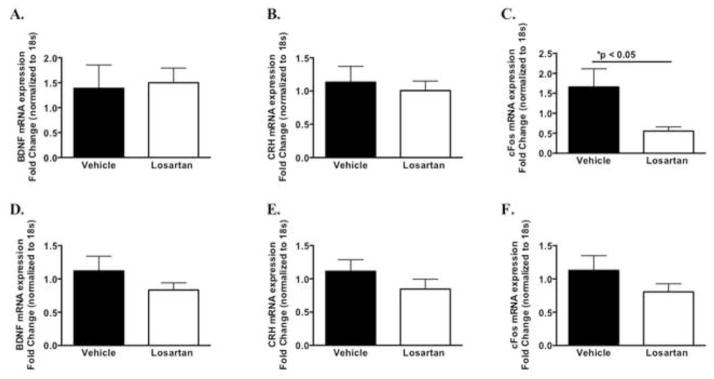
After cued fear conditioning, both acute and 2-week administration of losartan enhanced the consolidation of extinction memory but had no effect on fear acquisition, baseline anxiety, blood pressure, and neuroendocrine stress measures. Gene expression changes in the brain were also altered in mice treated with losartan for 2 weeks, in particular reduced amygdala AT1 receptor and bed nucleus of the stria terminalis c-Fos messenger RNA levels.
These data suggest that AT1 receptor antagonism enhances the extinction of fear memory and therefore might be a beneficial therapy for PTSD patients who have impairments in extinction of aversive memories.
创伤后应激障碍(PTSD)目前的有效治疗选择有限,因此探索新的治疗策略至关重要。肾素-血管紧张素系统的药理学抑制是治疗高血压的常用方法,新出现的证据凸显了该途径在应激和焦虑中的重要性。我们实验室最近的一项临床研究提供了证据,支持肾素-血管紧张素系统在诊断为PTSD的患者应激反应调节中的作用。
利用PTSD动物模型和选择性1型血管紧张素受体(AT1)拮抗剂氯沙坦,我们研究了AT1受体抑制对恐惧记忆和基线焦虑的急性和长期影响。氯沙坦治疗后,我们进行了经典的巴甫洛夫式恐惧条件反射,将听觉线索与足部电击配对,并检查消退行为、大脑中的基因表达变化以及神经内分泌和心血管反应。
在线索性恐惧条件反射后,急性和连续2周给予氯沙坦均增强了消退记忆的巩固,但对恐惧获得、基线焦虑、血压和神经内分泌应激指标无影响。在连续2周接受氯沙坦治疗的小鼠中,大脑中的基因表达变化也发生了改变,特别是杏仁核AT1受体和终纹床核c-Fos信使核糖核酸水平降低。
这些数据表明,AT1受体拮抗作用增强了恐惧记忆的消退,因此可能是对厌恶记忆消退受损的PTSD患者有益的治疗方法。