Bioengineering Center and the School of Chemical, Biological and Materials Engineering, University of Oklahoma, Norman, Oklahoma, United States of America.
PLoS One. 2013 Oct 3;8(10):e76403. doi: 10.1371/journal.pone.0076403. eCollection 2013.
The targeting of therapeutics is a promising approach for the development of new cancer treatments that seek to reduce the devastating side effects caused by the systemic administration of current drugs. This study evaluates a fusion protein developed as an enzyme prodrug therapy targeted to the tumor vasculature. Cytotoxicity would be localized to the site of the tumor using a protein fusion of purine nucleoside phosphorylase (PNP) and annexin V. Annexin V acts as the tumor-targeting component of the fusion protein as it has been shown to bind to phosphatidylserine expressed externally on cancer cells and the endothelial cells of the tumor vasculature, but not normal vascular endothelial cells. The enzymatic component of the fusion, PNP, converts the FDA-approved cancer therapeutic, fludarabine, into a more cytotoxic form. The purpose of this study is to determine if this system has a good potential as a targeted therapy for breast cancer.
A fusion of E. coli purine nucleoside phosphorylase and human annexin V was produced in E. coli and purified. Using human breast cancer cell lines MCF-7 and MDA-MB-231 and non-confluent human endothelial cells grown in vitro, the binding strength of the fusion protein and the cytotoxicity of the enzyme prodrug system were determined. Endothelial cells that are not confluent expose phosphatidylserine and therefore mimic the tumor vasculature.
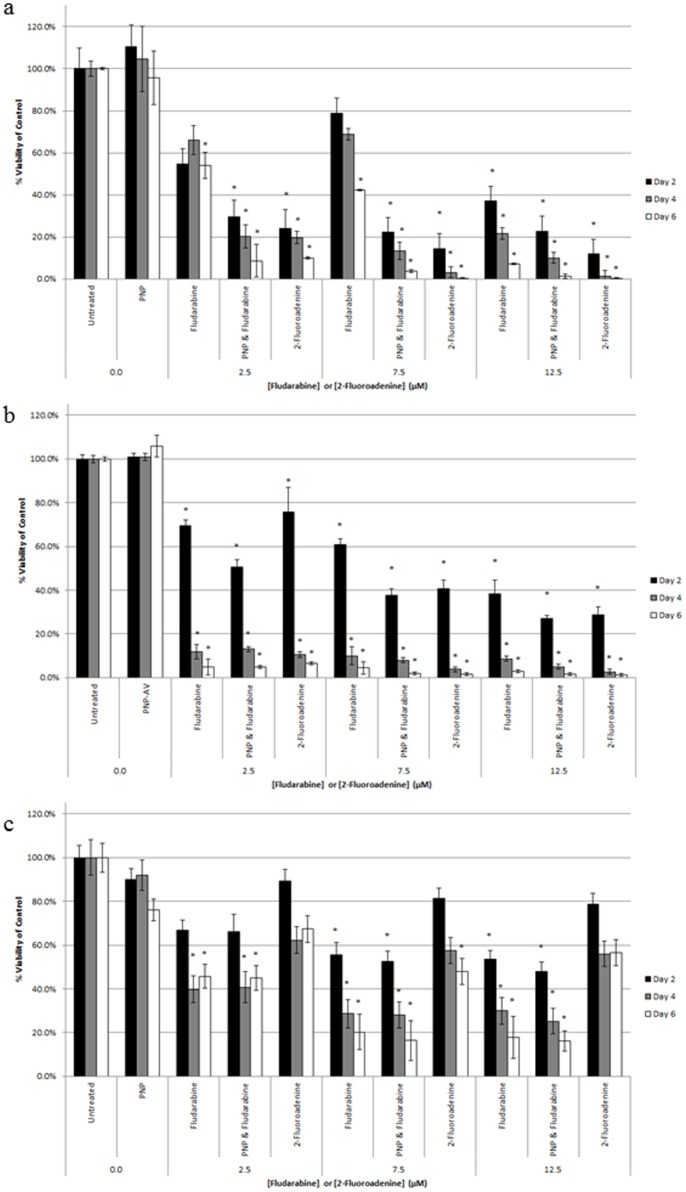
The purified recombinant fusion protein had good enzymatic activity and strong binding to the three cell lines. There was significant cell killing (p<0.001) by the enzyme prodrug treatment for all three cell lines, with greater than 80% cytotoxicity obtained after 6 days of treatment.
These results suggest that this treatment could be useful as a targeted therapy for breast cancer.
靶向治疗是开发新癌症治疗方法的一种有前途的方法,旨在减少当前药物全身给药引起的破坏性副作用。本研究评估了一种作为酶前药治疗靶向肿瘤血管的融合蛋白。细胞毒性将使用嘌呤核苷磷酸化酶(PNP)和膜联蛋白 V 的蛋白融合定位到肿瘤部位。膜联蛋白 V 作为融合蛋白的肿瘤靶向成分起作用,因为它已被证明与癌细胞和肿瘤血管内皮细胞外部表达的磷脂酰丝氨酸结合,但与正常血管内皮细胞不结合。融合蛋白的酶成分 PNP 将美国食品和药物管理局批准的癌症治疗药物氟达拉滨转化为更具细胞毒性的形式。本研究的目的是确定该系统是否具有作为乳腺癌靶向治疗的良好潜力。
在大肠杆菌中生产并纯化了大肠杆菌嘌呤核苷磷酸化酶和人膜联蛋白 V 的融合物。使用人乳腺癌细胞系 MCF-7 和 MDA-MB-231 以及体外培养的非汇合人内皮细胞,确定融合蛋白的结合强度和酶前药系统的细胞毒性。非汇合的内皮细胞暴露磷脂酰丝氨酸,因此模拟肿瘤血管。
纯化的重组融合蛋白具有良好的酶活性和与三种细胞系的强结合。三种细胞系的酶前药治疗均导致明显的细胞杀伤(p<0.001),治疗 6 天后获得超过 80%的细胞毒性。
这些结果表明,这种治疗方法可能对乳腺癌的靶向治疗有用。