Department of Molecular and Cellular Biology, Harvard University, Cambridge, Massachusetts, United States of America.
PLoS One. 2013 Sep 30;8(9):e75895. doi: 10.1371/journal.pone.0075895. eCollection 2013.
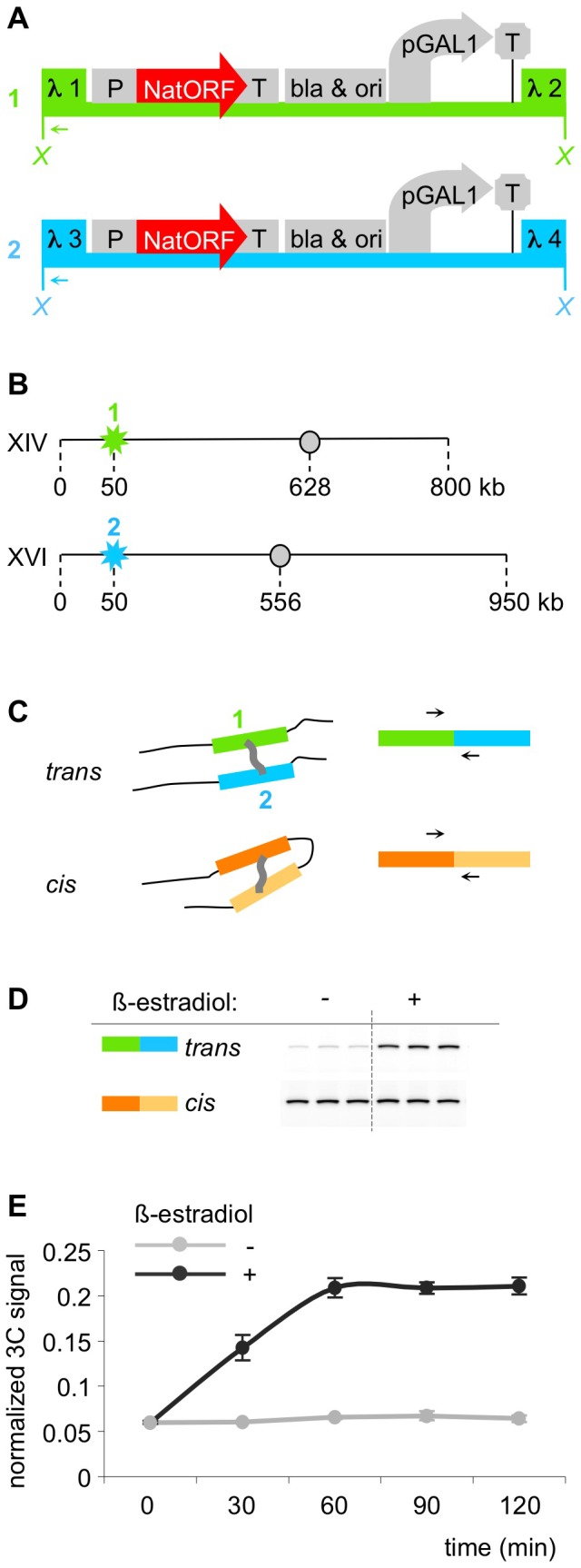
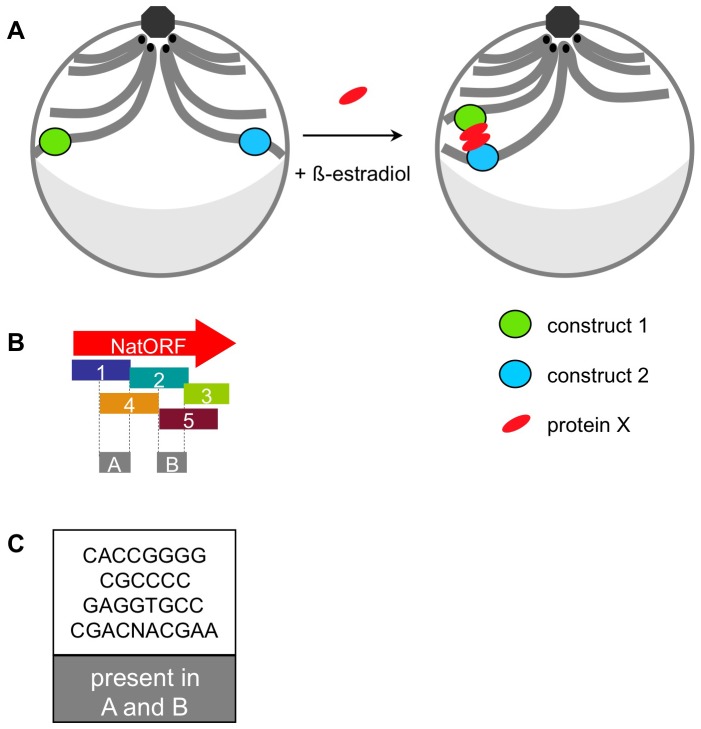
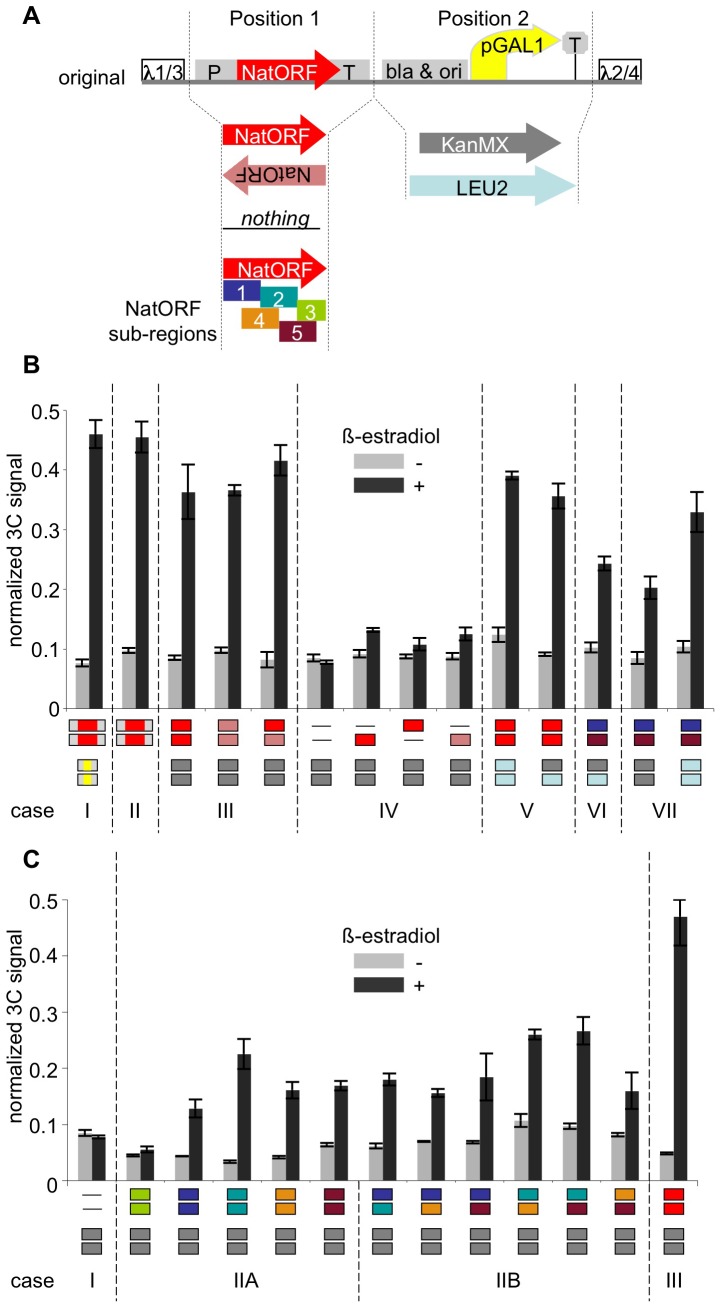
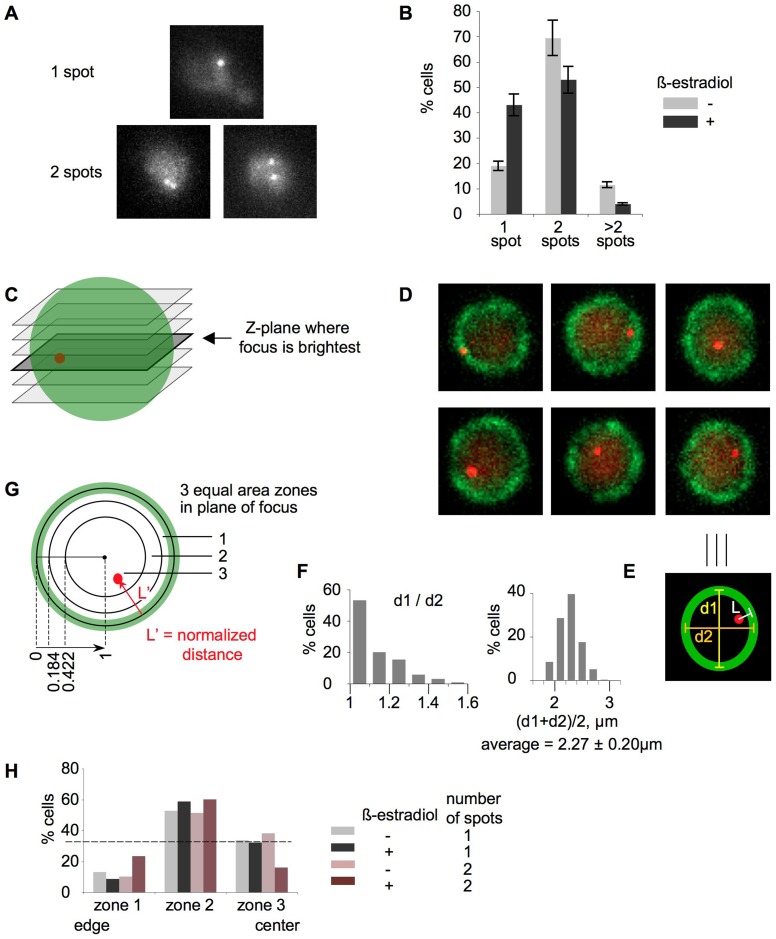
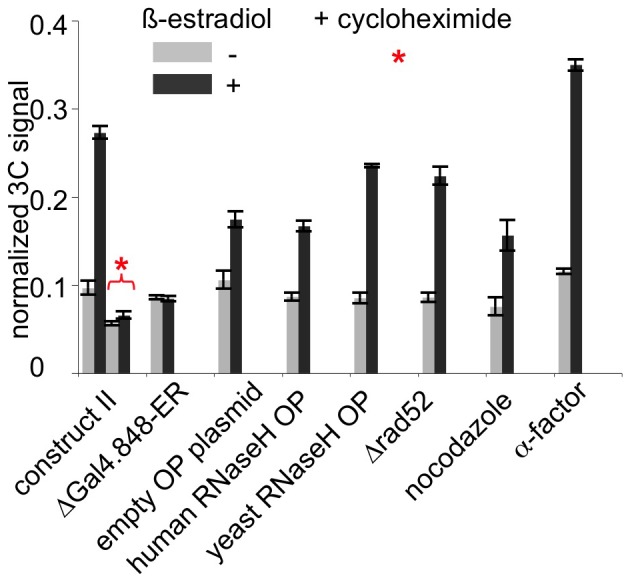
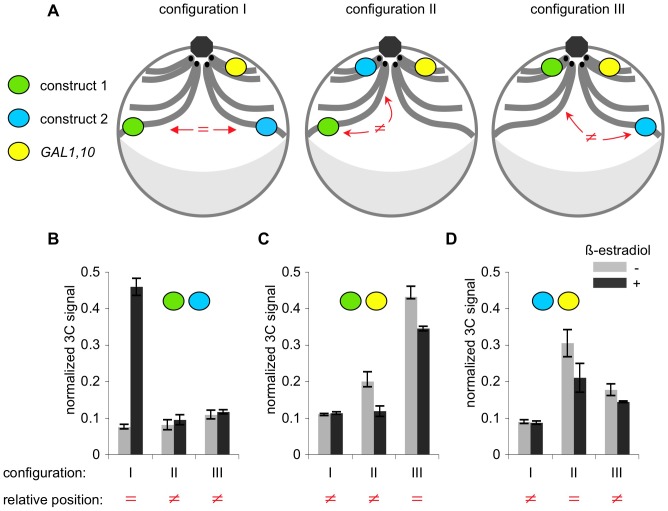
Three-dimensional organization of the genome is important for regulation of gene expression and maintenance of genomic stability. It also defines, and is defined by, contacts between different chromosomal loci. Interactions between loci positioned on different chromosomes, i.e. "trans" interactions are one type of such contacts. Here, we describe a case of inducible trans interaction in chromosomes of the budding yeast S. cerevisiae. Special DNA sequences, inserted in two ectopic chromosomal loci positioned in trans, pair with one another in an inducible manner. The spatial proximity diagnostic of pairing is observable by both chromosome capture analysis (3C) and epifluorescence microscopy in whole cells. Protein synthesis de novo appears to be required for this process. The three-dimensional organization of the yeast nucleus imposes a constraint on such pairing, presumably by dictating the probability with which the two sequences collide with one another.
基因组的三维组织对于基因表达的调控和基因组稳定性的维持非常重要。它还定义了不同染色体位置之间的接触,并受到这些接触的定义。不同染色体上的位置之间的相互作用,即“转座”相互作用就是这种接触的一种类型。在这里,我们描述了酿酒酵母 S. cerevisiae 染色体中诱导型转座相互作用的情况。插入两个位于转座位置的异位染色体位置的特殊 DNA 序列以可诱导的方式彼此配对。配对的空间接近性诊断可通过全细胞的染色体捕获分析(3C)和荧光显微镜观察到。显然,蛋白质从头合成是这个过程所必需的。酵母核的三维组织对这种配对施加了限制,可能是通过决定两个序列相互碰撞的概率来实现的。