State Key Laboratory for Mesoscopic Physics, Department of Physics, Peking University, Beijing 100871, P.R. China.
Sci Rep. 2013 Oct 8;3:2870. doi: 10.1038/srep02870.
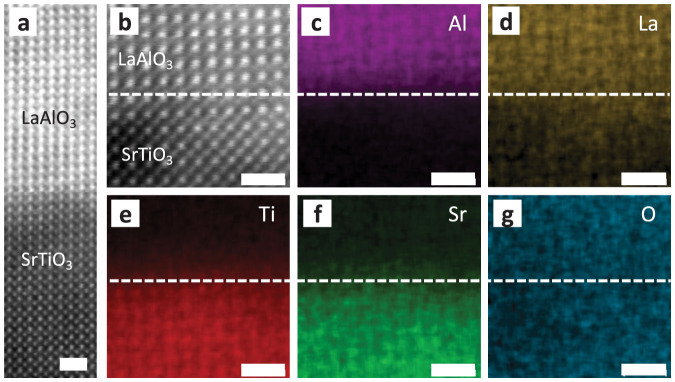
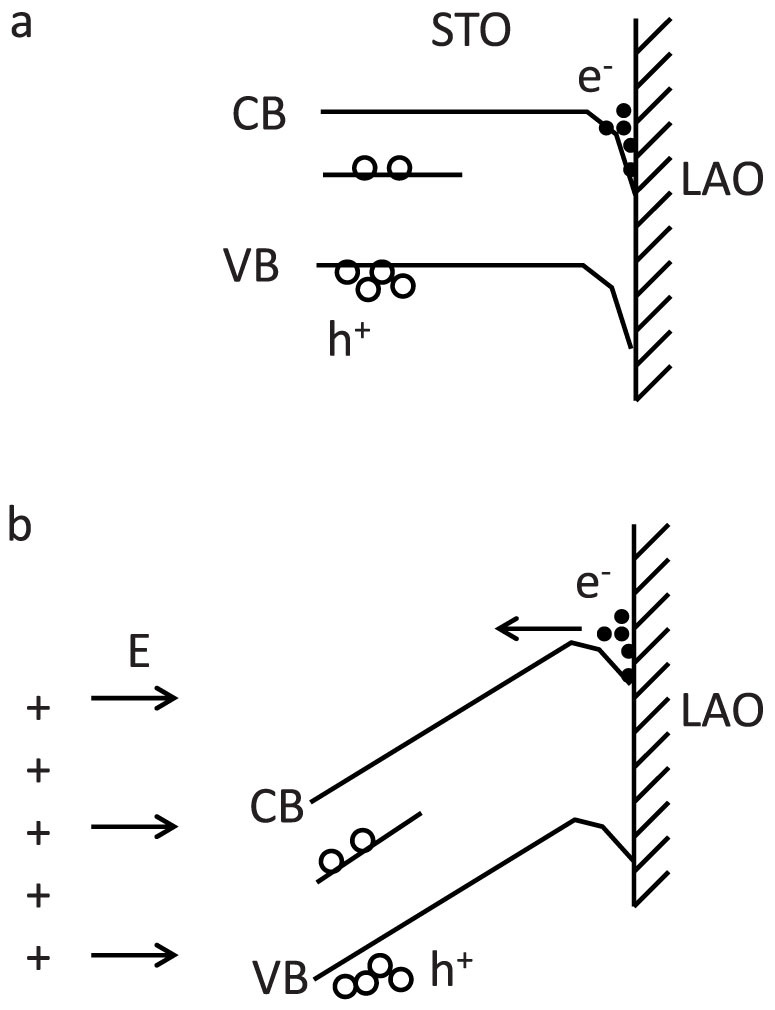
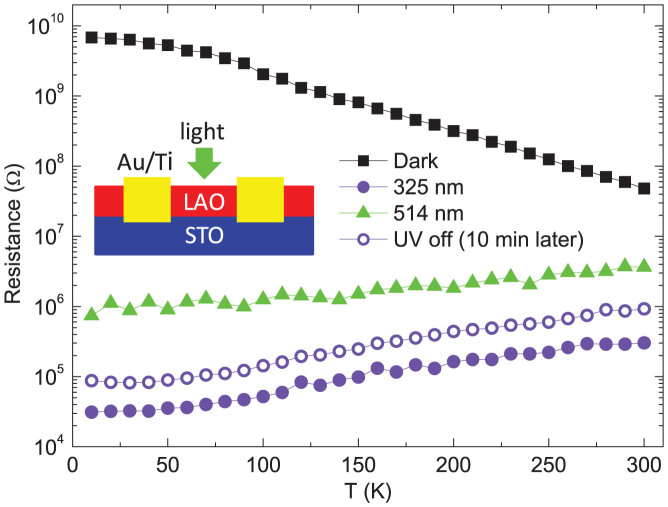
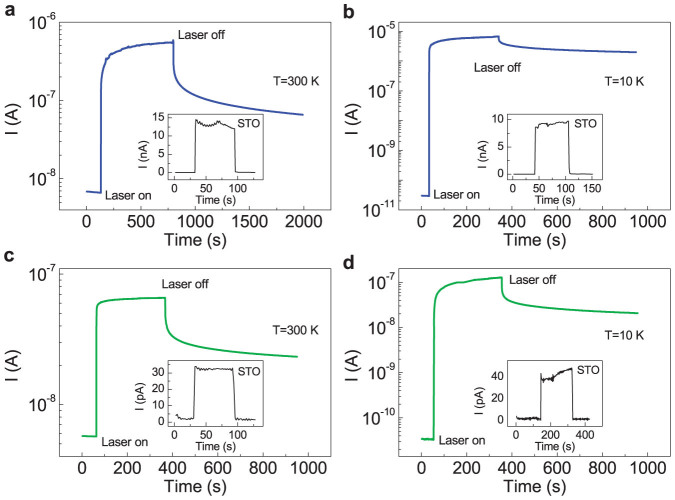
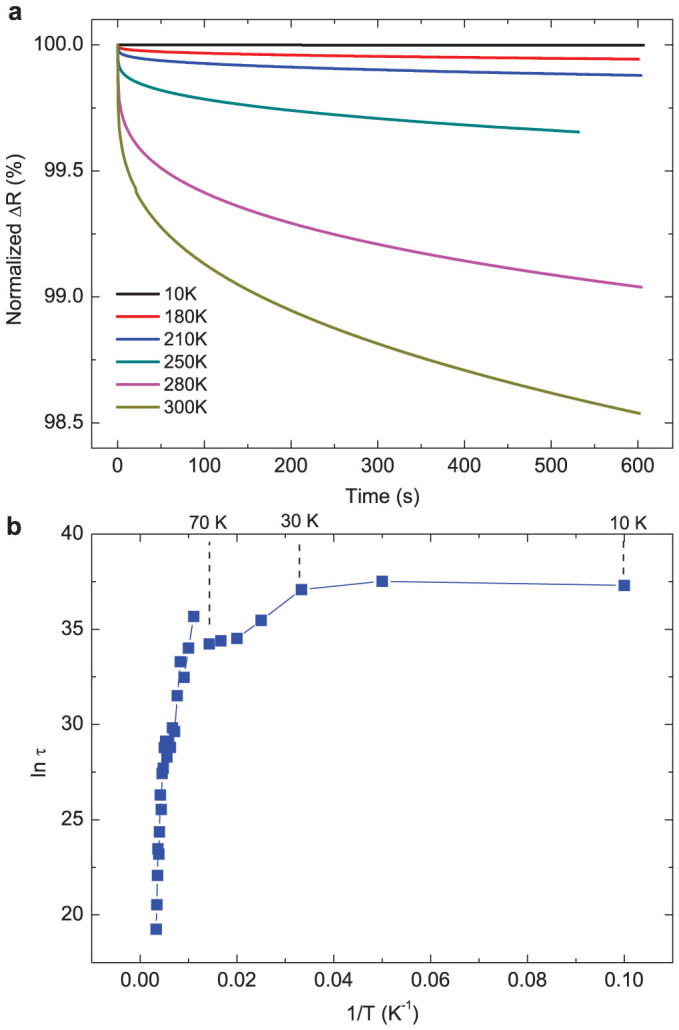
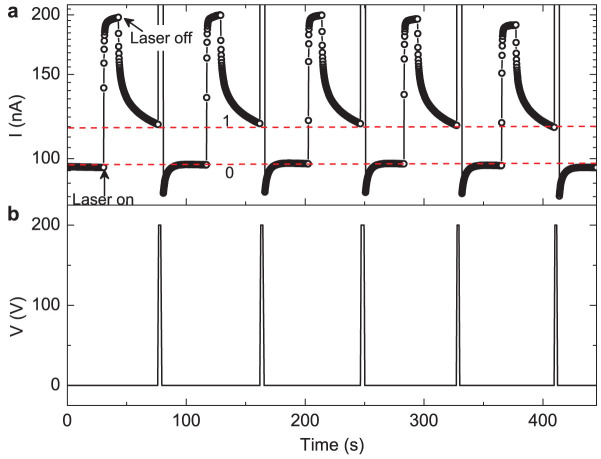
We report a new type of memory device based on insulating LaAlO₃/SrTiO₃ (LAO/STO) hetero-interface. The microstructures of the LAO/STO interface are characterized by Cs-corrected scanning transmission electron microscopy, which reveals the element intermixing at the interface. The inhomogeneous element distribution may result in carrier localization, which is responsible for the insulating state. The insulating state of such interface can be converted to metallic state by light illumination and the metallic state maintains after light off due to giant persistent photoconductivity (PPC) effect. The on/off ratio between the PPC and the initial dark conductance is as large as 10⁵. The metallic state also can be converted back to insulating state by applying gate voltage. Reversible and reproducible resistive switching makes LAO/STO interface promising as a nonvolatile memory. Our results deepen the understanding of PPC phenomenon in LAO/STO, and pave the way for the development of all-oxide electronics integrating information storage devices.
我们报告了一种基于绝缘 LaAlO₃/SrTiO₃(LAO/STO)异质界面的新型存储器件。通过 Cs 校正扫描透射电子显微镜对 LAO/STO 界面的微结构进行了表征,揭示了界面处的元素混合。不均匀的元素分布可能导致载流子局域化,从而导致绝缘状态。通过光照可以将这种界面的绝缘状态转换为金属状态,并且由于巨大的持久光电导(PPC)效应,金属状态在光照关闭后仍然存在。PPC 和初始暗电导之间的导通/关断比高达 10⁵。通过施加栅极电压也可以将金属状态转换回绝缘状态。可逆且可重复的电阻开关使 LAO/STO 界面有望成为非易失性存储器。我们的结果加深了对 LAO/STO 中 PPC 现象的理解,为开发集成信息存储器件的全氧化物电子学铺平了道路。